What Is Tire Ply Rating? Strength & Load Explained
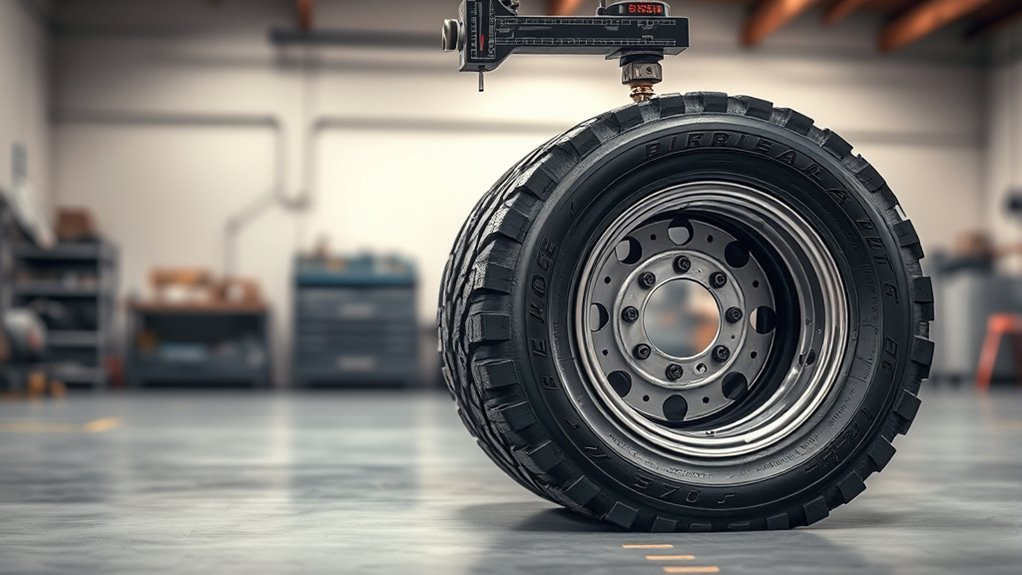
Tire ply rating tells you a tire’s structural strength and how much load it can carry—not the literal number of fabric layers. It’s a comparative value tied to modern materials and construction; higher ply or load-range letters mean greater capacity when inflated to the specified pressure. You’ll still check the numeric load index for exact weight limits. Choosing higher ply helps towing and hauling but can stiffen the ride. Keep going and you’ll get practical markers for safe selection.
What a Ply Rating Actually Means : and Why It Matters to You

Think of a ply rating as a quick specification of a tire’s load-carrying capability: it used to describe the actual number of fabric layers, but today it denotes the equivalent strength created by modern materials and construction. You should read the ply rating (e.g., 10PR) as an indicator of structural capacity rather than literal layers. Manufacturers now rely on material advancements—nylon, steel belts and engineered composites—to boost tire durability and load tolerance while reducing physical ply count. That means a tire stamped 10PR can support far more weight than an older 4-ply design despite having fewer fabric plies. Use the ply rating to verify tires meet or exceed your vehicle’s specified load requirements; selecting by rating guarantees compliance with safety and performance limits.
Ply Rating vs. Load Range vs. Load Index: The Simple Differences
You need to tell Ply Rating Explained, Load Range Meaning, and Load Index Basics apart to choose the right tire for your vehicle. Ply rating communicates relative carcass strength, load range maps that strength to a letter classification tied to inflation limits, and load index gives the exact numeric maximum weight per tire at a specified pressure. Knowing how these three interact lets you match tires to manufacturer specs and carry loads safely.
Ply Rating Explained
Understanding tire markings matters when you need the right load capacity for your vehicle. Ply rating now denotes a tire’s relative strength and load-carrying capability, not the literal number of fabric layers. When you compare ply ratings, you’re evaluating structural robustness that affects tire durability and performance impact under load. A “10-ply” rating, for example, maps to Load Range E—it signals strength, not actual ply count. The load index complements ply rating by giving a numeric maximum-load value at a specified pressure; combine both to size tires correctly for your vehicle and intended use. Read sidewall markings carefully: ply rating tells you how much structural support the tire provides, while load index quantifies the maximum weight it will safely carry.
Load Range Meaning
Having covered how ply rating reflects a tire’s structural strength rather than literal fabric layers, let’s look at load range and how it differs from ply rating and load index. You’ll read load range as a letter code—B, C, D, E—denoting the maximum weight a tire can carry at a specified inflation pressure. Unlike ply rating, which describes strength and construction, load range ties capacity directly to air pressure; higher letters mean greater capacity. When you perform load range comparisons, focus on the letter and the required inflation to realize that capacity. Consider load range implications for towing, payload and inflation management: choosing a higher load range raises allowable load but requires proper pressure. Match load range to vehicle demands, not just ply rating or sidewall numbers.
Load Index Basics
Think of the load index as the precise numeric counterpart to ply rating and load range: it tells you the maximum weight a tire supports at its specified inflation, using a standardized scale so you can compare different tires directly. You use the load index to translate letters and historical ply numbers into an exact weight capacity; that’s the load index significance. Modern construction means a high ply rating or load range can coexist with fewer physical plies, so the load index calculation gives the definitive figure you need for safety and performance.
- Read the tire sidewall: the load index number maps to a kilogram/pound value.
- Match load index to vehicle requirements and inflation spec.
- Prioritize the higher calculated index when carrying heavier loads.
How to Read Ply, Load Range and Load Index on the Sidewall
The sidewall is your quick reference for a tire’s strength and safe load limits: look for the ply rating (e.g., “10PR”) to gauge relative carcass strength, the load range letter (A–G) which maps to standardized ply-equivalent capacity (for example C ≈ 6‑ply, E ≈ 10‑ply), and the numeric load index that specifies the maximum load the tire will carry at its rated inflation; read these markings together and follow the recommended inflation pressure on the sidewall to confirm the tire meets your vehicle’s load and safety requirements.
When you perform sidewall inspection during tire maintenance, locate the “PR” marking, the load range letter, and the load index number. Compare load range and ply rating together to assess strength; then verify the load index against load tables. Always use the recommended inflation on the sidewall to ensure the tire achieves its rated capacity.
How Ply Rating + Inflation Determine Tire Load Capacity
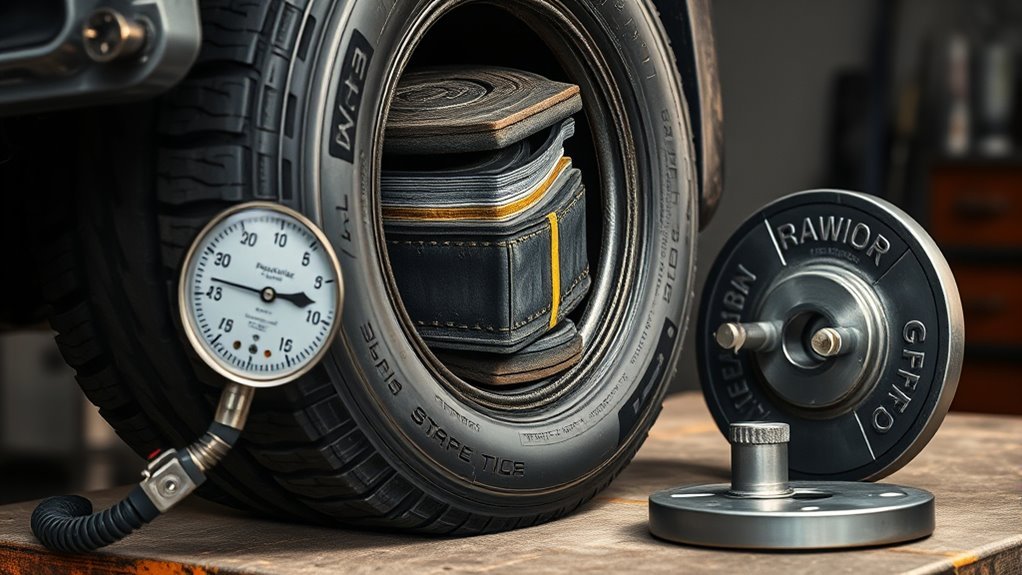
Because a tire’s ply rating defines its basic carcass strength and inflation sets the contact patch stiffness, the two work together to determine how much weight a tire can safely carry: higher ply ratings provide greater structural support, while higher inflation raises the pressure the tire can sustain and consequently its load capacity for a given load index. You check the sidewall load index and match inflation to the manufacturer’s specified pressure to achieve rated capacity. Modern materials let manufacturers meet load requirements with fewer plies, but you still must honor ply rating limits. Proper matching preserves tire performance and maintains load safety under dynamic conditions.
- Verify load index vs. required vehicle load.
- Inflate to specified pressure for rated capacity.
- Replace tires that show structural fatigue or incorrect ply.
Why Identical-Size Tires Can Have Different Ply or Load Ratings
Even when tires share the same size, you’ll find different ply and load ratings because manufacturers use varying construction materials and techniques that change strength without altering dimensions. Advanced materials—steel cords, rubberized textiles and varied cable counts and arrangements—let you carry more load at the same size, while inflation pressure dictates the actual load capacity you can safely use. Always verify the tire’s sidewall load index and ply or load rating to confirm compatibility with your vehicle and its required inflation.
Construction Material Differences
When you compare tires of the same size, differences in fabrics, steel belts, and cable arrangements let one model carry more weight than another; manufacturers use stronger synthetic cords and rubberized textiles where traditional cotton or nylon once sufficed, and strategically placed steel wires or belts boost load capacity without adding plies. You should note that ply materials and synthetic fibers change structural stiffness and distribute stress, yielding measurable strength variations. Advanced composites and modern construction techniques improve tire durability while enabling weight management and performance enhancements. Testing and rating methods vary by maker, so identical dimensions can conceal different internal architectures. Consider how cable count, belt placement, and rubber formulation affect the rated load for a given tire.
- Steel belts increase radial strength and load range
- Synthetic fibers reduce weight while raising stiffness
- Cable arrangement alters stress distribution and longevity
Inflation And Load Capacity
Any identical-size tire can carry different loads depending on construction, materials, and inflation pressure, so you should never assume size alone equals capacity. You need to check load index and Load Range because internal structure, advanced textiles or steel belts, tread design, and tire shape change load distribution and maximum capacity. Tire pressure directly alters supported weight: raising pressure increases load capacity within manufacturer limits. Two same-size, same-ply tires can thus have different ratings due to material strength and design. Always consult specs for load index at specified pressure. Monitor inflation to maintain intended load distribution across the contact patch and avoid overload.
| Factor | Effect |
|---|---|
| Construction | Alters strength |
| Inflation | Changes capacity |
| Tread/shape | Affects distribution |
| Load Range | Sets max load |
Choosing the Right Ply Rating for Towing, Hauling, or Daily Driving
If you’re towing, hauling, or simply driving daily, choose a ply rating that matches your vehicle’s load demands and manufacturer’s recommendations to maintain safety and performance. You’ll select higher ply ratings (6-ply or above) for towing and heavy hauling to improve durability, stability, and resistance to blowouts. For routine daily driving, a minimum 4-ply rating suffices while preserving comfort. Always verify the load index along with ply rating, and follow manufacturer guidance to confirm correct tire maintenance and balanced load distribution.
- For trailers and heavy loads: 6-ply+ and check load index.
- For mixed use (work by day, commute by night): consider upgraded ply rating.
- For everyday passenger use: 4-ply minimum, monitor tire maintenance.
Trade-Offs: Load Strength Versus Ride Comfort and Tire Life
After matching ply rating to your load needs and vehicle specs, consider how higher load strength affects ride quality and tire life. You’ll gain load flexibility and capacity with higher ply or load-range tires (for example, E/10-ply versus B/4-ply), but that increased strength reduces sidewall compliance and increases stiffness. That stiffer construction transfers more road shock to the chassis, degrading ride quality on rough surfaces and increasing driver fatigue. Higher-capacity tires also change tread-wear behavior: if inflation, alignment, or loading aren’t managed, wear becomes uneven and lifespan shortens despite higher load ratings. Choose tires that balance required load strength with adequate flexibility to preserve comfort and predictable wear patterns; prioritize proper inflation and alignment to mitigate the trade-offs.
Common Mistakes When Switching Ply-Rated Tires : and How to Avoid Them
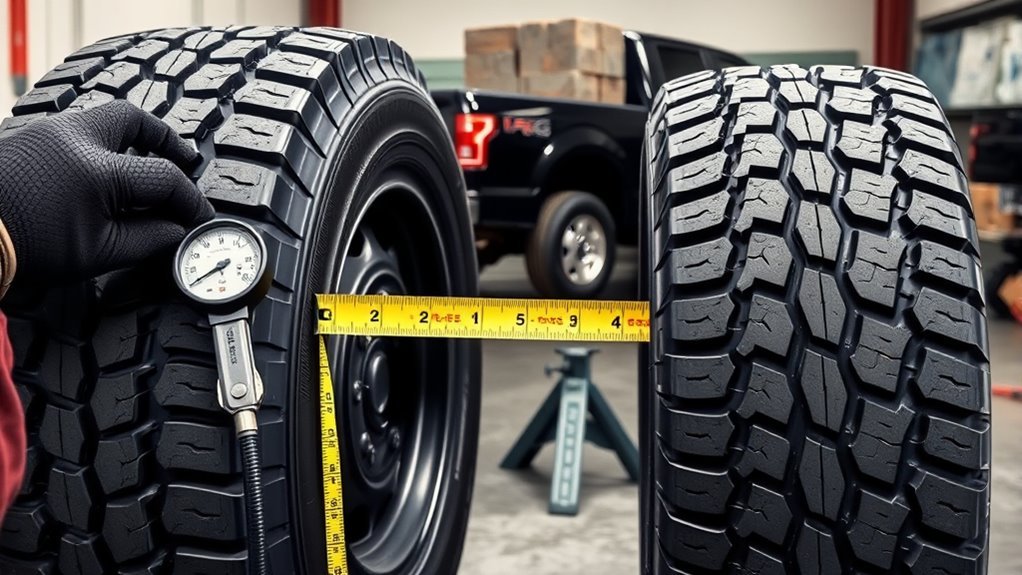
Mistakes in swapping ply-rated tires often stem from assumptions and oversight, so double-check ratings, load indexes, and intended use before you change rubber. You’ll avoid common failures by treating ply rating as one parameter, not proof of overall strength. Don’t assume more plies equals better performance; modern materials negate that ply rating myth. Always verify the load index on the sidewall and match it to manufacturer requirements for towing or heavy use. Cross-brand load range designations differ, so consult specs rather than labels. Follow tire maintenance tips: correct inflation, regular inspection, and load-aware driving to preserve load capacity and control.
Double-check ply and load-index specs — don’t trust ply counts alone; match sidewall ratings to intended use and maintenance.
- Don’t downgrade ply rating without checking load index and intended use.
- Don’t trust ply rating myths; review material and design specs.
- Don’t ignore sidewall markings and brand-specific load ranges.
Frequently Asked Questions
Is a 10-Ply or 12-Ply Tire Better?
Neither is inherently better; you’ll choose based on load capacity and tire durability. You’ll prefer 12-ply for higher standardized loads, but compare load range, construction, and intended use to guarantee peak strength and performance.
Which Is Better, 4 Ply or 8 Ply Tires?
You’ll pick 8-ply for heavy-duty needs — like a Model T hauling today — because it boosts tire durability and load capacity, improves off road performance, though 4-ply can offer softer road handling and everyday comfort.
What Load Range Is a 10-Ply Tire?
A 10-ply tire corresponds to Load Range E, so you’re getting roughly 3,750 pounds load capacity per tire; you’ll benefit from enhanced tire durability, engineered with modern materials rather than literal plies.
How to Tell if a Tire Is 6 Ply or 10-Ply?
Check the tire sidewall: you’ll find tire construction and ply ratings stamped (e.g., 6PR or 10PR). Read those markings and confirm with the manufacturer’s specs to verify load capacity and intended use.
Conclusion
You now know ply rating isn’t about literal plies but a standardized strength class that, with inflation, dictates load capacity. Want to picture it? Imagine a stack of invisible layers that lets your vehicle carry heavier loads safely. When choosing tires for towing, hauling, or daily driving, match the ply/load rating to your payload and inflation needs to avoid overload, premature wear, or compromised handling. Make the stronger tire choice; your safety depends on it.
Related Articles
How to Read Motorcycle Tire Size: Complete Breakdown
Often misunderstood, this guide decodes motorcycle tire sizes like 180/55ZR17—learn what each number and letter means to ensure safe, perfect fitment.
Read More
How to Read Bicycle Tire Size: Inches, Metric & ISO
Get the essential trick to decoding ETRTO/ISO codes so you’ll always pick rim-compatible tyres—discover what to check next.
Read More
How to Read Tire Size Numbers: Decode the Sidewall
Step-by-step guide to decode tire sidewalls—sizes, load, speed, DOT and winter symbols—so you’ll know what fits and when to replace.
Read More