What Is Rim Tape? Purpose & Why Every Wheel Needs It
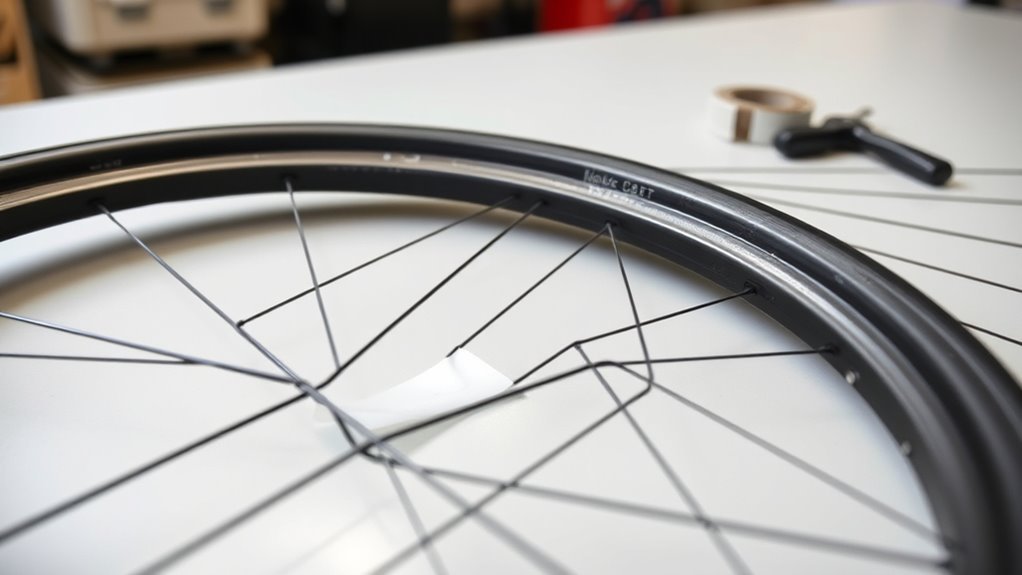
Rim tape is the thin barrier you put over spoke holes to protect your inner tube, seal tubeless systems, and stop sharp rim edges from causing flats. You’ll keep air where it belongs, improve tire seating, and prevent sudden punctures from exposed holes or rough bead beds. Different tapes suit roadside fixes, high-pressure clinchers, or airtight tubeless rims, so pick width and thickness to match your rim. Keep going to learn installation, maintenance, and troubleshooting.
Quick Answer: Do You Need Rim Tape?
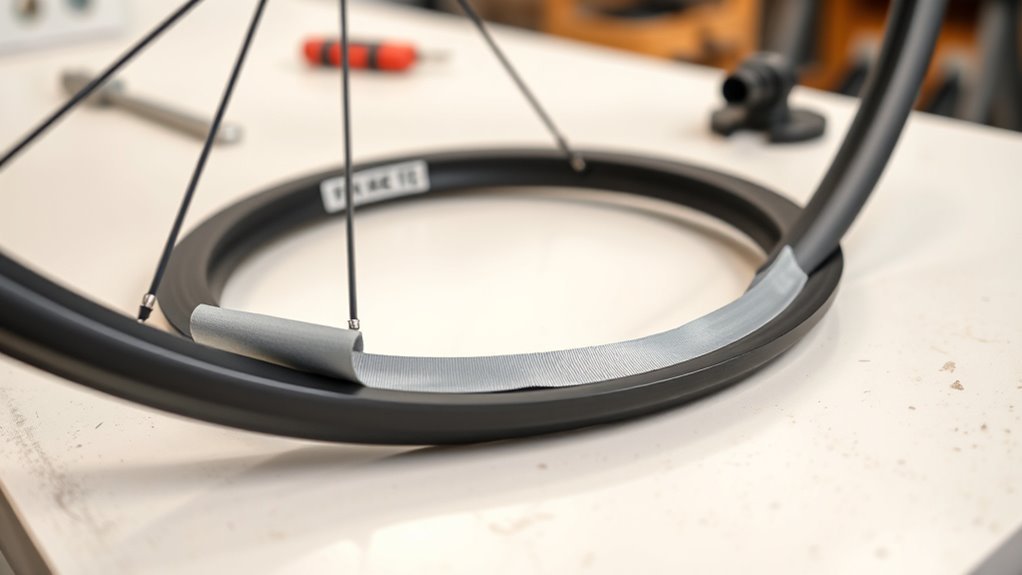
Wondering whether you need rim tape? Yes—if you ride with inner tubes or a tubeless setup, rim tape prevents spoke-hole punctures and helps seat the tire correctly. You’ll choose tape width slightly wider than the rim and thickness appropriate to the system: cloth-style for tubes, thicker adhesive or sealant-compatible tape for tubeless. The rim tape benefits include fewer flats, reliable tire seating, and, for tubeless, improved airtightness to hold pressure. Inspect tape whenever you remove tires and replace every 1–2 years or sooner if damaged; proper rim tape maintenance reduces leak risk and extends tube and tire life. Fit and adhesion matter—poorly applied or wrong-size tape defeats its protective and sealing functions.
What Rim Tape Does and Why It Matters
Now that you know whether you need rim tape, let’s look at what it actually does and why it matters. You rely on rim tape to protect the inner tube from spoke holes and sharp edges, sharply reducing punctures and flats. In tubeless setups it seals the rim bed to prevent air leaks, preserving tire pressure and consistent performance. For correct function the tape must completely cover all spoke holes and rough edges; partial coverage causes recurrent flats or mounting issues. Rim tape benefits include low cost and improved wheel reliability. Maintain rim tape longevity by inspecting it regularly and replacing it every 1–2 years or sooner if degraded. Proper installation and timely replacement keep your wheels safe and performant.
Rim Tape Types: Rubber, Cloth, Adhesive, Tubeless
Choosing the right rim tape comes down to matching material and width to your wheel and riding style: rubber tapes stretch and work for quick fixes, cloth tapes give higher pressure ratings and long-term durability, adhesive tapes simplify installation (available with or without pre-cut valve holes), and dedicated tubeless tapes are thicker and stickier to guarantee an airtight seal. You’ll use rubber tape when you need fast, temporary coverage—its rubber advantages are obvious for roadside repairs but it won’t last like other options. Cloth tape is your choice for clincher rims where cloth durability and higher pressure tolerance matter. Adhesive tape offers installation speed and reliable sealing—adhesive convenience—especially on tubeless setups. For tubeless systems, opt for tubeless performance: thicker, more adhesive tape that prevents leaks.
How Tape Width & Thickness Affect Clincher, Tubeless, and Hookless Rims
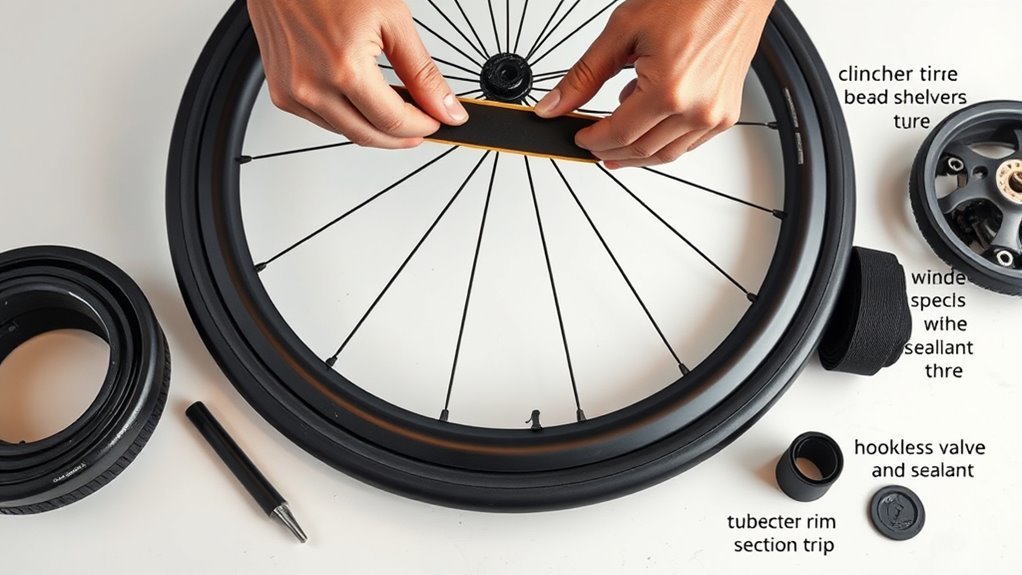
You’ll want rim tape wide enough to cover the bed plus 4–5 mm over each rim edge (for a 19.6 mm inner rim that means about 24–25 mm) so you don’t expose sharp edges or allow sealant to leak. Tape thickness controls bead seating and air retention: clinchers need the right thickness to set bead pressure correctly, tubeless systems demand thicker, adhesive tape for an airtight seal, and hookless rims tolerate less overhang—avoid tape over ~26 mm. Get width and thickness right and you’ll prevent flats, simplify mounting, and preserve ride safety.
Tape Width Matters
For a 19.6 mm inner rim, aim for 24–25 mm rim tape so it fully covers the rim bed and spoke holes without overlapping the bead seat; tape wider than 26 mm can interfere with tire seating while tape narrower than 23 mm risks exposing edges and leaks. You’ll choose tape based on tape compatibility with clincher, tubeless, or hookless rims and follow precise installation techniques to avoid wrinkles or gaps. Width controls coverage; correct sizing prevents bead interference and protects spoke holes.
- Use 24–25 mm for 19.6 mm rims to guarantee full coverage and reliable sealing.
- Verify tape compatibility with rim profile before purchase.
- Apply with steady tension, smooth overlaps, and no wrinkles.
- Re-check seating and inflation after installation to confirm a proper seal.
Tape Thickness Role
Think of tape thickness as the silent workhorse that determines sealing, durability, and tire fit: too thin and you risk leaks and punctures, too thick and you can impair bead seating or cause the tape to climb sidewalls on hookless rims. You should choose tape material and thickness to match rim type: clinchers need moderate thickness that won’t hinder bead seating but covers spoke holes; tubeless calls for thicker, highly adhesive tape to hold air under pressure and resist stretching during installation techniques like successive pulls and heat seating. For hookless rims, prioritize controlled thickness and correct width to prevent sidewall climb and instability. Inspect tape periodically—degraded thickness increases flats and pressure loss—replace when compressive properties or adhesion decline.
How to Measure, Cut, and Install Rim Tape (Step-by-Step)
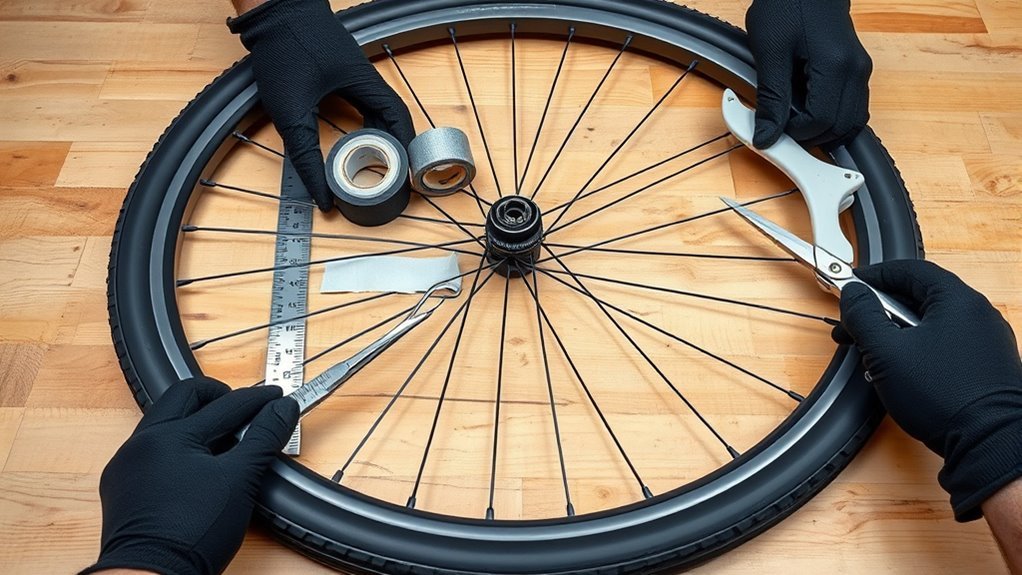
Start by measuring the rim bed width and inner circumference with a flexible tape or string so you know the correct tape width and length. Cut the tape slightly longer than the circumference, leaving about 1–2 cm for overlap, then trim the width to match the rim bed. Clean the rim, apply the tape opposite the valve hole, press firmly to eliminate bubbles, and cut a precise valve hole for a sealed fit.
Measure Rim Bed Width
Begin by measuring the rim bed width with a caliper or ruler so you can pick rim tape that fully covers the channel; accuracy matters because tape should be slightly wider than the measured inner width (road rims ≈15 mm, mountain rims ≈19 mm). You’ll record the rim width (inner measurement) to check tape compatibility and avoid under-coverage. Measure at multiple points around the bed to catch variances and note the valve hole position for later alignment. Use that measurement to select tape slightly wider than the largest reading.
- Use digital calipers for ±0.1 mm precision.
- Check measurements across three spots on the bed.
- Choose tape material rated for your rim profile.
- Note valve location to align tape and cut later.
Cut Tape To Length
Measure the rim circumference with a flexible tape or a length of string, clean the bed thoroughly, then add a small overlap before cutting the tape so it fully covers the channel and spoke holes. You’ll choose tape materials compatible with your rim profile—cloth, PVC, or adhesive polymer—based on durability and flex. Use the measured length plus 5–10 mm overlap; mark and cut squarely with sharp scissors or a utility knife for a clean edge. Begin installation opposite the valve hole, align the tape centrally over the bed, and press firmly as you wrap to avoid bubbles and gaps. Trim valve opening precisely. Follow installation techniques that guarantee coverage of spoke holes and sharp edges, and inspect periodically for wear, replacing every 1–2 years.
Press And Seal Tape
A clean, accurately cut strip of rim tape is essential for an airtight seal; you’ll measure the rim circumference with a flexible tape, add a few millimeters for overlap, and account for tape width before cutting. Clean the rim with alcohol wipes, then lay the press-and-seal tape opposite the valve hole. Press firmly as you apply to eliminate bubbles and guarantee full coverage of spoke holes — consistent press performance maximizes seal effectiveness. Trim the tape so the ends overlap slightly at the valve area. Cut a precise valve hole that aligns with the rim’s valve seat to avoid leaks. Inspect the bond and re-press any lifted edges before mounting the tube or tubeless setup.
- Measure circumference with flexible tape
- Clean rim thoroughly
- Apply from opposite valve, press firmly
- Cut precise valve hole
When to Replace Rim Tape: Signs and Service Intervals
Inspect rim tape whenever you remove a tire or tube and replace it immediately if you see tears, holes, peeling, or sections that have shifted—those defects let spoke holes and sharp edges puncture tubes. For routine rim tape maintenance, note visible damage, adhesive failure, or movement during service; those are immediate replace triggers. If you get frequent or unexplained flats, inspect tape as a likely cause and swap it out. As a preventive interval, plan replacement every 1–2 years to address material degradation even when tape appears intact—this is the typical rim tape lifespan guidance. When converting to tubeless, upgrade to tubeless-specific rim tape for an airtight seal. Keep records of replacement dates to inform future service.
Troubleshooting Recurring Flats, Mounting Issues, and Tubeless Leaks
When recurring flats, stubborn bead seating, or slow tubeless leaks keep happening, start by checking the rim tape — poor coverage, wrong width/thickness, or adhesive failure often underlie these issues. You’ll want to verify full coverage of spoke holes and confirm the tape type matches tubeless or clincher requirements. If you find tears, peeling, or gaps, replace the tape with correct width/thickness to improve flat prevention and bead seating. Use installation tips: center the tape, maintain proper tension, and avoid wrinkles that create leak paths. For tubeless, confirm airtight adhesion before adding sealant; test by seating and inflating to working pressure. Regular inspection and correct tape selection stop repeated flats and mounting problems.
- Inspect for tears, gaps, or misalignment
- Confirm tape width/thickness match rim
- Re-seat bead after replacing tape
- Use tubeless-specific tape and adhesive
Frequently Asked Questions
What’s the Point of Rim Tape?
Rim tape prevents punctures and seals tubeless setups, so you avoid flats and air loss. For rim tape benefits, choose correct width/thickness; installation tips: clean rim bed, center tape precisely, press firmly and inspect regularly.
How Often Does Rim Tape Need to Be Replaced?
Think of a watchband snapping after years; you should replace rim tape every 1–2 years. You’ll monitor rim tape durability, inspect rim tape materials, watch for tears or frequent flats, and swap when degraded or shifting.
How Do I Know if My Rim Tape Is Bad?
You’ll know rim tape is bad if you see tears, holes, peeling, shifted tape after rim tape installation, frequent rapid flats without visible tube punctures, difficulty mounting tires, or brittle/degraded rim tape materials needing replacement.
Conclusion
Think of rim tape as the quiet bridge in a busy city—unseen, but keeping traffic flowing. You’ll choose the right material, width, and thickness to match your rim and tire, install it carefully, and replace it before wear or leaks show. Treat it as routine maintenance: simple, technical, and essential. Do that, and your wheels will run smoothly, avoiding surprises that grind your ride to a halt.
Related Articles
How to Read Motorcycle Tire Size: Complete Breakdown
Often misunderstood, this guide decodes motorcycle tire sizes like 180/55ZR17—learn what each number and letter means to ensure safe, perfect fitment.
Read More
How to Read Bicycle Tire Size: Inches, Metric & ISO
Get the essential trick to decoding ETRTO/ISO codes so you’ll always pick rim-compatible tyres—discover what to check next.
Read More
How to Read Tire Size Numbers: Decode the Sidewall
Step-by-step guide to decode tire sidewalls—sizes, load, speed, DOT and winter symbols—so you’ll know what fits and when to replace.
Read More