ETRTO Tire Sizing Explained: How to Read Codes and Match Tires to Rims
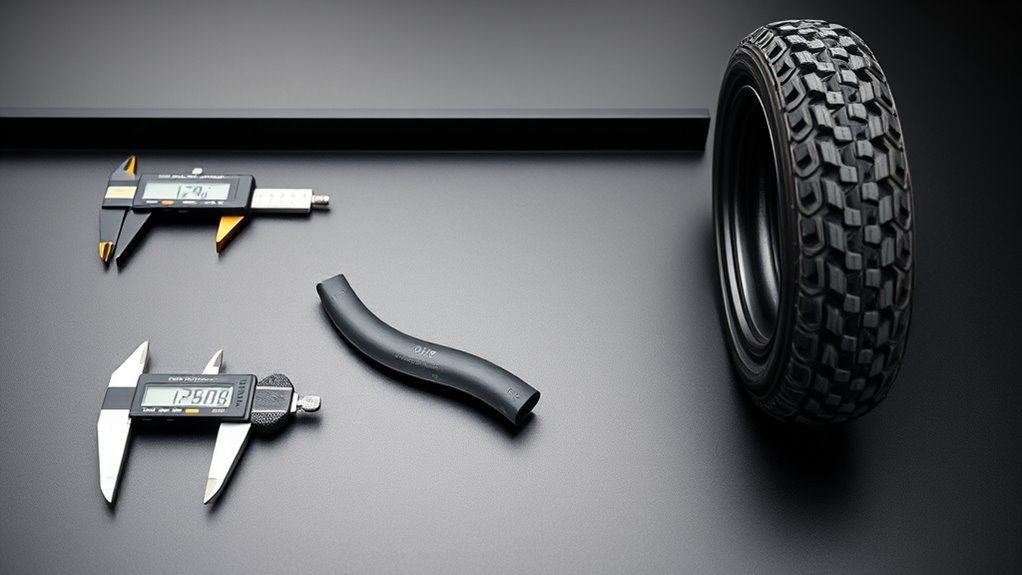
ETRTO tire sizing tells you the exact tyre width and bead-seat diameter in millimetres, so you can match tyres, rims, and tubes reliably. You’ll see markings like 28-622 (width, then BSD). The first number is the tread width; the second is the rim bead diameter. Match those numbers to rim and tube specs, allow at least ~6 mm clearance, and respect rim internal-width limits and pressure ratings. Keep reading to learn how rim width, tubulars, and historical sizes affect fit.
What ETRTO Tire Sizing Tells You (Quick Summary)
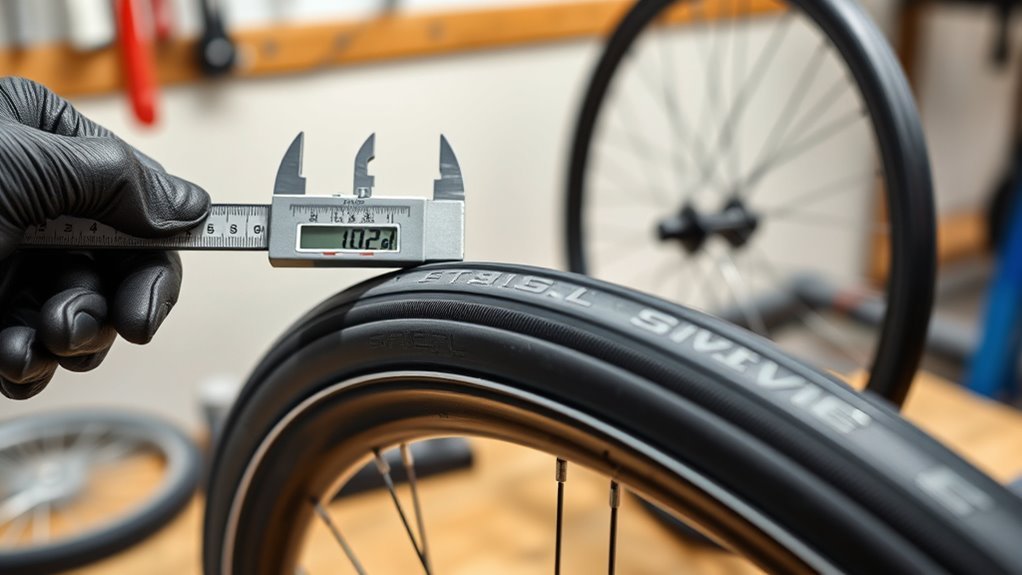
An ETRTO size like 28-622 tells you exactly what the tire measures and which rim it fits. The 28 is the tire width in millimeters. The 622 is the bead (rim) diameter in millimeters.
ETRTO stands for the European Tyre and Rim Technical Organisation. Their standardised two-number system guarantees compatibility and safety across manufacturers. That uniformity cuts down on fitment errors that hurt tire performance and raise risk.
When choosing tires, check the bead diameter first for a primary match. Then confirm the width leaves enough room. Guidelines recommend at least 6 mm clearance around the tire so it won’t rub on your frame or fork. With these basics down, you can select compatible tires and rims with confidence.
How to Read ETRTO Markings on Tyre, Rim, and Tube
Reading ETRTO markings on a tyre, rim, or tube is simple. The format is “width–bead diameter” in millimetres. For example, 28-622 means the tyre’s section width is 28 mm and the rim bead-seat diameter (BSD) is 622 mm.
Here’s how to use it: read the tyre marking to confirm tire width and BSD, check the rim’s stamped diameter, then match the tube to the same pair. Because ETRTO is standardised, it works across manufacturers. Mismatched rim diameters or wrong tire widths will cause poor fit or create a safety hazard.
| Component | Marking example | Meaning |
|---|---|---|
| Tyre | 28-622 | Section tire width – BSD |
| Rim | 622 | Bead-seat rim diameter |
| Tube | 28-622 | Compatible width and BSD |
Common ETRTO Codes and Their Wheel-Size Names (622, 584, 559…)
Numbers like 622, 584, and 559 are ETRTO bead diameters that map directly to common wheel-size names: 700C, 650B, and 26-inch. The second number in any ETRTO code is what tells you rim compatibility, regardless of the tire’s nominal inch or marketing label.
You read ETRTO as width-bead diameter (e.g., 32-622). The bead diameter (622, 584, 559) is the definitive number for rim fit. Width varies with tire construction and rim internal width.
ETRTO standardisation solved the confusion caused by inch-based names during tire evolution, giving everyone a universal system. When selecting tires, match the bead diameter first, then pick the width based on clearance and performance needs. That approach minimises fit errors and keeps things safe and interchangeable.
ETRTO to Traditional Size Quick Reference
| ETRTO BSD (mm) | Traditional Name | Common Use |
|---|---|---|
| 622 | 700C / 29″ | Road, gravel, 29er MTB |
| 584 | 650B / 27.5″ | Gravel, mountain bike |
| 559 | 26″ | Traditional mountain bike |
| 507 | 24″ | Junior bikes, some wheelchairs |
| 406 | 20″ | BMX, folding bikes |
| 305 | 16″ | Small folding bikes, kids’ bikes |
How Rim Internal Width Changes Actual Tyre Width and Fit
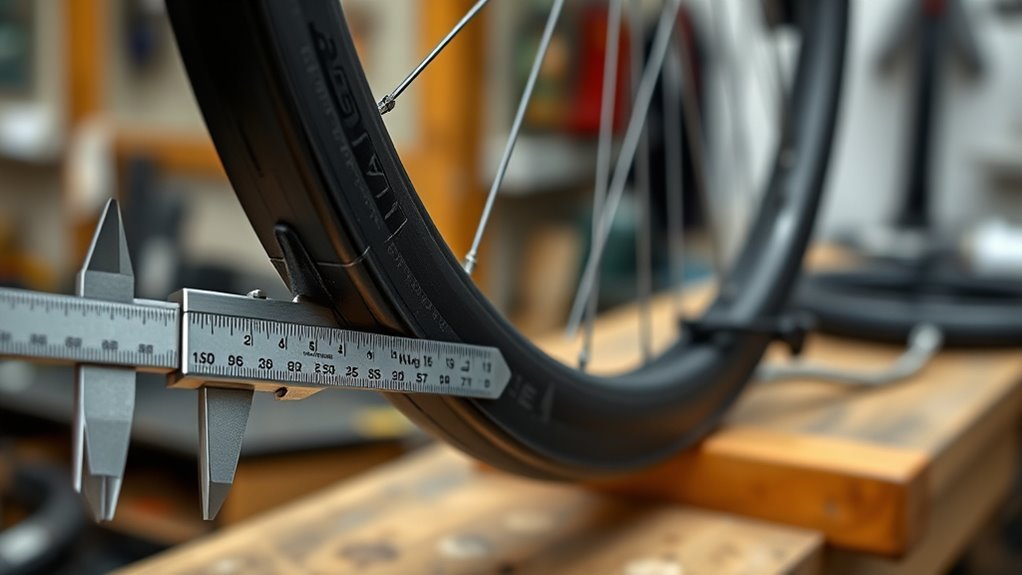
Once you’ve matched the bead diameter using the ETRTO code, you need to think about rim internal width. It changes a tire’s mounted profile and how it performs.
The width printed on the sidewall is a nominal value. On a real wheel, clincher tire width typically shifts by about 0.4 mm for every 1 mm change in rim internal width. So a wider rim makes the tire wider, improving stability and grip. A narrower rim pinches the tire profile and can hurt handling.
For the best results, pick tires whose nominal widths align with the rim’s internal measurement and follow ETRTO guidance on allowed combinations. Good matching reduces pinch flats and preserves the handling characteristics the tire was designed for. If you need exact numbers, measure the mounted width directly.
ETRTO Safety Limits: Max Tyre Width, Brake/Frame Clearance, and Pressure
Safety margins in ETRTO rules keep tyres, rims, and frames working together without interference or overload.
Follow maximum tyre width limits tied to rim compatibility: the tyre’s inflated width should be between 1.4 and 2.2 times the rim’s internal width. Staying within that ratio preserves tyre safety, handling, and bead security.
Keep at least 6 mm clearance around the tyre from brakes and frame. This prevents rubbing during suspension compression, wheel flex, or debris build-up.
Only inflate to pressures allowed by both tyre and rim markings. Whichever maximum is lower is the one that governs safe inflation. ETRTO’s approach forces you to match tyre dimensions to rim specs and frame clearances, reducing the risk of mechanical failure.
Measure Your Bike: Axle-to-Brake, Crown and Seatstay Clearances, and Rim Specs
Before picking a tyre size, measure three key areas on your bike:
Axle-to-brake distance: From the hub axle to the center of the brake shoe. Measure with the wheel centered and verify that brake shoes contact the rim centerline.
Crown and seatstay clearances: You need a minimum of 10 mm free. If you plan to fit fenders, aim for 20 mm. Check clearance around the widest projected tyre profile.
Rim specs: Read the internal width and max pressure stamped on the rim. Match tyre recommendations to these numbers to avoid unsafe inflation.
| What to measure | Why it matters |
|---|---|
| Axle positioning | Guarantees brake alignment |
| Crown clearance | Prevents frame rub |
| Rim specs | Limits safe tyre size and pressure |
Choosing Replacements: Matching ETRTO Codes, Tubed vs Tubeless, and Rim Compatibility
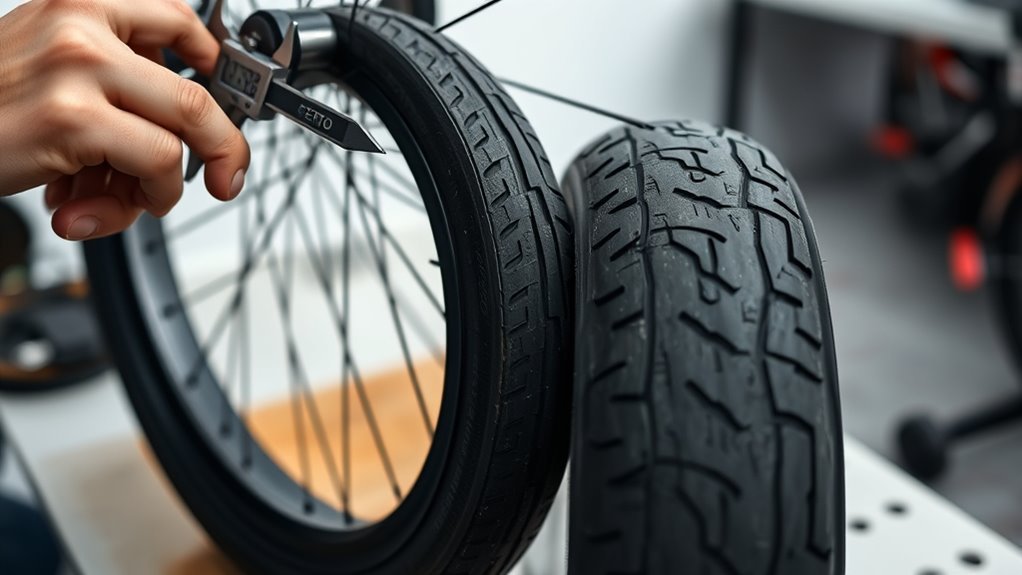
Now that you’ve measured your bike, it’s time to pick replacement tyres. Match ETRTO codes and confirm tube or tubeless compatibility with the rim.
Match the two-number ETRTO pair (width and bead diameter) to guarantee bead seating and correct tire performance. For example, 28-622 fits a 622 mm bead rim with a nominal 28 mm width.
For tubed setups, select inner tubes sized to the tire’s ETRTO width and diameter. For tubeless, only use tubeless-ready tyres on tubeless-compatible rims to get an airtight seal.
Always verify rim internal width against the tyre width and the rim manufacturer’s max recommended tire size. Going over that limit risks poor handling and compromises rim safety and brake/frame clearances.
Troubleshooting Size Mismatches and Conversion Pitfalls (Historical Sizes, Tubulars)
When you hit a size mismatch, start by confirming the actual bead diameter rather than relying on historical inch or French labels. For example, 700A and 700B have different bead diameters than modern 700C (642 mm and 635 mm vs 622 mm). Tubular tires use dedicated rims and mount differently, so clincher ETRTO codes don’t apply to them. Always measure bead seat diameter and effective rim width to avoid conversion errors that compromise fit and safety.
Historical Size Confusion
Historical French and inch-based size names once guided tire choices, but they often mislead today. Their stated diameters don’t match modern ETRTO bead-seat measurements. You should rely on ETRTO codes (e.g., 32-590) rather than nominal names.
Multiple naming schemes exist: French, inch, and proprietary labels that reflect older manufacturing practices, not actual bead-seat diameters. These legacy names can produce mismatches of several millimeters, affecting seating, clearance, and safety.
Always read the ETRTO pair (width and BSD) stamped on both tire and rim. When restoring vintage wheels or sourcing obsolete sizes, verify BSD numerically instead of trusting nominal labels. Sheldon Brown’s tire sizing reference is a useful resource for cross-referencing old and new sizing systems. That verification prevents incompatible pairings and reduces conversion headaches.
Tubular Rim Compatibility
Tubulars don’t seat like clinchers. They rely on exact bead-seat diameter and rim bed width to glue or sew the tire reliably.
Verify ETRTO two-number sizing (e.g., 25-622) against the rim’s measured diameter and internal width. Older tubular designations can differ by millimeters and lead to unsafe fits.
Inspect the tubular tire construction for glueing surfaces, casing profile, and whether the base is sewn or taped. Confirm rim material compatibility, since aluminum, carbon, and steel beds accept adhesives differently and may need specific prep or primer.
Final step: test-fit and align the tire before the adhesive cures. This avoids misalignment, handling issues, or outright failure.
Conversion Measurement Errors
Historical labels and inch-based conversions often don’t translate cleanly to modern ETRTO values. Verify every measurement instead of assuming compatibility.
Measure bead seat diameter and tire width in millimeters and compare directly to ETRTO markings. Inch-based labels frequently introduce sizing gaps that mislead fit decisions.
For tubulars, confirm rim type and nominal dimensions since they lack a standard bead and rely on precise circumference matching. Don’t infer fit from rim diameter alone.
Cross-reference original tire stamps, rim specifications, and current ETRTO charts. If any value differs, re-evaluate rather than forcing a fit. Write down all measured values before purchase or mounting to prevent safety risks and avoid repeat conversion errors.
Frequently Asked Questions
What Does ETRTO Size Mean?
ETRTO size is a tire’s width and bead diameter in millimetres (e.g., 28-622). The system was created for standardisation and offers precise compatibility, safety, and simplified tyre-to-rim matching across manufacturers and regions.
What Does 40 622 Mean?
40-622 means the tire is 40 mm wide with a 622 mm bead diameter. These sizing standards guarantee rim compatibility, so you can match tires to wheels without guesswork.
How to Calculate ETRTO?
Measure tire width and rim bead diameter in millimeters, then record them as width-diameter (e.g., 40-622). Following ETRTO standards guarantees tire compatibility across rims and manufacturers for safe, precise fitting.
Conclusion
ETRTO gives you a clear, numerical language for tyre fit, so use it. Match the two-number code (tyre width × bead-seat diameter) to your rim and tube, then check rim internal width and frame/brake clearances before buying. Respect ETRTO safety limits for maximum width and pressure. Measure axle-to-brake, crown, and seatstay gaps if you’re unsure. Treat historical names cautiously since they’re labels, not specs. Always prioritise the ETRTO code as your north star.
Related Articles
How to Read Motorcycle Tire Size: Complete Breakdown
Often misunderstood, this guide decodes motorcycle tire sizes like 180/55ZR17—learn what each number and letter means to ensure safe, perfect fitment.
Read More
How to Read Bicycle Tire Size: Inches, Metric & ISO
Get the essential trick to decoding ETRTO/ISO codes so you’ll always pick rim-compatible tyres—discover what to check next.
Read More
How to Read Tire Size Numbers: Decode the Sidewall
Step-by-step guide to decode tire sidewalls—sizes, load, speed, DOT and winter symbols—so you’ll know what fits and when to replace.
Read More