What Is a Tire Pressure Monitoring System (TPMS)?
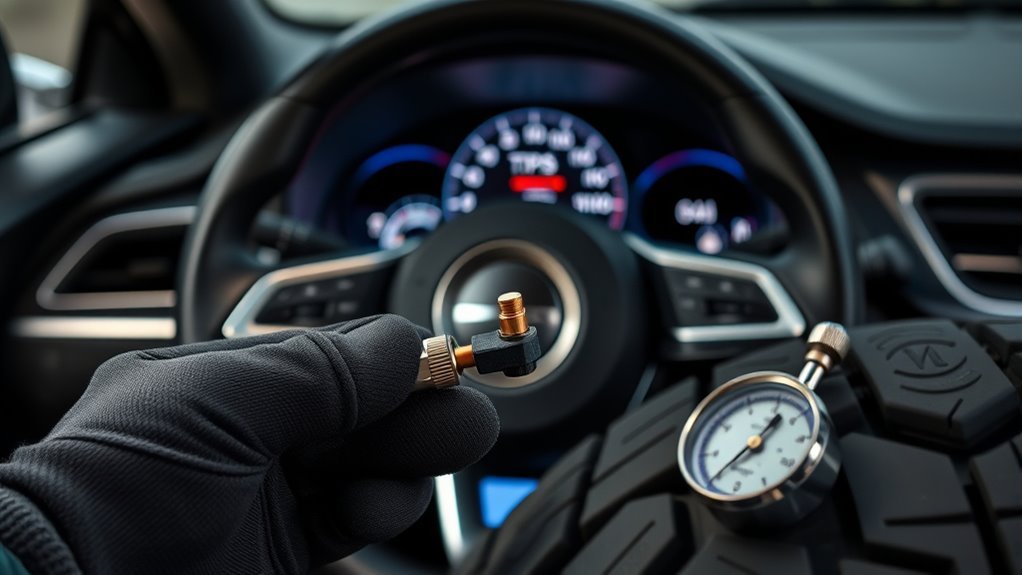
A Tire Pressure Monitoring System (TPMS) watches each tire’s air pressure in real time and warns you when pressure falls below safe limits, reducing blowout risk, improving handling, and cutting fuel waste. Direct TPMS uses in‑tire sensors for exact per‑tire pressure and temperature data; indirect TPMS infers under‑inflation from wheel‑speed signals. Sensors typically last 5–10 years and need replacement when batteries die. Keep pressures checked regularly, and continue for practical tips, troubleshooting, and cost details.
What TPMS Is and Why It Matters
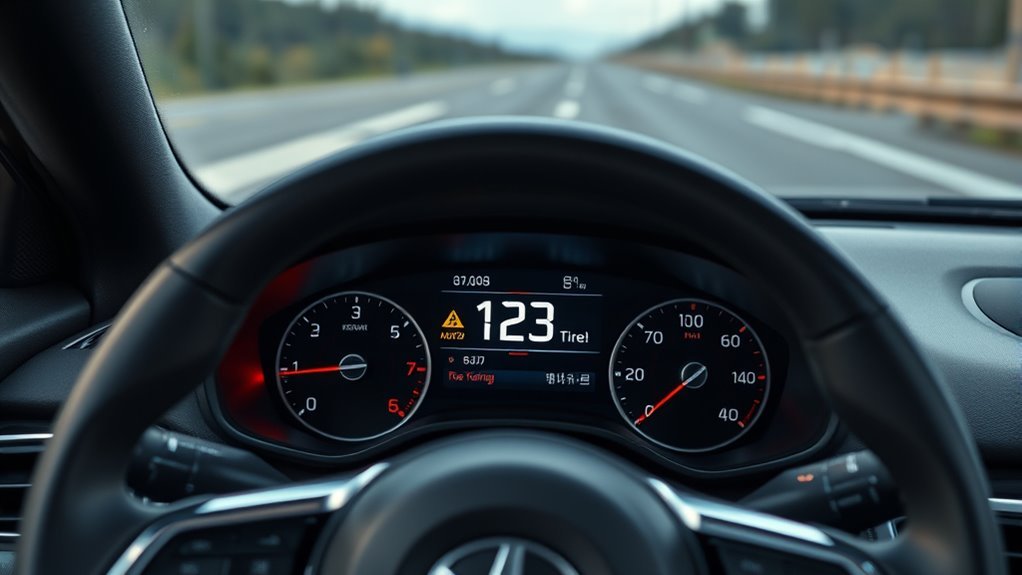
A Tire Pressure Monitoring System (TPMS) is an electronic system that continuously measures tire air pressure and alerts you when pressure deviates from manufacturer specifications, directly improving vehicle safety and performance. You rely on TPMS importance for proactive tire safety: it detects under-inflation that raises rolling resistance, reduces fuel efficiency (up to about $0.11/gal loss), and increases blowout risk. U.S. regulation (FMVSS 138) mandated TPMS on light vehicles after Sept 1, 2007, requiring warnings at 25% under-inflation. Two technical approaches exist: direct sensors in each wheel or indirect estimation via ABS wheel-speed sensors. You’ll use TPMS alerts to prioritize inspections, maintain correct pressure, and reduce accident likelihood. Systematic monitoring consequently delivers measurable safety and performance gains.
How Direct TPMS Works (What It Shows You)
Having covered why TPMS matters, let’s look at how direct systems present tire data so you can act on it. Direct TPMS uses sensor technology mounted inside each tire to measure real-time pressure and temperature. Each sensor transmits a unique serial number and live readings wirelessly to the vehicle’s control module, which maps values to specific wheel positions. The display shows numerical PSI (or bar) per tire and may flag high temperature deviations. The system triggers pressure alerts via dashboard indicators when values fall below or exceed manufacturer thresholds, enabling prompt corrective action. Sensor batteries typically last 5–10 years; when a battery dies you replace the entire sensor to restore full functionality and identification.
How Indirect TPMS Works (When It’s Used)
When your vehicle detects a wheel spinning faster than the others, indirect TPMS infers a loss of tire pressure by comparing ABS wheel-speed sensor data and vehicle speed patterns. You rely on wheel speed and rotation comparison across all wheels to detect under-inflation without pressure sensors. The system leverages existing ABS sensors, minimizes hardware cost, and flags suspected low pressure through algorithms that monitor relative rotation rates. You must manually reset the system after inflation or tire rotation to maintain accuracy. Note limitations: it provides no absolute pressure values and can be confused by uneven wear or mixed tire sizes.
| Feature | Implication |
|---|---|
| Uses ABS sensors | Lower cost, simpler install |
| Rotation comparison | Detects relative under-inflation |
| Manual reset required | Maintenance dependent for accuracy |
Direct vs. Indirect TPMS: Which Should You Choose?

When choosing between direct and indirect TPMS, you should weigh precision against cost and maintenance. Direct TPMS gives real-time, per-tire pressure readings and alerts, with sensor batteries lasting ~7–10 years but requiring full sensor replacement when depleted. Indirect TPMS is cheaper and uses existing wheel-speed sensors, but it infers under-inflation, can miss gradual leaks, and needs manual resets after tire work.
Direct TPMS Benefits
Choose direct TPMS (dTPMS) when you want precise, real-time tire pressure and temperature for each wheel—its sensors measure actual pressure rather than estimating it from wheel speed, so alerts are faster and more accurate. dTPMS typically provides individual-tire data, maintains accuracy through tire rotations and replacements without requiring resets, and uses sensor batteries that last roughly 7–10 years.
You’ll get measurable safety enhancements and improved maintenance efficiency: immediate low-pressure alerts reduce blowout risk and let you schedule timely service, while long sensor life lowers recurring maintenance tasks. Data-driven fleet management benefits from per-tire telemetry and trend analysis.
- Real-time, per-wheel pressure and temperature monitoring.
- Consistent accuracy after rotations/replacements; no resets.
- Sensor battery life ~7–10 years; lower long-term maintenance costs.
Indirect TPMS Tradeoffs
Although indirect TPMS uses wheel speed sensors rather than in-tire sensors, it still provides a cost-effective option for monitoring tire pressure by detecting relative rotation differences to infer under-inflation. You’ll save on initial hardware and avoid sensor battery replacements, lowering long-term maintenance costs — key cost considerations when comparing systems. However, indirect TPMS has inherent accuracy issues: it estimates pressure from rotational speed, so differing tire sizes or uneven wear can produce false alerts or miss under-inflation. It also requires manual reset after inflation or rotation, whereas direct TPMS auto-adjusts. Choose indirect if budget and low maintenance matter and your tires are uniform; choose direct if you need precise, per-tire readings and can accept higher upfront expense.
TPMS Warning Light: Step-by-Step Actions
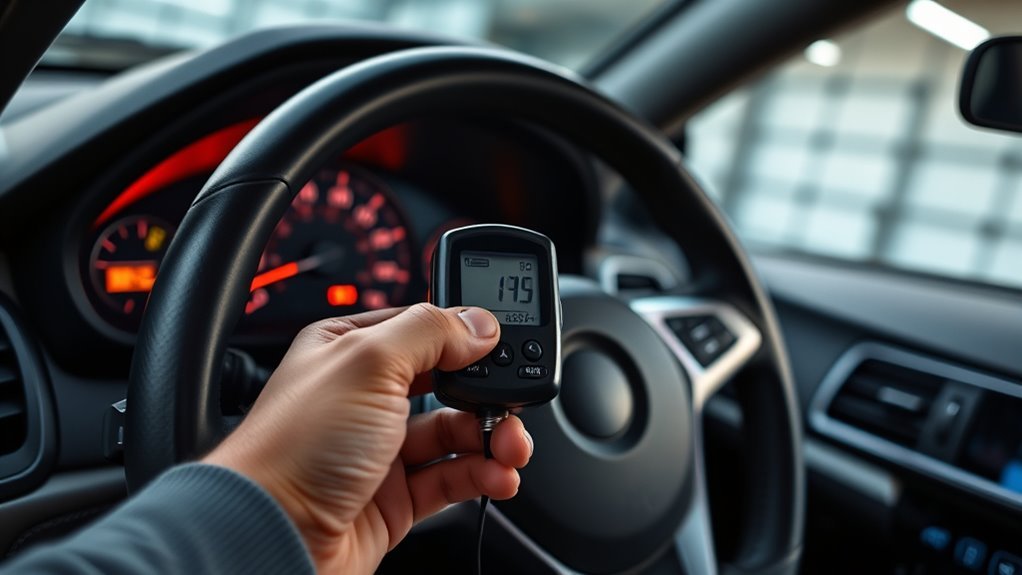
When the horseshoe-shaped TPMS light comes on, you should safely pull over and check all four tires with a pressure gauge against the manufacturer’s PSI. If any tire is 25% or more underinflated, inflate to spec and then reset the TPMS per your owner’s manual; if the light blinks, inspect sensors for dead batteries or corrosion. Perform monthly pressure checks to reduce repeat alerts and maintain peak performance.
Check Tires Immediately
If the TPMS warning light comes on, pull over to a safe spot and inspect all four tires immediately, because the system signals a drop in pressure of roughly 25% or more that can compromise handling and tire integrity. You’ll perform quick safety checks: visual inspection for obvious damage, verify tire pressure with a calibrated gauge, and compare readings to the manufacturer’s PSI. Follow this numeric procedure:
- Check: visually scan tread and sidewall for punctures, bulges, or debris; note the low tire(s).
- Measure: use a reliable tire pressure gauge on all four tires and record PSI versus the door-jamb/owner’s manual specification.
- Correct: inflate low tires to spec, retest PSI, inspect for leaks; if light persists, seek professional service.
Reset Or Inspect Sensors
After you’ve confirmed and corrected tire pressures, the next step is to reset or inspect the TPMS to clear the warning and verify sensor function. Consult your owner’s manual for the model-specific reset procedure—some vehicles require a button sequence, others an onboard menu or driving cycle. If the light stays on or blinks, perform basic system diagnostics: scan for fault codes and note blinking patterns that indicate sensor error. Check sensor calibration and battery age; sensors typically need replacement every 7–10 years. If you can’t reset the light or diagnostics show faults, schedule a technician inspection to test RF transmission, replace faulty sensors, and recalibrate the system. Document PSI readings and diagnostic codes for efficient troubleshooting and repair.
TPMS Upkeep: Costs, Common Problems, and Fixes
Because sensor batteries are non-serviceable and usually last 7–10 years, you’ll need scheduled replacements to keep a TPMS reliable. Use TPMS maintenance tips: track sensor age, budget sensor replacement costs ($50–$200 each installed), and perform routine pressure checks to extend sensor and tire life. Common faults include blinking warning lights (system faults, not just low pressure), dead/damaged sensors, valve-stem corrosion, and errors after tire rotation on indirect systems.
- Diagnose: read codes with a scan tool to identify failed sensor IDs or module faults.
- Repair: replace corroded valve stems and faulty sensors; factor labor and sensor replacement costs.
- Verify: reset or relearn sensor IDs and confirm stable pressure readings.
Frequently Asked Questions
How Long Do TPMS Sensors Last?
They typically last about 7 to 10 years; sensor lifespan varies with usage and environment. You should follow maintenance tips: inspect sensors regularly, avoid corrosion, check seals after tire service, and replace all aging sensors proactively.
Conclusion
You now know TPMS keeps tire pressure monitored like a vigilant sentinel, whether by direct sensors measuring psi or indirect systems inferring pressure from wheel speed. Use TPMS data to act: stop, inspect, inflate to manufacturer psi, retorque valve components, or replace faulty sensors. Track maintenance costs and sensor life to avoid failures. Treat the warning light as immediate actionable data, not a suggestion—follow protocol systematically to preserve safety, fuel economy, and tire life.
Related Articles
How to Read Motorcycle Tire Size: Complete Breakdown
Often misunderstood, this guide decodes motorcycle tire sizes like 180/55ZR17—learn what each number and letter means to ensure safe, perfect fitment.
Read More
How to Read Bicycle Tire Size: Inches, Metric & ISO
Get the essential trick to decoding ETRTO/ISO codes so you’ll always pick rim-compatible tyres—discover what to check next.
Read More
How to Read Tire Size Numbers: Decode the Sidewall
Step-by-step guide to decode tire sidewalls—sizes, load, speed, DOT and winter symbols—so you’ll know what fits and when to replace.
Read More