What Is a Tire Boot? Emergency Repair Method Explained
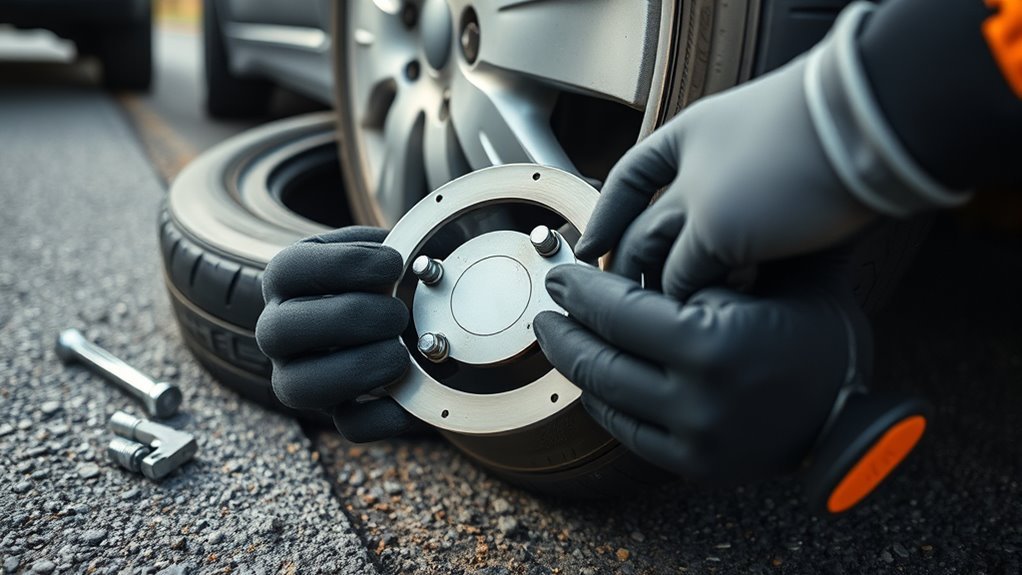
A tire boot is a thin liner you slip between the tube and tire carcass to stop the tube from bulging through a cut or sidewall tear, letting you limp home safely. You’ll remove the wheel, position a boot over the damage, smooth it flat to avoid folds, then partially inflate the tube to seat the boot and check for leaks. It’s for small cuts, not major structural failures, and here’s more on when and how to use one.
Fit a Tire Boot: Step-by-Step
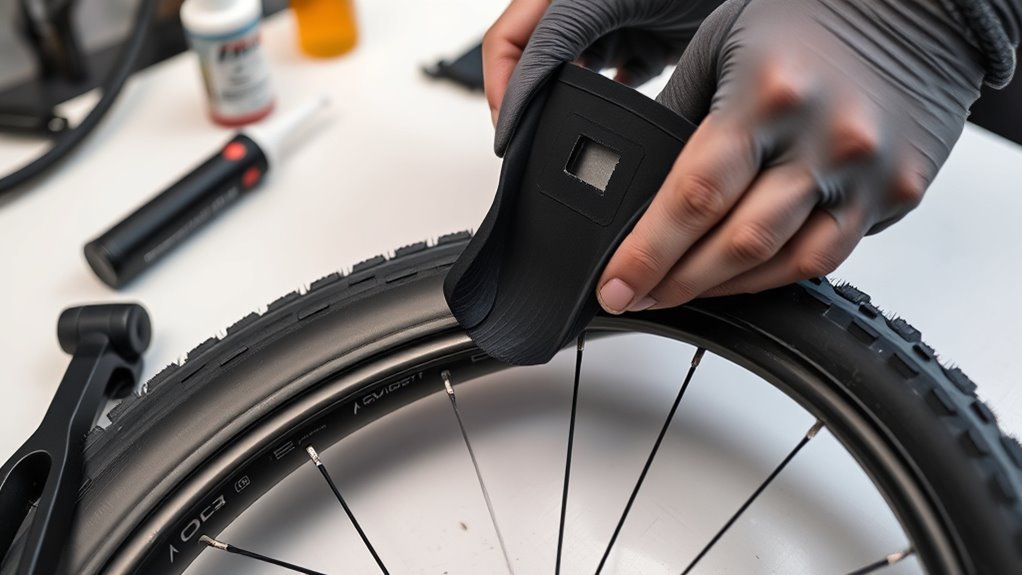
Before you start, remove the wheel and tire so you can inspect the inner surface; you’ll need clear access to the cut or puncture to fit the boot correctly. You locate the damage, choose an appropriate tire boot type for size and material, and slide the boot between the inner tube and tire carcass so it fully covers the hole. Press the boot flat against the inner surface, avoiding folds that could force the tube into the breach. Partially inflate the tube to about 80% to seat the boot and verify no leaks. Treat this as an emergency repair: ride only to a safe place or home. Once returned, replace the damaged tire or perform a permanent patch repair.
Quick Answer: When to Use a Tire Boot (and When Not To)
Now that you’ve fitted a temporary boot and confirmed the tube holds air, know when a boot is appropriate and when it isn’t. Use a tire boot when a small cut or sidewall tear would otherwise let the tube bulge or chafe; it provides immediate support and prevents sudden failure so you can reach a repair point. Don’t use one on tubeless systems or for large structural tire damage.
A tire boot is a temporary fix for small cuts or sidewall tears—use it to prevent tube bulging, not for tubeless or major damage.
- Appropriate: small cuts/sidewall punctures that exceed tube capacity.
- Inappropriate: tubeless tires relying on sealant, or major tread/structural failure.
- Inspect: verify the boot material doesn’t abrade the tube and that the tire casing still supports safe riding.
Treat boots as temporary repairs only; plan a permanent replacement or professional repair promptly.
Best Shop and DIY Tire‑Boot Materials to Carry
When you want reliable, compact options for roadside tire repairs, pack both a small commercial boot and a couple DIY backups so you’re ready for anything. You’ll rely on commercial tire boots like Park Tool’s sticky-backed patch for quick, clean installs on cuts and small tears. For heavier damage, carry duct tape or polymer banknotes; they give extra structural support. For ultralight or unexpected fixes, keep homemade tire boots cut from milk jugs, old tire sidewalls, or energy bar wrappers. Store materials flat in your pack with a small razor and alcohol wipe.
| Material | Use case |
|---|---|
| Park Tool boot (commercial tire boots) | Fast, adhesive repair |
| Duct tape / polymer notes | Reinforcement for larger tears |
| Milk jug / wrapper (homemade tire boots) | Lightweight emergency patch |
| Old tire piece | Durable, heavy-duty boot |
How a Boot Stops Your Tube From Popping
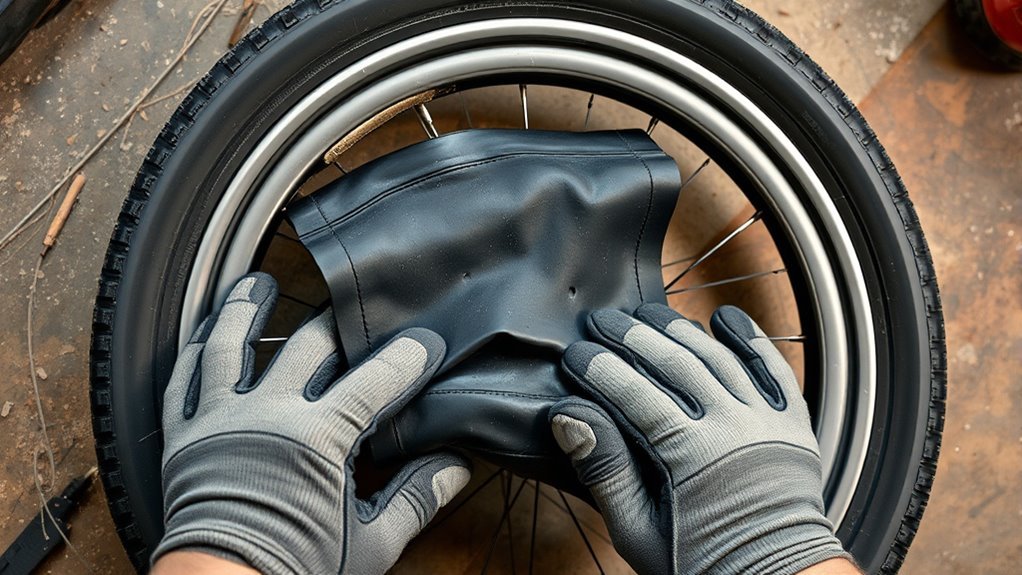
Because a boot sits directly between the damaged tire and the tube, it blocks the tube from bulging out through cuts or holes and distributes pressure away from the weak spot. You fit a boot as a structural liner so the tube doesn’t extrude into a breach; the boot fills gaps and reinforces the casing, maintaining internal pressure and lowering rupture risk during inflation. Use controlled boot installation techniques and sensible tube pressure management—inflate to about 80% capacity to seat the boot without overstressing the patched area. Boots are durable plastics or adhesive patches offering temporary structural support so you can ride to safety.
- Install the boot centered over the damage, smooth edges, avoid folds
- Inflate slowly, monitor pressure and tube seating
- Recheck alignment before final inflation
After the Ride: Inspect, Repair, or Replace the Tyre
After you get home, give the tire a thorough inspection to decide whether a temporary boot or a full replacement is appropriate. You’ll perform a damage assessment: look for cuts, scrapes, punctures, and sidewall tears. Check tread and sidewall integrity since small holes can propagate under load and compromise tire longevity. If punctures are small and confined to the tread, apply a patch or properly positioned tire boot to seal the area and protect the tube. Confirm the boot fully covers the breach and won’t shift. For large cuts or sidewall failures, replace the tire—repairs won’t restore structural strength. Maintain a routine inspection schedule and proper inflation to extend tire longevity and reduce the risk of unexpected failures on future rides.
Frequently Asked Questions
Can a Tire Boot Be Reused After One Use?
No, you shouldn’t reuse a tire boot after one use; tire boot durability is limited, and for emergency repairs you’ll compromise safety and integrity. Replace with a new boot or get a professional, permanent repair promptly.
Will a Boot Affect Tire Balance or Ride Feel?
A subtle compromise: you’ll notice minor shifts, but a properly installed boot rarely upends tire performance. For short-term emergency solutions, it can slightly alter balance and ride feel; professional rebalancing fixes any persistent vibration.
Are Tire Boots Compatible With Tubeless Setups?
Yes — you can use tire boots with tubeless setups if you choose proper tire boot materials and follow careful installation techniques; you’ll seal and seat the bead, maintain air retention temporarily, and avoid bead damage during mounting.
How Long Can a Boot Safely Stay Installed?
You can safely run a tire boot temporarily for up to one tire lifespan segment—typically a few hundred miles—while using proper repair techniques; monitor pressure, inspect frequently, and replace the tire with a permanent repair or new tire promptly.
Can Tire Boots Be Used on Car Tires in Emergencies?
Yes, you can use tire boots on car tires in emergencies; they provide immediate tire boot benefits as practical emergency tire solutions, letting you safely drive short distances to a repair shop while avoiding rapid air loss.
Conclusion
When you fit a tire boot, you’re giving your ride a polite bandage—just enough to keep you moving without pretending the problem’s gone. Use it for short, controlled journeys to reach proper help; don’t lean on it as a permanent fix. Carry a thin, strong patch and something rigid in your kit. After the ride, inspect the damage and decide: permanent repair, professional replacement, or another temporary nod to survival.
Related Articles
How to Read Motorcycle Tire Size: Complete Breakdown
Often misunderstood, this guide decodes motorcycle tire sizes like 180/55ZR17—learn what each number and letter means to ensure safe, perfect fitment.
Read More
How to Read Bicycle Tire Size: Inches, Metric & ISO
Get the essential trick to decoding ETRTO/ISO codes so you’ll always pick rim-compatible tyres—discover what to check next.
Read More
How to Read Tire Size Numbers: Decode the Sidewall
Step-by-step guide to decode tire sidewalls—sizes, load, speed, DOT and winter symbols—so you’ll know what fits and when to replace.
Read More