What Is a Snake Bite Flat? Why It Happens & How to Avoid
A snake bite flat happens when your tube gets pinched between rim and tire during a hard impact, leaving two small “fang” holes and a sudden pressure loss. It’s common if you hit curbs, rocks, or sharp edges at low pressure or on narrow tires. You can fix it roadside with a patch or spare tube, but preventing it—proper inflation, wider or reinforced tires, tubeless setups, careful line choice and riding technique—is far better; more tips follow below.
What Is a Snakebite (Pinch) Flat and How to Spot One
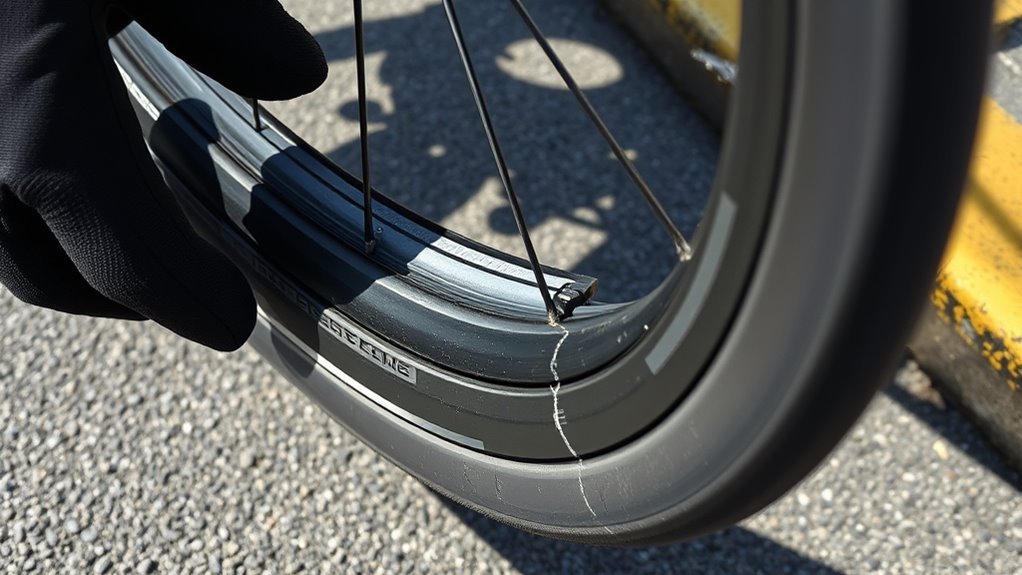
A snakebite (or pinch) flat happens when your tube gets pinched between the tire and rim, making two small punctures about half an inch apart that look like fangs; you’ll usually see diagonal cord impressions on the tube where the rim compressed it. You’ll notice snakebite symptoms as a sudden loss of pressure after hitting a curb, rock, or pothole, especially with under-inflated tires or on rough terrain. Inspect the removed tube for paired punctures and rim-impression marks to confirm the diagnosis. Underside snakebites can occur on low-pressure mountain bike setups when the tire rolls and fails on impact. For pinch flat prevention, keep correct pressure, use wider or reinforced tires, and avoid aggressive impacts to reduce risk.
Quick Ride-Time Fixes for a Snakebite
When you hit a curb or rock and feel a sudden loss of pressure, stop and remove the wheel to inspect the tube for two fang-like holes about 10 mm apart; if you’ve got a patch kit clean the area thoroughly and apply the patch per the kit’s instructions, but the fastest, most reliable ride-time fix is swapping in a properly inflated spare tube after checking the tire and rim for debris or damage. First, locate the paired punctures and confirm they’re snakebite-style. For quick patching, roughen and clean the area, apply glue and a patch, and let it set per instructions; this is temporary. Better: fit a spare tube, inflate to the recommended pressure, and re-seat the tire. Finally, recheck the tire and rim for sharp objects or deformation before you ride.
How Tyre Pressure, Width and Construction Change Your Risk
After you’ve patched or swapped a tube, look at how pressure, tire width and construction affect your odds of another snakebite. You’ll reduce pinch-flat risk by following inflation guidelines and practicing basic tire maintenance and pressure monitoring. Match tire width to rim compatibility so the casing can support load distribution without bottoming out. Choose tires with tire reinforcement—multi-layer plies or Kevlar sidewalls—when you ride aggressively or carry weight.
- Low pressure increases pinch risk; check pressure monitoring regularly and inflate to recommended values.
- Wider tires let you run lower pressures safely, improving comfort and reducing snakebites.
- Reinforced tires resist pinch damage better than standard casings during impacts.
- Narrow rims plus narrow tires make bottoming out more likely; consider wider rims for tougher terrain awareness and varied riding habits.
Common Scenarios and Road Features That Cause Snakebites
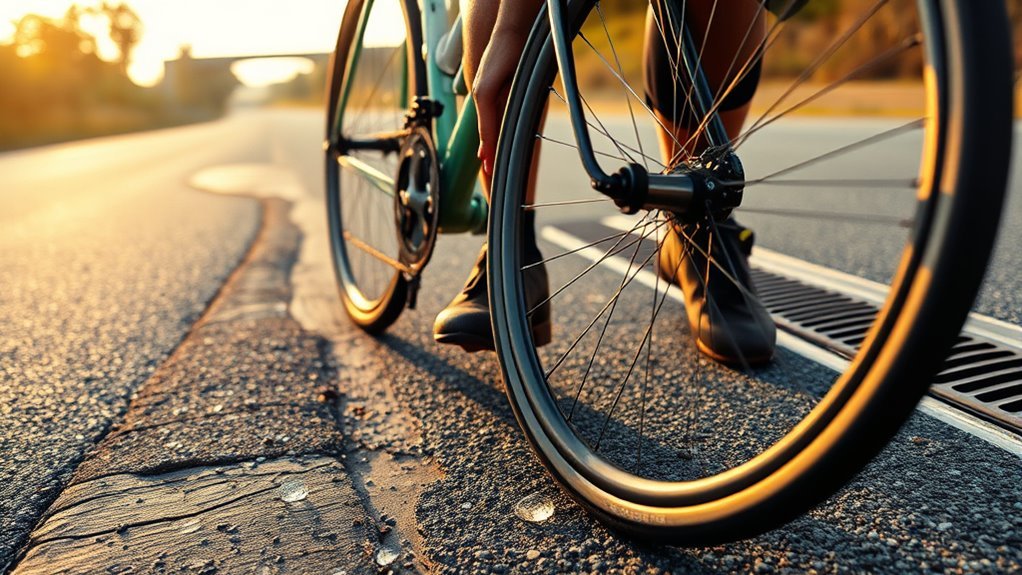
Because impacts that compress the tire against the rim cause most snakebites, you should watch for sudden drops and hard edges—railroad tracks, raised driveway lips and curb hits are common culprits. When you cross railroad crossings or ride over raised driveway lips, the abrupt gap can bottom the tire and pinch the tube. Uneven surfaces, potholes, ruts and rocks do the same on rough roads, especially if your pressure’s low. In urban riding, potholes and edges are frequent and unforgiving. Aggressive riding—fast hits, hard cornering over obstacles or launching curbs—increases impact forces and the chance of pinch flats. Scan ahead, slow for edges, and choose lines that smooth shifts to reduce snakebite risk.
Tube Types That Resist Pinch Flats
You can limit snakebites not only by changing how you ride but by picking tubes and tires that handle impacts better. Choose components that match your terrain and preferred tire materials, and keep correct air pressure to minimize deformation on impact. Options include:
- Latex tubes: more stretchable than butyl, offering better lateral support in tubulars and reducing pinch risk.
- Thicker, thorn-resistant butyl tubes: added durability for rough roads and occasional impacts.
- Tubeless setups with sealant: remove the tube entirely so the tire deforms without pinching, and sealants plug small punctures instantly.
- Reinforced tires (Kevlar sidewalls) plus appropriate air pressure: combine tougher casing with correct inflation for greatest resistance to pinch flats.
Each choice trades puncture protection, weight, and maintenance; pick what suits your riding.
Common Installation Mistakes That Cause Snakebites
When you don’t seat the tube properly it can bunch at the bead and create pinch points that lead to snakebite flats. Using tire levers too aggressively also risks nipping or tearing the tube during installation. Both errors are common, avoidable, and frequently implicated in post-installation punctures.
Improper Tube Seating
One common mistake that causes snakebite flats is pinching the inner tube between the tire bead and rim when mounting or inflating. You should check tube alignment as you work: inflate the tube slightly to give it shape, then seat the tire fully while ensuring the tube isn’t twisted or bunched. Perform a rim inspection before mounting—confirm the rim strip is centered and undamaged so it won’t create pinch points. Work methodically around the wheel, pushing the bead into the rim with your thumbs rather than forcing tools. If you spot a bulge or uneven pressure, deflate and reseat.
- Partially inflate tube to check fit
- Smooth tube to avoid folds or twists
- Verify rim strip placement and integrity
- Seat bead gradually and evenly
Overuse Of Tire Levers
Avoid forcing the tire on with too many levers—doing so greatly ups the chance of pinching the tube and creating a snakebite. You should limit lever use and finish the last section by hand, following tire lever techniques that minimize pinch points. Inflate the tube slightly before fully seating the tire so you can adjust without levering aggressively. Check that the rim strip is centered; an off-center strip creates hidden pinch hazards even if you use proper installation best practices. When you do use levers, position them carefully and avoid catching the tube between lever and bead—small tears from a lever can turn into flats on the road. These steps reduce snakebite risk and keep your installs reliable.
Upgrades: Tyres, Tubes, Rim Strips and Tubeless Options
Because the right upgrades change how your bike handles punctures, focus on tyres, tubes, rim strips and tubeless conversions to lower snakebite risk and improve durability. You’ll want to evaluate tire construction and tire selection first: multi-layer touring tyres boost sidewall strength and flat prevention while preserving ride comfort. Pressure management matters—wider tyres let you run lower pressures without pinch flats. Choose tubes and sealants for extra puncture protection; thicker thorn-resistant tubes or Slime reduce failure chances. Rim compatibility is key for tubeless conversions; going tubeless removes the tube, cutting snakebite risk as the tyre can flex without pinching. Add a rim strip or liner for an added barrier.
Upgrade tyres, tubes, rim strips or go tubeless—stronger casings, wider tyres and sealants cut snakebites and improve durability.
- Multi-layer tyres (e.g., Schwalbe Marathon) for durability
- Thorn-resistant tubes or liquid sealant
- Tubeless setup for pinch-flat reduction
- Tire liners like Mr. Tuffy for extra protection
Riding Technique and Terrain Tactics to Avoid Rim Strikes
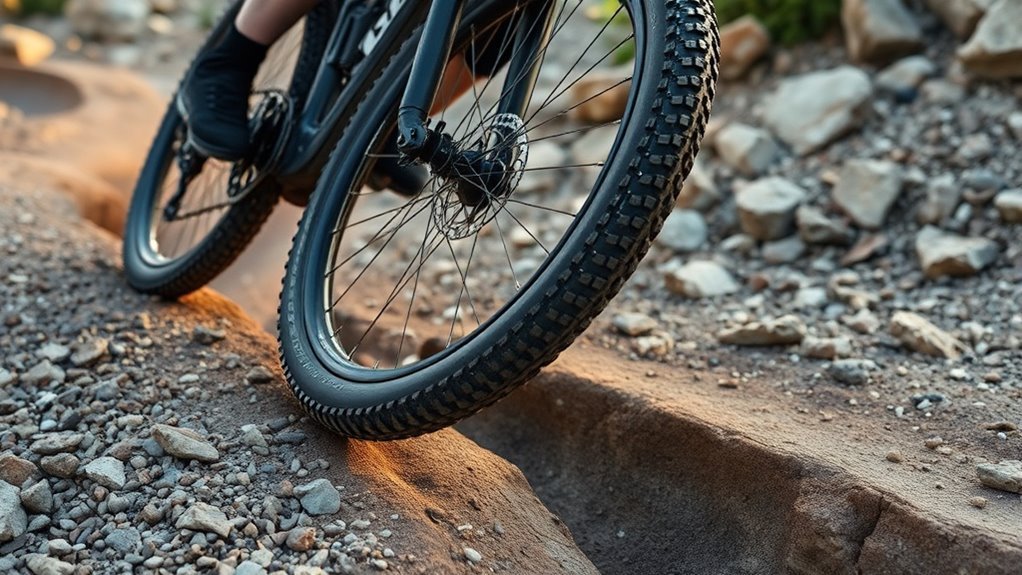
When approaching obstacles, pick a clean line that lets you roll over or around hazards rather than smashing into them. Shift your weight back and lift the bike slightly so your tires meet impacts at a reduced effective force, and keep your arms and legs soft to absorb shocks. Control speed and steer the wheel angle to present the smallest contact patch to edges, which greatly lowers the chance of a rim strike.
Line Choice Over Obstacles
If you pick your line carefully over curbs, rocks, and other sharp edges you’ll dramatically cut the risk of a snakebite flat by preventing the tire from getting pinched between rim and obstacle. Use line selection and obstacle navigation to read the terrain, choose smoother passages, and approach hazards at an angle to keep momentum and reduce impact. Ride smoothly rather than bouncing, and keep tire pressure within the recommended range so the tire can absorb shocks. Scan ahead, adjust speed, and pick routes that avoid sharp contacts.
- Approach obstacles diagonally to lessen force on the tire and rim.
- Aim for rounded or sloped sections instead of edges.
- Maintain steady speed to roll over rough spots.
- Keep tire pressure ideal for shock absorption.
Weight Distribution Control
Good line choice sets you up, but how you shift your weight over that line determines whether the tire kisses the rim or keeps rolling. You’ll reduce pinch-flat risk by making deliberate weight shifts: move rearward over obstacles, stand slightly on the pedals, and keep light contact with the bars. Scan the trail to approach holes at an angle and avoid direct impacts. Practice smooth body positioning to absorb shocks rather than letting the tire compress fully. Regularly read terrain and adjust line to bypass sharp edges. Below is a simple posture-action guide.
| Situation | Body positioning | Action |
|---|---|---|
| Pothole | Rearward, slight stand | Shift weight back, pedal neutral |
| Rut | Balanced, relaxed arms | Angle approach, finesse line |
| Drop | Back and low | Lift hips, absorb impact |
Speed And Wheel Angle
Because speed and wheel angle directly change how your tire meets obstacles, dialing both in will cut pinch-flat risk and improve control. Use speed management to carry just enough momentum to roll over edges rather than strike them, and adjust wheel positioning to meet terrain at a forgiving angle. Lean slightly forward to shift weight and keep traction without bottoming the rim. Practice smooth, controlled lines on rough ground so you avoid sudden compression that causes snakebite flats. Choose wider tires when appropriate to allow lower pressures and better shock absorption.
- Approach curbs and ruts with controlled speed, not sudden bursts.
- Angle the wheel to navigate smoothly over obstacles.
- Keep a forward, balanced posture to manage weight transfer.
- Use tire width and pressure to complement your technique.
Maintenance Checklist and Pre-Ride Routine to Prevent Pinch Flats
When you prepare for a ride, a quick maintenance checklist cuts the risk of snake bite flats: check tire pressure with a reliable gauge and inflate to the manufacturer’s recommended range, adjusting for load and temperature. Do a visual tire inspection for cuts, bulges, or embedded debris that raise vulnerability. Perform a rim inspection and clean rim strips so they sit flat and won’t expose the tube to holes or pinch points. Run your fingers along bead seating to confirm even contact. Carry a compact repair kit—tire levers, a spare tube, and a pump—to handle roadside repairs quickly. These routine steps are evidence-based, fast, and greatly reduce the chance of pinch flats during your ride.
Frequently Asked Questions
Can a Snake Bite Through a Tire?
Yes, a snake can’t bite through a properly inflated bike tire, but sharp punctures occur from impacts; you’ll improve snake bite prevention and tire durability by keeping pressure up, inspecting tires, and avoiding hard impacts.
What Not to Do After a Snake Bite?
About 80% of bike punctures are pinch flats, so don’t panic: you shouldn’t delay first aid, spread your legs, cut the tire, trust common myths, or reuse a damaged tube without proper inspection and repair.
Conclusion
You’ve seen how a snakebite flat sounds and why it happens — the sudden double-pinch, the sickening hiss. You can’t erase every hazard, but you can stack the odds: proper pressure, wider or tougher tyres, quality tubes or tubeless setup, careful installs and smoother line choices. Before you roll, check rims, strips and pressures; ride with intent. Do that, and the next sharp edge that waits won’t get the last word.
Related Articles
How to Read Motorcycle Tire Size: Complete Breakdown
Often misunderstood, this guide decodes motorcycle tire sizes like 180/55ZR17—learn what each number and letter means to ensure safe, perfect fitment.
Read More
How to Read Bicycle Tire Size: Inches, Metric & ISO
Get the essential trick to decoding ETRTO/ISO codes so you’ll always pick rim-compatible tyres—discover what to check next.
Read More
How to Read Tire Size Numbers: Decode the Sidewall
Step-by-step guide to decode tire sidewalls—sizes, load, speed, DOT and winter symbols—so you’ll know what fits and when to replace.
Read More