What Is a Bias Ply Tire? Structure, Uses & Key Facts
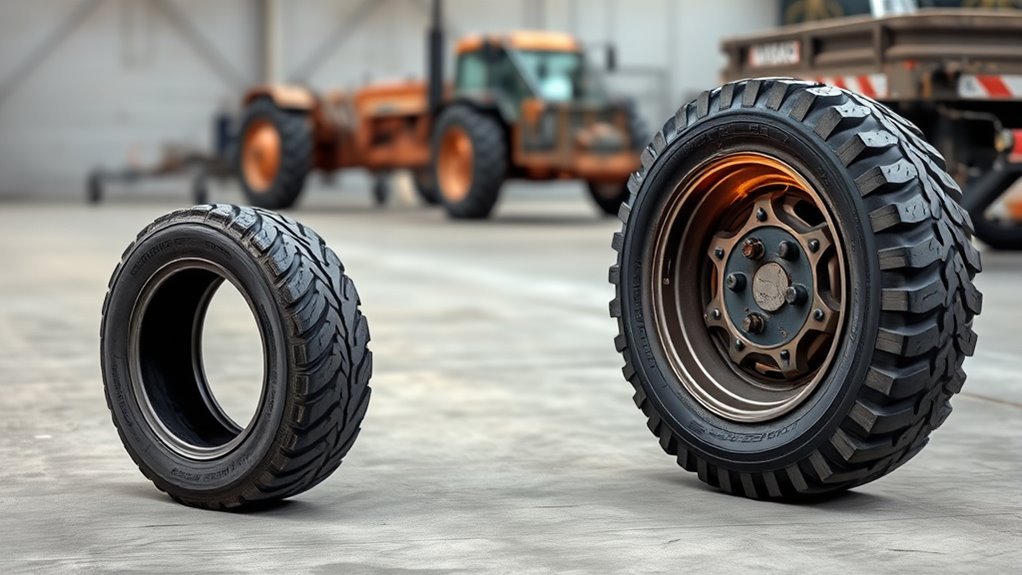
A bias‑ply tire uses multiple rubberized fabric plies laid diagonally (30–45°) in alternating directions to form a stiff, load‑bearing carcass with thick sidewalls and bead cores that’re vulcanized to lock the structure. You’ll get excellent puncture resistance, towing stability, and rugged off‑road or agricultural performance, but higher rolling resistance, more heat under sustained speeds, and firmer ride with reduced highway finesse. Keep going and you’ll find detailed tradeoffs, applications, and selection tips.
What Is a Bias‑Ply Tire and How It’s Built
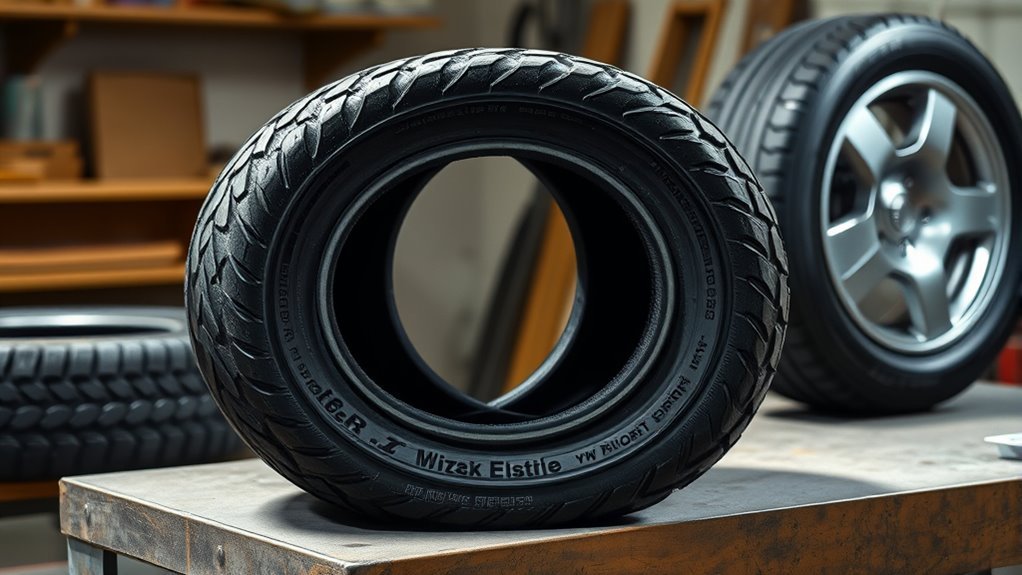
A bias‑ply tire uses multiple rubberized fabric plies laid diagonally in a crisscross pattern—usually at 30–45° to the tire’s centerline—so each layer alternates direction to form a strong, load‑bearing carcass. You’ll recognize this construction from tire history as the dominant pre‑radial approach, shaped by early manufacturing process capabilities that favored layered fabric and rubber bonding. In building one, technicians assemble carcass plies, bead cores, and thicker sidewall compounds on a drum, then vulcanize the assembly to cure the rubber and lock ply angles. The alternating plies produce a rigid sidewall that sustains heavy loads and rough terrain. You’ll see bias‑ply tires on agricultural, vintage, and construction equipment where durability and authentic appearance outweigh heat‑related wear considerations.
How Bias‑Ply Construction Changes Performance
Consider how the bias‑ply’s crisscrossed plies change vehicle behavior: the diagonal layers produce a stiffer carcass and sidewall that boosts load capacity and puncture resistance but also transmits more road shock and generates extra heat under sustained use. You’ll notice tire performance shifts: firmer ride quality and more direct feedback from road irregularities compared with radials. The unified construction advantages include enhanced stability under heavy loads and improved resistance to cuts and abrasions on rough terrain. Tradeoffs affect operational metrics: higher rolling resistance increases fuel consumption during prolonged highway speeds, and heat buildup can limit sustained high‑speed operation. You should weigh these construction advantages against reduced ride comfort and efficiency when selecting tires for specific tasks.
Durability & Load Capacity: Real‑World Benefits
Because their plies cross at alternating angles, bias‑ply tires give you a rugged carcass and thick sidewalls that resist cuts, punctures, and deformation under heavy loads. You’ll get predictable load‑carrying capacity from the crisscross fabric layers, so vehicles, trailers, and equipment in construction and agriculture can support significant weights without rapid structural failure. In real world applications, that translates to reduced sidewall damage on rocky trails, fewer punctures on farms, and improved towing stability because the stout sidewalls limit sway. Rugged environments demand tires that tolerate impacts and carry loads reliably; bias‑ply construction delivers this through multilayer reinforcement. You’ll pay less upfront than comparable radials while gaining durable, application‑specific performance for heavy‑duty use.
Limitations: Heat, Wear, and High‑Speed Handling
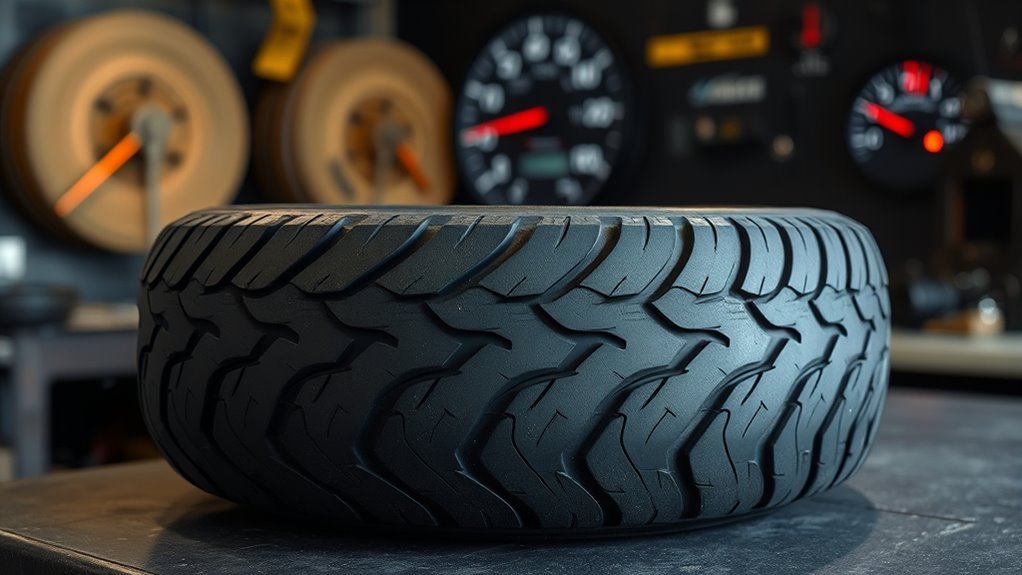
When you run bias ply tires on prolonged highway duty, their higher rolling resistance and thick construction promote heat buildup that accelerates rubber deterioration. That heat contributes to faster tread wear, shortening service life compared with radials. Combined with stiff sidewalls and a rigid carcass, this design also reduces high‑speed stability and can cause wandering at highway speeds.
Heat Buildup Risks
Although bias ply tires handle rough terrain well, their diagonal construction and thicker fabric layers cause higher rolling resistance and faster heat buildup during prolonged use. You’ll notice tire heat rises quicker under load and at sustained speeds, and that increased temperature has a direct performance impact: reduced structural integrity, diminished handling precision, and higher failure risk. Because the plies and stiff sidewalls don’t shed heat efficiently, long highway stints or heavy towing make them vulnerable. You should monitor pressures and avoid extended high‑speed runs in hot conditions. Inspect tires frequently for bulges or soft spots that indicate internal degradation. For applications demanding sustained speed or extended mileage, choose radial designs or limit service conditions to reduce thermal stress and related hazards.
Accelerated Tread Wear
One key limitation of bias ply tires is accelerated tread wear under sustained highway use and high loads: their diagonal construction and thicker sidewalls trap heat and raise rolling resistance, which increases friction on the tread and speeds degradation. You’ll notice reduced tread life from compounded heat and friction during prolonged high-speed runs; thicker sidewalls hinder heat dissipation so the rubber softens and abrades faster. Increased rolling resistance also raises surface temperatures and fuel cost while accelerating wear. To mitigate this, you must prioritize tire maintenance: keep pressures within spec, inspect tread depth and wear patterns frequently, and rotate tires as recommended. Proper load management and avoiding sustained high-speed operation will help preserve tread life and detect issues early.
Reduced High‑Speed Stability
High-speed driving exposes bias ply tires’ structural limits: their crisscross plies and stiff sidewalls generate extra heat and rolling resistance, causing faster tread wear and a rougher, less stable ride. You’ll notice increased road feedback and a wandering sensation as the diagonal plies flex unevenly; that creates stability concerns during sustained highway speeds. Heat buildup accelerates compound degradation, reducing tread life and worsening fuel economy. For modern vehicles tuned for radial handling, bias ply tires compromise predictable high-speed cornering and straight-line tracking. Use them where low-speed durability or vintage authenticity matters, not for extended freeway runs. Summary table below highlights tradeoffs:
| Characteristic | Effect at High Speed | Practical Impact |
|---|---|---|
| Heat | Increases | Faster wear |
| Sidewall stiffness | Higher | Rough ride |
| Rolling resistance | Higher | Worse fuel economy |
| Handling | Degrades | Stability concerns |
Best Vehicles and Jobs for Bias‑Ply Tires
Think of bias‑ply tires as the workhorses of the tire world: their layered construction and stiff sidewalls excel on off‑road vehicles, farm machinery, construction equipment, rugged trailers, and classic cars where durability, load capacity, and period‑correct appearance matter. You’ll fit them to off road vehicles that need puncture resistance and predictable traction over rocks, sand, and mud. On agricultural machinery they support heavy implements and tolerate repeated sidewall flex in fields. Construction equipment benefits from the tires’ toughness against debris and uneven ground while preserving load capacity. Use bias‑ply tires on heavy duty trailers for hauling in rough conditions; they resist impact damage and carry weight reliably. Classic car owners select them to maintain historical accuracy without compromising basic durability.
Bias vs Radial: How Construction Changes Ride and Handling
When you compare bias and radial tires, you’ll notice the stiffer bias sidewalls give a firmer, less compliant ride while radials absorb bumps better due to independent sidewall-tread action. That construction also shifts handling: bias tires resist deformation under heavy loads but offer less precise cornering and higher rolling resistance. For traction, radials generally outperform on wet pavement while bias ply designs shine on uneven terrain and heavy-duty tasks.
Ride Comfort Differences
Because bias and radial tires handle loads and flex differently, you’ll feel their construction differences immediately in ride and handling. In a comfort comparison, bias ply’s diagonal plies create a stiffer sidewall that transmits more road irregularities to the cabin, so ride quality is rougher on paved roads. Radial tires arrange plies perpendicularly, letting sidewall and tread operate independently; this isolates vibrations and absorbs bumps more effectively, yielding smoother ride quality for everyday driving. Bias construction also runs hotter under prolonged use, accelerating wear and degrading smoothness over long trips. While bias ply can offer durability and load capacity advantages for specific applications, you’ll prefer radials when predictable comfort comparison and consistent ride quality are priorities for regular street use.
Handling And Traction
Although both tire types support the vehicle, their construction changes how grip and steering feel: you’ll notice distinct differences in tire performance and driving experience. Bias ply’s diagonal plies make sidewalls stiffer, transmitting road irregularities and producing a firmer, less compliant feel. They can wander on smooth surfaces and generate more heat at highway speeds, degrading handling and traction. Radials let sidewalls and tread move independently, offering better contact patch control, improved wet grip, and a steadier driving experience.
- Imagine hitting a highway: bias ply heats, feels vague; radial stays planted, precise.
- Picture a gravel track: bias ply resists cuts, carries load; radial still grips better.
- Envision a rainy curve: radial maintains bite; bias ply risks reduced traction.
Winter Bias‑Ply Tires: Performance and When to Use Them
If you drive in regions with cold, variable winters, winter bias‑ply tires give you improved traction by using rubber compounds formulated to stay flexible at low temperatures and siped tread patterns that bite into ice and slush. You’ll notice winter performance and traction enhancement versus standard bias‑ply designs, especially in moderate snowfall and fluctuating conditions. These tires retain flexibility at low temps, optimizing contact patch and braking response. Choose them when local weather includes frequent freeze–thaw cycles and icy surfaces. Evaluate typical routes, temperatures, and snow depth before fitting. Maintenance and seasonal replacement preserve compound properties and siping effectiveness. Use the table below to compare primary attributes.
| Attribute | Benefit |
|---|---|
| Compound | Flexibility at low temps |
| Tread | Siping for ice grip |
| Use case | Moderate snow, variable winters |
Trailers and Heavy‑Haul: Practical Considerations
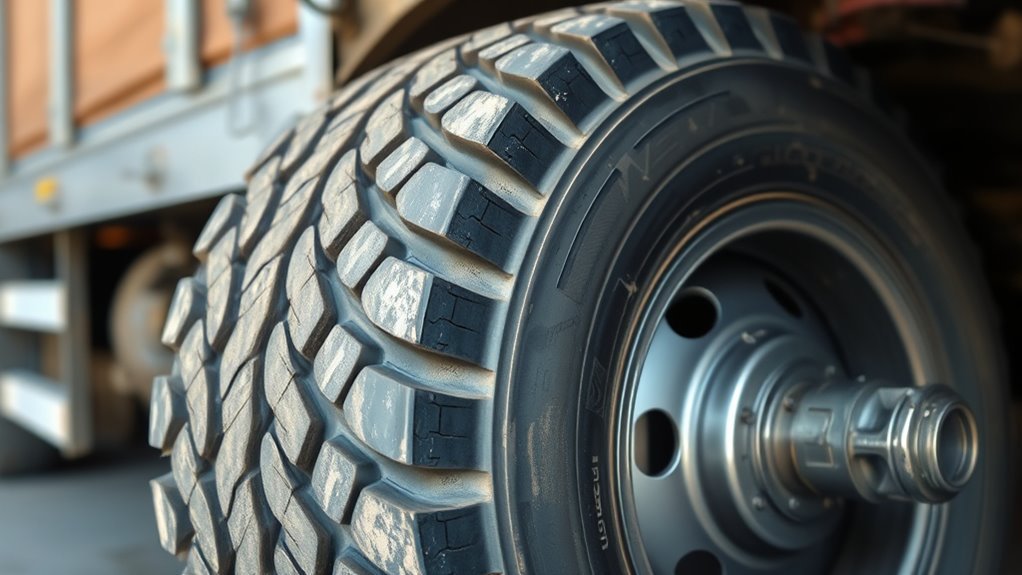
Having covered winter bias‑ply performance, it’s worth looking at how their rugged construction and diagonal ply layout benefit trailers and heavy‑haul work. You’ll rely on bias ply tires for robust load distribution and improved trailer stability when moving construction or agricultural equipment over rough ground. Their carcass resists sidewall damage and keeps the rig predictable under stress, though expect quicker wear and slightly worse fuel economy on paved runs. Maintain correct inflation, inspect for cuts or separations, and rotate or replace tires proactively to avoid failures.
- Visualize a loaded flatbed crossing rutted terrain with steady trailer stability.
- Picture a loader on a lowboy where diagonal plies shield sidewalls from impacts.
- Imagine scheduled checks preserving load distribution and preventing downtime.
Choosing Bias or Radial: Quick Criteria and Recommendation
When you need tires for a specific use, match the construction to the job: choose bias ply for rugged, off‑road work and heavy loads, and choose radials for highway miles, wet traction, and ride comfort. For practical tire selection, evaluate load demands, vehicle type, and terrain compatibility. Choose bias ply when you need taller sidewalls, narrow contact patches, and durability for construction, agriculture, trailers, or period‑correct classic cars. Choose radials when you prioritize handling, stability, smoother ride, and superior wet traction for modern vehicles and long highway runs. If you split duties, favor radials for daily driving and switch to bias ply for dedicated off‑road or heavy‑haul applications. Match tire construction to operational needs rather than aesthetics for ideal performance and safety.
Frequently Asked Questions
What Are Bias Ply Tires Used For?
You use bias ply tires for off-road, agricultural, construction, trailer, and classic car applications; their performance characteristics offer durability, load capacity, and stability, while their historical context explains preference for period-authentic restorations.
What Are the Disadvantages of Bias Ply Tires?
You’ll face faster tread wear, greater heat buildup, higher rolling resistance, rougher ride and poor bump absorption, stiffer sidewalls causing wandering, reduced fuel efficiency and compromised high-speed performance due to bias ply construction limitations.
What Vehicles Typically Use Bias Ply Tires?
Like an old oak supporting a caravan, you choose bias ply tires for classic cars, off road vehicles, tractors, construction equipment, trailers, and some military rigs; they’ll give rugged load‑bearing, puncture resistance, and stability.
Conclusion
You’ll pick bias‑ply when you want rugged carcass strength and predictable load carrying—think vintage trucks, trailers, and off‑road rigs—because its angled plies coincide to form a tough, flexible block that resists cuts and sidewall damage. That same construction, however, coincides with more heat and squirm at speed, so don’t choose it for highway comfort or high‑speed stability. Match construction to duty: heavy loads and rough work = bias; long, fast road miles = radial.
Related Articles
How to Read Motorcycle Tire Size: Complete Breakdown
Often misunderstood, this guide decodes motorcycle tire sizes like 180/55ZR17—learn what each number and letter means to ensure safe, perfect fitment.
Read More
How to Read Bicycle Tire Size: Inches, Metric & ISO
Get the essential trick to decoding ETRTO/ISO codes so you’ll always pick rim-compatible tyres—discover what to check next.
Read More
How to Read Tire Size Numbers: Decode the Sidewall
Step-by-step guide to decode tire sidewalls—sizes, load, speed, DOT and winter symbols—so you’ll know what fits and when to replace.
Read More