What Does M+S Mean on Tires? Mud & Snow Rating Guide
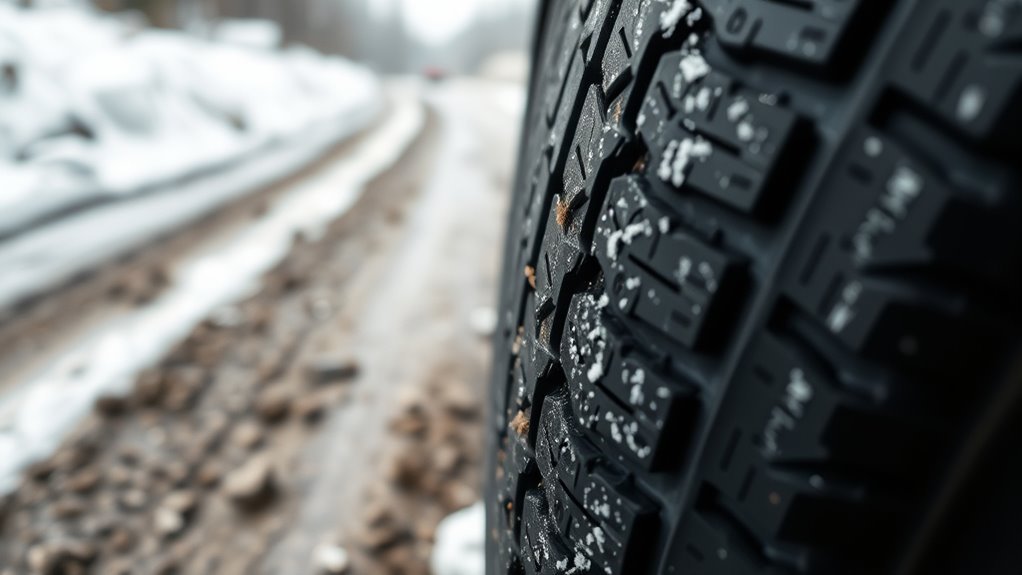
M+S on your tire sidewall means “Mud and Snow” and indicates the tread’s designed for improved traction in light mud and snow versus a standard tire; it’s based on geometric criteria (about a 25% void ratio) and works for mild winter conditions but isn’t a substitute for a certified winter tire. Expect moderate grip, limited ice braking, and degraded performance in very cold temperatures or deep snow. Keep going to learn the key differences, limits, and legal notes.
What M+S Means on Your Tire Sidewall
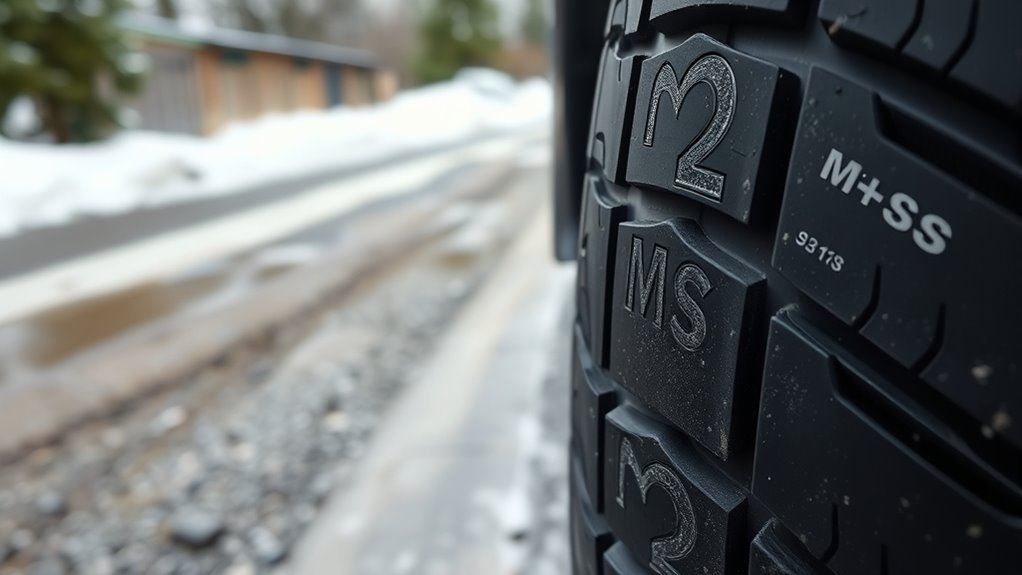
Look for the M+S stamp on your tire sidewall: it stands for “Mud and Snow” and indicates the tire was designed to offer better traction in light mud and snow than a standard tire. You’ll note M+S history traces to the 1970s when manufacturers adopted simple geometric criteria—about 25% void ratio and shoulder notches—to claim improved grip. That benchmark remained minimal compared with dedicated winter certifications. You should recognize M+S tire types include all-season variants and some light-truck designs; markings may appear as M+S, MS, M&S, or M/S. Inspect the tread pattern and void percentage to verify the designation’s basis. Use M+S tires for mild winter conditions, but don’t assume they equal purpose-built winter compounds.
Is M+S Enough? Quick Decision Guide for Drivers
Wondering if the M+S mark is sufficient for winter driving? You need M+S clarity: the Mud and Snow designation signals improved traction in light mud and mild snow, not guaranteed performance in heavy snow or ice. Don’t confuse M+S misconceptions with proven capability — M+S uses basic tread criteria and lower certification standards than the Three Peak Mountain Snowflake. If you drive in occasional, mild winter conditions, M+S or all-season tires with that mark can be acceptable, but inspect tread depth and compound for temperature performance. In regions with harsh winters, choose dedicated winter tires certified by the Three Peak Mountain Snowflake. Use this quick decision guide: mild winter = M+S may suffice; severe winter = opt for certified winter tires.
M+S vs 3PMSF (Three‑Peak Mountain Snowflake): Real Differences
Because the two marks serve different testing regimes and use cases, you should treat M+S and 3PMSF as distinct performance categories rather than interchangeable labels. You’ll rely on M+S for basic mud and light-snow capability; recognize M+S limitations mean lower certification thresholds and no guarantee of severe-snow performance. The 3PMSF benefits are measurable: certified tests for traction in medium-to-deep snow deliver superior grip and handling.
- Certification scope: M+S indicates basic tread design; 3PMSF requires validated snow traction under controlled testing.
- Use cases: M+S suits mixed use and off-road scenarios; 3PMSF targets sustained winter driving in cold, snowy regions.
- Selection rule: choose 3PMSF where winter severity demands reliable certified performance; accept M+S for mild conditions.
M+S Performance: Traction, Braking, and Cold‑Temperature Limits
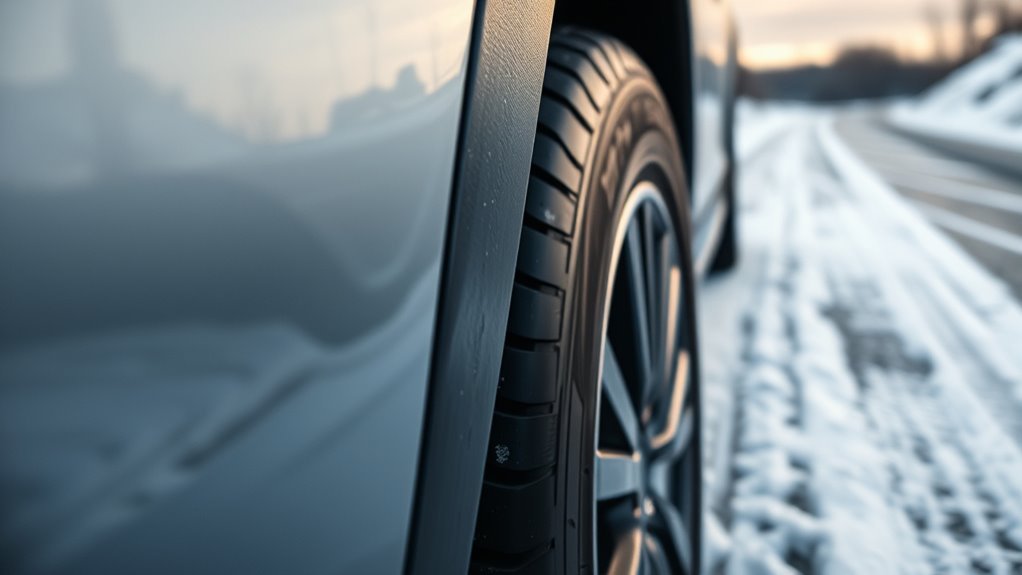
While M+S tires give you better grip than standard all-seasons thanks to deeper voids and added tread notches, they’re optimized for light snow and mud and aren’t tested for severe-snow or ice braking performance. You’ll see improved M+S traction performance in slush and packed snow due to ≥25% void ratio and notch geometry, but certification standards are basic. M+S braking capability drops on hard-packed snow and ice because rubber compounds and siping aren’t winter-grade. Expect shorter gains vs. dedicated winter tires; don’t assume parity with 3PMSF-rated models. Monitor tread depth and compound aging—performance degrades in cold temperatures below tire design thresholds.
| Parameter | Effect |
|---|---|
| Traction | Moderate in light snow |
| Braking | Limited on ice |
Legal Rules and Buying Advice: When to Use M+S, Chains, or Winter Tires
If you drive in regions with variable winter laws, check local statutes before relying on M+S tires: the M+S mark signals improved mud-and-light-snow capability but not the tested winter performance of 3PMSF tires, and some jurisdictions require chains or mandate 3PMSF tires under specified conditions. You should assess legal requirements, expected conditions, and tread depth (minimum 3/16-inch recommended) when making tire selection decisions to guarantee regulatory compliance and safe operation.
- Use M+S only for light snow or where law permits with chains; fit chains when mandated and compatible with your vehicle.
- Choose 3PMSF winter tires for deep snow, ice, or strict local mandates.
- Inspect tread depth, document compliance, and replace when below spec.
Frequently Asked Questions
Are M&S Tires Ok for Winter?
Yes—M+S tires can work for mild winter conditions, but they’re limited. You’ll get improved tire performance in light snow and mud, yet they won’t match dedicated winter tires for severe cold, ice, or heavy snowfall.
Is MS an All Season Tire?
Like a mild-weather coat, M+S tires aren’t true all-season performers; they offer all season performance in light conditions but their tire classification is broad, so you’ll want dedicated winter tires for severe snow and ice.
Is M/S the Same as 3 Peak?
No — you shouldn’t treat M+S the same as 3PMSF. M+S vs. All Season explains basic tread claims; Tire Performance Differences show 3PMSF undergoes severe-snow testing, giving superior winter traction and reliability compared to M+S.
What Does M/S on a Tire Mean?
M/S on a tire means you get improved mud and snow traction characteristics for moderate conditions; you’ll see specific tread voids and notches that modestly enhance tire performance, but it isn’t a substitute for certified winter tires.
Conclusion
M+S on your sidewall means the tire’s tread and compound are tuned for mud and light snow — not magic. Don’t pretend they’ll stop you like winter tires; they’ll help in slush and mild cold but lose grip, braking performance, and steering precision in deep snow or subfreezing ice. If you face heavy winter conditions, choose 3PMSF‑rated winter tires or chains. Use M+S only for occasional mild winter driving, not for heroic mountain storms.
Related Articles
How to Read Motorcycle Tire Size: Complete Breakdown
Often misunderstood, this guide decodes motorcycle tire sizes like 180/55ZR17—learn what each number and letter means to ensure safe, perfect fitment.
Read More
How to Read Bicycle Tire Size: Inches, Metric & ISO
Get the essential trick to decoding ETRTO/ISO codes so you’ll always pick rim-compatible tyres—discover what to check next.
Read More
How to Read Tire Size Numbers: Decode the Sidewall
Step-by-step guide to decode tire sidewalls—sizes, load, speed, DOT and winter symbols—so you’ll know what fits and when to replace.
Read More