What Does 650b Mean? Tire Size Explained for Gravel Bikes
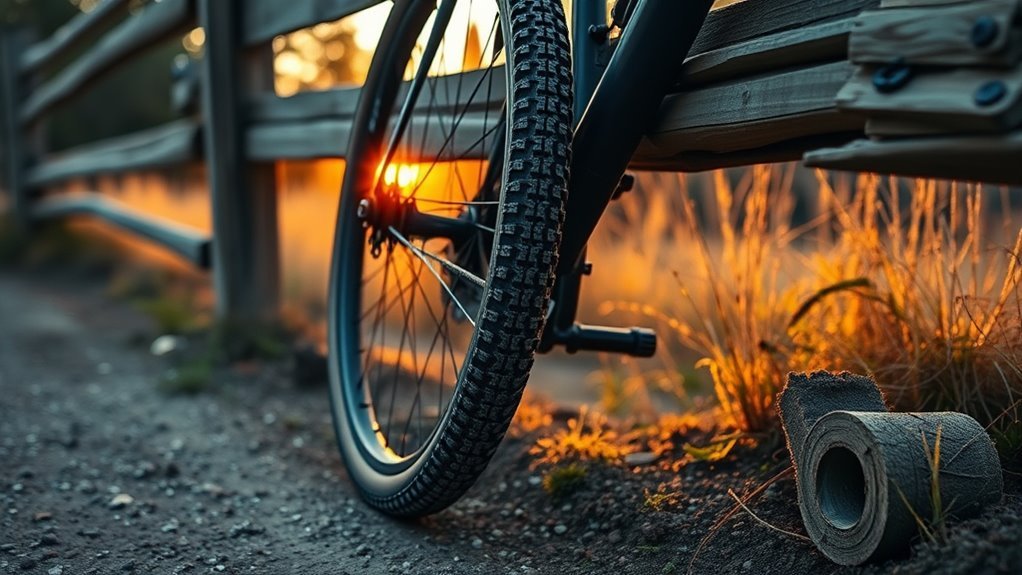
650b refers to a rim with a 584 mm bead-seat diameter (commonly called 27.5″), so you must fit tires and rims by BSD, not approximate names. On gravel it lets you run 40–50 mm tires at lower pressures for more traction, compliance and fewer pinch flats, while altering geometry slightly (BB height, clearance and handling). Verify frame and brake clearance and tubeless compatibility before switching. Keep going and you’ll get setup, pressure and compatibility specifics to help you choose.
Quick Recommendation: When to Choose 650B Vs 700C

If you ride rough gravel, technical trails, or want a more comfortable, grippy setup, pick 650B—its smaller rim lets you run wider tires at lower pressures for better traction and compliance; choose 700C when you prioritize top rolling efficiency and a broader tire selection for smoother surfaces and long-distance speed. You’ll select 650B on a gravel bike when terrain types demand maximum grip and puncture resilience; wider tires and deliberate pressure adjustments lower vibration and increase control. Opt for 700C if your riding preferences emphasize speed considerations and consistent rolling on mixed surfaces where tire availability gives you tailored rubber. Consider rider height and fit: shorter riders may avoid toe overlap issues with 650B‚ taller riders often gain comfort factors and handling confidence. Make tire selection a deliberate trade-off: prioritize comfort and technical capability with 650B, or prioritize efficiency and broader tire choices with 700C. Adjust pressure, tire volume, and tread to match your liberation-focused objectives.
What “650b” Means for Rim and Tire Size
650b denotes a rim with a 584 mm bead seat diameter (BSD), which yields about a 27.5‑inch wheel once a tire is mounted; the “b” comes from an older French sizing code that differentiated rim/tire width categories. In practice, that 584 mm rim characteristic fixes compatibility: you’ll fit tires labeled 650b or 27.5″ and you must match BSDs to avoid bead seating failures. Focus on rim characteristics such as internal width and bead profile — they determine which tire options you can safely run and what air volumes you’ll achieve.
For gravel use, 650b rims accommodate wider rubber, typically 40–50 mm, letting you run lower pressures for traction and shock absorption without burping on tubeless setups. That combination gives you greater control on rough terrain and a liberated handling envelope. When choosing, verify tire bead seating, recommended rim width ranges, and sidewall clearance to confirm safe, performant assemblies.
650B Vs 700C: Rim and Tire Size Comparison
How do 650B and 700C wheels actually differ on paper and on the trail? You’ll note the fundamental rim diameter gap: 650B’s 584mm bead seat versus 700C’s 622mm, yielding roughly 27.5″ and 29″ effective diameters. That geometric difference drives measurable performance metrics: 700C often rolls faster on smooth surfaces, 650B handles rough terrain with greater stability.
When you compare rim width and tire tread, 650B setups commonly accept wider, higher-volume tires (40–50mm) that change contact patch and ride feel; 700C favors narrower, lower-resistance casings (25–45mm). Consider weight differences—larger wheels can add rotating mass, but material choices (aluminum, carbon) mitigate that.
Fit matters: frame geometry dictates clearances; some 700C frames accept 650B with clearance, while 650B frames may not suit 700C. Match your riding styles to terrain suitability: choose the wheel-tire combo that liberates your intended line and speed goals.
Why 650b Improves Traction and Comfort on Gravel
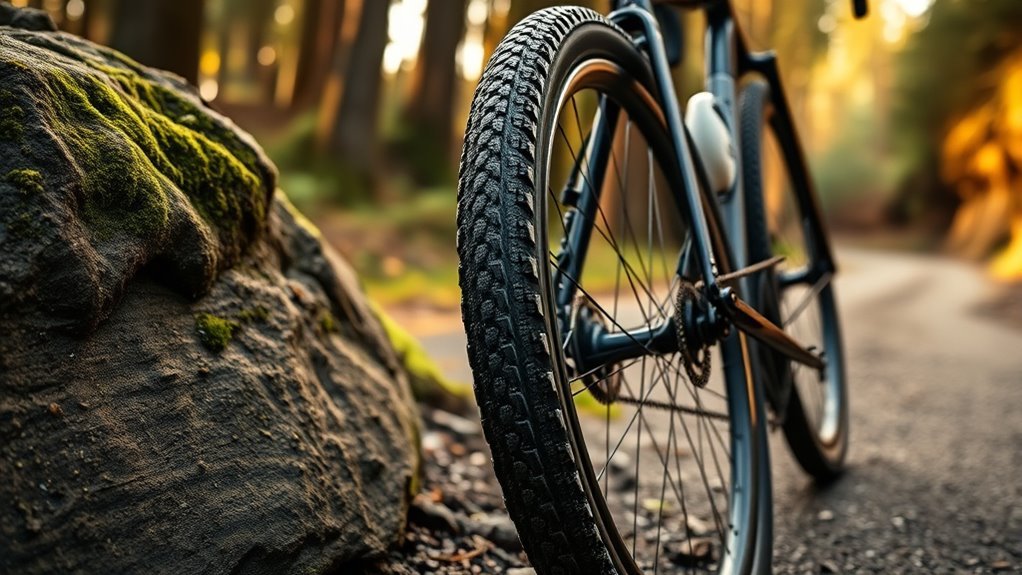
With a 584 mm rim you can fit substantially wider 650b tires, which increases air volume and contact patch size. That larger volume lets you run lower inflation pressures without risking pinch flats, improving mechanical grip on loose gravel. The net effect is more traction and a noticeably smoother, more controlled ride over rough terrain.
Increased Tire Volume
A slightly larger wheel-and-tire package gives you more air volume, and that extra volume is what lets 27.5-inch (584 mm rim) setups run wider tires at lower pressures without sacrificing support. You gain measurable tire cushioning and improved shock absorption because the larger internal chamber distributes impact forces over more air and a larger contact patch. That increased volume lowers the chance of pinch flats—especially with tubeless seals—since the tire deforms more before bottoming out on the rim. Practically, you’ll notice steadier traction and stability in technical gravel sections as the tire conforms to irregularities rather than bouncing off them. For riders seeking freedom from harsh terrain, 650b volume delivers a predictable, forgiving platform that preserves speed and control.
Lower Inflation Pressure
Run 650B tires at lower pressures and you’ll feel immediate benefits: the larger casings (typically 40–50 mm) let you drop psi without the tire squirming or folding, increasing effective air volume and contact patch to absorb impacts and bite into loose gravel. You gain measurable tire pressure benefits and comfort enhancement that free you to ride faster, longer, and more confidently.
- Increased air volume cushions sharp hits and evens out washboard surfaces.
- Expanded contact patch improves lateral grip on loose and uneven terrain.
- Lower pressures reduce pinch-flat risk, especially with tubeless setups.
- Stable sidewall support preserves cornering precision and steering feedback.
Run targeted pressures for your load and conditions; you’ll trade minimal rolling resistance for significant traction and sustained comfort.
Trade-Offs: Speed, Rollover, and Efficiency Vs 700C
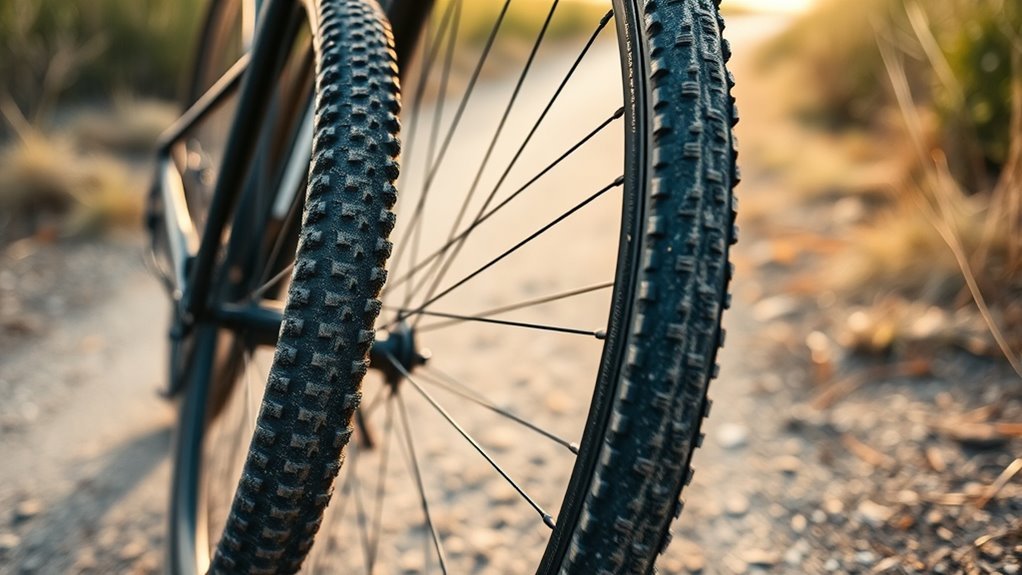
Although both wheel sizes can handle a variety of surfaces, you’ll trade faster rolling and better obstacle rollover on 700C for the greater comfort, traction, and bump absorption that 650B delivers. 700C’s larger diameter reduces rotational losses and smooths changes over rocks and ruts, so it requires less energy to maintain speed on hard-packed and paved sections. You’ll notice 700C’s speed advantages and rollover efficiency on flowing gravel where momentum matters; its geometry lets you sustain higher velocity with lower cadence and reduced power spikes over obstacles. Conversely, 650B lets you fit larger-volume tires, lower pressures, and a contact patch that increases grip and mitigates vibration, translating to superior control on technical, loose terrain. Choose based on mission: pick 700C when conserving energy and maximizing pace on mixed or smoother routes; opt for 650B when you seek liberated handling, comfort, and predictable traction on rough, demanding trails where control outweighs raw speed.
Tire Width & Pressure: How 650b Changes Ride on Gravel
With 650B you get larger tire volume—typically 40–50mm—which lets you run lower pressures to increase traction and comfort on gravel. You’ll trade some rolling resistance for a bigger contact patch that boosts grip and stability in loose or technical sections. We’ll quantify pressure ranges and how they affect rolling resistance versus cornering grip so you can tune setup for your terrain and weight.
Tire Volume And Pressure
Because 650B rims (584 mm) let you fit substantially wider tires—commonly 40–50 mm—you get a larger air volume that lets you run lower pressures (typically 30–40 PSI) for better comfort, traction, and puncture resistance on gravel. You’ll appreciate clear tire characteristics and measurable performance benefits: increased volume cushions impacts, lowers vibration transmission, and reduces pinch-flat risk while expanding the contact patch for grip. Run lower pressures deliberately; they change handling and stability without sacrificing speed on rough surfaces. Use the guidance below to choose pressures and widths that free you to ride harder, longer, and more confidently:
- 40–50 mm width: maximizes volume for rough terrain.
- 30–40 PSI: balance between comfort and rolling efficiency.
- Higher volume: improved stability in technical sections.
- Lower pressure: enhanced traction on loose surfaces.
Grip Versus Rolling Resistance
When you swap to 650b tires in the 40–50 mm range and lower pressures into the 30–40 PSI window, you change the trade-off between grip and rolling resistance: you get measurable grip enhancement from increased contact patch and sidewall compliance, while the larger air volume cushions impacts and cuts pinch-flat risk. Run ideal pressure for mixed terrain and rolling resistance drops relative to narrow high-pressure tires, because deformation losses shrink and traction improves. Lower pressures boost traction on loose gravel; raise pressure for hard-packed sections to reduce energy loss. You can tune pressure dynamically to favor grip or speed without changing tires. For riders seeking freedom on varied surfaces, 650b provides a pragmatic balance—control when you need it, efficiency when you want to move.
Frame Compatibility: Can Your Gravel Bike Take 650b?
Curious if your gravel bike can run 650b wheels? You’ll first inspect frame dimensions, bike models, and fork design to confirm clearance for ~2.1” (or wider) tires. Changing wheel diameter alters geometry—lowering bottom bracket and potentially increasing pedal strikes—so measure chainstay length and BB drop before committing. Check brake compatibility; some calipers or mounts need adjustment for different rim diameters.
- Verify manufacturer specifications for dual 700c/650b support.
- Measure clearances at chainstays, seatstays, and fork crown with intended tire selection.
- Assess how reduced wheel radius affects handling and stack/ reach balance.
- Confirm brake caliper range or need for adapters on your specific bike models.
If the frame meets clearances and the brakes adapt, you gain liberated versatility: a practical, terrain-driven setup. If not, choose a different frame or consult a shop to avoid compromising safety or performance.
Setup Checklist: Tires, Tubeless Conversion, Clearance
Start by listing the exact tire dimensions and intended use, then confirm clearance and tubeless readiness before you buy wheels or tires. You’ll typically run 650b (BSD 584mm) tires 40–50mm wide for gravel. Verify frame and fork clearance—many accept up to ~2.1″—and confirm rim internal width matches tire profile.
| Item | Spec | Action |
|---|---|---|
| Tire size | 650b / 584mm BSD | Match label to rims |
| Width | 40–50mm (≈1.6–2.0″) | Measure clearance |
| Tubeless | Compatible? | Check bead & rim tape |
| Pressure | 25–40 psi | Adjust per weight/terrain |
| Tube option | 27.5 x 1.5–2.0″ | Use correct tube if not tubeless |
For tubeless conversion, use proper rim tape, valves, and sealant; test bead seating during tire installation and perform a leak/pressure adjustment cycle. If you keep tubes, choose sizes marked for 27.5”/650b. This checklist frees you to optimize grip, comfort, and reliability without compromise.
Who Should Pick 650b : Rider Types and Scenarios
If you value comfort, control, or versatile off‑road capability, 650b wheels are a practical choice because their 584mm bead seat diameter lets you run wider 40–50mm tires that increase air volume and traction without dramatically altering bike geometry. You’ll find 650b suits specific Rider preferences and Terrain types where stability and compliance matter more than raw rolling speed.
- Comfort-oriented riders seeking a cushioned ride on rough tracks and reduced fatigue.
- Adventure and gravel enthusiasts who need grip on mixed surfaces for bikepacking and exploratory routes.
- Shorter riders who benefit from reduced toe overlap and improved handling in technical sections.
- Technical trail seekers and bikepackers who want better traction in mud, deep gravel, and long tours with fewer pinch flats (especially tubeless).
Choose 650b when your rides prioritize control, traction, and resilience over marginal speed gains — it’s a deliberate decision to expand capability and personal freedom on varied terrain.
Frequently Asked Questions
Is 650B the Same as 700C?
No, 650b isn’t the same as 700c; they differ in bead seat diameter and overall diameter, so you’ll check tire compatibility and wheel geometry to verify fit, maximizing performance and freeing you to choose terrain-appropriate wheels.
Is 650B the Same as 27.5 Inch?
Yes — 650B equals 27.5 inch, and you’ll see coincidence when tire compatibility and frame geometry align; you’ll fit wider tires for comfort and grip, but you’ll check clearances and dropout spacing to guarantee proper, liberated performance.
Is 650B Better for Gravel?
Yes—you’ll often find 650B better for gravel: it boosts gravel performance and ride comfort by allowing wider, higher-volume tires at lower pressures, improving traction, cushioning, and agile handling for more liberated, technical off-road riding.
Are 650B Wheels the Same as 26?
No — 650B’s 584mm BSD vs 559mm for 26-inch makes them different; you’ll check tire compatibility and frame clearance. You’ll gain improved riding experience via larger air volume, lower pressures, and better traction.
Conclusion
Think of switching to 650b like fitting wider tires on a dirt-friendly chassis: you’ll gain grip and compliance without reinventing the bike. If you value traction, lower pressures, and comfort on rough gravel, 650b with appropriate rim width and tubeless setup is a pragmatic choice. If top speed, rollover efficiency, or strict clearance matters, stick with 700c. Verify frame/fork clearance, chainstay and brake compatibility, and use correct pressures and mounting procedures.
Related Articles
Metric vs Inch Tire Size Conversion: Simple Formula
Nail tire size conversions confidently with a simple metric-to-inch formula that reveals overall diameter and revolutions per mile—discover how it ensures safe swaps.
Read More
Presta vs Schrader Valve Hole Size: Rim Compatibility
Find out why valve hole size matters for Presta vs Schrader rim compatibility — and what happens if you drill the wrong size.
Read More
Can You Use a Different Size Inner Tube? Risks Explained
Not all inner tubes fit safely—learn when mismatched sizes cause folds, valve stress, or blowouts and what to check before you ride.
Read More