
Upsizing Wheels on a Toyota RAV4: Pros, Cons, and Considerations
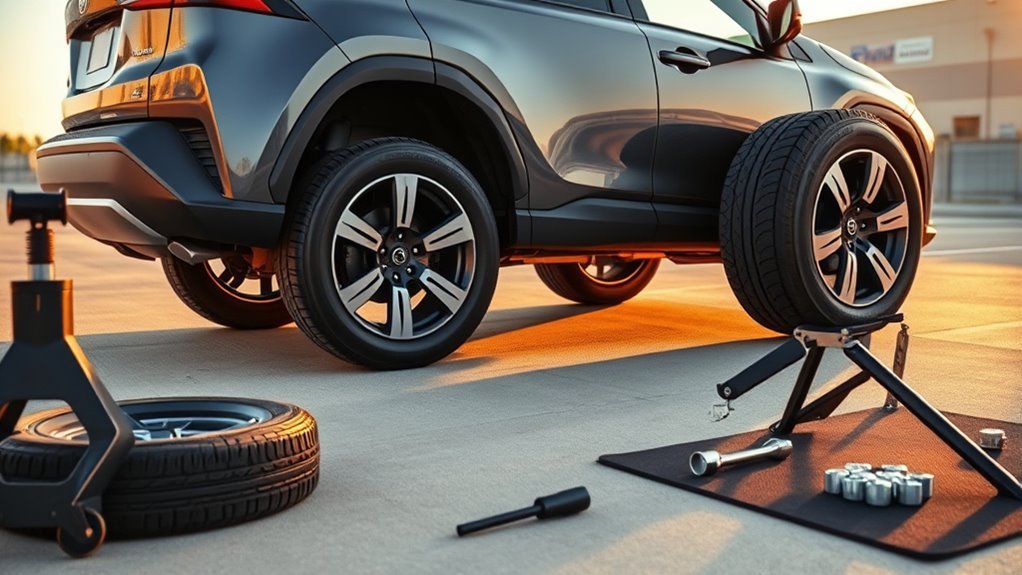
Upsizing wheels on your Toyota RAV4 can boost performance and give it a sportier look, but there are trade-offs. While larger wheels enhance handling and stability, they can also reduce fuel efficiency and ride comfort due to added weight and rolling resistance. You’ll need to guarantee the overall diameter stays within a 3% range for speedometer accuracy. Plus, don’t forget about necessary adjustments like wheel alignment. There’s much more to reflect on before making your decision.
Benefits of Upsizing Wheels on a RAV4

When you consider upsizing the wheels on your Toyota RAV4, you’re not just making a cosmetic change; you’re enhancing performance and handling. Larger wheels can markedly boost your cornering capabilities thanks to wider tires that grip the road better, especially in summer conditions. This means you’ll enjoy improved stability and confidence during drives.
Additionally, upsized wheels increase ground clearance, allowing your RAV4 to conquer rugged terrains more effectively, making off-road adventures feel liberating. Beyond performance gains, there’s a notable visual appeal; your RAV4 will sport a sportier, more aggressive look that could enhance its overall value.
Just remember to maintain an overall diameter within a -3/+3% tolerance to keep your speedometer accurate and vehicle integrity intact. While you might notice a slight increase in fuel consumption, the trade-off for enhanced driving experience and aesthetic upgrade can be well worth it.
Essential Considerations Before Upsizing Your RAV4 Wheels
Upsizing your RAV4’s wheels can greatly enhance its performance and aesthetics, but there are important factors to weigh before making the change. First, consider maintaining an overall diameter within a -3/+3% tolerance to avoid speedometer inaccuracies. Popular fitments, like moving from 225/65R17 to 245/65R17, can improve your vehicle’s ground clearance, but you’ll need to pay attention to wheel offset and its impact on suspension wear.
- Larger wheels can improve traction and stability off-road.
- Upsized tires may lead to a harsher ride quality, increasing road noise.
- Always check tire pressure; larger tires can alter how your vehicle handles.
Consult fitment guides to verify compatibility and understand the potential trade-offs. Balancing aesthetics with performance and comfort is key to making the right choice for your RAV4.
How Upsizing Affects Fuel Economy?
While larger wheels on your Toyota RAV4 can boost its visual appeal and off-road capability, they often come with a trade-off in fuel economy. Upsizing typically increases tire weight, leading to higher rolling resistance. This means your engine has to work harder to maintain speed, which can reduce fuel efficiency and lower your MPG. Even a modest upgrade, like moving to 245-65-17 tires, might cause slight declines in fuel economy, although the improved traction and ground clearance can be appealing.
Additionally, the added weight impacts acceleration, further straining your engine’s performance during daily driving. While the aesthetic and functional benefits of larger tires are enticing, it’s important to weigh these against the potential reductions in fuel economy. If freedom and efficiency are your goals, consider how much you’re willing to sacrifice in fuel performance for those larger wheels.
How Bigger Wheels Affect Ride Comfort
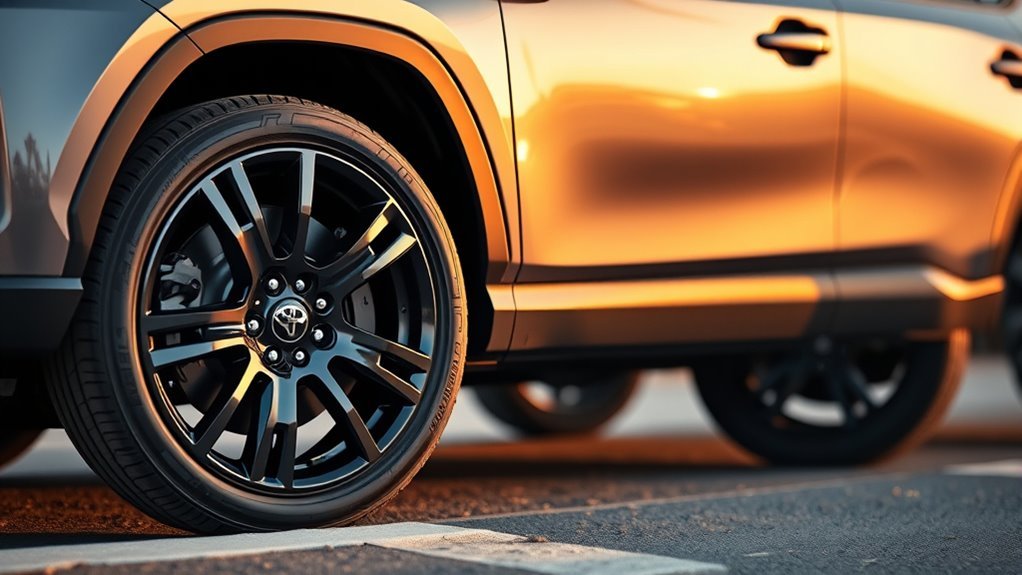
When you upsize the wheels on your Toyota RAV4, you might notice a bumpier ride as larger tires come with lower sidewalls, reducing shock absorption. This change can amplify road vibrations and make every pothole feel more pronounced. While you may gain improved handling, the trade-off often leads to a harsher driving experience, especially on uneven surfaces.
Increased Road Vibrations
Switching to larger wheels on your Toyota RAV4 can considerably impact ride comfort, particularly by increasing road vibrations. The reduced sidewall height of low-profile tires diminishes their ability to absorb shocks, making bumps feel more pronounced. You might also experience amplified noise levels inside the cabin, which can detract from your driving pleasure.
Consider these points:
- Larger wheels can lead to greater vibrations transmitted to the cabin, increasing driver fatigue.
- The shift affects wheel alignment, which may require adjustments for peak performance.
- Vibration mitigation becomes essential, as the trade-off for aesthetics might be compromised comfort.
Before upsizing, weigh these factors carefully to guarantee your driving experience remains liberating and enjoyable.
Harsher Ride Quality
Upsizing the wheels on your Toyota RAV4 might seem like a great way to enhance its appearance, but it often leads to a harsher ride quality. The reduced sidewall height of larger tires diminishes their ability to absorb road imperfections, resulting in a stiffer ride. You’ll likely notice amplified impacts from bumps and increased vibrations in the cabin, which can compromise ride stability. Here’s a quick look at some comfort trade-offs:
| Aspect | Standard Wheels | Larger Wheels |
|---|---|---|
| Sidewall Height | Taller | Shorter |
| Shock Absorption | Better | Reduced |
| Ride Comfort | Smoother | Harsher |
| Cabin Noise | Quieter | Louder |
| Weight Impact | Lighter | Heavier |
In essence, while you gain style, comfort often takes a backseat.
Reduced Shock Absorption
While larger wheels can elevate the aesthetic appeal of your Toyota RAV4, they also significantly impact ride comfort due to reduced shock absorption. Upsizing typically means lower-profile tires, which decreases sidewall height and flexibility. This results in amplified vibrations from road imperfections, making your daily drives less enjoyable.
- Reduced sidewall thickness limits shock absorption techniques, leading to a stiffer ride.
- Increased vibrations and noise compromise overall cabin comfort.
- Strain on the suspension system can diminish ride quality on bumpy terrain.
While you may appreciate the enhanced performance and style, it often comes at the cost of comfort. Balancing aesthetics with ride quality is essential for maximizing your RAV4’s versatility.
How Bigger Wheels Enhance Performance
Bigger wheels can greatly enhance your Toyota RAV4’s performance in various driving conditions. By increasing the contact patch, they improve grip, leading to better cornering stability. This means you’ll feel more confident maneuvering curves, whether on the highway or winding back roads. Larger wheels also allow for the installation of bigger brake components, resulting in improved braking performance and reduced stopping distances—crucial for safety and control.
Additionally, the lower-profile tires that come with bigger wheels minimize sidewall flex, giving you more responsive steering and valuable feedback while driving. If you venture off-road, upsized wheels boost ground clearance, making it easier to tackle rough terrains. Not only do these enhancements contribute to a thrilling driving experience, but they also empower you with greater handling and agility, liberating you to explore various environments with confidence.
Why Bigger Wheels Upgrade Your RAV4’s Aesthetic
Enhancing your Toyota RAV4 with larger wheels instantly transforms its aesthetic appeal, giving it a more aggressive and sporty stance. This upgrade not only makes your vehicle stand out on the road but also elevates its perceived value. With the right wheel designs and color options, you can create a unique look that reflects your personality.
Enhancing your RAV4 with larger wheels elevates its style and value, giving it an aggressive, sporty stance that reflects your personality.
- A wider wheelbase enhances the RAV4’s robust presence.
- Larger wheels paired with low-profile tires provide a modern, sleek appearance.
- Upsized wheels often signal higher trim levels, attracting attention.
Common Drawbacks of Upsizing RAV4 Wheels
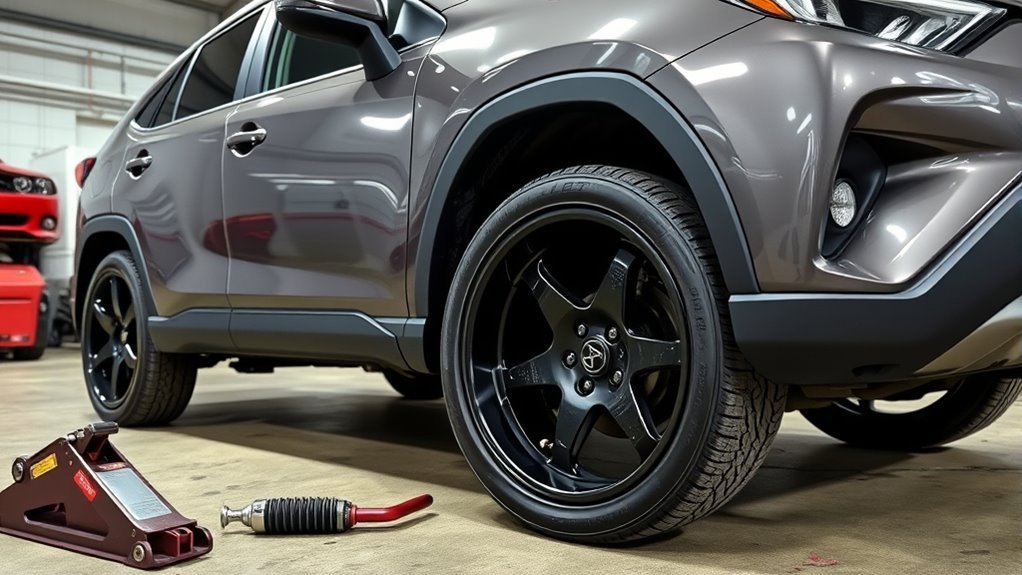
Upsizing your RAV4’s wheels can be visually striking, but it’s essential to contemplate the potential drawbacks that come with this modification. First, larger wheels often increase weight and rolling resistance, which can lead to higher fuel consumption. You might also notice a rougher ride, as bigger tires amplify road imperfections and noise inside the cabin.
Moreover, without proper recalibration, upsizing can throw off your speedometer, affecting your driving accuracy and safety. Your suspension components will likely face increased wear and tear, resulting in higher maintenance costs down the line. Additionally, larger wheels can limit your turning radius, making maneuvering in tight spaces a challenge.
Lastly, keep an eye on your wheel alignment and tire pressure. These factors become even more critical with upsized wheels, as improper settings can lead to uneven wear and further complications. Balancing aesthetics and performance is key.
How to Ensure Your Wheels Fit Right
When modifying your RAV4’s wheels, ensuring a proper fit is key to both performance and safety. To get it right, keep the following in mind:
- Maintain the overall diameter within a -3% to +3% tolerance of the original size to avoid speedometer inaccuracies.
- For models like the 2021 RAV4 Prime, a tire size of 245/65R17 works well, but always check fitment specifics for your model.
- Consider wheel alignment and tire pressure adjustments after upsizing to enhance handling and safety.
Expert Tips for Making the Best Choice
When upsizing your RAV4’s wheels, it’s essential to guarantee compatibility with your vehicle’s specifications to avoid issues down the line. You’ll also want to weigh the performance trade-offs, as larger wheels can enhance aesthetics but may impact ride comfort and fuel efficiency. Finally, keep tire size considerations in mind, since not all upsized options will be readily available for your specific model.
Compatibility With Vehicle Specs
Before you make any changes to your Toyota RAV4’s wheels, it’s vital to understand how those modifications can impact both performance and safety. Start with thorough fitment checks to guarantee your new wheels align with size guidelines. Keeping the overall diameter within a -3/+3% tolerance is essential to maintain speedometer accuracy and avoid mechanical issues.
Consider these points:
- Consult your vehicle’s specifications for compatible wheel and tire sizes.
- Popular sizes like 245/65R17 fit well and improve ground clearance.
- Be aware that larger tires might require minor modifications, such as adjusting wheel wells.
Staying informed about the latest fitment information will help you make choices that enhance both your RAV4’s aesthetics and integrity.
Performance Trade-Offs
While upsizing your Toyota RAV4’s wheels can enhance aesthetics and handling, it’s essential to weigh the performance trade-offs that come with those changes. Larger wheels improve handling dynamics by increasing the tire contact patch, giving you better grip on smooth surfaces. However, this upgrade can decrease acceleration and fuel efficiency due to added weight and rolling resistance. You’ll also need to monitor tire pressures carefully; a larger tire may require different inflation levels. Additionally, the ride quality may suffer, resulting in more road noise and vibrations because of reduced sidewall height. To balance performance and comfort, consider consulting a professional to choose compatible wheel and tire sizes tailored to your driving habits.
Tire Size Considerations
Choosing the right tire size for your Toyota RAV4 is vital to maximizing both performance and comfort. You’ll want to maintain an overall diameter within a -3/+3% tolerance to prevent speedometer inaccuracies and mechanical issues. Here are some key considerations:
- Tire Pressure: Confirm your new tires can handle the recommended pressure for peak performance.
- Tread Patterns: Select tread patterns suitable for your driving conditions to enhance grip and safety.
- Sidewall Height: Larger tires may reduce sidewall thickness, affecting ride comfort and shock absorption.
Researching available options is important, as some upsized dimensions might be hard to find. Remember, evaluating your driving habits will help you choose tires that offer the right balance of aesthetics and functionality.
Frequently Asked Questions
What Are the Disadvantages of Larger Rims?
Larger rims can reduce ride comfort and negatively impact brake performance. You’ll experience a rougher ride and increased road noise, plus potential strain on your vehicle’s suspension, leading to costly repairs down the road.
What Are the Benefits of Upsizing Tires?
By upsizing tires, you can boost your RAV4’s traction by up to 20%. This performance enhancement not only improves handling but also gives your ride an aesthetic appeal that turns heads wherever you go.
Do Bigger Rims Waste More Gas?
Yes, bigger rims can waste more gas. The added tire weight increases rolling resistance, leading to reduced fuel efficiency. You may notice a drop in miles per gallon, impacting your overall driving experience.
Conclusion
To summarize, upsizing your RAV4 wheels can transform your ride into a head-turning machine that commands attention on the road. While there are clear benefits like improved aesthetics and performance, be sure to weigh the potential drawbacks, especially regarding comfort and fuel efficiency. By carefully considering your options and ensuring the right fit, you can strike the perfect balance between style and practicality. So go ahead, elevate your driving experience to new heights!

Related Articles
Can I Change Tire Size on My Toyota RAV4? Rules and Recommendations
Are you considering changing the tire size on your Toyota RAV4? Discover the essential rules and recommendations before making a decision.
Read More
What to Do If the TPMS Light Comes On in Your RAV4
Understand the steps to take when the TPMS light illuminates in your RAV4, as overlooking it could lead to serious tire problems.
Read More
What to Do After a Tire Blowout in a RAV4: Step-by-Step Safety
Just experienced a tire blowout in your RAV4? Discover essential safety steps and tips to ensure you're prepared for any situation.
Read More