
Tire Wear Indicator Bars: Built-In Safety Markers Decoded
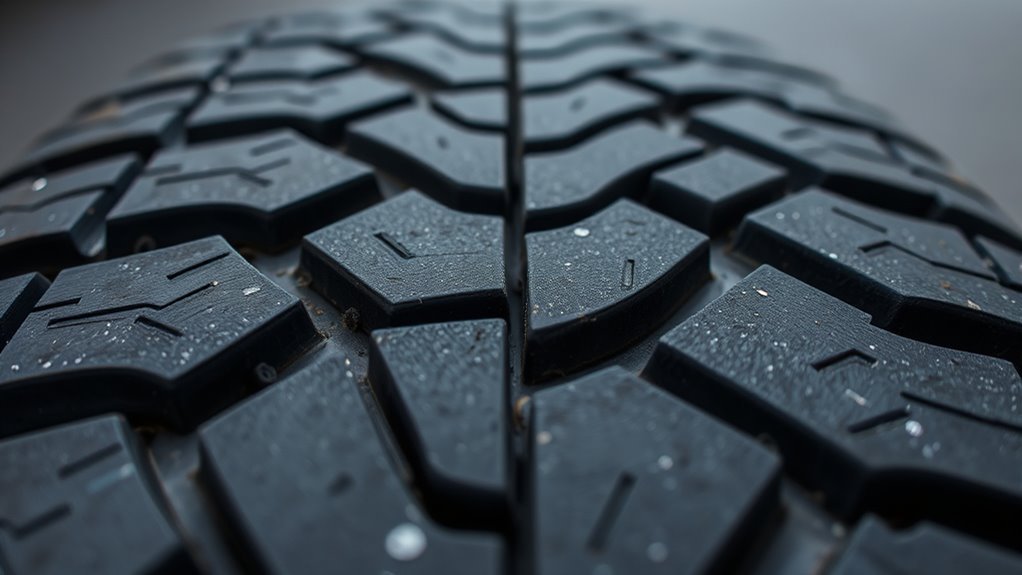
Tire wear indicator bars are raised rubber strips molded across the grooves that reach flush with the tread at about 2/32″ — when you see them, the tire’s legally worn and should be replaced. Use the penny or quarter tests for quick checks and a gauge for precise measurements across grooves. Inspect multiple tread locations and look for dimples or edge etchings that mark wear. If you want practical checks, causes, and replacement timing, keep going.
How to Check Tread Depth: Tire Wear Bars, Penny/Quarter, and Gauges
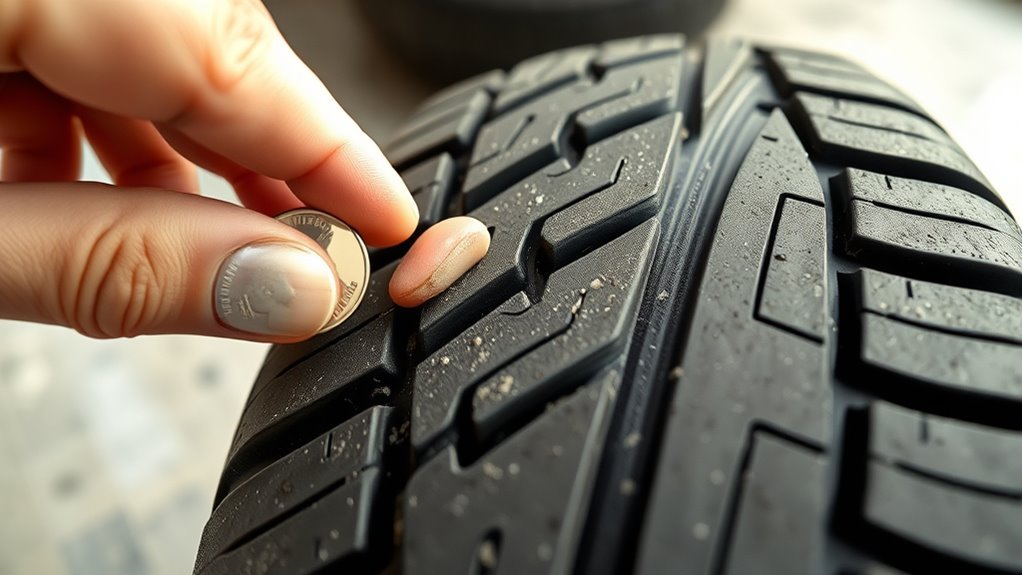
Routine checks of your tire tread keep you safe and legal. You’ll inspect built-in wear indicator bars that appear in the grooves at a tread depth of 2/32 inch; when bars become visible, replace the tire to restore tire safety. Use the Penny Test by inserting a penny upside down into a groove: if Lincoln’s head is fully visible, the tread’s below 2/32 inch and replacement’s required. The Quarter Test is a quick intermediate check: if Washington’s head touches the tread, you’ve got about 4/32 inch—usable but nearing the limit. For precision, use a tread depth gauge: seat the probe in the groove, read the measurement, and compare to safety thresholds. Check multiple grooves across the tire to detect uneven wear. Do these checks regularly—before long trips and season changes—to reduce hydroplaning risk and preserve braking performance. You’ll maintain control and the freedom to travel safely.
Where to Spot Tire Wear Bars and What They Look Like
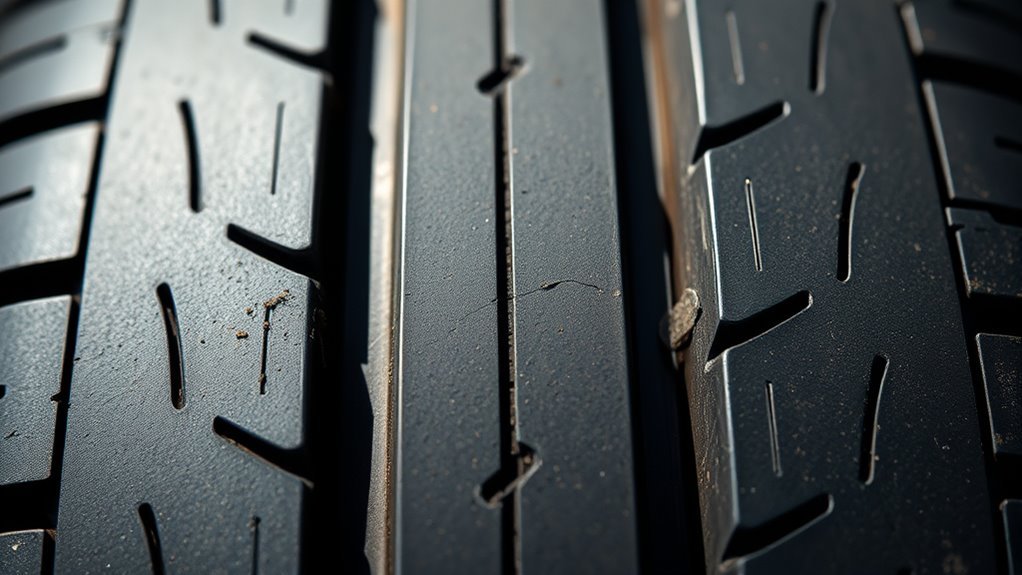
Now that you know how to check tread depth with wear bars, coins, and gauges, learn where to find those bars and what they look like. You’ll inspect grooves across the full tread because tire bar locations vary by manufacturer. Look for small rubber strips running perpendicular to grooves; they become flush with the tread at 2/32″. Some brands use edge etchings or dimple-like indentations instead of bars. Check sidewalls and shoulder shifts for those unique markers. Regular inspection using these visibility tips lets you act before legal minimums are reached.
| Location | Marker type | What to watch for |
|---|---|---|
| Central grooves | Raised bar | Bar flush with tread |
| Shoulder grooves | Dimple/indent | Etch or small hole |
| Sidewall edge | Etched marker | Brand-specific symbol |
| Full circumference | Continuous bar | Even wear across tire |
| Multiple grooves | Repeated bars | Consistent visibility across ribs |
Inspect systematically; freedom on the road depends on timely, exact action.
Uneven Wear Patterns and What They Indicate
When you spot irregular tread wear, read the pattern to diagnose issues: if one side is worn more than the other, it usually signals camber misalignment requiring camber adjustments to restore even contact. Feathering — sharp, angled edges across tread ribs — points to improper toe settings that you should correct to improve tracking and reduce noise. Center wear indicates overinflation; lower pressure to increase shoulder contact and preserve tread. Edge or shoulder wear reflects underinflation and raises blowout risk; inflate to manufacturer specs and recheck alignment. Cupping, with scalloped or scooped sections, suggests worn suspension components—bushings, shocks, or mounts—that you’ll need to service to stop vibration-induced wear. Read each pattern as a cue: adjust camber, correct toe settings, maintain proper inflation, and repair suspension faults. Those steps free you from avoidable tire loss and keep control precise, safe, and more liberating on the road.
When to Replace Tires: Legal Limits, Safety Thresholds, and Timing to Shop
Know that most states set the legal minimum tread at 2/32 inch; you must replace tires at or below that depth. You should start shopping when tread reaches about 4/32 inch to avoid slipping into the legal/safety zone. Check wear bars and other signs now—visible bars, uneven wear, or reduced wet traction mean it’s time to buy.
Legal Minimum Tread
Although many states set the legal minimum tread depth at 2/32 inch, you should start shopping for replacements once tread reaches 4/32 inch to maintain stopping performance and reduce hydroplaning risk. You’ll remain compliant with safety regulations by replacing tires before they hit the 2/32 inch statutory limit, but proactive replacement preserves control and minimizes crash risk. Inspect tread depth regularly with a gauge or a coin test, and watch for wear bars that indicate when tread is flush. Driving on tires at or below the legal minimum multiplies accident risk and contributes to thousands of annual collisions. Choose replacements based on load, climate, and performance needs so you can drive freely without compromising safety or violating legal limits.
Optimal Replacement Window
If your tread measures 4/32 inch or less, start shopping for replacements so you’re not caught driving on tires that approach the 2/32 inch legal minimum indicated by wear bars. You’ll use 4/32 as your actionable replacement timing threshold to preserve safety performance before legal limits force a change. Inspect tread regularly; when wear bars become flush with the tread, replace immediately. Worn tires amplify hydroplaning risk and braking distance, degrading control and trip freedom. Treat tread depth monitoring as routine maintenance that protects your mobility and autonomy. Prioritize timely replacement to avoid a threefold increase in accident likelihood from inadequate traction. Choose tires that restore specified tread depth and handling characteristics to reclaim confident, liberated driving.
Signs To Shop Now
A quick visual and tread-depth check tells you when to shop: start looking for replacements once tread measures 4/32 inch or when tread wear bars become visible, and replace immediately if any part of the tire reaches the 2/32 inch legal minimum. You’ll perform regular tread inspection to detect uneven wear patterns; any localized 2/32 inch zone mandates immediate replacement to maintain control and legal compliance. Visible wear bars and 4/32 inch readings indicate compromised wet traction and rising hydroplaning risk, so begin tire shopping proactively rather than waiting for failure. Prioritize models with measurable grooves and robust siping. Act decisively—timely replacement preserves your mobility, reduces stopping distances, and protects your autonomy on wet and variable roads.
Seven Maintenance Steps to Prevent Premature Wear and Extend Tread Life
You should check tire pressure monthly to maintain correct inflation and prevent uneven wear. Rotate tires every 5,000–8,000 miles to equalize tread wear across axles. Inspect suspension components regularly, since worn parts can induce misalignment and accelerate tread loss. Additionally, regular monitoring of tread depth ensures timely replacement and enhances safety on the road.
Check Tire Pressure Monthly
Check tire pressure at least once a month to keep the contact patch ideal and prevent uneven tread wear. You’ll preserve tread life and control by confirming PSI against the manufacturer’s spec on the door jamb or manual. Measure when tires are cold; remember pressure falls roughly 1 psi per 10°F drop. Underinflation accelerates edge wear and overinflation concentrates wear at the center—either can cut tread life by as much as 25%. Adjust pressures with a calibrated gauge and a reliable air source, documenting changes for trend spotting. Regular checks reduce premature replacements and improve the safety impact of your tires, giving you freedom from avoidable failures and the confidence to drive with consistent handling and optimized fuel efficiency.
Rotate Tires Regularly
Rotate your tires every 5,000–8,000 miles to equalize wear patterns and extend tread life. You’ll harness tire rotation benefits: even out front-to-rear disparities caused by steering and drive forces, reduce cupping and feathering, and preserve traction. Use the manufacturer’s rotation pattern—front-to-back or crisscross—to maintain balanced contact patches. Keep rotation frequency consistent and documented; doing so stabilizes handling, supports fuel efficiency, and delays reaching wear indicator bars. When you rotate, inspect tread depths and note irregularities that signal alignment or component issues (reserved for the next section). Rotate at service intervals or with every oil change to simplify compliance. This disciplined approach frees you from premature replacements and maximizes tire life, cost-efficiency, and road confidence.
Inspect Suspension Components
Inspect your suspension components at regular intervals—shocks, struts, bushings, and mounts—since worn parts quickly produce uneven tread wear and degrade handling. You’ll perform suspension inspections to spot leaks, cracks, excessive bounce, or loose bushings. Component maintenance includes proactive replacement and scheduled alignments every 5,000–10,000 miles to keep tire contact ideal and extend tread life. Act decisively: worn components steal control and freedom; replacing them restores predictable handling and even wear patterns. Keep records of inspections and repairs to enforce a regimen that liberates you from roadside uncertainty.
| Risk | Action | Reward |
|---|---|---|
| Leaks | Replace shock/strut | Grip restored |
| Play | Rebuild/replace bushings | Alignment holds |
| Misalignment | Professional check | Even wear |
Quick Troubleshooting: Unusual Wear Despite Proper Care
Even when you maintain proper inflation and rotation schedules, atypical tread patterns—like feathering, edge wear, cupping, or scalloping—usually point to suspension or alignment faults that need prompt diagnosis. Misalignment causes distinct wear patterns; you should inspect toe and camber settings first. If rotations and pressures are correct but you see feathered edges or inner/outer wear, schedule an alignment check.
Cupping or scalloping signals degraded shocks or struts: degraded damping lets the tire hop, creating localized tread scallops. Measure tread depth across the width and around the circumference to quantify irregularities. Remember temperature-driven pressure loss—about 1 psi per 10°F drop—can accelerate uneven wear, so check pressures monthly.
Replace or repair worn suspension parts and re-align to restore even contact patch loading. Do visual inspections regularly and act on anomalies promptly. That approach preserves tire life, reduces risk, and frees you from unnecessary replacements.
Frequently Asked Questions
How to Read a Tire Wear Bar?
You read a tire wear bar by inspecting grooves: if the tread sits flush with the bar, you must replace the tire. Use tire maintenance tips and tread depth measurement tools to guarantee safety and preserve your mobility.
Can You Drive With Tires at Wear Bars?
No—you can’t safely. Like a parachute with frayed cords, worn tires cut your escape; tire safety demands replacing at wear bars since tread depth at 2/32″ raises hydroplaning risk and braking distances dramatically.
What Are the Built in Tread Wear Indicators?
They’re tiny raised rubber bars molded across tread grooves that show when tires hit minimum tread; you should monitor them as part of tire maintenance tips, since tread depth importance affects grip, safety, and your driving freedom.
Conclusion
Think of your tires as the last line of defense—those tiny wear bars are bundled compasses, pointing when grip slips and danger approaches. You’ll check tread with a gauge, coin, or the molded bars; you’ll read uneven ribbing like weathered maps showing alignment, pressure, and balance faults. Replace at legal or safety thresholds, maintain inflation and rotation, and you’ll keep those safety markers honest—preventing surprise failures and steering you safely forward.
Related Articles
Signs You Need New Tires: Visual & Performance Clues
Lifelong safety starts with spotting tread wear, bulges, or vibration—learn the simple checks that tell you when tires must be replaced.
Read More
Tire Age Limit: How Old Is Too Old to Drive On?
When should you retire tires—learn the crucial six-year rule, warning signs, and what to check next to avoid sudden failures.
Read More
Flat Tire on the Highway: Safe Steps to Pull Over & Fix
A quick, calm checklist for safely pulling over and changing a highway flat—learn the critical steps to protect yourself and finish the job confidently.
Read More