
Tire Warning Signs on a Toyota RAV4: When to Take Action
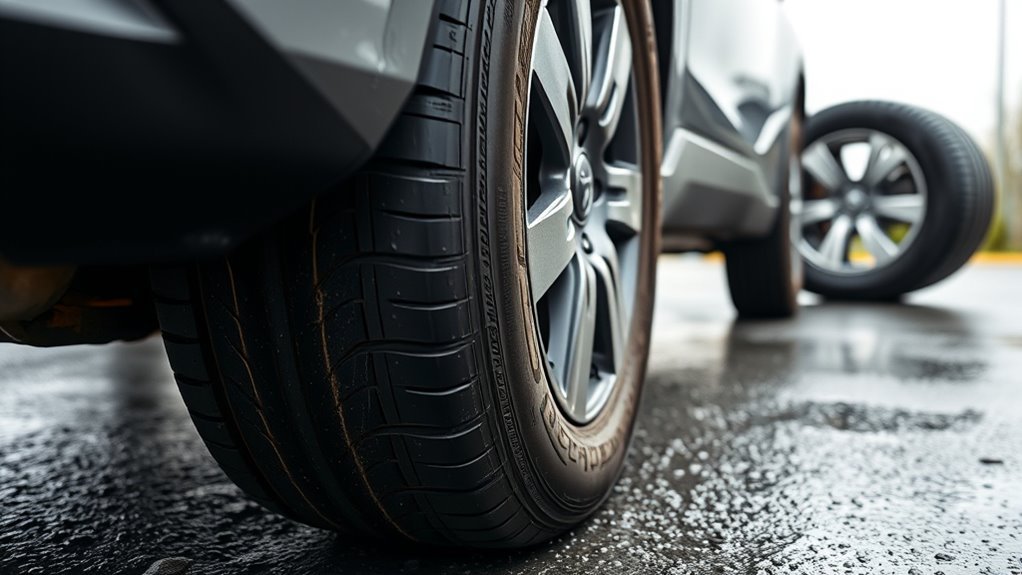
If you notice the yellow exclamation mark light on your Toyota RAV4, it signals a tire pressure issue that needs your attention. This warning often means low tire pressure, which can lead to performance problems, flat tires, or worse. Checking your tire pressure regularly guarantees safety and efficiency. If the light stays on even after adjusting the pressure or if you experience handling issues, seeking professional help is essential. You’ll discover more about maintaining your tires effectively.
What Does the Yellow Exclamation Mark Light Mean?
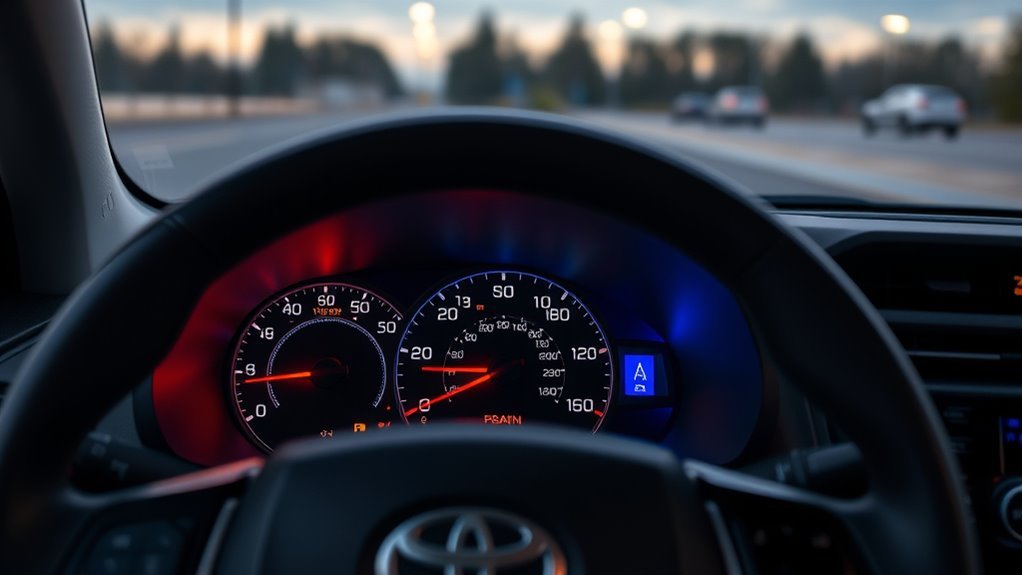
When you see the yellow exclamation mark light on your Toyota RAV4, it’s a clear signal that something needs your attention—specifically, the Tire Pressure Monitoring System (TPMS). This warning usually pops up due to low tire pressure, which can drop by 1 PSI for every 10°F decrease in temperature. It’s essential to check all tires, including the spare if it has a TPMS sensor, to guarantee proper tire inflation.
If you confirm that all pressures are correct, the light might indicate a faulty TPMS sensor or that the system needs a reset. Regularly monitoring tire pressure isn’t just about compliance; it’s about enhancing your driving experience and safety. Ignoring this warning can lead to performance issues, so take action when you see that light. Stay proactive—your RAV4 deserves it!
Common Causes of the Tire Pressure Warning Light
While many drivers might overlook the Tire Pressure Warning Light, understanding its common triggers can help you avoid potential issues. One of the main causes is tire pressure fluctuations due to seasonal temperature changes; for every 10°F drop, you can lose about 1 PSI, leading to a 20-25% pressure drop in your tires. Such under-inflation can result in common tire issues like decreased fuel efficiency and increased risk of flats or blowouts, which compromise your safety on the road. Additionally, leaks or punctures can cause sudden pressure drops that trigger the warning light. Sometimes, the Tire Pressure Monitoring System (TPMS) could malfunction, activating the light even when tire pressures are fine. Regularly checking your tire pressure and addressing these common problems will keep your RAV4 running smoothly and safely.
How to Check Your Tire Pressure Safely
Checking your tire pressure safely is essential for ideal performance and safety. You’ll need a reliable tire pressure gauge and a few simple steps to get accurate readings. Let’s go through the process and best practices together to keep your RAV4 running smoothly.
Required Tools Overview
To guarantee your Toyota RAV4’s tires are in peak condition, you’ll need a reliable tire pressure gauge—either digital or analog. Understanding tire gauge basics is essential, as accurate readings confirm your safety on the road. Always check your tire pressure when the tires are cold; driving heats them up, leading to inflated readings. Locate the recommended tire pressure, usually on the driver’s side door jamb or in your owner’s manual, to know the ideal PSI. Don’t forget to check all four tires and the spare if it has a sensor. For adjustments, use an air compressor at a gas station or a portable inflator, employing proper pressure measurement techniques to avoid overinflation.
2. Step-by-Step Procedure
Verifying your tire pressure is ideal starts with a reliable tire pressure gauge. Begin by measuring the air pressure in each tire when they’re cold; temperature can greatly affect readings. Check your vehicle’s owner’s manual or the driver’s side door jam for the recommended tire pressure, usually around 35 PSI for many Toyota RAV4 models. If the pressure’s low, use an air compressor to inflate the tires, but be careful not to overinflate. After adjusting, reset the Tire Pressure Monitoring System (TPMS) if needed, following your vehicle’s specific reset procedure to clear any warning lights. For best tire maintenance, check your pressure at least once a month and before long trips to confirm safe driving conditions.
3. Best Practices Reminder
While it might seem straightforward, checking your tire pressure safely requires a few key steps to guarantee accuracy. Start by checking your tires when they’re cold, ideally before you drive. Use a reliable tire pressure gauge—digital ones are often easier to read and more precise. The recommended tire pressure for your Toyota RAV4 is typically around 35 PSI. If your tires are below this level, inflate them immediately. Make it a habit to follow these tire maintenance tips and check your pressure at least once a month or before long trips.
| Action | Frequency |
|---|---|
| Check Tire Pressure | At least monthly |
| Inspect for Damage/Wear | Monthly |
| Inflate to Recommended PSI | As needed |
What’s the Right Tire Pressure for Your RAV4?
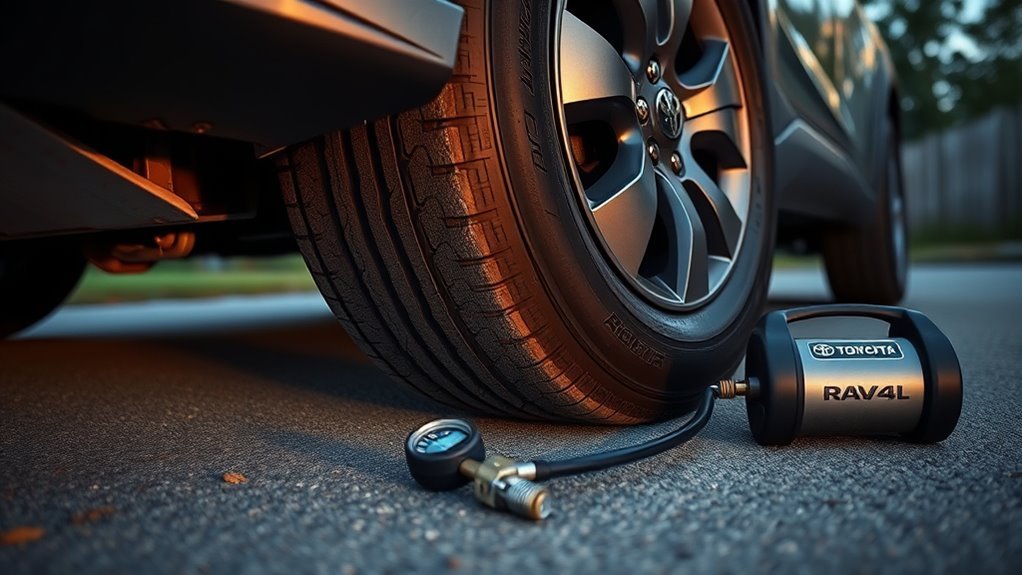
When it comes to your RAV4, the right tire pressure usually falls between 32 and 35 PSI, depending on your model and trim. To find the exact number, just check the driver’s side door jamb—it’s tailored for your vehicle. Remember, seasonal temperature changes can affect pressure, so keep an eye on it to guarantee safe and efficient driving.
Recommended PSI Levels
To keep your Toyota RAV4 performing at its best, knowing the right tire pressure is vital. Typically, you’ll want to maintain a tire pressure between 29 to 35 PSI, depending on your model year and load conditions. Always check the driver’s side door jamb for the exact specifications unique to your vehicle. Measuring tire pressure when the tires are cold is important, as driving can inflate the readings. Regular tire pressure adjustments not only enhance ideal tire performance but also boost fuel efficiency and improve safety. By routinely inspecting and adjusting your tire pressure, you can prevent uneven tire wear and potential blowouts, ensuring your tires last longer and your RAV4 runs smoothly.
Seasonal Pressure Adjustments
As temperatures shift with the seasons, it’s important to keep a close eye on your Toyota RAV4’s tire pressure. The recommended levels are about 33 PSI for the front tires and 30 PSI for the rear, but always check the specifics on your driver’s side door jamb. Seasonal pressure fluctuations can cause your tires to lose about 1 PSI for every 10°F drop in temperature, especially during winter. Regular tire pressure checks are vital for winter maintenance, ensuring peak traction and handling on icy roads. Plus, maintaining proper pressure helps prevent premature tire wear and boosts fuel efficiency. Don’t let low tire pressure catch you off guard; stay proactive for a safer, smoother ride.
Immediate Actions to Take When the Tire Pressure Light Activates

Seeing the tire pressure warning light activate on your Toyota RAV4 can be alarming, but swift action is key. Here’s what you should do immediately:
Seeing the tire pressure warning light on your Toyota RAV4 can be concerning, but prompt action is essential for safety.
- Stop Safely: Pull over to a safe location and turn off the engine.
- Check All Tires: Inspect each tire, including the spare if it has a sensor, for visible damage or punctures.
- Inflate Tires: If you find under-inflated tires, inflate them to the recommended pressure, which you can find on the driver’s side door jam or in the owner’s manual.
- Reset TPMS: After addressing tire pressure issues, reset the Tire Pressure Monitoring System using your vehicle’s menu or the dedicated reset button.
Ignoring the warning light can jeopardize your safety, fuel efficiency, and handling. Regular tire pressure maintenance and seasonal tire care are essential to keep your RAV4 performing at its best.
What You Need to Know About the Tire Pressure Monitoring System (TPMS)
The Tire Pressure Monitoring System (TPMS) is essential for keeping your RAV4 safe on the road. It alerts you when tire pressure drops markedly, helping you avoid potential issues. Regular monitoring of this system guarantees it functions correctly, so you can drive with confidence.
Understanding TPMS Functionality
Tire safety is essential, and understanding how the Tire Pressure Monitoring System (TPMS) works can help you maintain it effectively. Here’s what you should know about TPMS functionality:
- Types of TPMS: Familiarize yourself with direct sensors, which give real-time readings, and indirect methods that use wheel speed sensors.
- Warning Light Activation: The TPMS light activates when tire pressure drops by 20-25%, signaling potential issues.
- Reset Procedures: Know how to reset the TPMS light, usually involving a reset button or accessing the vehicle’s menu.
- Sensor Maintenance Tips: Regularly inspect sensors, as malfunctions can trigger false warnings despite correct pressures.
Importance of Regular Monitoring
While you might rely on your TPMS to alert you to low tire pressure, regular monitoring is essential for maintaining peak vehicle performance and safety. TPMS systems only trigger when tire pressure drops by 20-25%, meaning you could still face issues before that alert. Under-inflated tires can lead to increased wear, reduced fuel efficiency, and a higher risk of blowouts, all serious safety implications. Keep in mind that temperature changes can also affect tire pressure; even a 10°F drop can reduce it by about 1 PSI. To guarantee ideal handling and longevity of your tires, check your tire pressure regularly, aiming for the recommended 33 PSI or as specified by your manufacturer. Stay proactive to keep your ride smooth and safe!
Risks of Ignoring Tire Pressure Alerts
Ignoring tire pressure alerts can seem harmless, but it often leads to serious consequences for your safety and wallet. Under-inflated tires aren’t just a minor inconvenience; they can pose significant risks.
- Increased Risk of Flats: Low pressure raises the chances of blowouts, especially at high speeds.
- Fuel Efficiency Loss: Every 1 PSI drop can reduce fuel efficiency by up to 3%, costing you more at the pump.
- Uneven Tire Wear: Ignoring alerts can lead to accelerated wear, resulting in frequent replacements and higher maintenance expenses.
- Compromised Vehicle Control: Low tire pressure affects handling, making it harder to maintain control, especially in emergencies.
Resetting Your Tire Pressure Monitoring System
After addressing the risks associated with ignoring tire pressure alerts, it’s important to know how to reset your Tire Pressure Monitoring System (TPMS) on your Toyota RAV4. Here’s a quick TPMS functionality overview to help you out:
| Step | Direct TPMS | Indirect TPMS |
|---|---|---|
| Locate the reset button | Found beneath the steering wheel | Access via vehicle menu |
| Inflate tires | To recommended pressure | To recommended pressure |
| Press reset button | Until light blinks, then off | Select reset option |
| Drive after resetting | 10-30 minutes for recalibration | 10-30 minutes for recalibration |
For both systems, it’s essential to maintain your TPMS sensors. If the warning light stays on post-reset, consult a professional for sensor maintenance. Keeping your tires in check not only enhances safety but also liberates your driving experience!
When to Get Professional Help With Your Tire Pressure System
When your Tire Pressure Warning Light stays illuminated despite adjusting your tire pressures, it’s crucial to seek professional help. Ignoring this warning could lead to safety issues. Here are key signs that indicate it’s time for a technician:
- Persistent Warning Light: If the light remains on after correcting pressures, you might have tire sensor issues.
- Frequent Pressure Fluctuations: A drop in tire pressure of 20-25% that recurs signals underlying pressure fluctuation concerns.
- Inconsistent Readings: If one tire consistently shows lower pressure than others, it could mean a leak or sensor malfunction.
- Handling Issues: Difficulty in handling or stability while driving often points to tire under-inflation or damage, requiring immediate inspection.
Don’t hesitate to rely on professionals, like those at Jay Wolfe Toyota of West County, to guarantee your RAV4’s peak performance and safety.
Tips for Maintaining Optimal Tire Pressure Year-Round
To maintain ideal tire pressure year-round, it’s essential to establish a routine. Check your tire pressure at least once a month, as temperature fluctuations can markedly affect inflation levels, impacting both performance and safety. For your Toyota RAV4, the recommended tire pressure is typically around 35 psi, which you can find on the driver’s side door jamb or in the owner’s manual.
Use a reliable tire pressure gauge for accurate readings; even a 1 psi difference can trigger alerts in your Tire Pressure Monitoring System (TPMS). If the Tire Pressure Warning Light activates, inflate your tires to the recommended pressure immediately. Driving on under-inflated tires can reduce fuel efficiency and increase wear.
Consider scheduling seasonal tire checks at a certified service center, like Jay Wolfe Toyota of West County, to guarantee ideal tire conditions throughout the year. Following these tire maintenance tips will keep you safe and enhance your driving experience.
Frequently Asked Questions
How Do You Reset the Tire Pressure Light on a Toyota RAV4?
To reset the tire pressure light on your Toyota RAV4, inflate tires to recommended levels, press the TPMS reset button until the light blinks, and drive for 10-30 minutes to complete pressure monitoring.
Does RAV4 Tell You Which Tire Is Low?
Your RAV4 won’t tell you which tire’s low; the warning indicators simply flash, urging you to check all tires. Feel the freedom of driving safe by regularly monitoring tire pressure to prevent surprises.
At What Point Does the TPMS Light Come On?
The TPMS light comes on when tire pressure drops by 20-25% in at least one tire. This warning indicator signals potential issues, urging you to check and inflate your tires promptly for safety and efficiency.
Conclusion
In summary, staying on top of your RAV4’s tire pressure is essential for safety and performance. Ignoring those warning lights can lead to serious issues down the road—why take that risk? By regularly checking your tire pressure and addressing any alerts promptly, you can guarantee a smoother, safer ride. Remember, a little maintenance goes a long way in keeping your vehicle in top shape year-round. Don’t wait; take action now!

Related Articles

Upsizing Wheels on a Toyota RAV4: Pros, Cons, and Considerations
Boost your Toyota RAV4's performance with larger wheels, but discover the hidden trade-offs that could impact your ride before you decide.
Read More
Can I Change Tire Size on My Toyota RAV4? Rules and Recommendations
Are you considering changing the tire size on your Toyota RAV4? Discover the essential rules and recommendations before making a decision.
Read More
What to Do If the TPMS Light Comes On in Your RAV4
Understand the steps to take when the TPMS light illuminates in your RAV4, as overlooking it could lead to serious tire problems.
Read More