Tire Tube Parts Explained: Valve, Body & Bead Guide
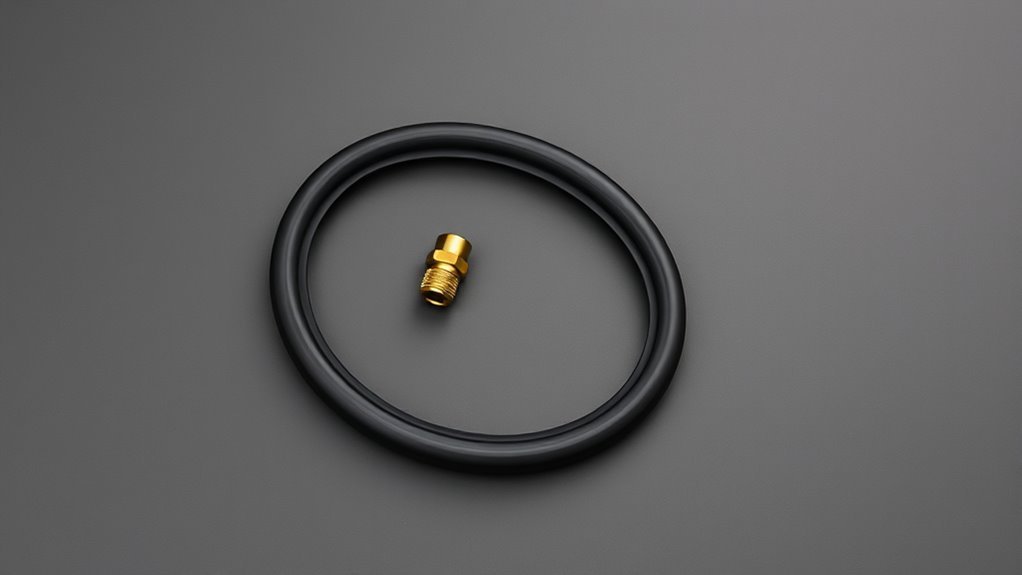
You’ll find three key parts: the valve stem, the tube body, and the tire bead. The valve stem controls one-way air flow and must match your rim hole and pressure needs. The body—typically butyl or natural rubber—forms the airtight chamber and cushions impacts. The reinforced bead seats the tire on the rim and prevents lateral slippage. Proper sizing, alignment, and regular valve inspection prevent leaks and failures, and the guide explains installation, materials, and troubleshooting.
Who This Guide Is For and What It Covers
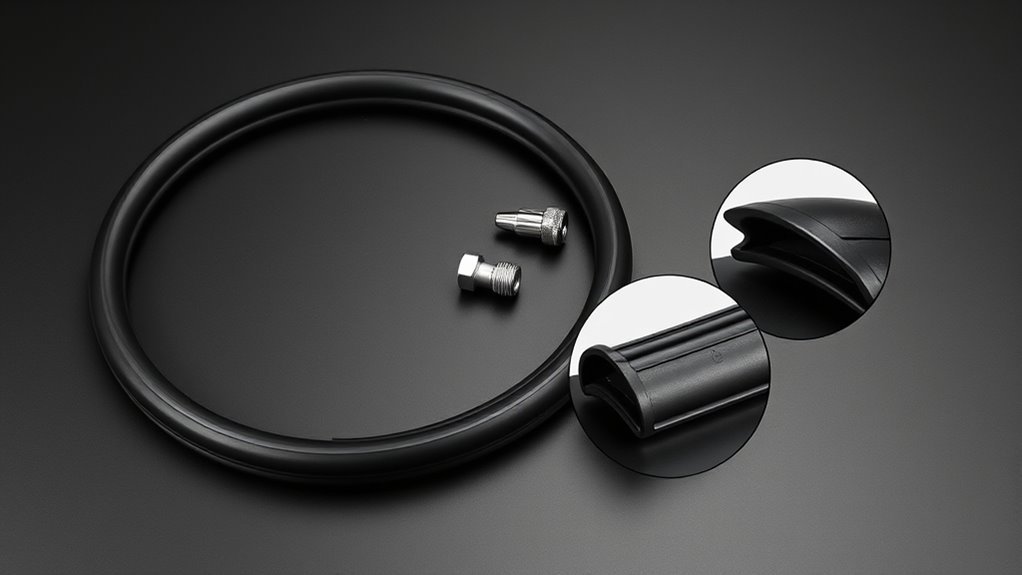
This guide is for anyone who needs a clear, technical primer on inner tube components and their functions. You’ll learn the valve stem’s role as the one-way air mechanism, why its integrity determines pressure retention, and how it prevents air escape. You’ll see the main body described as butyl rubber forming an airtight chamber that supports the tire and dampens shocks. You’ll encounter the tire bead’s construction—high-tensile steel wires wrapped in rubber—to understand how it secures the tire to the rim and resists slippage. With these facts you’ll make informed inner tube selection decisions and apply practical tire maintenance tips to preserve pressure, detect valve or body defects, and maintain bead seating for consistent, safe performance.
How Tubes, Valves, and Beads Work Together
Having covered individual components, you’ll now see how the tube, valve and bead form an integrated system that keeps the tire pressurized, seated and load-bearing. You rely on the vulcanized butyl tube to create an airtight chamber; it cushions and transmits load to the tire carcass. The valve stem provides controlled inflation and pressure management—its core seals to prevent escape, so routine valve maintenance preserves system integrity and extends tube lifespan. Tire beads, with high‑tensile steel, clamp the tire onto the rim, preventing lateral slippage and maintaining the rim-to-tire seal the tube depends on. Correct alignment and compatibility among tube diameter, valve type (Presta or Schrader) and bead seating are critical to avoid leaks, premature wear or catastrophic failure.
Read Tire & Rim Markings to Pick the Right Inner Tube
Reading the tire and rim markings tells you which inner tube will fit and perform safely: decode the tire size (e.g., 540/65 R30 indicates a 30″ rim diameter), note whether the tire is Tubetype (TT) or Tubeless (TL), and match the tube reference and valve type (for example, M754 with TR218A for 30″) to the rim’s valve hole and pressure requirements. You’ll use markings to confirm tire compatibility and tube sizing: rim diameter, TT/TL designation, and load/pressure specs. Match valve stems to rim holes and expected psi; TR300 suits high-pressure, heavy-duty needs. If markings and valve references align, install confidently. If they don’t, don’t guess—replace or consult specs to avoid seal failure or rapid air loss.
| Confirmation | Action |
|---|---|
| Size match | Fit tube |
| Valve match | Seal check |
| Pressure | Validate |
Inner Tube Materials: Butyl vs. Natural Rubber
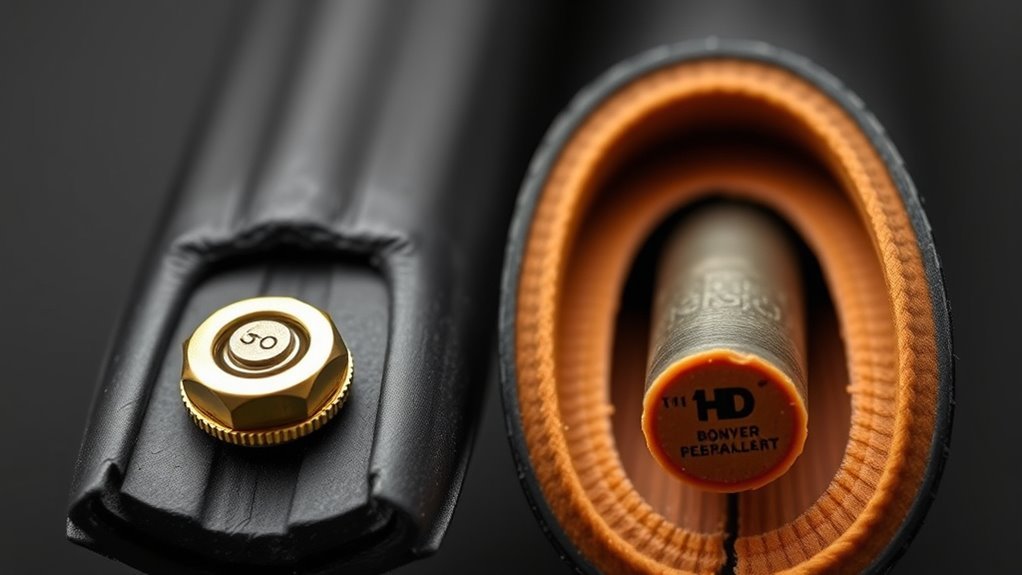
When you choose an inner tube, the construction material — typically butyl or natural rubber — directly affects air retention, durability, and temperature resistance, so match material properties to your use. You’ll select butyl for superior air retention and lower gas permeability; its inner tube advantages include consistent pressure retention, moisture resistance, and broad temperature tolerance, yielding longer service intervals. Natural rubber gives better elasticity and puncture resilience in dynamic deformation, but its higher permeability and reduced resistance to UV and aging mean more frequent inflation and shorter lifecycle. Evaluate rubber durability against expected exposure: heavy-duty, long-duration use favors butyl; applications needing maximum flexibility and ride compliance may justify natural rubber despite maintenance trade-offs. Consider cost and availability when specifying.
Valve Types: Choose the Right Stem for Your Rim
Although valve stems look simple, choosing the right type for your rim hole and operating pressure is critical to prevent leaks and confirm safe inflation. You’ll select stems (TR13, TR15, TR300, TRJS2, TR22O) based on valve compatibility and expected inflation pressures. Low-pressure passenger applications use TR13/TR15 (max 60 psi); heavy-duty vehicles need TR300/TR22O (up to 150 psi). Match rim hole diameter precisely to avoid air loss and fitment failure.
| Valve Type | Rim Hole Size (in) | Max Inflation Pressures |
|---|---|---|
| TR13 | 0.445 / 0.631 | 60 psi |
| TR15 | 0.618 / 0.633 | 60 psi |
| TR300/TR22O | heavy-duty sizes | 150 psi |
Check specs before installation to confirm correct stem selection.
Beads & Bead Filler: How They Affect Tube Fit and Safety
You’ll want to inspect bead construction materials—usually high-tensile steel wires—because they secure the tire to the rim and prevent lateral slip. Check the bead filler’s compound, density, and stiffness since they stiffen the lower sidewall, influence rolling resistance, and affect durability. Confirm proper fit and retention to maintain air pressure and avoid leaks or blowouts.
Bead Construction Materials
Because bead construction combines high-tensile steel wires and a tailored rubber bead filler, it directly determines how a tube fits and how safely the tire stays on the rim. You’ll see bead materials typically use high-tensile steel wires plated with copper, brass, or bronze to resist corrosion and provide the hoop strength needed to lock the tire to the rim. That hoop strength governs bead performance: it prevents slippage under lateral and centrifugal loads and maintains a consistent seal with the rim. You must match bead diameter and construction to rim size; mismatches produce leaks or compromised retention. While bead filler composition affects stiffness, the wire gauge, plating, and winding pattern are the core determinants of durability, fit, and safety.
Bead Filler Functionality
When bead fillers are properly matched to the bead construction and rim, they stabilize the lower sidewall and bead area so the tire keeps its shape under pressure and load; this stability reduces flex, helps maintain a consistent seal, and limits bead movement that can cause leaks or slippage. You should understand that bead fillers are a specific rubber compound seated alongside the high-tensile steel wires that form bead types; their density and stiffness determine how the assembly transmits forces. You’ll notice changes in ride quality, handling, and durability as stiffness increases or decreases — the primary performance impact. Inspect bead fillers and beads regularly for degradation or separation to prevent air loss and structural failure. Proper matching maintains shape and operational safety.
Fit And Retention
A secure bead-to-rim interface is the foundation of tube fit and retention, so you should verify the bead and bead filler match the rim profile and tire construction. Proper bead alignment prevents slippage and maintains airtight seals; beads of high-tensile steel with copper or brass coating resist deformation under load. Bead filler density and stiffness tune structural stiffness, influencing ride quality and the tire’s performance impact on handling.
- Ascertain bead-to-rim conformity to prevent air loss and bead unseating.
- Select bead filler hardness appropriate for load, speed, and intended handling.
- Inspect coatings and filler for wear that compromises retention or seals.
You’ll reduce failure risk by matching bead geometry and filler characteristics to rim and tire specifications.
Pick a Compatible Inner Tube & Valve (30 Example)
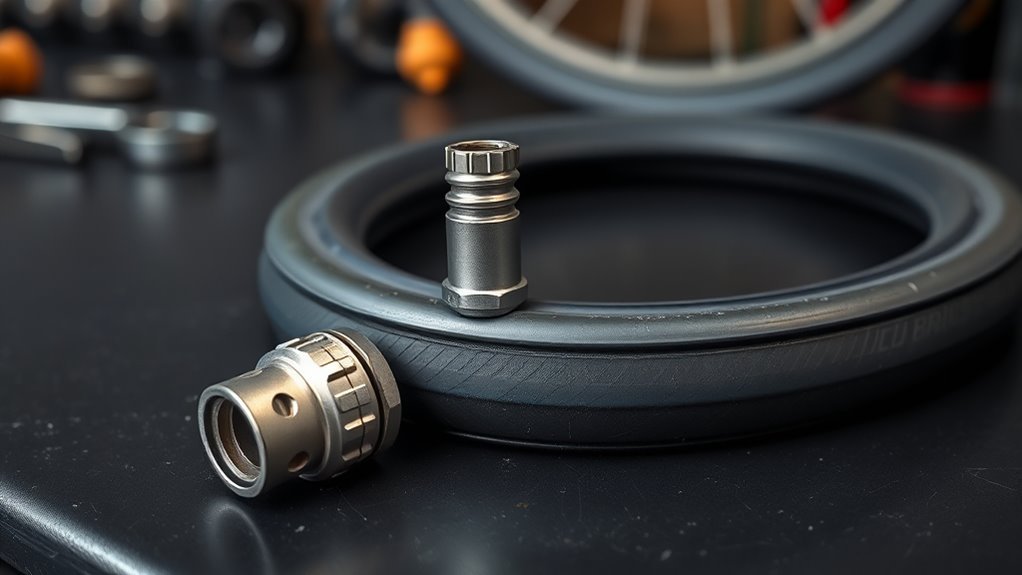
Start by matching the inner tube’s designation to your 30-inch tire—TT for tubetype or TL for tubeless—to confirm proper fit and function. You’ll then select tube width to match your tire’s cross-section; a snug width range prevents pinching and guarantees inner tube compatibility. Choose butyl rubber tubes for durability and airtight sealing; their material stability maintains pressure under typical loads. For a 30-inch tire listing valve reference M754, use a TR218A valve to secure correct valve performance and pressure retention. Verify valve length suits the rim depth to avoid stress at the stem. Inspect tube construction and valve seating for defects before mounting. Proper selection minimizes failures and optimizes tire behavior without addressing installation or post-install maintenance.
Install and Maintain Tubes: Stems, Sealing, and Leak Checks
Align the valve stem with the rim hole and seat the tube evenly before tightening the tire beads to prevent pinches and stem stress. You’ll confirm compatibility of tube size and valve type, then partially inflate to shape the tube, use proper tire inflation techniques to final pressure, and torque beads evenly. Check valve cores for sealing and replace faulty cores as needed.
- Inspect valve stem for cracks, corrosion, or play before each ride.
- Use soapy water across valve, bead, and rim seams to expose leaks by bubbling.
- Check pressure weekly and adjust per recommended PSI.
Follow valve maintenance tips: keep cores tight, use caps, and avoid over‑stretching stems during installation to reduce slow leaks and extend tube life.
Troubleshooting: Valve Failures, Slow Leaks, and When to Call a Dealer
Because valve issues often start at installation, check the stem alignment and rim attachment first—misalignment or a loose stem will let air escape and stress the valve. Follow valve maintenance tips: inspect core threads, tighten or replace damaged cores, verify rim tape condition, and confirm correct valve type/size (e.g., TR218A) for compatibility. For slow leaks, apply leak detection techniques such as a soapy water solution over the valve stem, base, and rim; bubbles indicate escaping air. Also inspect for debris and tube pinches. If replacing the valve doesn’t stop loss, or you can’t identify the source, stop further DIY repairs. Persistent leaks, incompatible replacements, or unclear failure modes require dealer or tire professional diagnosis to avoid repeated failures and safety risks.
Frequently Asked Questions
What Is the Difference Between TR13 and TR15 Valve Stems?
The difference is stem diameter and typical use: TR13 is 0.46″ for industrial/light trucks; TR15 is 0.65″ for passenger/front tractors. You’ll follow valve types selection and installation tips for proper fit and sealing.
What Are the Parts of a Tire Valve?
Like a tiny gatekeeper, a tire valve has a stem, core, cap, and seal—these valve types affect fit and function, and you’ll need routine valve maintenance to inspect cores, caps, stems, and seals for leaks or damage.
What Is the Anatomy of the Tire Tube?
The anatomy of a tire tube includes the rubber body, valve stem with core, and reinforced bead; you’ll consider tube materials, seam construction, and inflation methods (manual pump, compressor) to guarantee proper pressure, fit, and durability.
What Are the Six Major Parts of a Tire?
You’ve got six major parts: tread, sidewall, bead, radial cord body, inner liner, and valve—tire construction relies on engineered tire materials, combining steel, fabric, and rubber to deliver strength, air retention, and road contact.
Conclusion
You now know how tubes, valves, and beads work together, how to read rim and tire markings, and how materials and valve types affect fit and safety. Choose the correct tube, match the valve to the rim, seat the bead, and secure the stem. Inspect seals, test for leaks, and replace damaged parts. Maintain proper pressure, monitor for slow leaks, and get professional help when repairs exceed your tools or skills.
Related Articles
How to Read Motorcycle Tire Size: Complete Breakdown
Often misunderstood, this guide decodes motorcycle tire sizes like 180/55ZR17—learn what each number and letter means to ensure safe, perfect fitment.
Read More
How to Read Bicycle Tire Size: Inches, Metric & ISO
Get the essential trick to decoding ETRTO/ISO codes so you’ll always pick rim-compatible tyres—discover what to check next.
Read More
How to Read Tire Size Numbers: Decode the Sidewall
Step-by-step guide to decode tire sidewalls—sizes, load, speed, DOT and winter symbols—so you’ll know what fits and when to replace.
Read More