
Tire Storage Tips: Keep Off-Season Tires in Top Shape
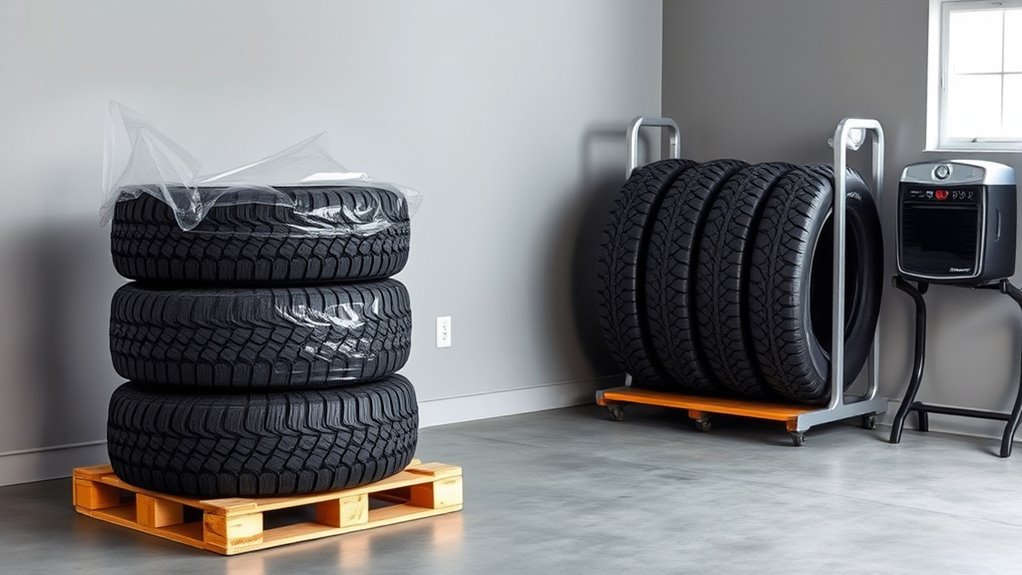
Clean your tires with mild soap and water and let them dry completely, then inspect for cuts, cracks, punctures, bulges and uneven wear, noting tread depth and original vehicle positions. Mark each tire (FR/FL/RR/RL) and log conditions. Store unmounted tires upright and mounted ones stacked or supported, elevated off the floor on pallets, away from sunlight, ozone sources, heat and chemicals. Keep a cool, dark space, rotate or roll monthly, maintain mounted tire pressure, and check before reuse — more practical guidance follows.
Tire-Storage Checklist: What to Do First
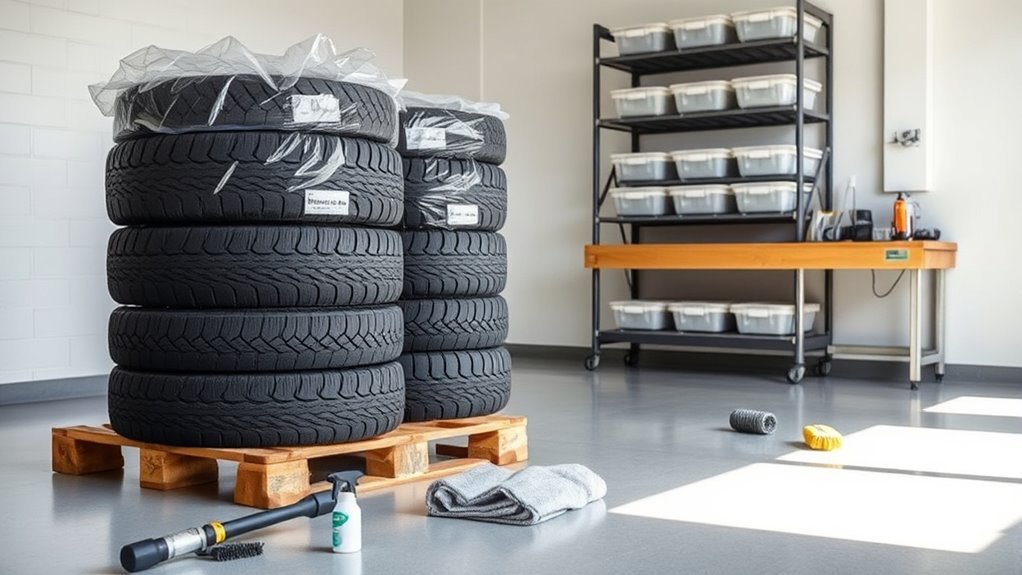
Before you stash your tires, clean them thoroughly with mild soap and water and let them dry completely; this removes dirt and contaminants that accelerate rubber degradation and prevents mold. Next, conduct a focused tire maintenance check: inspect tread, sidewalls, and bead areas for cuts, cracks, bulges, or embedded debris. Don’t skip puncture or valve stem checks—address repairs before storage so you’re not tied down later. Once clean and confirmed sound, verify dryness again; moisture invites mold and accelerates compound breakdown. Mark each tire’s original vehicle position discreetly so you can restore correct rotation patterns at reinstall. Choose a storage spot that’s cool, dry, and well ventilated, shielded from sunlight, ozone sources, and chemicals that attack rubber. Stack or hang according to manufacturer guidance to avoid distortion. These steps give you control over seasonal storage, reduce surprises, and free you to move when the season changes.
Prep Your Tires: Clean, Inspect, and Mark Positions
Before storing your tires, clean them thoroughly with mild soap and water and let them dry completely to prevent moisture-related degradation. Inspect each tire for cuts, cracks, punctures, or other damage and repair or replace any compromised units. Mark the mounting position (e.g., “FR,” “RL”) on the sidewall so you can reinstall and rotate them correctly next season.
Clean Thoroughly With Soap
Start by washing each tire with mild soap and water, using a soft brush or cloth to remove dirt, mud, and brake dust without abrading the rubber. You’ll perform tire cleaning with controlled soap application, rinsing thoroughly. Dry each tire completely to prevent moisture buildup and mold. Don’t use harsh chemicals or tire shine; they weaken rubber and shorten service life. While cleaning, note any irregularities for later inspection but don’t diagnose damage here. Mark each tire’s original vehicle position so you can restore correct rotation and balance when reinstalling. Store in a cool, dry place after cleaning. Keep records of cleaning dates to maintain a disciplined schedule that frees you from avoidable tire failures.
| Step | Purpose |
|---|---|
| Wash | Remove contaminants |
| Dry | Prevent mold |
| Mark | Preserve rotation |
Inspect For Damage
With the tires clean and dry, inspect each one carefully for cuts, cracks, punctures, bulges, or signs of sidewall damage that could compromise safety or storage integrity. You’ll run your hands and eyes over the bead, shoulder, and tread surface, feeling for embedded debris and listening for air leaks that indicate tire punctures. Measure tread depth across multiple points to detect uneven tread wear; document any areas under factory spec or showing feathering, cupping, or flat spots. Reject or repair tires with structural damage—don’t gamble with compromised rubber. Note manufacturing dates and environmental exposure signs like ozone cracking. Store only sound units in a cool, dry location away from solvents and electrical equipment that produce ozone, preserving freedom to drive safely when the season returns.
Mark Tire Positions
Label each tire’s exact position on the vehicle—front-right (FR), front-left (FL), rear-right (RR), rear-left (RL)—before you remove them so you can reinstall in the same spots or follow a prescribed rotation pattern. Use clear marking techniques: paint stick on the sidewall or adhesive tags on the tread, noting date and observed condition. Clean each tire with mild soap and water, dry completely to avoid moisture buildup, then inspect for cuts, cracks, or punctures. Record positions and condition in a simple log to track wear trends and plan tire rotation. Store labeled tires upright or stacked as recommended, and check them periodically in storage to confirm markings remain legible and condition hasn’t changed. This process protects safety and extends tire life.
Stand, Stack, or Hang: How to Position Tires
Although how you position tires depends on whether they’re mounted, you should stand unmounted tires upright to preserve shape and prevent deformation. Adopt a clear tire orientation: label and align upright tires in storage containers or on racks so you can access and rotate them monthly to avoid flat spots. If tires are mounted, stack them horizontally; keep stacks low, distribute weight evenly, and use pallets or shelves so they don’t contact the floor.
Never hang unmounted tires — they’ll sag and deform. You can hang mounted tires on sturdy tire hooks to relieve sidewall stress, but verify hooks and anchor points meet load requirements. Keep a rotation schedule and mark positions so you can swap locations each month; that preserves balance and life. Use storage containers, breathable covers, or racks that permit airflow while shielding tires from ground heat and moisture. Positioning should be deliberate, secure, and reversible so you maintain control and readiness when it’s time to reinstall.
Protect Tires From Ozone, Chemicals, Moisture, and Sunlight
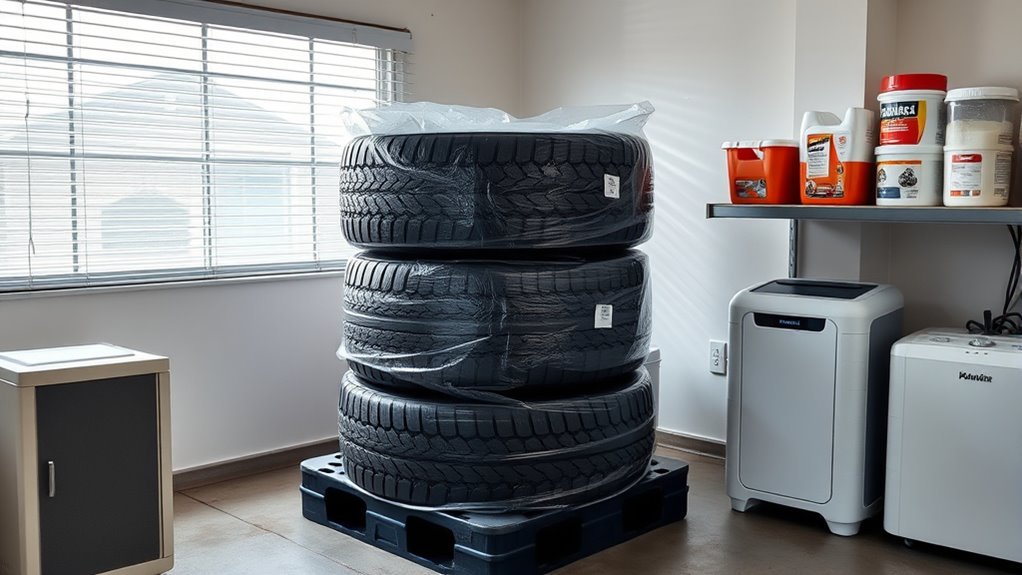
Keep tires away from ozone sources like electric motors and charging equipment, since ozone attacks rubber and promotes cracking. Store tires in airtight bags or sealed containers and position them away from gasoline, oils, solvents, and other chemicals that can degrade compounds. Make sure tires are dry and kept in a cool, dark spot to prevent moisture, mold, and UV-driven breakdown.
Shield From Ozone
Because ozone, sunlight, chemicals, and moisture all attack rubber differently, you should store tires where they’re protected from each hazard: keep them away from electric motors and ozone sources, out of direct sunlight, dry and well-ventilated, and clear of gasoline, oils, and solvents. For ozone specifically, position tires far from compressors, generators, and EV charging equipment; even small ozone concentrations accelerate cracking. Guarantee tires are dry, then seal them in airtight plastic bags to limit exposure to air and ozone, preserving rubber longevity. Use a cool, dark storage space with passive ventilation to avoid humidity buildup without introducing ozone. Inspect periodically for surface checking and rotate bags to relieve stress. These steps give you practical control over degradation and extend usable life.
Keep Away Chemicals
Having secured tires against ozone, you should also protect them from chemicals, moisture, heat, and sunlight to prevent rubber breakdown and safety hazards. Store tires away from gasoline, oils, solvents and equipment that produces ozone (motors, generators) to minimize chemical exposure and rubber degradation. Keep storage cool, dark, dry, and off heat-absorbing surfaces to slow aging. Use covers or sealed bins to block UV and moisture.
| Risk | Mitigation |
|---|---|
| Chemical exposure | Isolate from fuels, solvents |
| Ozone & UV | Distance from motors; use opaque covers |
| Moisture & Heat | Climate-controlled, elevated shelving |
Act decisively: inspect periodically, rotate position, and reject compromised tires to maintain safety and preserve mobility.
Pick the Right Place to Store Tires (Temperature, Ventilation, Surfaces)
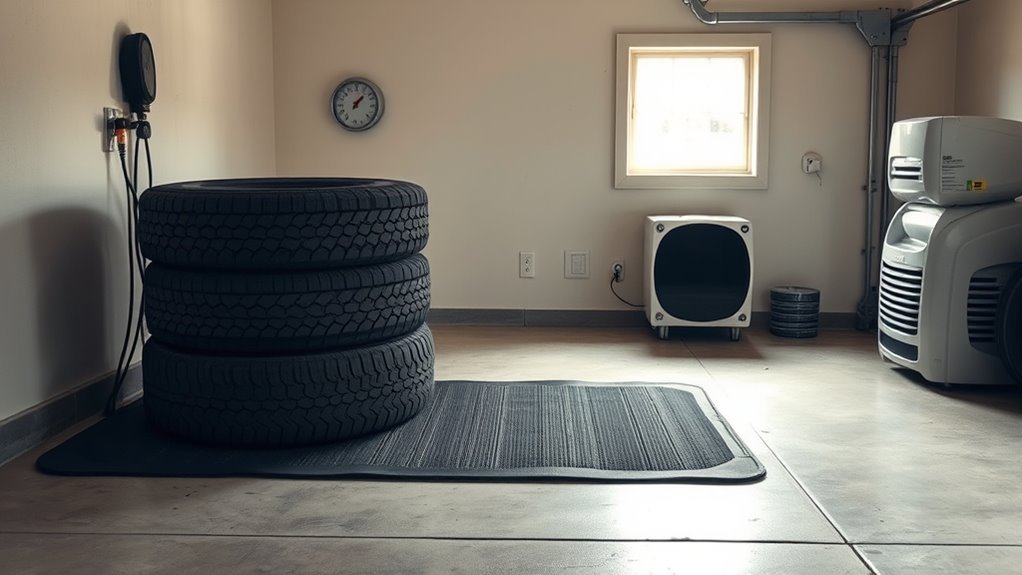
Choose a cool, dry spot with stable temperatures (ideally 15–25°C / 59–77°F), good ventilation, and surfaces that won’t transfer heat or moisture to the tires. You want ideal temperatures to slow rubber aging; temperature swings accelerate degradation. Prioritize ventilation importance: airflow reduces humidity, discourages mold and ozone accumulation that crack compounds.
Don’t store tires on asphalt, sand, snow, or other heat-absorbing or reflective surfaces that raise local temperatures. Keep them out of direct sunlight and away from UV sources; radiation promotes dry rot. Use shelves or wooden pallets to elevate tires off the floor, preventing ground moisture wicking and preserving bead shape. In basements or garages, place tires away from furnaces, hot pipes, and electrical equipment that emit heat or ozone.
Label and position tires so you can inspect them periodically without dragging them across dirty or damp surfaces. Choosing the right spot gives you control — it preserves rubber integrity and extends usable life.
Motorcycle and Mounted-Tire Tips: Monthly Care and Inflation
Once you’ve picked the right storage spot, shift attention to mounted motorcycle tires: keep them inflated to 100 kPa (15 psi) while stored to preserve bead and tread shape, and support the bike on a main stand or jack so the wheels aren’t bearing full weight. You’ll maintain correct tire pressure and reduce compressive stress that leads to flat spots and ozone-induced cracking. Monthly, rotate the bike slightly or move it on its stand to redistribute contact points and guarantee even weight distribution across both tires. Check tire pressure with a calibrated gauge and top up to the recommended inflation level; fluctuations compromise handling and safety. Use a stable jack or center stand rated for your model, and confirm lift points to avoid frame damage. Inspect mounted tires each month for foreign objects, sidewall deformation, or tread anomalies so you can address issues before riding. Keep records of pressure checks and rotations to verify consistent maintenance and extend tire service life while you pursue the freedom of the open road.
When to Retire Tires: Age, Damage Checks, and Post-Storage Inspection
Before you reinstall stored tires, confirm they’re still safe: rubber degrades over time, so retire any tire over 10 years old regardless of tread, and immediately reject tires showing visible damage—cracks, bulges, cuts, punctures, or sidewall deformation. You’ll perform systematic safety inspections: check tread depth (replace at <2/32"), scan for surface cracking and embedded objects, and flex the sidewall to reveal hidden failures. Measure pressure with a calibrated gauge; correct inflation restores handling and reduces blowout risk. Inspect valve stems and caps for leaks or brittle rubber—replace stems if they show cracks or fail leak tests. Record manufacture date and inspection results to track tire lifespan and justify retirement decisions. If you want freedom from roadside risk, don’t gamble: any structural harm or uncertain age means retire the tire. After replacing worn or aged tires, balance and align before riding to preserve control and extend the life of the new set.
Frequently Asked Questions
How to Store off Season Tires?
You store off-season tires by doing tire cleaning, fully drying them, then placing each in airtight storage containers or large plastic bags with excess air removed; keep them upright in a cool, ventilated space and inspect regularly.
Should Winter Tires Be Stored Flat or Upright?
Think of tires as sleeping soldiers: you’ll store unmounted winter tires upright to preserve shape and avoid flat spots, while mounted wheels can be stacked horizontally carefully; monitor tire storage conditions and avoid excessive stacking.
Conclusion
Think of your stored tires as a sleeping engine: treat them right and they’ll wake ready. Before you cover them, clean, inspect, and mark positions; choose stable, cool, dark ground; guard against ozone, chemicals, and moisture; stack, stand, or hang per mounting; check motorcycle and mounted tires monthly and keep inflation correct. Retire any that show age or damage, and re‑inspect after storage—then they’ll perform predictably when duty calls.
Related Articles

When to Replace Tubeless Sealant: Timing & Signs
Be warned: tubeless sealant can fail in weeks or months—learn the signs, testing tips, and exact replacement timing to avoid flats.
Read More
The Penny Test for Tread Depth: How to Do It Right
Better learn the penny test correctly—discover when Lincoln’s head reveals dangerous tread wear and what to do next.
Read More
Tire Rotation Schedule: How Often & Why It Matters
Optimizing tire life? Discover why rotating every 5,000–8,000 miles matters for safety and savings—read on to learn exact patterns and tips.
Read More