Tire Sealant vs Spare Tire: Which Backup Is Smarter?
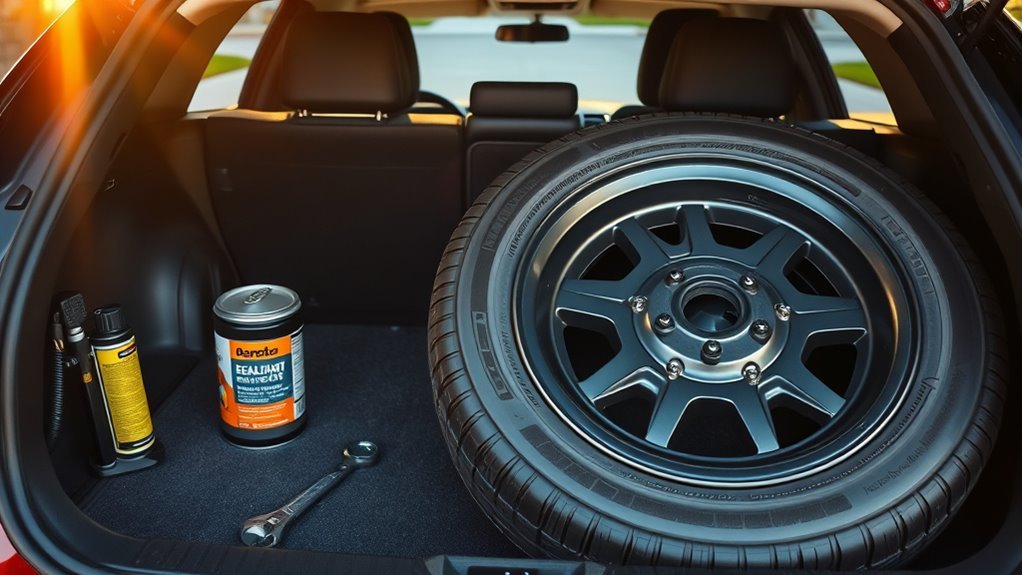
You should pick a full spare for long trips, rural routes, winter or serious damage, and use a trusted sealant or plug kit only for quick, small tread punctures (about 1/4″ or less). Sealant gives immediate mobility but can complicate shop repairs and TPMS; spares are heavier and costlier but reusable and reliable. Balance weight, cost and typical driving—keep tools and a plan—and continue for a detailed comparison and kit checklist.
Quick Verdict: When to Use Sealant vs a Spare
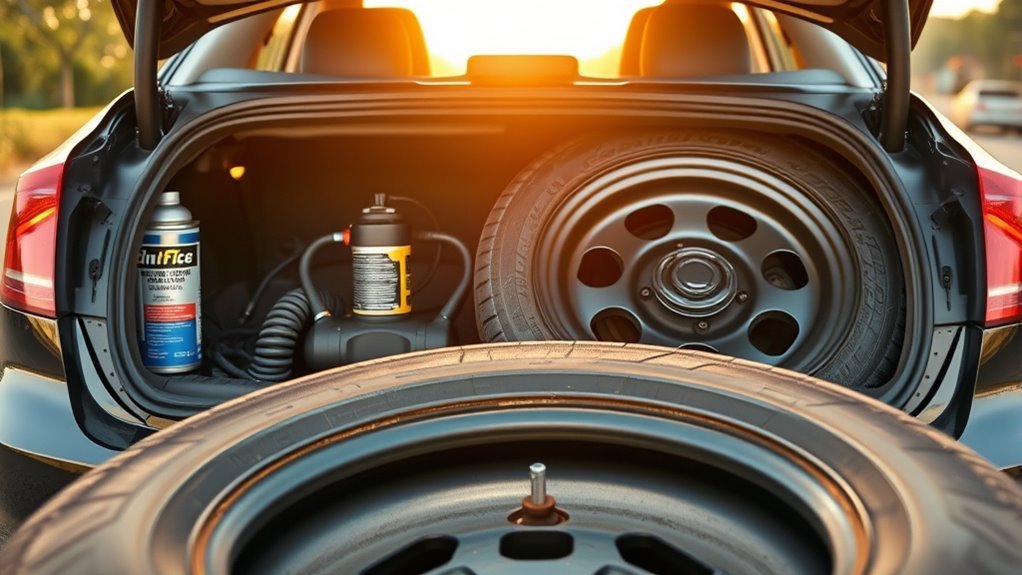
If you get a small tread puncture (under about 1/4 inch), use a tire sealant as a temporary fix to get you to a shop; for anything larger or if you need to drive any significant distance, fit a spare. You’ll choose sealant when immediacy and minimal gear matter: it restores enough pressure to reach a repair facility, demonstrating measured sealant effectiveness on tiny holes. Know the trade-offs — sealant can foul the wheel, risk TPMS issues, and prompt some shops to refuse repair.
For autonomous, longer-range travel, pick a spare. Compare spare types: compact spares save space and weight for urban freedom, while full-size spares give genuine resilience for long-distance escapes and safer travel at reduced speeds. Factor cost: dealer spare kits average £400–£600, aftermarket options near £215, making a spare a cost-effective long-term backup versus repeated sealant use. Prioritize what frees you to move safely and confidently.
How Sealants Work : What They Actually Fix
You inject a liquid sealant that coats the tire interior and plugs small tread punctures—typically effective for holes under about 1/4 inch—so you can drive to a shop. It won’t reliably fix sidewall damage, large gashes, or blowouts, and those cases need professional repair or replacement. Also note sealant can make professional patching harder or mess TPMS sensors, so tell your technician if you’ve used it.
How Sealant Seals
Because a sealant coats the tire’s interior with a liquid compound, it can stop small tread-area punctures (generally under 1/4 inch) by being forced into the hole and solidifying, creating a temporary airtight barrier so you can drive to a shop. You’ll perform a simple sealant application: inject per instructions, rotate the wheel so the compound reaches the puncture, then drive briefly to distribute it. It works because pressure pushes liquid into the breach where rapid curing forms a plug. This offers immediate mobility and freedom from being stranded, but remember it’s a temporary fix. Track sealant longevity via manufacturer specs and inspection. Keep records and plan professional service promptly to restore full safety and reduce waste.
| Benefit | Note |
|---|---|
| Quick mobility | Temporary |
| Easy use | Messy for shops |
Limitations On Damage
While sealants restore mobility for small tread punctures by forming a quick-curing plug, they won’t reliably fix sidewall cuts, large gashes, or punctures over roughly 1/4 inch; those failures exceed the sealant’s ability to coat and cure into a pressure-tight barrier. You should expect effective temporary sealing only for limited puncture size in the tread area—typically up to 1/4 inch—and recognize clear sidewall limitations: flexible walls, thinner rubber, and movement prevent an adequate bond. Sealants can free you from being stranded, but they aren’t permanent. Cold climates reduce effectiveness as compounds stiffen. Use sealant to get to safety or a shop, then replace or professionally repair the tire promptly to reclaim true freedom and reliability.
Effects On Repairs
Although sealants can quickly restore mobility by coating the interior and plugging small tread punctures (generally under 1/4 inch), they often complicate proper repairs: many shops refuse to work on sealed tires because the goo makes inspection messy, can foul tools and patch materials, and may hide secondary damage. You’ll get immediate freedom, but expect trade-offs. Sealant longevity is limited; a single repair can force replacement later because effectiveness drops with reuse and exposure. Repair complexity increases: technicians must clean and assess for internal cord or sidewall damage, and TPMS sensors can be fouled, yielding inaccurate readings. If you value independence, use sealant as a stopgap, then prioritize a full, professional remove-and-inspect repair to avoid hidden failures.
How Sealant Affects Repair Shops and TPMS
If you bring a tire treated with sealant into a shop, expect extra hurdles: many shops refuse the job or add fees because sealant creates a messy residue that hampers proper patching and risks TPMS sensor contamination. You should know the concrete impacts: repair shops list Repair shop concerns like longer labor, ruined adhesives, and liability if a patch fails. Data-driven shops document TPMS complications when sealant coats sensors, causing false readings or sensor failure that raises replacement costs.
You’ll face practical choices: disclose sealant use before service, accept possible surcharges, or plan to replace the tire if contamination is severe. Sealant can also increase scrap rates, creating environmental waste and limiting repair options. If you want autonomy on the road, favor solutions that preserve repairability and protect TPMS integrity—so you’re not stranded by avoidable shop refusals or extra bills.
What a Spare Tire Lets You Do That Sealant Can’t
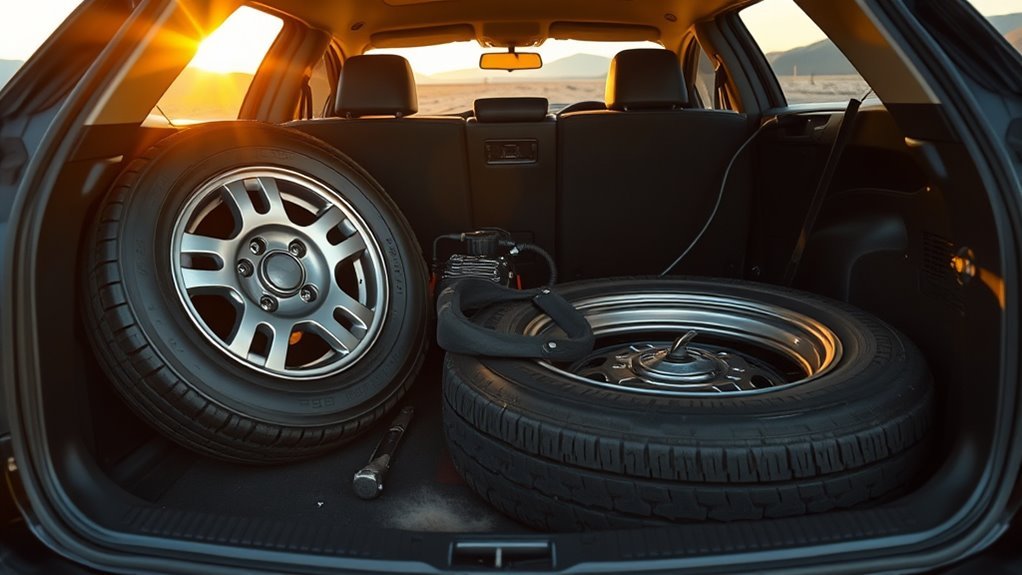
With a spare tire you can keep driving immediately at normal speeds to reach a shop or your destination, rather than slowing down or stopping. You won’t have to deal with sealant residue that can complicate repairs or trigger shop refusals. That reliability and cleanliness makes a spare the safer, more practical choice for serious punctures or remote emergencies.
Immediate Normal Driving
Because a spare tire restores mobility right away, you can drive on it at reduced speeds to reach a repair shop or carry on with planned stops without waiting for help. When you face a flat tire, a spare preserves vehicle mobility and driving safety immediately, letting you avoid prolonged dependence on roadside assistance. Sealant can immobilize your car or complicate tire maintenance, forcing you to wait for replacement or protracted repairs. With a spare you can swap tires, drop the damaged unit off for service, and continue your day—essential for emergency preparedness in remote areas. Compact spares keep trunk space usable while giving you freedom to move and manage downtime on your terms.
No Mess Or Repairs
Having a spare not only gets you back on the road immediately but also keeps the cleanup and repair hassle out of your hands. When you install a spare, you avoid sealant’s sticky residue that forces immediate, often costly service and can deter shops from working on the tire. A spare lets you drive directly to a shop on your schedule, enabling mess reduction and true repair ease: drop off the damaged tire, get a proper plug or replacement, and preserve TPMS integrity. In rural or low-service areas this autonomy matters—you’re not stranded while sealant cures or awaiting specialized removal. Data and shop reports show sealant-related complications raise repair costs and turnaround time; a spare preserves choice, speed, and cleaner outcomes.
Costs, Weight & Space: Sealant vs Spare Compared

Although sealant kits promise lighter, space-saving convenience, you should weigh those short-term gains against real costs and limitations: dealer spare-wheel kits run £400–£600 (aftermarket around £215), sealant-treated tires can be refused by repair shops, and disposing or replacing contaminated tyres adds expense. You want liberation on the road, so use clear cost analysis and space efficiency to decide. Sealant saves weight and stashes easily, but may leave you stranded or facing higher repair/disposal bills. A compact spare fits under a false floor, preserves mobility, and often proves more reliable long-term despite upfront cost.
| Metric | Sealant Kit | Compact Spare |
|---|---|---|
| Upfront cost | Low | Medium–High |
| Space & weight | Very efficient | Efficient (fits under floor) |
| Long-term expense risk | Higher (repairs/disposal) | Lower (reusable) |
Choose what frees you: immediate convenience or durable, predictable backup that keeps you moving and avoids hidden costs.
Choose by Scenario: City, Rural, Long Trips, Winter
When you pick between a sealant and a spare, match the choice to where and when you drive: city commuters will appreciate a compact sealant for quick, space-saving repairs on minor punctures, but expect some shops to refuse sealant-treated tires; rural drivers and long-distance travelers should favor a full spare for reliable mobility over long stretches and through limited service areas; in winter, opt for a spare since cold temperatures can reduce sealant effectiveness and road conditions raise puncture risk.
If you drive primarily in town, prioritize city safety and trunk freedom: a sealant gets you back on the road fast for small nails, reducing downtime and preserving your day. If you’re out in the country, choose rural reliability—spares eliminate dependency on temporary fixes and limited service access. For long trips, favor trip comfort and confidence; a full spare prevents long delays from sealant failures. In winter, make winter readiness non-negotiable: cold, wet conditions and tougher road debris mean a spare is the dependable choice every time.
Emergency Kit Checklist: Best Sealants, Plug Kits, and Spare Options
One compact emergency kit should combine a trusted sealant, a quality plug kit, and a spare (or clear plan for one) so you can handle most common punctures without guessing. Choose sealant types that clearly state tread-only use; they’re fast and temporary, sealing small holes but not sidewall breaches or large gashes. Pair sealant with tested plug kit brands that include insertion tools, reamers, and durable plugs—plug repairs are stronger and often need professional follow-up for safety. For spares, decide between a space-saver for short distances and a full-size spare for reliable replacement; DIY aftermarket spares can cost ~£215 versus dealer £400–£600. Include a compact jack, lug wrench, and clear instructions so you can act decisively. Assemble a checklist: sealant (tread-only), named plug kit brand, spare type, tools, and emergency contact plan. That setup gives you freedom to move, reduces downtime, and keeps options open without committing to one single fix.
Final Decision Checklist : Pick the Smarter Backup
Want the smartest backup for punctures? Use this checklist to choose decisively. Assess where you drive: rural trips demand a spare tire for autonomy; urban drivers might accept sealant as a temporary fix. Check puncture size limits—sealants and plug kits only work for holes under 1/4 inch and never for sidewall damage. Factor sealant reliability: mixed user reports and potential TPMS damage can lead shops to refuse repairs, raising long‑term costs. Compare costs: aftermarket spares ~£215, dealer kits £400–£600, versus cheaper sealant kits that may cost more over time if repairs are rejected. Prioritize immediate mobility—spares let you keep going; sealants can immobilize you until help arrives. Plan tire maintenance: keep the spare inflated, learn simple swaps, and store a compact jack and lug wrench. If you value freedom and minimal downtime, opt for a spare; if weight and emissions matter and you accept limits, carry sealant plus a clear contingency plan.
Frequently Asked Questions
Is Tire Sealant Better Than a Spare Tire?
No — you shouldn’t rely solely on sealant; tire sealant benefits offer temporary fixes, but spare tire convenience gives reliable mobility. You’ll prefer a spare for serious punctures, though sealant’s lightweight option can aid short-term emergencies.
What Are the Disadvantages of Tire Sealant?
It clogs shops and raises bills: like toothpaste gumming a brush, sealant effectiveness is limited to small tread holes, causes repair limitations, can foul TPMS, create mess, and only provides a temporary, risky fix.
Conclusion
Quick verdict: pick sealant for small, fast punctures in city driving and a spare for long, rural, or winter trips. Sealants plug tiny holes quickly, but can complicate professional repairs and TPMS. A spare gets you home or to a shop without messy cleanup. For example, a commuter used sealant for a 3mm nail on a weekday—back on the road in 10 minutes—whereas a weekend camper relied on a full-size spare after a sidewall blowout. Use scenario-based judgment.
Related Articles

Run-Flat Tires Explained: Safe Zero-Pressure Driving
Hesitant to change a tire? Discover how run‑flat technology lets you keep driving safely after a puncture—and what limits you must never ignore.
Read More
Signs You Need New Tires: Visual & Performance Clues
Lifelong safety starts with spotting tread wear, bulges, or vibration—learn the simple checks that tell you when tires must be replaced.
Read More
Tire Wear Indicator Bars: Built-In Safety Markers Decoded
On the brink of legal tread limits? Discover how tire wear indicator bars reveal danger and when to replace—read on to protect your ride.
Read More