
Tire Safety Tips for Toyota RAV4 Owners: Essential Checks
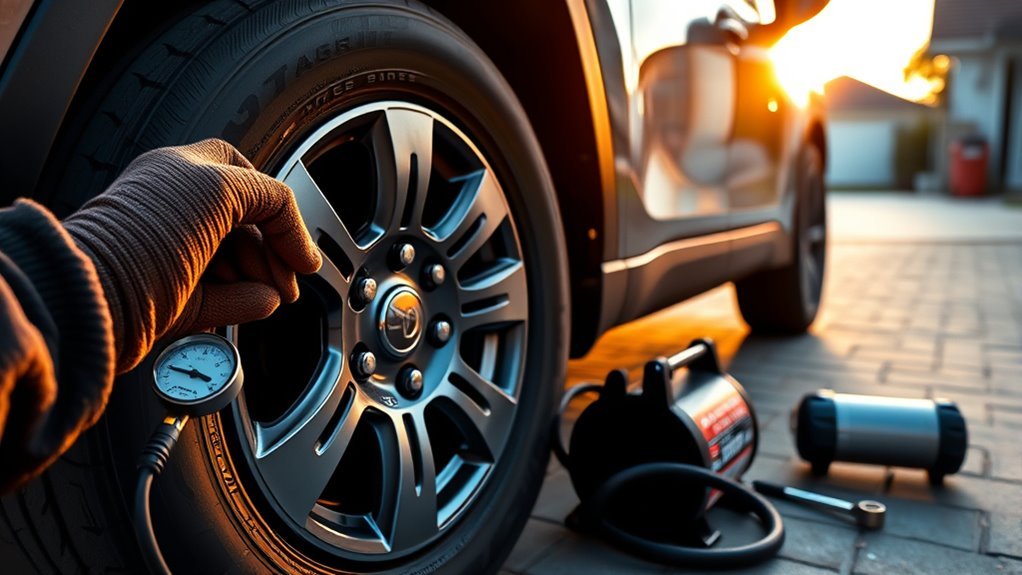
For your Toyota RAV4, keeping proper tire pressure is crucial for safety and performance. Regularly check your tire pressure using a reliable gauge; underinflated tires can increase fuel consumption and risk blowouts. Look for signs of wear, like uneven tread or bulges. Also, make certain to rotate your tires and align them to prevent uneven wear. These important checks maximize tire lifespan and enhance driving stability. There’s more to learn about tire care to guarantee your vehicle runs smoothly.
Why Tire Pressure Matters for Your Safety
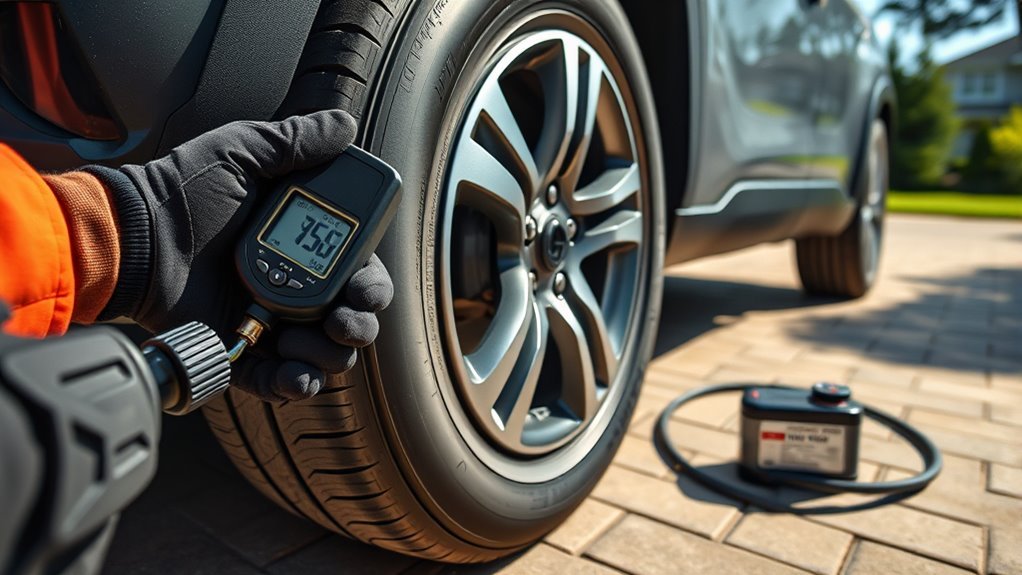
When it comes to driving your Toyota RAV4, proper tire pressure is crucial for safety. Maintaining the correct PSI not only guarantees ideal load capacity but also enhances handling and stability. Underinflated tires can severely compromise your vehicle’s performance, leading to diminished stability, higher fuel consumption, and an increased risk of blowouts. Conversely, overinflated tires can reduce traction and extend braking distances due to a smaller contact patch, raising the chances of accidents.
To keep your driving experience safe and efficient, regularly check your tire pressure at least once a month. This practice promotes even wear, boosts fuel efficiency, and extends the lifespan of your tires. Always refer to the manufacturer-recommended tire pressure specifications found on the driver’s door jamb sticker. Adhering to these guidelines is crucial for maximizing safety and performance on the road.
How to Identify Underinflated and Overinflated Tires
Identifying underinflated and overinflated tires is crucial for maintaining your Toyota RAV4’s safety and performance. Underinflated tires typically show pressure below the manufacturer-recommended PSI, leading to increased wear on the outer edges and heightening the risk of blowouts. Look for tire bulge signs, as they may appear bulged at the bottom. Conversely, overinflated tires exceed 10% of the recommended PSI, creating a rounded profile and smaller contact patch with the road. This results in reduced traction and longer braking distances. To check for underinflation, feel the tire’s sidewalls; soft, squishy sidewalls indicate low pressure, while hard, stiff sidewalls suggest overinflation. Additionally, tread wear indicators can help you assess the overall condition of the tire. Regularly measuring tire pressure with a reliable gauge guarantees you catch these issues early, promoting safety and peak performance.
How to Check and Adjust Your Tire Pressure?
Maintaining the correct tire pressure is crucial for peak performance and safety in your Toyota RAV4. To accurately check your tire pressure, measure it before driving or at least three hours after. Use a reliable tire gauge: remove the valve cap, press the gauge onto the valve stem, and note the PSI reading when the hissing stops. If your tires are underinflated, add air until you reach the manufacturer’s recommended PSI, which you can find on the driver’s door jamb sticker or in the owner’s manual. For overinflated tires, carefully open the valve stem to release excess air until you achieve the desired pressure. Regularly checking tire pressure at least once a month not only enhances vehicle safety but also improves fuel efficiency and prolongs tire lifespan. So, embrace tire gauge usage to guarantee your RAV4 performs at its best on every journey.
Why Tire Rotations and Alignments Are Essential
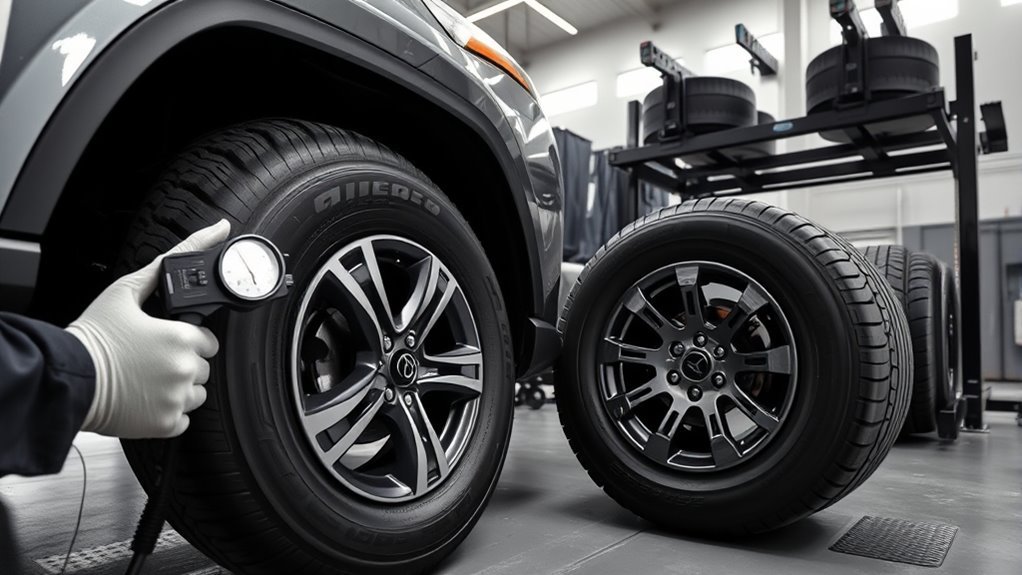
To keep your Toyota RAV4 performing at its finest, regular tire rotations and alignments are crucial. These practices help maintain even tread wear, guaranteeing you get the most out of your tires while improving vehicle performance. Here’s why they matter:
Regular tire rotations and alignments are essential for peak performance and even tread wear in your Toyota RAV4.
- Maximize tire lifespan: Rotating your tires every 5,000 to 7,500 miles prevents uneven tread wear.
- Enhance safety: Proper alignment maintains straight tracking, reducing handling issues like pulling to one side.
- Boost fuel efficiency: Alignments guarantee ideal tire contact with the road, improving your vehicle’s overall performance.
Ignoring these checks can lead to uneven tread wear, vibrations in the steering wheel, or even humming noises, all of which signal the need for immediate attention. By prioritizing tire rotations and alignments, you enhance your driving experience and extend your tires’ lifespan. Don’t underestimate their importance!
How to Inspect Your Tires for Wear and Damage
While driving your Toyota RAV4, you might not notice tire issues until they become serious, making regular inspections vital for safety. Start by checking your tread depth using the penny test: insert a penny into the tread with Lincoln’s head down. If you can see the top of his head, it’s time to replace the tire. Next, perform a sidewall inspection. Look for any cracks, blisters, or bulges, as these can indicate compromised structural integrity. Also, examine the tread for uneven wear patterns, which may suggest misalignment or suspension problems that need attention. Don’t forget to check for foreign objects like nails or stones embedded in the tread that could lead to punctures. Make it a habit to conduct these visual inspections at least once a month and before any long trips to guarantee your tires are safe and functioning at their best.
Frequently Asked Questions
How Often Should I Replace My Tires?
You should replace your tires every 6,000 to 8,000 miles or when tread wears down to 2/32 inches. Regular seasonal maintenance helps guarantee peak performance and safety, so keep an eye on tread depth.
What Are the Signs of a Tire Blowout?
A tire blowout can feel like a sudden thunderstorm. Watch for signs like vibrations, bulges, or uneven wear. Regular tire maintenance guarantees blowout prevention, keeping your drives safe and freeing you from unexpected dangers.
Can Temperature Changes Affect Tire Pressure?
Yes, temperature changes impact tire pressure. As temperatures drop or rise, tire pressure fluctuates. Regular pressure monitoring and diligent tire maintenance are essential to guarantee peak performance and safety, especially during extreme weather conditions.
How Do I Choose the Right Tires for My RAV4?
To choose the right tires for your RAV4, consider tire types suited for your driving conditions and select tread patterns that enhance traction and handling. Always match specifications to guarantee peak performance and safety.
What Should I Do if I Get a Flat Tire?
If you get a flat tire, assess the damage. If it’s repairable, use a tire repair kit. Otherwise, call roadside assistance for a safe tire change. Always keep essentials in your RAV4 for emergencies.
Conclusion
Keeping your Toyota RAV4’s tires in top shape is like nurturing the heartbeat of your vehicle; it guarantees smooth rides and safety on the road. By regularly checking tire pressure, rotating your tires, and inspecting for wear, you’re not just maintaining rubber; you’re safeguarding your journey. So, treat your tires with the care they deserve, and they’ll carry you safely through every twist and turn life throws your way. Drive smart, stay safe!

Related Articles

Upsizing Wheels on a Toyota RAV4: Pros, Cons, and Considerations
Boost your Toyota RAV4's performance with larger wheels, but discover the hidden trade-offs that could impact your ride before you decide.
Read More
Can I Change Tire Size on My Toyota RAV4? Rules and Recommendations
Are you considering changing the tire size on your Toyota RAV4? Discover the essential rules and recommendations before making a decision.
Read More
What to Do If the TPMS Light Comes On in Your RAV4
Understand the steps to take when the TPMS light illuminates in your RAV4, as overlooking it could lead to serious tire problems.
Read More