
Tire Pressure in Cold Weather: How Much PSI You Lose
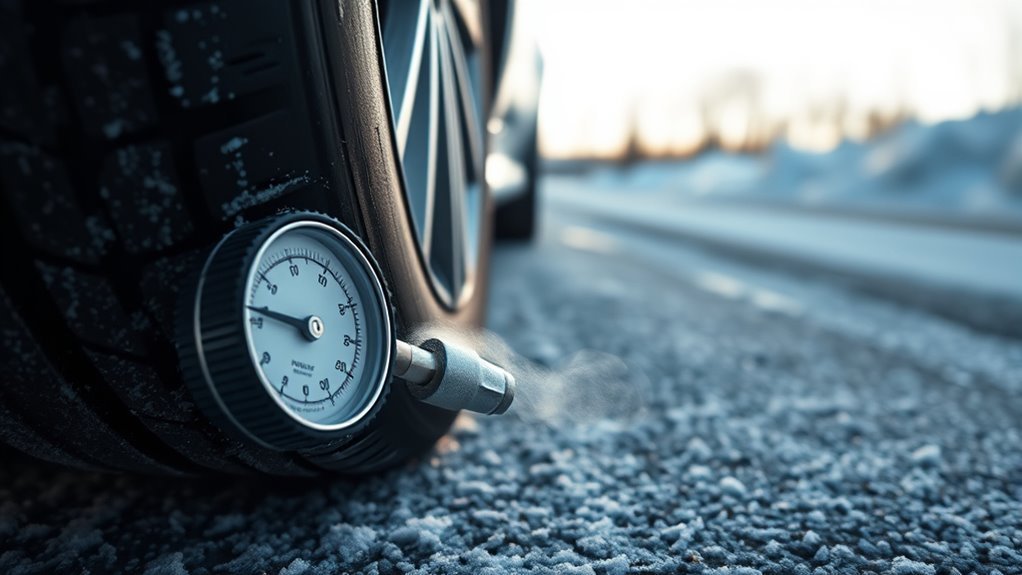
Expect about a 1–2 PSI drop for every 10°F decline, so a 20°F swing typically trims ~4 PSI and a change from 80°F to 30°F can cut roughly 5 PSI. Cold air slows molecules, lowering internal pressure per the ideal gas law, which harms handling, braking, and fuel economy. Check tires cold with a quality gauge and inflate to the manufacturer’s PSI; persistent loss means repair. Keep monitoring in winter and you’ll find practical tips and troubleshooting next.
How Much PSI Do Tires Lose in Cold Weather? (Quick Answer)
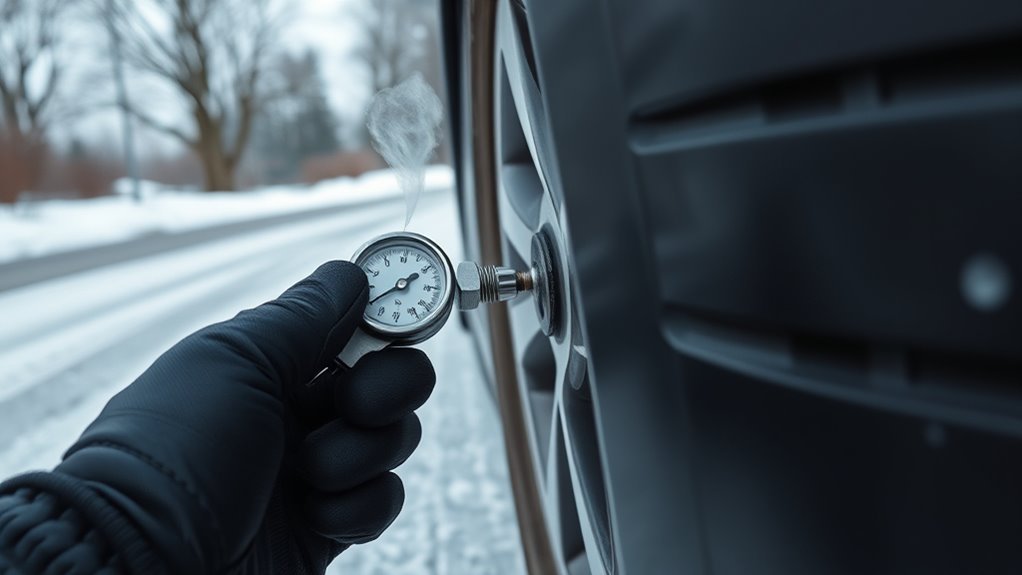
Wondering how much pressure you’ll lose when temperatures drop? You can expect tires to lose about 1–2 PSI for every 10°F decrease, so a 20°F swing typically trims roughly 4 PSI from your readings. That loss matters: underinflation degrades handling and costs you fuel — roughly 0.2% efficiency loss per 1 PSI drop. You won’t reliably see this change; visual inspection won’t catch small declines, so you need measured checks.
For practical winter maintenance, check tire pressure when tires are cold and repeat more often during extended cold spells. Keep a quality gauge in your glove box and reset pressures to the manufacturer’s cold PSI recommendation when needed. By actively monitoring and restoring proper tire pressure, you reclaim control over safety, performance, and economy. This small, consistent habit is a straightforward act of self-liberation on cold mornings.
Why Cold Air Lowers Tire Pressure (Simple Physics)
You’ll notice tire pressure falls in cold weather because air molecules move slower and occupy less space, reducing the force they exert on the tire walls. Using the ideal gas law (PV = nRT), a drop in temperature T directly lowers pressure P when volume V and moles n are effectively constant. That’s why a 50°F swing can cut several PSI and why you should check inflation as temperatures change.
Air Molecules Move Slower
Because air molecules slow down as temperature falls, they collide with the inside of your tire less forcefully and less often, which reduces the pressure the tire exerts. You’ll feel this as a measurable loss: roughly 1–2 PSI for every 10°F drop, so a 20°F plunge can shave about 4 PSI. Slower molecules increase local air density but reduce momentum transfer to the tire wall, producing net pressure loss due to temperature effects. The colder gas contracts, lowering internal pressure and altering handling and fuel efficiency if you don’t compensate. Check and adjust PSI when ambient temperatures change considerably. Maintain recommended pressure to preserve control and efficiency, and liberate yourself from avoidable maintenance surprises.
Ideal Gas Law Basics
When temperature drops, the Ideal Gas Law (PV = nRT) explains why your tire pressure falls: at constant volume and amount of air, pressure is directly proportional to absolute temperature, so colder air produces lower pressure. You should understand gas behavior practically: colder molecules occupy less kinetic energy, reducing collisions on the tire interior and lowering pressure measurement readings. Expect roughly 1–2 PSI loss per 10°F decline; a 20°F fall can trim about 4 PSI, roughly 15% of typical pressure. That pressure loss affects braking, handling, and fuel economy, so you’ll check and adjust pressures when temperatures change. Use accurate gauges for pressure measurement and re-inflate to recommended values when tires are cold to maintain safety and performance.
Temperature-Pressure Relationship
Although the molecules inside your tire slow down as temperature falls, the practical result is straightforward: cooler air exerts less force on the inner walls, so measured pressure drops roughly 1 PSI for every 10°F decline. You’ll feel this as temperature effects that cause steady pressure fluctuations; a fall from 80°F to 30°F can shave about 5 PSI — roughly 15% of pressure. Check tires in winter; cold stable conditions still mean lower PSI because air contracts. Maintain recommended pressure to preserve braking, handling, and fuel economy. Below is a quick relatable chart to guide expectations and action.
| Outside Temp | PSI Change | Action |
|---|---|---|
| +20°F | -6 PSI | Inflate |
| 0°F | -8 PSI | Check |
| -20°F | -10 PSI | Inflate |
| 30°F | -5 PSI | Monitor |
Typical PSI Change per 10°F : Real-World Examples
Expect roughly a 1–2 PSI drop for every 10°F your tires get colder, so a shift from 70°F to 30°F typically trims about 4 PSI and a 20°F plunge can shave ~5 PSI. You’ll see concrete examples next—common temperature swings and their PSI impacts—so you can match changes to your vehicle’s recommended pressure. Even a few PSI lost translates to measurable fuel-economy and wear penalties, so you should check and adjust PSI when temperatures change.
PSI Loss Per 10°F
A typical rule of thumb is that tire pressure drops about 1–2 PSI for every 10°F decrease in ambient temperature, so you should expect measurable loss as temperatures fall. You’ll see the effect quickly: a 20°F drop commonly removes about 4 PSI — roughly 12% of a 35 PSI baseline — and bigger swings (80s to 30s) can shave off about 5 PSI. Because cold weather contracts trapped air, visual inspection won’t reveal small deficits; they reduce fuel efficiency, handling, and safety. Check pressures with a calibrated gauge when tires are cold, adjust to the manufacturer’s recommended PSI, and recheck after weather changes. Take control: routine monitoring keeps you mobile and independent in winter.
Real-World Temperature Examples
You’ve seen the rule of thumb for PSI loss per 10°F; now let’s look at concrete temperature changes and what they actually mean for your tires. You’ll use this to plan tire maintenance and feel freer on the road during winter driving. A 20°F drop can shave about 4 PSI; an 80°F to 30°F shift can cut roughly 5 PSI — around 15% of pressure. Below is a stark snapshot to motivate action.
| Outside Temp Change | Typical PSI Loss | Effect on You |
|---|---|---|
| -10°F | 1–2 PSI | Reduced grip |
| -20°F | ~4 PSI | Longer stops |
| -50°F | ~5 PSI (80→30) | Safety risk |
Monitor pressure often; reclaim control.
Fuel Impact By PSI
When temperatures drop, your tires lose pressure and your fuel economy quietly takes a hit: roughly 1–2 PSI per 10°F translates to about 0.2% fuel loss per PSI. You can quantify impact: a 20°F fall (≈4 PSI) cuts fuel efficiency ~0.8%; a five-PSI loss (~15% underinflation) harms consumption and handling markedly. Track ambient shifts and adjust pressure to reclaim performance. Prioritize tire maintenance as an act of practical autonomy—check pressures cold, use a calibrated gauge, and top to manufacturer psi. Small, routine corrections compound into measurable savings and safer control. If you want freedom from wasted fuel and dependence on frequent refueling, make cold-weather pressure checks nonnegotiable and precise.
How to Check Tire Pressure Correctly Before Driving
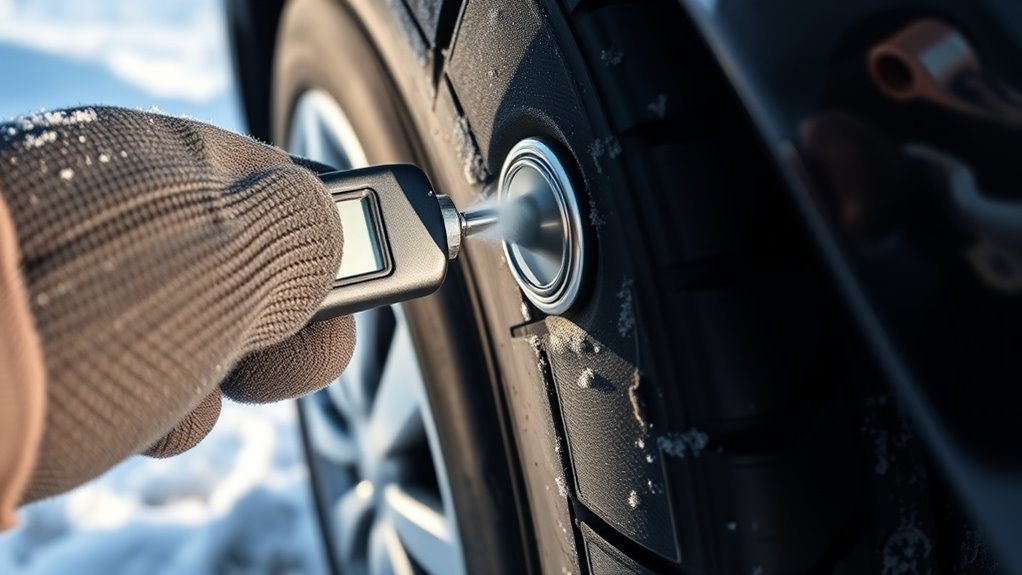
Before you drive, check tire pressure while the tires are cold so you get an accurate reading—cold air gives truer PSI than heat from driving. You’ll empower yourself by using clear measurement techniques: locate the recommended tire pressure on the door-jamb sticker or in the owner’s manual (most passenger cars list 30–35 PSI). Use a quality tire pressure gauge, remove the valve stem cap, and press the gauge firmly to the stem to get an immediate, stable reading. Note that tires can lose about 1–2 PSI per 10°F drop, so interpret low readings in context.
If pressure is below the recommended value, top up at a reliable air pump right away; do this before starting a trip. After checking, always replace the valve stem cap to keep out dirt and moisture that can cause internal tire damage. These steps are precise, practical, and free you to travel safely with confident tire pressure readings.
What to Do If Your Tires Lose PSI (Inflate, Monitor, Shop)
If your tires lose PSI in cold weather, inflate them to the vehicle’s recommended pressure (usually 30–35 PSI) before driving and then monitor them regularly; remember tires can drop about 1–2 PSI for every 10°F decrease, so check pressures when tires are cold with a quality gauge, top up at a service station or air pump, and inspect for persistent leaks or damage that warrant professional repair. You’ll maintain control and freedom if you treat tire maintenance as routine: measure, inflate, and log readings. If pressure remains low after inflation, shop for repairs—don’t defer. Use local service centers for quick diagnostics, or a trusted tire shop for patching or replacement.
| Action | Target |
|---|---|
| Measure cold | Accurate PSI |
| Inflate | 30–35 PSI |
| Recheck | 24–48 hours |
| Inspect | Leak/damage |
| Shop | Professional repair |
Stay assertive: manage pressure management proactively to keep mobility uncompromised.
How Winter Tire Pressure Affects Safety and Performance
You already know to measure and top up PSI in cold weather; now consider how those pressure changes affect safety and performance. A 1–2 PSI drop per 10°F will alter contact patch and handling, so you’ll need tire maintenance tips that focus on precise pressure control. Underinflation increases stopping distances and raises skidding risk on ice or wet surfaces by reducing grip and predictable responses to steering inputs.
Keep recommended pressure (usually 30–35 PSI) to guarantee even tread wear, longer tire life, and maximum fuel economy; losing 4 PSI can cut fuel efficiency by about 0.8%, which adds up. Proper inflation maximizes traction and stability on icy roads, preserving vehicle control during evasive maneuvers.
Adopt winter driving strategies that include pre-trip pressure checks and immediate correction when temps fall. These disciplined actions free you from avoidable hazards and costs, letting you drive with greater confidence and control in winter conditions.
How Often to Check and Adjust Tire Pressure in Winter
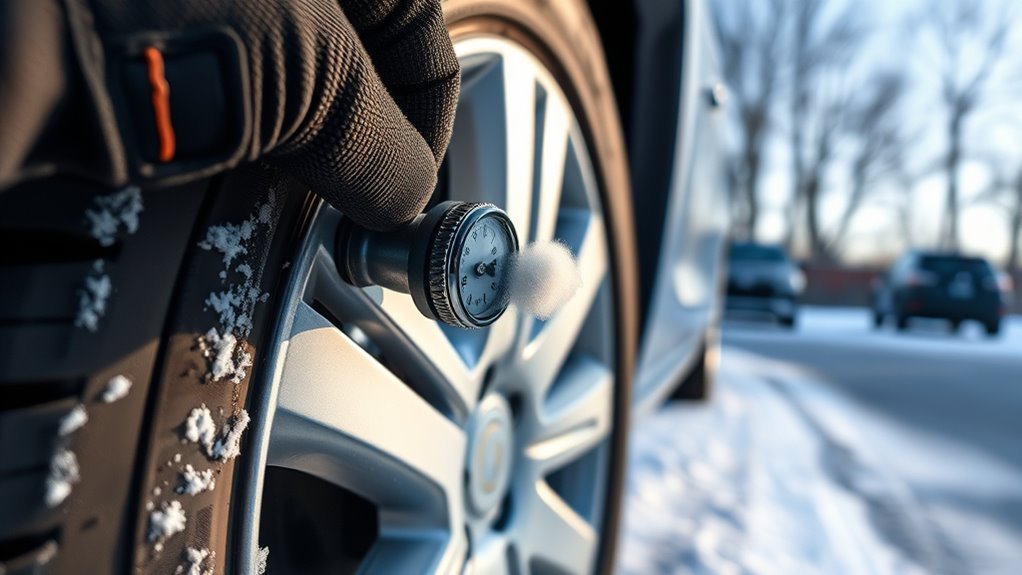
A quick pressure check every two weeks during winter is a practical baseline, since tires can lose about 1–2 PSI for each 10°F drop and up to 5 PSI with larger temperature swings. Check cold tires before you drive for accurate readings; driving heats rubber and masks true pressure. Use the vehicle’s recommended PSI (commonly 30–35 PSI) as your target and correct deviations immediately to maintain handling, fuel efficiency, and even wear.
TPMS is useful but not authoritative; you should perform manual checks to verify sensor readings and prevent gradual underinflation. If temperatures swing rapidly or you’re preparing for extended trips, increase check frequency to weekly. Document readings so you spot trends indicating leaks or valve issues. These tire maintenance tips are pragmatic steps toward autonomous vehicle stewardship. They align with winter driving precautions: proactive checks, timely adjustments, and disciplined recording keep you safe and free from avoidable roadside problems.
Where to Get Air, Tools, and Service (Pumps, Shops, Apps)
When temperatures drop and pressure shifts, head to a nearby gas station for quick access to air pumps—many still offer free or coin-operated machines for on-the-spot inflation. Use mapped air pump locations to top off tires before you drive; they’re fast, ubiquitous, and put control in your hands. Carry a quality tire pressure gauge and a portable tire inflator so you can check and correct pressure at home or on the road.
For precise work, choose tire shops or auto mechanics—professional tire service options include calibrated gauges, balancing, and leak diagnosis. Mobile apps (Firestone and others) help you locate nearby service centers, schedule checks, and track maintenance history. Prioritize reliability: verify pump accuracy, keep tools charged, and document psi targets for each vehicle. With basic tools and knowledge, you’ll break dependence on chance and preserve traction, fuel economy, and safety during cold snaps.
Frequently Asked Questions
How Much Will Tire Pressure Drop in Cold Weather?
Expect about 1 PSI loss per 10°F drop; a 20°F fall typically costs ~4 PSI. You’ll prioritize tire maintenance in cold temperatures, checking and inflating tires regularly to maintain safety, efficiency, and freedom on the road.
How Much Psi Do You Lose in Winter?
You’ll lose about 1–2 PSI per 10°F drop, so winter can strip 4–5 PSI or more; monitor tire pressure, address cold temperatures, and prioritize safety concerns for winter driving to stay liberated and in control.
Should I Fill My Tires to Max Psi in Winter?
No — you shouldn’t fill tires to max psi in winter. You’ll follow recommended pressure for safety, balancing cold weather effects with tire maintenance; you’ll check and adjust regularly to preserve grip, handling, and freedom on the road.
Conclusion
Cold weather steals about 1 PSI for every 10°F drop — science, not spite — so check pressures often. Don’t wait for a dashboard tantrum: use a quality gauge, inflate to the vehicle-recommended cold PSI, and recheck after short drives. Underinflation wrecks fuel economy, grip, and tire life; overinflation trades comfort for uneven wear. Be pragmatic: carry a portable pump or know a nearby service station, and treat winter pressure like a scheduled maintenance ritual.
Related Articles
When to Replace Tubeless Sealant: Timing & Signs
Be warned: tubeless sealant can fail in weeks or months—learn the signs, testing tips, and exact replacement timing to avoid flats.
Read More
The Penny Test for Tread Depth: How to Do It Right
Better learn the penny test correctly—discover when Lincoln’s head reveals dangerous tread wear and what to do next.
Read More
Tire Rotation Schedule: How Often & Why It Matters
Optimizing tire life? Discover why rotating every 5,000–8,000 miles matters for safety and savings—read on to learn exact patterns and tips.
Read More