
Tire Materials Explained: What Are Toyota RAV4 Tires Made Of?
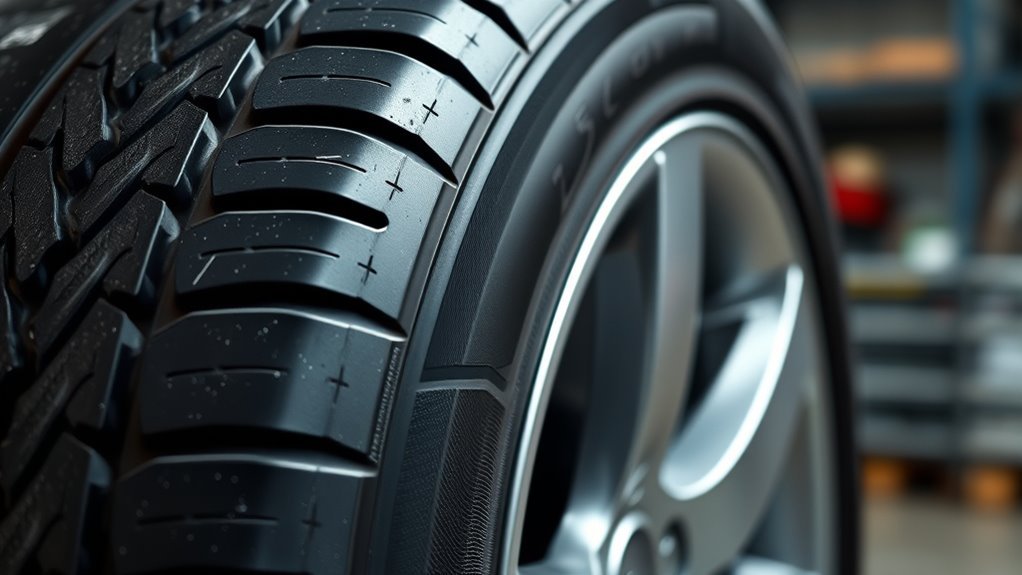
Your RAV4’s tires combine layered rubber compounds, steel belts, textile cords and a reinforced bead to balance traction, load capacity and ride comfort. Treads use mixes of natural and synthetic rubber with silica and carbon black to tune grip, wear and rolling resistance. Sidewalls include tougher compounds and sometimes steel or fabric reinforcements for puncture resistance and stability. Manufacturing adds layered plies and vulcanization for strength and uniformity—keep going to see specifics on types, care and sustainability.
Quick Answers: Which Tires Work Best for a Toyota RAV4?

Which tires work best for your Toyota RAV4 depends on your climate, driving style, and trim-specific wheel size. You’ll choose all-season tires for balanced Tire performance across varied conditions; their harder compound and versatile tread give stable handling, longer wear, and acceptable wet traction thanks to silica. If you live where winters bite, opt for winter tires with softer compounds and deeper grooves to reclaim traction on snow and ice—this’s a clear Seasonal consideration that improves braking and control. For RAV4 trims with 17–19 inch wheels, match tire diameter and load ratings to preserve handling and ride comfort; larger rims favor lower-profile tires for sharper response, smaller rims favor taller sidewalls for compliance. You’ll prioritize a compound and pattern that reduces rolling resistance if fuel efficiency matters. Make selections that free you from compromise: target the compound, tread, and size that align with your climate, use case, and liberation-oriented driving goals.
What RAV4 Tires Are Made Of: Core Materials Breakdown
You’ve picked tire type based on climate and use; now let’s look at what those tires are made of and why each material matters. You’ll find a primary blend of natural and synthetic rubber across RAV4 tires: this mix delivers elasticity for contact conformity, durability against abrasion, and baseline traction. Carbon black functions as the main filler, reinforcing the rubber matrix, lowering heat buildup, and extending tire lifespan while giving the tire its black appearance. Steel belts sit beneath the tread to preserve shape, resist puncture propagation, and maintain directional stability at speed. Reinforcement layers use polyester or nylon cords to control deformation under load, improving ride quality and structural longevity. The tread design combines rubber variants to balance grip in wet and dry conditions and to manage tread wear patterns. Each component targets a specific performance vector, so when you choose tires, you’re selecting a calibrated material system optimized for safety, durability, and liberated mobility.
Tread Compounds: Natural vs Synthetic, Silica, Carbon Black
Tread compounds blend natural and synthetic rubbers with fillers like silica and carbon black to deliver the specific traction, wear resistance, and rolling-resistance targets set for RAV4 tires. You’ll find natural rubber contributes elasticity and low-temperature grip, while synthetic polymers—styrene-butadiene and others—add abrasion resistance and tuning flexibility. Silica lowers hysteresis, improving wet tread performance and reducing rolling resistance for better fuel economy; it’s essential when you demand confident grip in rain without sacrificing efficiency. Carbon black reinforces the matrix, raises heat resistance, and extends rubber longevity by resisting mechanical degradation; it also stabilizes compound stiffness under load. Engineers combine multiple formulations—sometimes a dozen variants—to tailor tread zones for all-season balance or sportier response. For you, that means tires optimized to free your mobility: predictable grip, consistent wear, and controlled rolling effort. The compound choices directly determine the trade-offs between traction, comfort, and service life.
RAV4 Tire Structure: Belts, Beads, Sidewalls, Textile Reinforcements
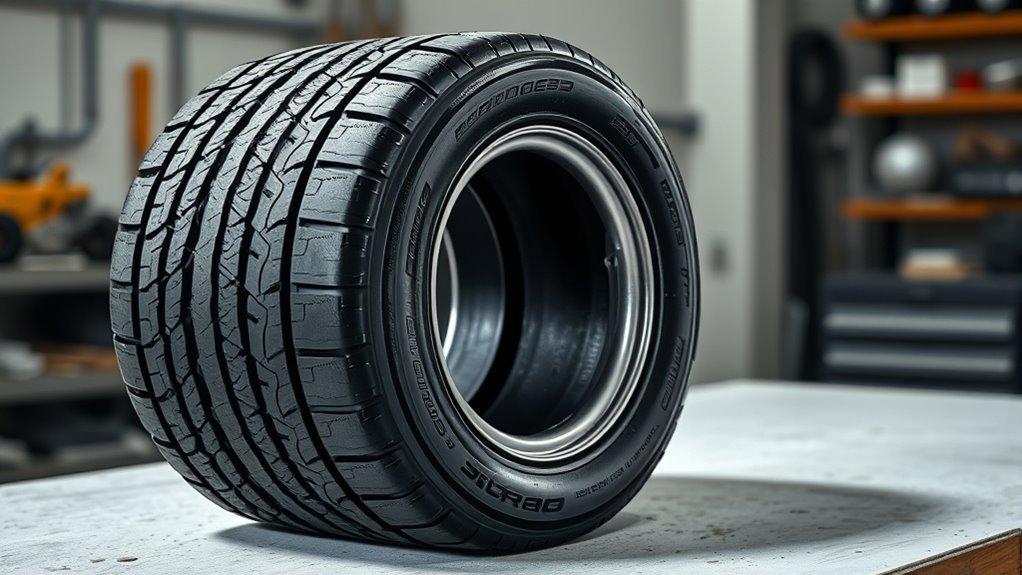
You’ll examine how belt and ply construction—typically steel belts over textile plies—controls stiffness, footprint, and high‑speed stability on the RAV4. You’ll also look at bead and sidewall reinforcement, where steel wires embedded in rubber and rubber‑coated bead/sidewall assemblies secure rim fit and resist impact and flex. Together these elements determine handling, ride comfort, and durability under varying loads.
Belt and Ply Construction
Because belt and ply construction defines a tire’s load-bearing skeleton, you should understand how each layer contributes to RAV4 performance: steel belts provide longitudinal stiffness and shape retention, improving high-speed stability and overall tire performance through proven construction techniques. Beneath the tread, multiple plies of textile cords—typically polyester or nylon—control carcass shape, distribute loads, and maintain internal pressure for predictable response; you’ll feel crisper steering and consistent contact patch under load. The bead uses steel wire embedded in rubber to lock the tire to the rim, preserving alignment of belts and plies. Sidewall reinforcement with rubber-coated steel wires protects the carcass from external damage but won’t be detailed here. This layered architecture liberates you with reliable handling, durability, and safety.
Bead And Sidewall Reinforcement
Having covered belts and plies, let’s examine how the bead and sidewall reinforcements lock the tire to the rim and protect the carcass. You’ll find the bead design centers on a high-strength steel wire core embedded in rubber, clamping the tire to the wheel and sealing air under load. Sidewall strength comes from rubber-coated steel wires that resist cuts, curb impacts, and maintain shape under pressure. Textile reinforcements (polyester or nylon) bridge flexibility and stability between bead and belt layers. Together these elements free you from uncertainty about durability and handling.
- Steel bead core gripping the rim.
- Rubber-coated sidewall wires shielding the carcass.
- Textile plies allowing controlled flex.
- Belts preserving high-speed geometry.
Which Tire Types to Choose for Your RAV4 (Trim and Use Cases)
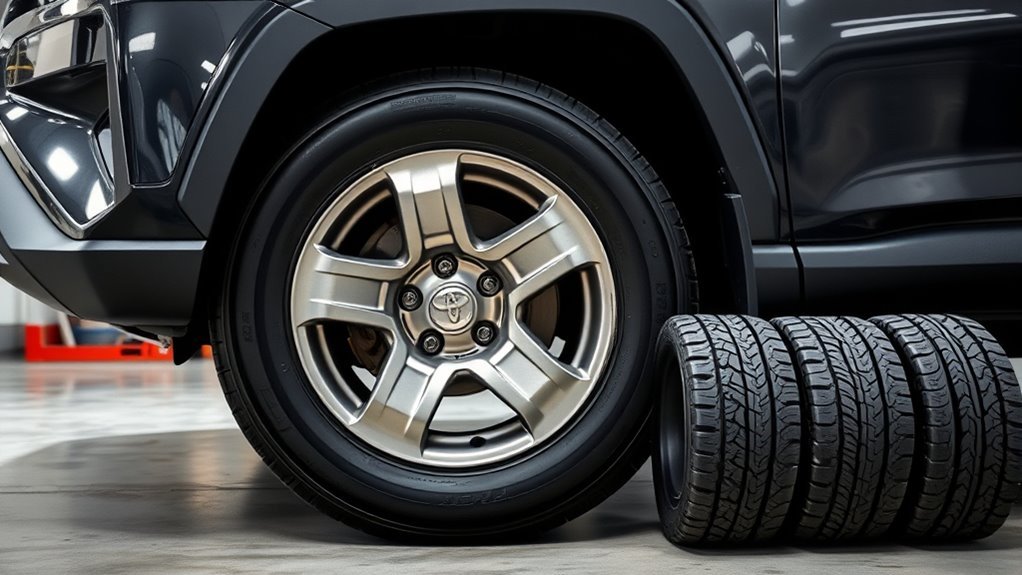
Pick the tire type that matches your RAV4’s trim and primary use: all-season tires suit most everyday models for balanced wet/dry performance, winter tires with softer compounds and deeper treads are necessary for sustained icy or snowy conditions, high-performance tires benefit sport-tuned trims for improved grip and handling at higher speeds, and off-road tires with reinforced sidewalls and aggressive lugs are appropriate for frequent rugged-terrain use. Apply tire selection strategies that align trim-specific specs—size, load index—and your driving environment. For liberated mobility, choose purpose-built rubber: all-season for mixed conditions, winter for low-temperature traction, high-performance for response and lateral grip, off-road for puncture resistance and traction on loose surfaces. Prioritize seasonal tire considerations: compound, tread depth, and siping for cold-weather predictability; tread pattern and sidewall construction for off-road durability; and speed-rating and heat resistance for sport variants. Always verify fitment in the owner’s manual or with a tire professional to maintain safety margins, handling intent, and legal load capacities.
How Tires Are Made : And Why Compounding, Layering and Vulcanization Matter for RAV4 Performance
You’ve chosen the right tire type for your RAV4; now understand how those tires are made so you can see why one compound or construction performs better than another. You’ll see tire technology is a sequence: compounding, layering, vulcanization, then testing. Compounding mixes natural and synthetic rubbers—up to a dozen compounds—to tune grip, heat tolerance and wear resistance for liberated, confident driving. Layering positions steel belts and textile cords to control shape, directional stability and load distribution. Vulcanization applies heat and pressure to cross-link polymers, locking in mechanical strength and long-term resilience. Final quality control verifies each tire meets RAV4-specific performance optimization targets.
- Imagine a lab where pellets become tailored rubber blends.
- Picture fabric and steel laid in precise, concentric layers.
- Visualize a press sealing and curing the whole assembly.
- Envision inspection rigs confirming targeted ride, handling and safety metrics.
RAV4 Tire Durability, Puncture Resistance and Maintenance Tips
Because RAV4 tires blend natural and synthetic rubbers with carbon-black fillers and engineered reinforcements, they’re designed for a balance of traction, heat management and longevity—but that balance only holds if you maintain them. You’ll need to monitor tire lifespan factors: compound formulation, load, driving style, road conditions and heat. Carbon-black reduces heat buildup and slows tread degradation; reinforced sidewalls and sealants limit air loss from small punctures but aren’t foolproof.
You should adopt a disciplined maintenance frequency: check pressure and inspect tread depth monthly, and rotate tires every 5,000 to 7,500 miles to promote even wear. If you detect bulges, cuts or repeated slow leaks, replace the tire or service the sealant system immediately. Proper inflation minimizes flexing that causes heat and premature breakdown; correct rotation sequences balance wear across axles. These technical practices maximize durability, reduce puncture risk and keep you free to move without avoidable constraints.
Environmental and Sustainability Factors When Choosing RAV4 Tires
When choosing tires for your RAV4, consider the environmental footprint of their core materials—natural rubber, synthetic rubber, carbon black and silica—as each affects deforestation risk, greenhouse-gas intensity and end-of-life recyclability. You’ll want tires whose natural rubber stems from sustainable sourcing programs (GPSNR-compliant), reducing land conversion and protecting biodiversity. Ask manufacturers about carbon black alternatives and the lifecycle GHGs of synthetic polymers; petroleum-derived fillers drive emissions and complicate recycling. Look for evidence of eco friendly innovations: recycled rubber content, silica formulations that lower rolling resistance, and design-for-repair to extend service life.
- Visualize plantations managed for yield, not clearance, with traceable supply chains.
- Picture reclaimed rubber being repurposed into secondary tread compounds.
- Imagine lower rolling-resistance silica blends cutting fuel use and emissions.
- Envision supply-chain audits assuring fair labor and land-use practices.
Choose tires that advance liberation from extractive practices—prioritize traceability, low embodied carbon, and measurable end-of-life recovery.
Frequently Asked Questions
What Kind of Tires Does RAV4 Use?
The RAV4 uses primarily all-season tires; you’ll encounter RAV4 tire types including touring, all-terrain, or performance variants. Check tire size specifications on the placard or owner’s manual to match load index and recommended pressures.
What Are the Four Major Materials That Tires Are Made Of?
Think of a fortress: you’ll use rubber compounds, carbon black, steel and reinforcement layers. You’ll craft elastic tread, durable filler, rigid belts and fiber plies, so your wheels stay resilient, precise and free on the road.
Conclusion
You’ll pick properly when you prioritize performance, protection, and planet-friendly practices. Probe tread types, polymer profiles, and ply patterns to pair the right all-season, touring, or rugged all-terrain rubber with your RAV4’s trim and terrain. Maintain mounted materials—monitor tread, pressure, and puncture patches—to promote power, prevent premature wear, and preserve precise handling. Choose sustainably sourced silica blends or recycled-content compounds to balance braking, rolling resistance, and environmental responsibility.

Related Articles

Upsizing Wheels on a Toyota RAV4: Pros, Cons, and Considerations
Boost your Toyota RAV4's performance with larger wheels, but discover the hidden trade-offs that could impact your ride before you decide.
Read More
Can I Change Tire Size on My Toyota RAV4? Rules and Recommendations
Are you considering changing the tire size on your Toyota RAV4? Discover the essential rules and recommendations before making a decision.
Read More
What to Do If the TPMS Light Comes On in Your RAV4
Understand the steps to take when the TPMS light illuminates in your RAV4, as overlooking it could lead to serious tire problems.
Read More