
Tire Flat Spotting: Why It Happens & How to Prevent It

Tire flat spotting happens when a tire sits under load and the rubber and cords deform, creating a temporary or, after prolonged cold or inactivity, semi‑permanent flat patch that causes thumps and steering vibration. You’ll see symptoms fade as tires warm and flex, but persistent vibration, shoulder wear, or measurable loss of roundness needs professional inspection. Maintain correct pressure, rotate and move the vehicle during storage, use foam pads or stands, and avoid overinflation to prevent damage — more practical fixes follow.
What Is Tire Flat Spotting and How It Affects Your Drive

Tire flat spotting happens when a tire stays stationary under load long enough for a temporary flat patch to form on the tread, and that patch can cause rhythmic thumping and steering-wheel vibrations until the rubber warms and regains shape. You’ll notice a clear pattern: cold conditions, under-inflation, or long-term parking correlate with loss of tread curvature and increased vibration. The symptom set—rhythmic thumping and steering-wheel vibration that diminishes as the tire warms—matches controlled observations of rubber viscoelastic recovery. You can mitigate risk through disciplined tire maintenance and deliberate driving habits: keep pressures to manufacturer specs, move the vehicle periodically, and use supports during storage to reduce sustained contact stress. If vibrations persist after normal warm-up, semi-permanent deformation may be present and requires specialist evaluation; do not assume recovery. Embrace these evidence-based practices to reclaim control over vehicle dynamics and extend tire life, aligning practical freedom with measurable safety outcomes.
Temporary vs. Semi-Permanent Flat Spots : What’s the Difference?
You’ll see temporary flat spotting within days to weeks of inactivity as tires stiffen and develop reversible low spots that usually smooth out once heat and flexing return. If the vehicle sits for a month or more you risk semi-permanent damage—persistent vibrations, uneven wear, and altered handling that often won’t correct with normal driving and may require professional inspection or repair. Maintain proper inflation and move the vehicle periodically to reduce risk and speed recovery when minor spotting occurs.
Temporary Flat Spotting
Although temporary flat spotting usually appears after just a few days to weeks of inactivity, it’s distinct from longer-lasting damage and typically resolves as the tires warm during driving. You’ll feel short-lived vibration that diminishes as rubber softens and rounds under load. Cold storage, softer high-performance compounds, and wide footprints increase susceptibility because low temperatures stiffen the rubber and stabilize deformities. To liberate yourself from avoidable issues, apply disciplined tire maintenance: maintain correct pressure, rotate tires, and resume regular driving habits to restore tread shape. Temporary spots are reversible with heat and flex cycles; they don’t imply structural breakdown. Monitor symptoms after the first drive; if vibrations abate within miles, you’ve likely avoided semi-permanent harm and can continue normal use.
Semi-Permanent Damage Signs
If a vehicle sits under load for a month or longer, you’ll start to see signs that distinguish semi-permanent flat spotting from temporary deformation. You’ll need precise symptom identification: persistent vibrations that don’t diminish after several miles, uneven wear patterns visible at the tread shoulder, and a measurable loss of roundness under static load. These signs contrast with short-lived vibration that resolves as tires heat. Evaluating damage implications, you’ll note permanent structural changes in the rubber and internal cords that degrade handling and stability, increasing risk during high-speed maneuvers. Evidence supports prompt professional evaluation because semi-permanent spots often won’t self-correct and can accelerate failure. Preventive maintenance—regular movement and correct inflation—reduces occurrence and preserves your vehicle’s freedom to go.
Recovery And Repair
Having distinguished semi-permanent signs from temporary deformation, we’ll now focus on recovery and repair strategies for each flat-spot type. You’ll act differently depending on diagnosis: temporary flat spots usually resolve as rubber warms during driving; semi-permanent spots persist and need professional evaluation. Cold amplifies temporary symptoms, so short warm-up drives can restore balance. For semi-permanent damage, consult a tire specialist to assess structural harm and replacement necessity.
- Prioritize preventive steps: adhere to maintenance schedules, maintain correct pressures, and perform regular tire rotation to reduce idling-induced deformation.
- For temporary issues: drive moderate distances at safe speeds until vibrations abate; recheck pressures afterward.
- For persistent vibration: schedule a specialist inspection; expect possible replacement if uneven wear or structural compromise appears.
How to Spot Flat Spots Fast: Vibration, Thump, and Visual Cues
A rhythmic vibration or intermittent thump under steering or through the seat is the most reliable early sign of tire flat-spotting, especially after long parking or cold exposure; you’ll often feel it immediately on initial acceleration when rubber stiffness makes the deformed contact patch less compliant. You should note onset, frequency, and whether the sensation changes with speed—consistent rhythmic pulses point to a localized flat patch rather than wheel imbalance or suspension faults. Visually inspect tires for flattened contact areas or irregular wear, focusing on shoulders and crown after extended stationary periods. Cold-treated rubber magnifies symptoms, so check when tires are cold and compare both sides. Track your tire maintenance and driving habits: prolonged standing, hard braking, or aggressive launches raise flat-spot risk. If vibrations persist beyond a few miles or visual cues are ambiguous, schedule a professional tire inspection—persistent thumping can indicate structural compromise needing specialist evaluation to preserve safety and freedom on the road.
Quick Fixes: Warm-Up Driving, How Far to Go, and Pressure Checks

When tires show flat-spot symptoms, a brief warm-up drive of 10–15 minutes at moderate speeds usually restores their shape by evenly heating the rubber and increasing tread compliance. You’ll typically cover 5–10 miles during that interval, which distributes heat uniformly and reduces vibration. Check pressures before you drive: maintain recommended inflation (commonly 30–35 PSI) to optimize contact patch behavior and limit repeated deformation. Cold weather requires extra attention because pressure drops faster; underinflation elevates flat-spot risk. Make these actions routine to reclaim mobility and autonomy.
- Warm-up drive: 10–15 minutes at moderate speed to restore tread compliance and balance.
- Distance target: aim for ~5–10 miles to guarantee even heat distribution across all tires.
- Pressure routine: verify PSI before outings, adjust to manufacturer specs, and repeat weekly.
These steps tie directly to tire maintenance and deliberate driving habits; they’re evidence-based, minimal-effort interventions that prevent temporary flat spots without structural repairs.
Best Prevention for Short- and Long-Term Storage
For both short- and long-term storage, follow a few proven steps to keep tires from developing flat spots: maintain proper tire pressure per the manufacturer, and check pressures before and during storage as part of routine tire maintenance. Park on a forgiving surface when possible; hard concrete concentrates load and increases risk, so use foam pads or softer ground to distribute contact stress. For extended storage, relieve load from tires by placing the vehicle on jack stands or using supports to remove static weight and minimize deformation over time. Store the vehicle in a climate-controlled space to avoid temperature swings that stiffen rubber and promote flat-spot formation, especially in cold weather. If you opt for prolonged but occupied storage, move the vehicle every couple of weeks a short distance to redistribute contact patches and reset sidewall memory. These storage tips are evidence-based, focused on mechanical principles, and let you preserve mobility and autonomy without unnecessary interventions.
Do Tire Cradles, Foam Pads, or Overinflation Really Help?
You’ll want to judge cradles, foam pads, and overinflation on their measured trade-offs rather than marketing claims. Evidence shows cradles don’t reliably prevent flat-spotting under heavy loads or extreme temperatures, foam pads can reduce pressure-induced flattening at low cost for light use, and intentional overinflation introduces uneven wear and blowout risk without guaranteed benefit. Stick to manufacturer pressures, move the vehicle periodically, or use jack stands for the most reliable prevention.
Tire Cradles: Do They Work?
Curious whether tire cradles, foam pads, or simply overinflating will save you from flat spots? You want practical storage solutions that preserve tire integrity without myths. Evidence on tire cradle effectiveness is limited: cradles can lift contact patches and reduce localized deformation, but real-world validation is sparse. Foam pads offer cushioning and weight distribution; low-cost pads sometimes help. Overinflation won’t fix deformation and risks other failures, so don’t rely on it. Softer-compound tires are more vulnerable and may gain more from supports. Significantly, combine supports with regular vehicle movement to restore shape.
- Use cradles or pads as adjuncts, not sole fixes.
- Prioritize scheduled rolling or repositioning.
- Avoid overinflation; follow manufacturer pressure.
Foam Pads: Practicality Vs Cost
Although definitive trials are limited, practical evidence shows that high-density foam pads reliably distribute load and reduce flat-spot risk during storage, compressing only about 0.5 inch under typical vehicle weight and consequently lowering localized deformation compared with unsupported contact patches. You’ll find foam pad effectiveness is supported by simple mechanics: larger contact area and compliant support reduce static creep and stress concentrations. Compared with tire cradles, which lack verified performance data, foam pads are a more defensible choice. Price varies—high-density options range $40–$280—so perform a cost comparison against expected storage duration and tire value. You should also rotate or reposition the vehicle periodically; combining cheap foam pads with minimal maintenance yields practical tire protection.
Overinflation: Risks And Limits
When stored for long periods, tires that are overinflated can actually raise your risk of flat-spotting because increased internal pressure makes the carcass stiffer and less able to conform to load-induced stresses. You shouldn’t assume higher pressure prevents deformation; overinflation consequences include increased stiffness, uneven wear, and degraded tire performance. Tire cradles offer variable support and lack consistent validation, while foam pads can evenly distribute load affordably and reduce risk without overpressurizing.
- Maintain manufacturer-recommended pressure and monitor regularly.
- Use foam pads or validated cradles for long-term storage when possible.
- Avoid intentional overinflation as a preventative strategy; it trades one failure mode for another.
Act deliberately: follow evidence-based storage techniques to preserve mobility and autonomy.
When to See a Tire Specialist and Your Replacement Options
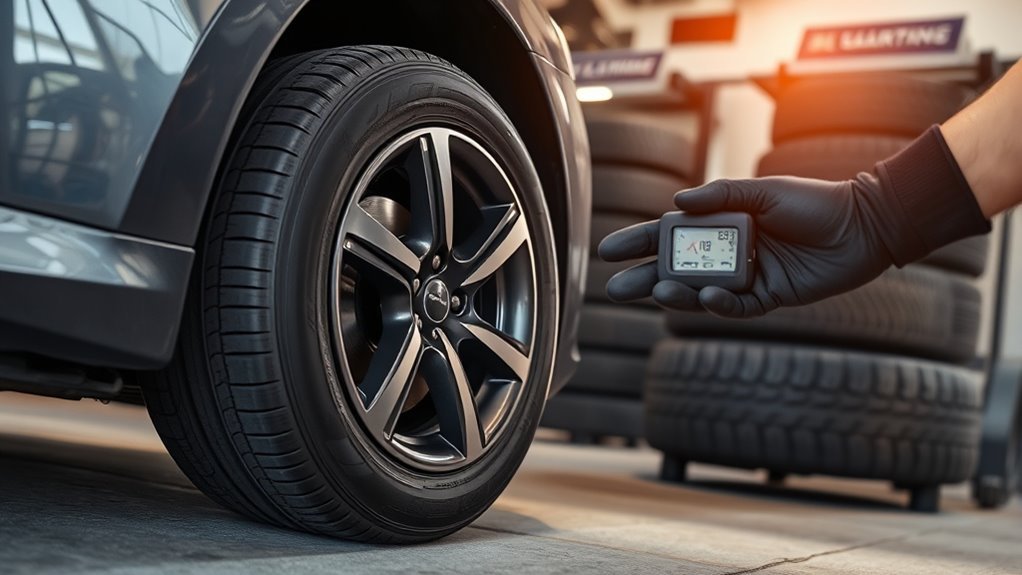
How will you know if a flat spot requires specialist attention? If vibration analysis shows persistent shaking after you’ve driven a short distance, consult a tire specialist—this often signals alignment, internal tire damage, or uncorrected flat-spotting. For semi-permanent flat spots that develop after a month or more of inactivity, professional evaluation is essential; these typically won’t recover with rolling alone and may necessitate replacement.
Follow disciplined tire maintenance: inspect tires regularly, check wear indicators, and document uneven wear patterns linked to flat spots. A specialist will assess tread depth, internal structure, and run-out to determine repairability. If replacement is recommended, ask about warranty or assistance programs like the Michelin Promise Plan, which can cover qualifying tire issues and ease cost barriers. Seeking expert diagnosis early preserves performance and safety, and aligns with your goal of mobility freedom—don’t wait until vibration or visible damage undermines control.
Frequently Asked Questions
Can Flat Spots Affect Modern Run-Flat or Airless Tires?
Yes — you can get flat spots on modern run-flat or airless tires, though less often; they’ll reduce tire longevity, and changing driving habits and storage practices will mitigate damage, supported by testing and real-world evidence.
Do Temperature Fluctuations Worsen Existing Flat Spots?
Yes — temperature fluctuations worsen existing flat spots: thermal cycling changes rubber stiffness and shrinkage, amplifying vibration and wear. Prioritize tire maintenance, stored pressure control, and regular rolling to minimize progressive damage and reclaim mobility.
Can Tire Balancing or Alignment Fix Flat-Spot Vibrations?
Yes—you can reduce vibration by rebalancing or aligning wheels, but you won’t fully cure pronounced flat spots; balancing addresses tire wear and imbalance, alignment corrects geometry, yet severe flat-spot vibration often needs tire replacement.
Are Flat Spots Covered by Tire or Vehicle Warranties?
Generally no: you won’t get automatic warranty coverage for flat spots unless manufacturer proves defect. You should document tire maintenance, store evidence, and pursue claims citing defective materials or workmanship to maximize successful warranty remediation.
Will Using Wheel Chocks Instead of Foam Prevent Flat Spotting?
Yes—you’ll reduce rolling movement and wheel chock benefits help, but chocks won’t fully replace foam alternatives for long-term static deflection. Use both: chocks for security, foam or suspension relief for proven flat-spot prevention.
Conclusion
Tire flat spotting can cut tire life and ride quality—studies show parked vehicles can develop temporary flats after just a few hours in cold conditions, with repeat occurrences accelerating tread damage. You can usually reverse temporary spots by warming and driving 5–10 miles at moderate speeds and correcting pressure; semi-permanent damage needs professional assessment. Prioritize proper storage, avoid chronic underinflation, and consult a tire specialist if vibration persists or tread shows permanent deformation.
Related Articles

When to Replace Tubeless Sealant: Timing & Signs
Be warned: tubeless sealant can fail in weeks or months—learn the signs, testing tips, and exact replacement timing to avoid flats.
Read More
The Penny Test for Tread Depth: How to Do It Right
Better learn the penny test correctly—discover when Lincoln’s head reveals dangerous tread wear and what to do next.
Read More
Tire Rotation Schedule: How Often & Why It Matters
Optimizing tire life? Discover why rotating every 5,000–8,000 miles matters for safety and savings—read on to learn exact patterns and tips.
Read More