Tire Diameter vs Rim Diameter: Key Differences to Know
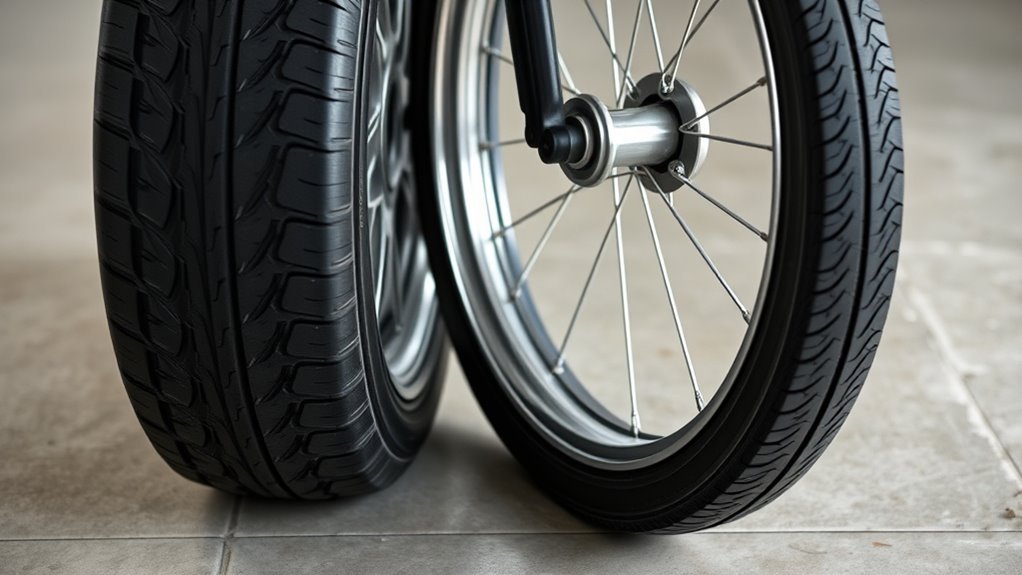
You need to distinguish tire diameter (the overall outside height of a mounted, inflated tire) from rim diameter (the bead-seat distance across the wheel). Tire diameter affects ride height, speedometer calibration and handling; rim diameter must match the tire’s bead size exactly for safe mounting. Mismatches prevent fitment and can be hazardous. Check tire size notation (e.g., 225/45R17) and specs like load index and inflation. Keep going and you’ll find practical fitment, clearance and maintenance guidance.
Tire Diameter vs Rim Diameter: Quick Answer
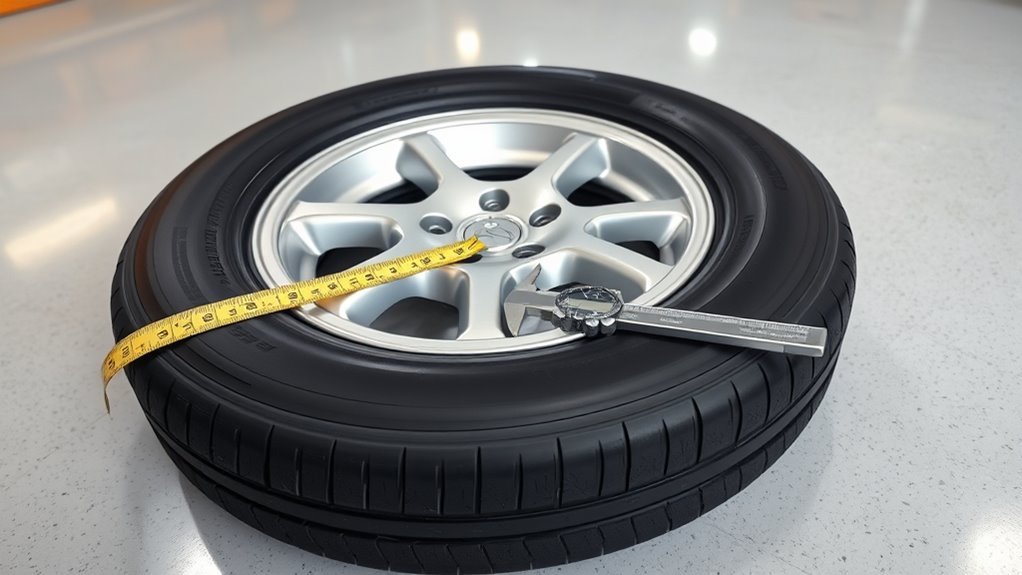
Tire diameter and rim diameter are two different measurements you must match for safe, correct fitment: tire diameter is the overall height of the mounted tire from ground to tread top, while rim diameter is the distance between the wheel’s bead seats measured in inches. You’ll use tire selection to guarantee the nominal tire diameter corresponds to the rim’s bead-seat diameter — for example, a 225/70R16 is roughly a 27.4-inch tire on a 16-inch rim. You must prioritize clearance, fitment, and the performance impact of diameter changes: incorrect diameter alters effective gearing, can skew your speedometer, and may introduce drivetrain stress. Practically, verify manufacturer specs and measure known good assemblies when swapping sizes. You’ll choose combinations that preserve intended handling and ride quality while freeing you from restrictive setups. Match tire and rim diameters precisely to maintain safety, vehicle integrity, and the liberated control you’re after.
Tire Diameter: Definition and How It’s Measured
Tire diameter is the overall outside height of a mounted, inflated tire—tread to tread—and you’ll see it quoted in inches or millimeters depending on the tire type. You measure outside diameter directly with a tape or calculate it from the tire code using diameter = (width × aspect ratio × 2 / 100) + rim diameter, ensuring consistent units. Be aware tread depth, inflation pressure, and load (plus tire construction like flotation vs. passenger) all change the effective diameter and must be controlled for accurate results.
What Tire Diameter Means
Diameter is the overall height of a mounted, inflated tire from one outer edge to the opposite outer edge, expressed in inches or millimeters and shown as the last number in size notation (for example, 16 in P225/70R16). You should know this dimension because it determines overall vehicle height, ground clearance, and speedometer calibration. Choose a diameter compatible with your rim to avoid mounting problems and degraded performance. Measure or verify diameter only when the tire is mounted and inflated to the manufacturer’s recommended tire pressure; low pressure compresses the tire and yields false readings. Diameter also influences handling: larger diameters can alter rotational inertia and affect vehicle stability. Understanding tire diameter frees you to make informed, practical choices that preserve safety and performance.
Measuring Outside Diameter
Having established what overall diameter represents and why it matters for fit and performance, you’ll now learn how to measure outside diameter accurately on a mounted, inflated tire. You’ll position the vehicle on level ground, confirm proper tire inflation to the manufacturer’s spec, and use measuring tools—either a large caliper or a rigid measuring tape—from the ground to the highest tread point. Measure at multiple points around the circumference to detect runout and record the largest consistent reading; tire diameter is given in inches or millimeters. Cross-check sidewall size notation for expected overall diameter and compare with vehicle specifications to preserve speedometer accuracy and handling. Accurate measurement frees you to choose replacements that maintain clearance, traction, and control.
Factors Affecting Diameter
Several key factors determine a tire’s overall diameter, and you’ll need to account for each when measuring or selecting replacements. You calculate diameter by adding twice the sidewall height (aspect ratio × section width) to rim diameter; that gives a precise overall height in inches. Control tire wear to avoid gradual diameter reduction that alters speedometer accuracy and drivetrain geometry. Deviations change ride quality, handling, fuel economy and have clear performance impact.
| Factor | Effect on Diameter | Practical Check |
|---|---|---|
| Aspect ratio | Directly scales sidewall height | Verify spec on tire sidewall |
| Rim diameter | Baseline measurement | Match vehicle rim size |
| Tire wear | Reduces tread height | Measure tread depth regularly |
| Inflation | Minor variation | Maintain recommended PSI |
Rim Diameter: Definition and Why It Matters for Fitment
Think of rim diameter as the key numeric link between wheel and tire: it’s the distance across the wheel measured at the bead seats, expressed in inches, and you must match it exactly to the tire’s rim size (the final number in a tire code like 255/40R17) to guarantee proper mounting, safe operation, and predictable handling. You need precise rim selection because the bead seats determine whether a tire will seal and carry load; even a one-inch mismatch stops mounting and risks catastrophic failure. Match rim diameter when you change wheels or tires to preserve handling, comfort, and safety. Each tire model is engineered for specific rim diameters, so your options narrow or widen based on that dimension. Practically, verify the rim number on the tire and the wheel specification before purchase. Prioritizing fitment importance lets you choose components that free you from compromise—optimizing performance without sacrificing safety or control.
Reading Tire Sizes: 225/45R17 and Rim Compatibility
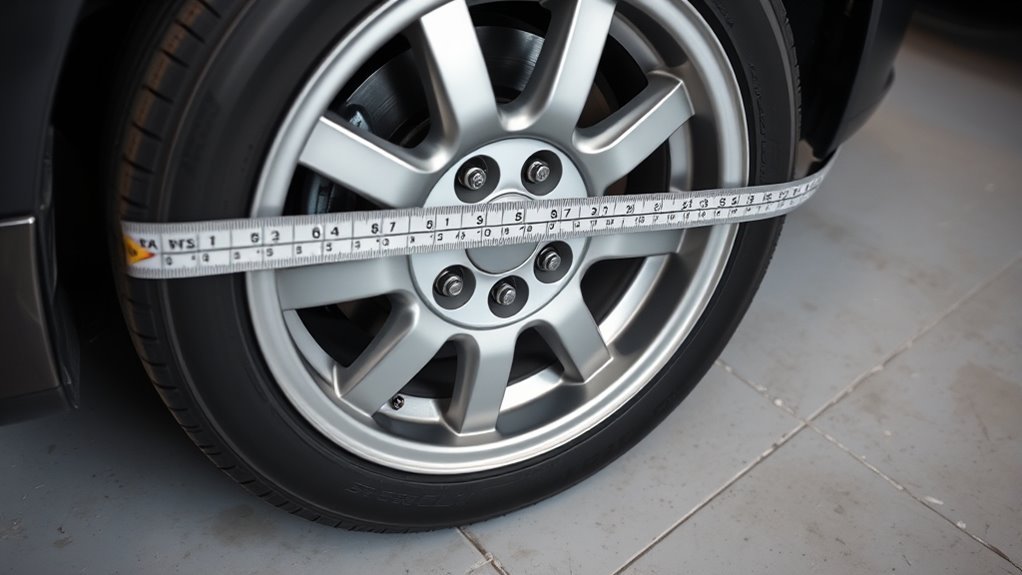
When you read 225/45R17, the 225 mm width tells you the tire’s section width and whether it will clear the wheel arches and rim flange. The 45% aspect ratio defines the sidewall height (45% of 225 mm), which affects overall diameter and ride characteristics. The R17 indicates the tire’s inner bead diameter must match a 17-inch rim, so always confirm rim capacity and the tire’s load/speed ratings before fitting.
Tire Width And Fit
Although tire markings look cryptic at first, 225/45R17 tells you key fit numbers: 225mm width, 45% aspect ratio, 17-inch rim. You’ll use the 225 value to judge width impact on handling—wider tires improve grip and tire performance but can reduce fuel efficiency. The 45 aspect ratio sets sidewall height, affecting comfort and responsiveness; don’t stray into aspect ratio trade-offs here. For rim compatibility, you must mount 225/45R17 on a 17-inch rim and confirm the rim width falls within the acceptable range—typically 7 to 8.5 inches for a 225mm tire. Fit matters: wrong rim diameter or out-of-range rim width risks poor seating, compromised safety, and degraded handling.
Aspect Ratio Explained
Because the aspect ratio is a simple percentage, you can quickly calculate sidewall height from a size like 225/45R17: 45% of 225 mm gives a 101.25 mm sidewall. You’ll use that sidewall height to judge handling trade-offs and freedom from compromise. Aspect ratio significance lies in measurable effects: lower ratios shorten the sidewall for crisper responses; higher ratios add cushioning but soften cornering.
- Lower aspect ratio — reduced sidewall height, improved handling precision.
- Higher aspect ratio — increased sidewall height, enhanced ride comfort.
- Radial construction (R) — standard durability, predictable behavior across ratios.
You’ll apply these facts to choose tires that liberate your driving goals without risking fitment or safety.
Rim Diameter Compatibility
If you fit a 225/45R17 tire, the “17” tells you it must mount on a 17-inch rim, so confirm the rim diameter matches exactly before installation. You should understand rim size is the inner wheel measurement where the bead seats; tire compatibility depends on that exact match. The overall tire diameter (≈24.9 inches for 225/45R17) is useful for clearance and gearing calculations but doesn’t change rim diameter requirements. Never force a tire onto an incorrect rim — mismatched rim and tire can cause poor handling, bead failure, or rapid wear. When replacing or upgrading, verify the tire’s rim diameter against the vehicle specifications and your intended performance goals to preserve safety and autonomy.
How Diameter Affects Ride Height, Speedometer, and Handling
When you change tire diameter, you directly change ride height, speedometer calibration, and handling in predictable ways: larger diameter raises ride height and ground clearance, alters speedometer accuracy, and shifts handling dynamics through contact patch and rolling circumference. You’ll need to balance liberation from constraints with technical trade-offs.
- Ride height and suspension: Increasing diameter increases ground clearance and center of gravity, affecting suspension geometry, alignment, and component wear; decreasing diameter lowers clearance but can improve agility.
- Speedometer accuracy and drivetrain: The speedometer’s calibration relies on original circumference; larger tires under-report speed, smaller tires over-report, and rolling circumference changes affect ABS and transmission shift logic.
- Handling dynamics and tire performance: Larger tires usually increase contact patch and high-speed stability; smaller tires often enhance steering response but may reduce traction.
Plan changes with suspension tuning, recalibration, or gear adjustments to preserve safety, efficiency, and the vehicle freedom you’re aiming for.
Common Fitment Problems and How to Fix Them (Rubbing, Clearance)
Although larger or improperly offset wheels can seem like a straightforward upgrade, they often create rubbing and clearance problems that compromise safety and performance. You must diagnose rubbing by inspecting tire contact points at full suspension compression and steering lock; maintain at least a 0.25-inch gap. Measure clearance precisely and compare to manufacturer specs.
| Issue | Cause | Fix |
|---|---|---|
| Fender rub | Excessive tire diameter/width | Trim liner; roll inner lip |
| Inner suspension contact | Negative offset | Use spacers; increase positive offset |
| Steering bind | Too-wide tire on rim | Re-select rim/tire pairing |
Apply rubbing solutions like wheel spacers or adjusted offset only after verifying load paths. For clearance adjustments, raise ride height with adjustable suspension or choose narrower tires matched to rim width. Document measurements and changes; test under load. These technical, practical steps free you from unsafe fitment while preserving performance.
Choosing Compatible Tires and Rims: Load Index, Speed Rating, Inflation
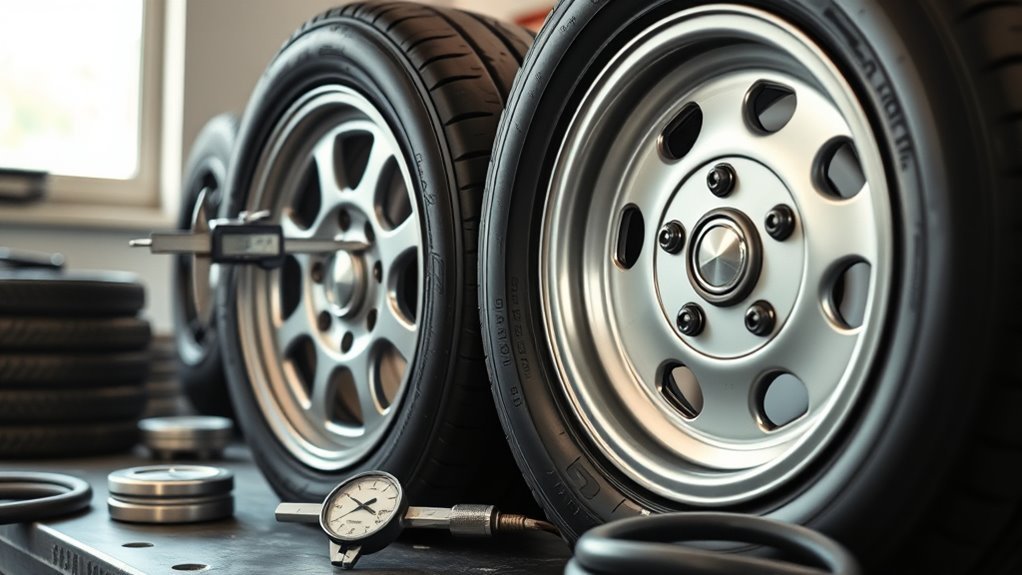
Because tire and rim compatibility directly affects load capacity, speed capability, and handling, you should match tire diameter to rim diameter exactly and select tires with load indexes and speed ratings that meet or exceed your vehicle’s original specifications. You’ll verify tire compatibility by checking tire size notation (e.g., 225/70R16) against rim diameter, then confirm the load index to support vehicle curb weight and payload. Choose a speed rating equal to or above the OEM rating to preserve dynamic stability.
- Check load index: confirm each tire’s numeric rating supports per-wheel load requirements.
- Confirm speed rating: select letters (e.g., H) that meet sustained-speed demands and legal limits.
- Set inflation pressure: use vehicle placard values, adjust for load, and recheck regularly.
You’ll liberate yourself from compromise by applying precise specs: matched diameters, adequate load index, correct speed rating, and proper inflation pressure maintain safety, predictable handling, and tire longevity.
Pre-Purchase Checklist: Verify Tire Diameter and Rim Match
If you’re about to buy tires, start by confirming the tire’s nominal diameter matches your rim diameter exactly, since a 255/40R17 tire is made to seat on a 17‑inch rim and will not mount safely on a different rim size. Next, consult your owner’s manual and the door‑jamb placard to verify the factory‑specified diameters and acceptable alternatives. Measure your current rim diameter if documentation is missing.
For tire fitment, guarantee the overall tire diameter maintains vehicle dynamics — speedometer calibration, clearance, and steering feel — by comparing manufacturer tolerances. During rim selection, confirm bead seat diameter and rim width compatibility with the tire’s nominal width and aspect ratio. Reject tires that require adapters or forceful mounting.
Record load index and speed rating alongside diameter for a complete match. Insist on professional mounting and a final inspection of bead seating and balance. Being deliberate here safeguards performance, safety, and your freedom to drive confidently.
Frequently Asked Questions
Is Rim Diameter the Same as Wheel Diameter?
No — rim diameter and wheel diameter differ: you’ll treat rim size as the bead-seat measurement, while wheel size often denotes overall wheel assembly dimensions; you’ll guarantee rim size matches tire specs to maintain safe, liberated driving.
Conclusion
You’ve learned the difference between tire diameter and rim diameter, how to read sizes, and why matching them matters; now act on it. Verify rim diameter before buying tires, confirm tire diameter before mounting, and check load, speed, and inflation before driving. Measure clearance, test fit for rubbing, and recheck speedometer calibration. Do the math, follow specs, and inspect physically — prevent mismatches, preserve handling, and protect safety.