Tire Cleaning Products Safe for Toyota RAV4 Wheels
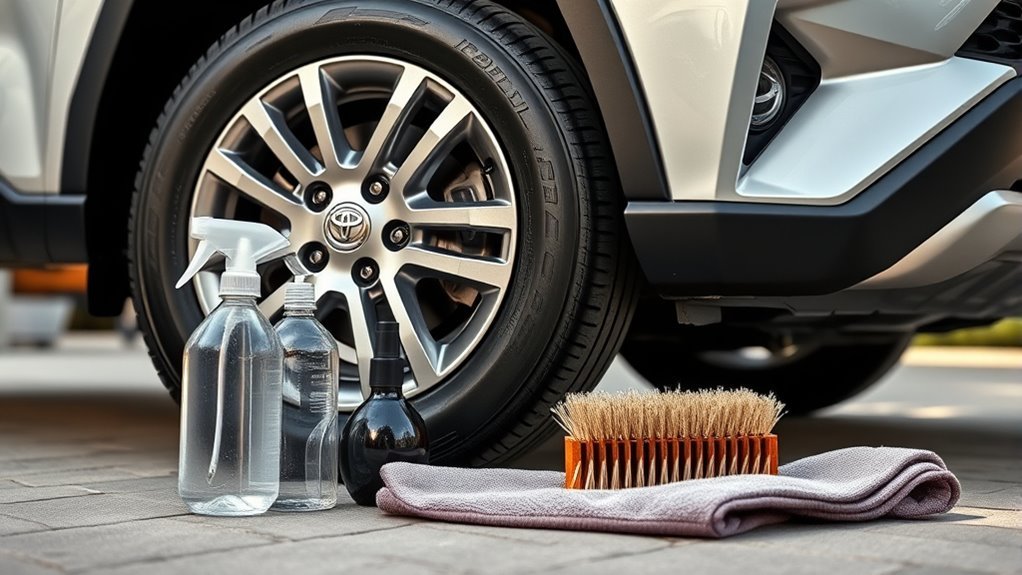
Use pH‑balanced, wheel‑safe tire cleaners and soft brushes so you won’t strip factory sealants or painted/coated finishes on your RAV4. Pre‑rinse, apply a tested product like Tuf Shine or Chemical Guys, wait the recommended dwell time, agitate with a stiff tire brush, then rinse and dry before applying a water‑based dressing. Avoid acidic, alkaline, bleach, or ammonia formulas and test new products on a hidden spot; continue for step‑by‑step application, protection, and troubleshooting tips.
Quick Guide: Clean RAV4 Tires Safely
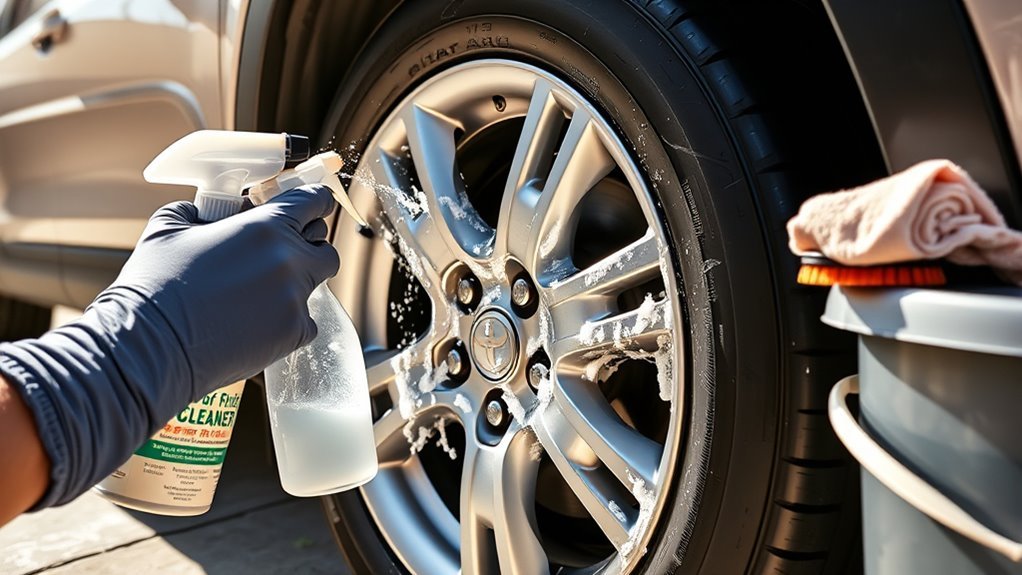
When you clean your RAV4’s tires, start by applying Tuf Shine Tire Cleaner to loosen dirt and grime without harming the wheel finish; let it dwell briefly, then scrub the sidewalls with a stiff Tuf Shine Tire Brush to break through heavy filth while protecting the wheel’s integrity. You’ll follow a methodical sequence: pre-rinse to remove loose debris, apply cleaner in sections, agitate firmly with the brush, then rinse thoroughly to avoid residue that can compromise protective coatings. Don’t use generic off-the-shelf tire shines that leave buildup and dull the tire’s appearance over time. For reliable tire maintenance, schedule this routine before washing the vehicle so you’re not redistributing grime. Track intervals based on driving conditions—urban grit demands more frequent attention than highway miles. These cleaning techniques free you from short-lived cosmetic fixes and deliver consistent, evidence-based results that preserve finish, improve aesthetics, and give you control over long-term wheel care.
Which RAV4 Tires and Wheels Need Special Cleaners?
Now that you’ve got a reliable cleaning routine, you should pay attention to which RAV4 wheels and tires need specialized products. Focus first on wheel finishes: most RAV4s use alloy wheels with protective coatings that pH-balanced cleaners preserve. Avoid acidic or overly alkaline formulas—these can strip coatings and accelerate corrosion from brake dust. For coated alloys, evidence supports using products like Sonax Wheel Cleaner Plus or similar pH-neutral options.
Next, match cleaners to tire types. Low-profile and performance tires often have softer compounds and may react to aggressive dressings or solvents; choose tire cleaners labeled safe for these constructions. Clean tires and wheels separately to prevent cross-contamination: use dedicated brushes and buckets so wheel residue doesn’t transfer to tire sidewalls. Regular, gentle maintenance reduces brake-dust buildup and protects finishes, giving you control over appearance and longevity without risking damage from harsh chemistries.
How to Pick Cleaners Safe for Painted/Coated Wheels
First, identify whether your RAV4’s wheels are painted, clear-coated, or powder‑coated so you pick a compatible product. Then check chemical compatibility—use pH‑balanced cleaners labeled safe for painted or clear‑coated surfaces and avoid acidic or strongly alkaline formulas that can strip coatings. Finally, always test any new cleaner on a small, hidden area to confirm there’s no discoloration or etching before full application.
Identify Your Wheel Finish
Start by identifying whether your RAV4’s wheels are painted, clear‑coated, or polished aluminum, since each finish reacts differently to cleaners and tools. For accurate finish identification, inspect visually and feel: painted finishes have uniform color, clear‑coated wheels show a lacquer layer over paint, and polished aluminum feels smooth and metallic without paint. Knowing these wheel types directs your product choice. For painted or coated wheels, avoid acidic or abrasive cleaners; use pH‑balanced formulas to prevent etching and flaking. Always test a new cleaner on a small, inconspicuous area to confirm compatibility with the wheel finish. Use soft brushes and microfiber towels to minimize scratches. Regular, appropriate maintenance preserves appearance and frees you from unnecessary damage and constraint.
Check Chemical Compatibility
Because painted and clear‑coated wheels rely on protective layers that can be stripped by wrong chemicals, always pick pH‑neutral cleaners labeled safe for painted/coated wheels and free of harsh abrasives or aggressive solvents. You’ll protect finishes by prioritizing formulations that minimize harmful chemical interactions and verify product effectiveness through labels and reviews. Check for explicit compatibility with ceramic coatings and avoid solvents that dissolve binders or lift clear coats. Use the table below to compare key attributes quickly.
| Attribute | What to look for | Why it matters |
|---|---|---|
| pH level | Neutral (around 7) | Prevents etching or stripping |
| Labeling | Safe for painted/coated wheels | Guarantees compatibility |
| Abrasives | None | Avoids scratches |
| Solvents | Low/none | Preserves binders |
| Reviews | Confirmed effectiveness | Real-world proof |
Test On Hidden Area
When you try a new wheel cleaner, always test it on a hidden section of the wheel to confirm it won’t harm the paint or clear coat. You’ll perform controlled hidden tests to reveal cleaner reactions before full application. Use a microfiber towel to apply a pea-sized amount, match the wheel finish, follow the product’s dwell time, then rinse thoroughly. Inspect for discoloration, dulling, or stripping.
- Choose a discreet area near the lug nut or inside barrel.
- Apply with a clean microfiber, not spray-and-forget.
- Wait the label’s dwell time, then rinse and dry.
- Reject acidic/alkaline formulas; prefer pH‑balanced or wheel‑specific cleaners.
This method protects coatings, preserves appearance, and frees you from avoidable damage.
Top Tire Cleaners for RAV4: Tuf Shine + Alternatives
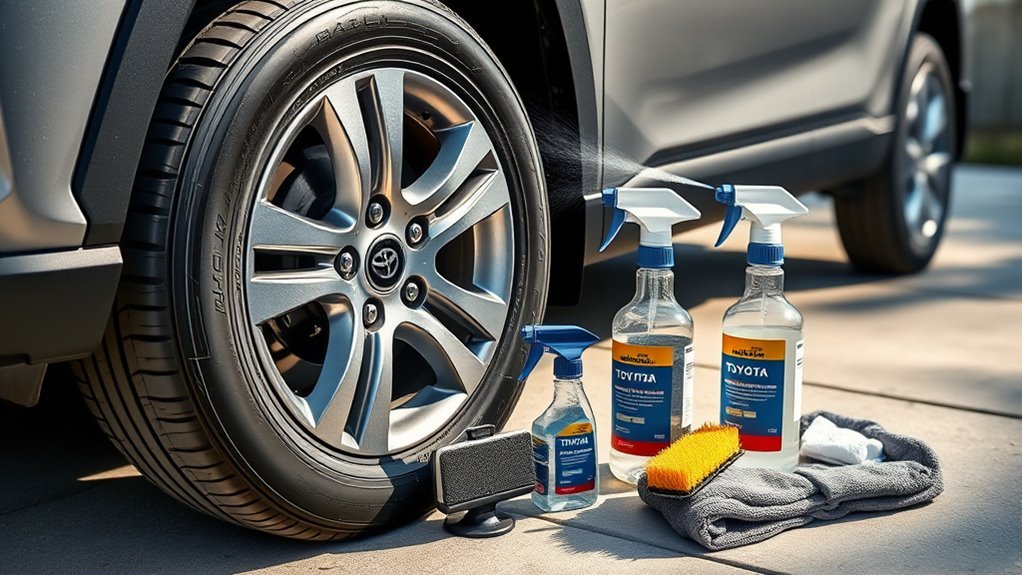
You’ll find Tuf Shine breaks down dirt and grime effectively while protecting wheel coatings, which helps prevent buildup that ages RAV4 tires. If you prefer alternatives, Chemical Guys Tire and Rubber Cleaner and Meguiar’s Hot Rims deliver comparable cleaning strength with formulations safe for coated wheels. Apply any of these cleaners according to label directions and use regular maintenance to preserve appearance and resale value.
Tuf Shine Benefits
If you want tires that look professionally maintained with minimal risk to rubber or wheel coatings, Tuf Shine delivers: its formula breaks down embedded dirt and grime efficiently while preventing browning and fading, and the matched Tuf Shine Tire Brush lets you agitate stubborn deposits without scratching surfaces. You’ll gain reliable cleaning techniques that protect finish and extend life. Use Tuf Shine as part of regular tire longevity tips to keep rubber supple and appearance consistent.
- Fast soil breakdown — reduces scrubbing time and abrasive risk.
- Safe on all tires — won’t strip coatings or accelerate deterioration.
- Browning/fading prevention — preserves factory look and resale value.
- Brush-matched system — removes heavy filth without surface damage.
Safe Alternative Options
Having covered Tuf Shine’s benefits, let’s look at other safe cleaners that give comparable results for a RAV4: You’ll find Chemical Guys Tire and Rubber Cleaner removes stubborn debris while remaining wheel-safe, and Meguiar’s Hot Rims targets brake dust and road grime efficiently. Sonax Wheel Cleaner Plus loosens embedded dirt for easier removal without harming finishes. These choices are evidence-based, tested on various wheel types, and support consistent appearance and longevity for your RAV4. If you want more control, combine commercial products with eco friendly options or vetted DIY solutions—mild soap, diluted citrus-based degreasers, or baking-soda pastes—to reduce harsh chemicals while maintaining performance. Choose methods that free you from worry and preserve wheel integrity.
Application And Maintenance
Start by spraying Tuf Shine Tire Cleaner evenly onto the tire sidewalls, let it dwell for about a minute to break down grime, then scrub with a stiff brush to remove embedded dirt—this method reliably cleans without harming RAV4 wheel finishes. You’ll rinse thoroughly, inspect for remaining brake dust, and repeat if needed. Use alternatives like Chemical Guys or Meguiar’s when supplies run low; all are safe for regular use and prevent corrosive buildup.
- Rinse tires, spray cleaner, wait ~60s, scrub with stiff brush.
- Rinse again, dry, inspect bead and lug areas for trapped grime.
- Apply water‑based tire dressing for UV protection and wheel aesthetic enhancements.
- Clean every 2–4 weeks as a tire longevity tips regimen.
Best Wheel Cleaners That Pair With Tire Products
Pairing the right wheel cleaner with your tire product guarantees complete brake-dust removal without harming your RAV4’s wheel finish. You’ll choose cleaners proven safe (avoid harsh acids) and match them to your tire chemistry. P&S Iron Buster, Sonax Wheel Cleaner Plus, and Meguiar’s Hot Rims each remove embedded brake residue without stripping coatings when used correctly. Use Mothers Wheel Brush and refined wheel brush techniques to agitate lug areas and spokes; this boosts contact and reduces dwell time. If you prefer liberation through responsible choices, consider eco friendly cleaners where available—they cut contamination with lower environmental impact.
| Wheel Cleaner | Best Pairing Benefit |
|---|---|
| P&S Iron Buster | Fast iron removal; pairs with neutral tire cleaners |
| Sonax Wheel Cleaner Plus | Strong cleaning; safe on coatings |
| Meguiar’s Hot Rims | Versatile; works with most tire products |
Apply per label, rinse thoroughly, and combine proper tools to protect finishes while regaining control over grime.
Cleaners to Avoid (That Strip Coatings)
Because harsh chemistries quickly undermine protective layers, avoid acidic or caustic wheel cleaners that can strip paint, clearcoat, and ceramic coatings on your RAV4’s wheels. You want freedom from frequent reapplications, so reject products that boast aggressive stain removal at the cost of finish integrity. Read labels and choose pH‑balanced formulas.
- Bleach- or ammonia-based cleaners — they’ll degrade ceramic coatings and eat at paint over time.
- Non‑pH‑balanced “super‑strength” formulations — risk etching, discoloration, and coating failure.
- Products that advertise “stripping” or “deep clean” without finish compatibility — a red flag for coatings.
- Industrial degreasers not rated for automotive finishes — designed to remove protective layers, not preserve them.
These recommendations counter cleaning myths and common mistakes: stronger isn’t always better. Be evidence‑based—check manufacturer guidance and test in an inconspicuous area. By avoiding these cleaners, you preserve finish longevity and reclaim control over maintenance frequency.
Step‑by‑Step: Clean Tires Without Contaminating Wheels
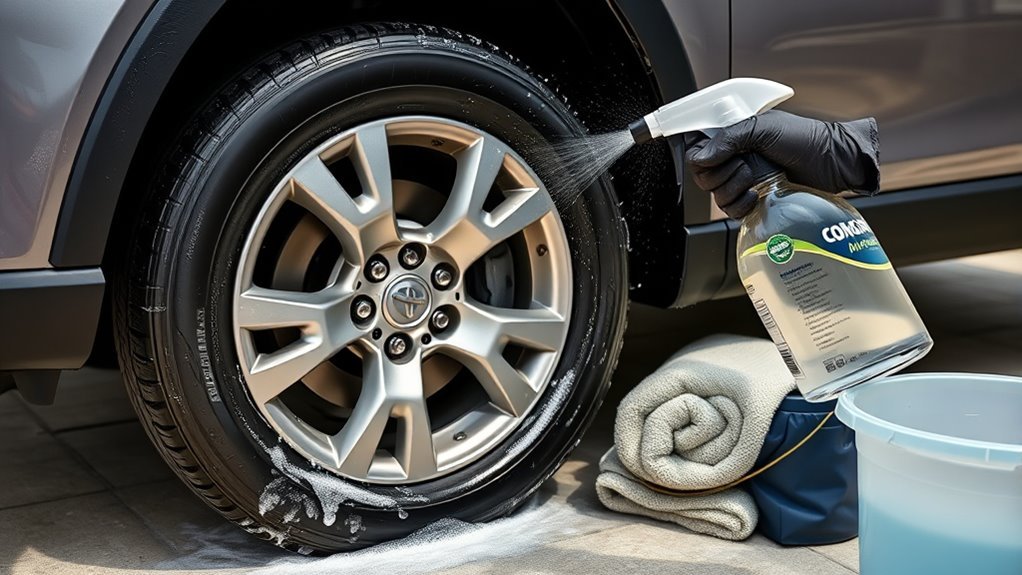
After you’ve eliminated cleaners that strip finishes, focus on a method that keeps wheel surfaces untouched while you work the tires. Begin by applying a dedicated tire cleaner (for example, Tuf Shine Tire Cleaner) to the sidewalls only; concentrated formulations remove grime without risking wheel finishes. Use dedicated tire scrubbers or a stiff Tuf Shine Tire Brush to agitate rubber—work in controlled strokes toward the road surface to limit splatter. Rinse each tire thoroughly before any dressing to wash away residue and prevent runoff from reaching wheels. Dry tires completely with a microfiber towel or air blower; moisture will carry dressing onto wheel finishes if you rush. Apply tire dressing sparingly, aiming at the inner sidewall and allowing product to absorb before rotating the wheel. Maintain strictly separate tools for tires and wheels to eliminate cross-contamination. This disciplined, stepwise approach protects wheel finishes while giving you clean, liberated tires.
Best Sealants & Ceramic Coatings for Wheels
Protection matters: choosing the right wheel sealant or ceramic coating will materially reduce brake-dust buildup, chemical etching, and UV damage on your Toyota RAV4 rims. You want durable wheel protection that simplifies cleaning and resists the heat and contaminants specific to wheels. Ceramic Pro-type coatings deliver long-lasting defense at roughly $55 per rim; paint-specific sealants outperform regular wax under brake heat. Quick-seal options like CarPro HydrO2 offer rapid application techniques and strong hydrophobicity for easier rinsing.
- Ceramic Pro — long-term durability, professional-grade barrier, estimated $55 per rim.
- CarPro HydrO2 — quick-seal, user-friendly application techniques, excellent water repellency.
- Wheel-specific paint sealants — formulated for heat resistance; avoid automotive wax.
- Prep protocol — thorough decontamination before coating to prevent flaws and premature failure.
You’ll gain liberation from constant scrubbing: precise prep and correct application techniques guarantee the coating performs and keeps your RAV4 wheels cleaner, longer.
RAV4 Wheel & Tire Maintenance Schedule
You should clean your RAV4’s wheels and tires every 1–2 weeks to prevent brake-dust buildup and corrosion, and perform a thorough monthly wheel cleaning with an iron-removing product like P&S Iron Buster. Inspect tires for wear and damage during each cleaning and rotate them every 5,000–7,500 miles to promote even tread life. Apply a pH-balanced cleaner for regular washes, then use a tire dressing monthly and reapply or top up wheel sealants/ceramic coatings on a seasonal (every 3–6 months) or as-needed basis to maintain UV and contamination protection.
Recommended Cleaning Frequency
When you stick to a weekly cleaning routine for your RAV4’s wheels and tires, you’ll limit brake-dust buildup and keep the finish looking sharp while reducing the need for aggressive future cleanings; supplement that weekly wash with a dedicated wheel cleaner like P&S Iron Buster once a month to remove embedded contaminants, clean wheel barrels thoroughly at tire rotations, inspect tires regularly for grime that can dull appearance or affect performance, and apply tire shine every 2–4 weeks to enhance looks and provide UV protection. You’ll preserve wheel care standards and promote tire longevity through disciplined, simple actions that prevent corrosion and performance loss. Follow this clear, evidence-based cadence:
- Weekly exterior wash of wheels and tires.
- Monthly iron-removal treatment.
- Barrel cleaning at each rotation.
- Tire-shine application every 2–4 weeks.
Seasonal Maintenance Tasks
Keeping the monthly and rotation-based habits from your weekly routine will make seasonal maintenance faster and more effective. You’ll schedule seasonal tire maintenance monthly and at rotations, using safe tire cleaning products (P&S Iron Buster) to remove brake dust without harming finishes. Inspect and clean inner barrels during rotations to prevent corrosion. Apply CarPro HydrO2 every 3–6 months to extend wheel life and simplify future cleanings. Finish with a tire shine compatible with wheels.
| Task | Frequency | Product/example |
|---|---|---|
| Wheel clean exterior | Monthly | P&S Iron Buster |
| Inner barrel clean | At rotations | Soft brush, degreaser |
| Protective coating | 3–6 months | CarPro HydrO2 |
| Tire shine | After cleaning | Non-damaging formula |
| Inspect for corrosion | At rotations | Visual + touch test |
Wheel Protection Schedule
Although wheel protection sounds optional, a scheduled regimen pays off: apply a ceramic coating or sealant every 6–12 months, clean with P&S Iron Buster monthly, and use a quick detailer biweekly to maintain hydrophobic properties and limit brake-dust bonding. You’ll preserve finish integrity, reduce cleaning time, and resist corrosive contaminants with a disciplined wheel coating routine. Inspect monthly for damage or buildup and adjust frequency based on driving conditions.
- At 6–12 months: reapply ceramic wheel coating or sealant for durable protection.
- Monthly: clean barrels and faces with P&S Iron Buster; use boar’s-hair brushes to protect coating.
- Biweekly: quick-detailer spray to restore hydrophobic properties.
- During tire rotation: deep-clean barrels, verify coating adhesion, and note maintenance tips.
Troubleshooting: Stains, Residue, and Coating Damage
If you spot stains, sticky residue, or dulling on your RAV4’s wheels, act quickly to identify whether it’s overspray from tire dressing, trapped grime, or chemical damage to a ceramic or painted coating. For stain prevention, use pH‑balanced cleaners and apply tire dressings sparingly, directing spray away from rims. If residue appears, rinse thoroughly immediately; persistent film responds to a dedicated rim cleaner formulated for coated or painted surfaces. Inspect closely for etched or discolored areas that suggest coating compromise—chemical stripping often leaves matte patches or uneven gloss. Regularly check wheel wells and lug areas where grime hides; early residue removal can reveal scratches or corrosion before they worsen. Follow manufacturer guidelines for any product, and avoid acidic or highly alkaline agents that can strip protective layers. When in doubt, test cleaners on an inconspicuous area and consider professional restoration for ceramic‑coating damage to restore protection and maintain your freedom to drive without worrying wheel deterioration.
Frequently Asked Questions
How to Clean Toyota Rims?
Rinse rims, apply wheel cleaner matched to rim materials, let sit 1–2 minutes, scrub with appropriate brush, rinse thoroughly; set cleaning frequency based on driving conditions, aiming for regular maintenance to keep you free from corrosion and grime.
What Is the Best Thing to Use to Clean Tire Rims?
Use a pH‑balanced wheel cleaner like Meguiar’s or Sonax with a soft-bristle brush; you’ll protect finishes, remove brake dust, and follow wheel maintenance cleaning tips that free you from grime while preserving rim longevity and resale value.
What Cleaners Are Safe for Tires?
Use pH-balanced, solvent-free cleaners like Tuf Shine or Chemical Guys and eco friendly cleaners for tire maintenance; test small areas first, avoid bleach/harsh solvents, and you’ll protect finishes while empowering independent, evidence-based care.
Conclusion
You’ve now got focused, evidence‑based guidance to clean RAV4 tires without harming wheels — from selecting pH‑neutral tire cleaners to pairing them with iron‑removing wheel products and protective sealants. Will you choose a gentle, tested tire formula and follow the step‑by‑step method to avoid cross‑contamination? By using compatible cleaners for painted or coated wheels, rinsing thoroughly, and scheduling regular maintenance, you’ll preserve finish integrity and extend wheel life with measurable results.

Related Articles

Upsizing Wheels on a Toyota RAV4: Pros, Cons, and Considerations
Boost your Toyota RAV4's performance with larger wheels, but discover the hidden trade-offs that could impact your ride before you decide.
Read More
Can I Change Tire Size on My Toyota RAV4? Rules and Recommendations
Are you considering changing the tire size on your Toyota RAV4? Discover the essential rules and recommendations before making a decision.
Read More
What to Do If the TPMS Light Comes On in Your RAV4
Understand the steps to take when the TPMS light illuminates in your RAV4, as overlooking it could lead to serious tire problems.
Read More