Tire Casing & TPI Explained: How Thread Count Matters
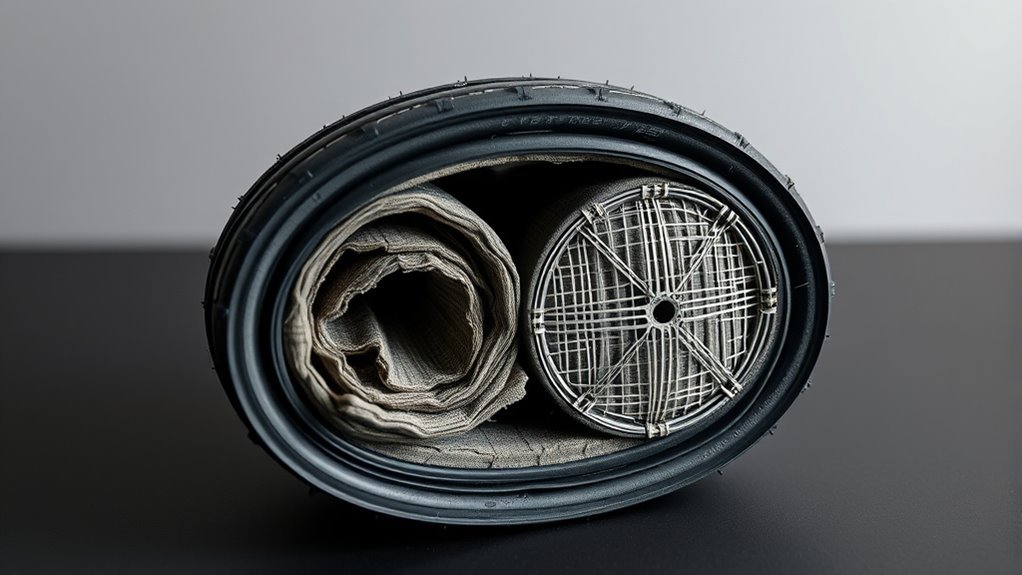
TPI (threads per inch) tells you how many fabric threads are in one inch of a tire casing; higher TPI means more, finer threads for a suppler, lighter, lower‑rolling‑resistance tire, while lower TPI uses thicker threads for tougher, more supportive casings. TPI affects comfort, grip and weight but not lonehandedly — rubber thickness, protection layers and weave matter for puncture resistance and sidewall stability. Keep going and you’ll get practical TPI choices by discipline and format.
Who This Guide Is For
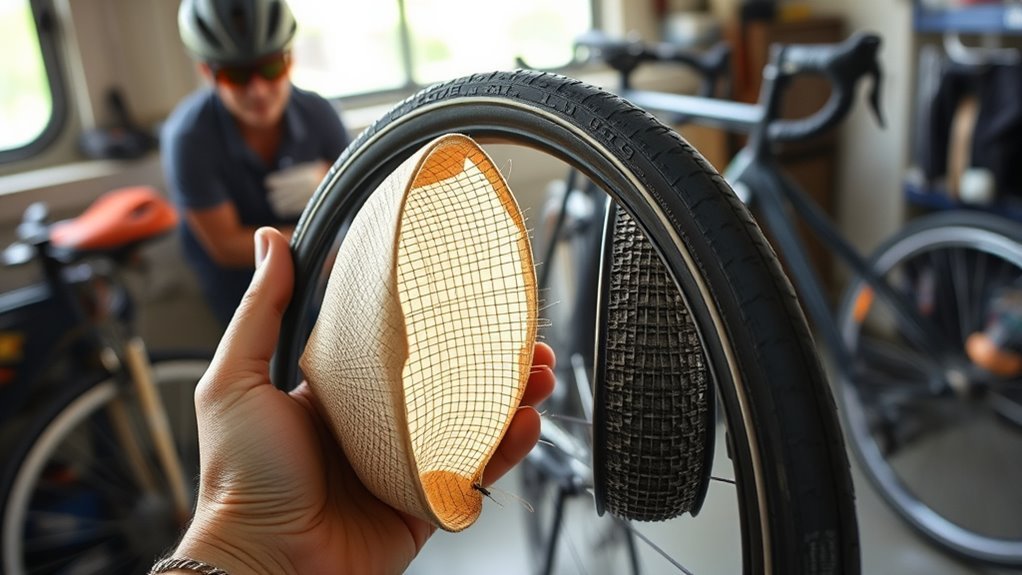
This guide is for cyclists who want a clear, practical understanding of how tire casing and TPI (threads per inch) affect performance and ride quality. You’re a rider seeking control over equipment choices—whether you’re a casual rider tuning comfort and durability or a competitive cyclist chasing marginal gains. You’ll get targeted comparisons of high- versus low-TPI casings, material trade-offs, and how those variables influence weight, rolling resistance, and compliance without jargon that obscures decisions.
You’ll use this information to match tires to goals: prioritize suppleness and lower rolling resistance when speed and feedback matter, or choose robust, lower-TPI constructions when puncture resistance and longevity are paramount. The guide frames decisions in actionable terms so you can select tires that liberate your riding—making choices that expand where, how far, and how fast you ride with confidence.
What TPI (Threads Per Inch) Actually Measures
TPI counts the number of individual fabric threads running through a one-inch section of the tire casing, so a higher TPI means more, finer threads per inch. You’ll measure it by inspecting the weave across a square inch or relying on the manufacturer’s spec, noting that manufacturers may layer fabrics (e.g., a stated 300 TPI can be three overlapping plies). Because measurement method and material differ, compare TPI alongside casing construction rather than as a lone performance metric.
What TPI Counts
One clear way to think about threads per inch is as the count of individual yarns woven across one linear inch of the tire’s casing, and that count directly governs the casing’s flexibility and weight. When you read TPI, you’re seeing a tradeoff: TPI benefits include lighter, more supple casings that improve ride quality and roll efficiency; TPI drawbacks include thinner yarns that can reduce puncture resistance. Higher TPI means finer, denser weave—better feel, lower mass, less protection. Lower TPI uses thicker yarns—more robust, heavier, and more puncture-resistant. Typical nylon ranges sit around 60–120 TPI; cotton and race casings can exceed 250 TPI. Use TPI to choose the balance between performance and durability that frees your ride.
How TPI Is Measured
When you inspect casing fabric closely, count the individual yarns crossing a one-inch square to determine threads per inch, and that raw count is what manufacturers report as TPI. You’ll learn that higher TPI indicates finer, denser yarns, which generally improve suppleness and ride quality. Measurement methods differ: some firms count every layer or ply, inflating values and undermining TPI accuracy. Common ranges—30–60 for durability, 90–120+ for performance, cotton >250—give context, but TPI alone isn’t definitive. For liberated consumers, demand clarity: ask manufacturers how they count, whether counts follow consistent industry standards, and inspect casing samples when possible. Use TPI as one controlled data point within a broader performance assessment.
How TPI Affects Ride Feel, Rolling Resistance, and Weight
Because the thread count determines how fine and flexible the casing is, higher TPI tires feel noticeably more supple and conform to road texture, giving you better comfort and grip. You’ll notice improved ride comfort and elevated tire performance: finer threads flex with micro‑imperfections, increasing traction and reducing vibration. Higher TPI also lowers rolling resistance by minimizing fabric stiffness and energy loss, so you’ll accelerate and climb with less effort.
Higher TPI usually means lighter casing—thinner yarn needs less rubber—so you gain responsiveness and reduced rotational mass. Tradeoffs exist: ultra‑fine casings can be more puncture‑prone without added protection. You’ll choose freedom by balancing TPI with protective layers tailored to your terrain and risk tolerance.
| Attribute | High TPI | Low TPI |
|---|---|---|
| Supple feel | High | Low |
| Rolling resistance | Low | High |
| Weight | Low | Higher |
| Durability | Lower* | Higher |
| Suitability | Fast roads | Rough roads |
Why TPI Isn’t the Whole Story: Rubber, Protection Layers, and Materials
TPI gives you a baseline for casing fineness, but rubber thickness and compound strongly determine ride quality and puncture resistance. Protective layers—be they woven belts, aramid strips, or extra rubber plies—add targeted durability that TPI alone won’t predict. Finally, the casing material and weave (nylon vs. cotton, tight vs. open lay) change suppleness and toughness, so assess construction as a whole.
Rubber Thickness Matters
Although thread count matters, the thickness and composition of the rubber coating play a major role in ride stiffness, comfort, and puncture resistance. You’ll feel thicker rubber as increased firmness; it raises ride stiffness and often improves rubber durability and resistance to cuts. Conversely, higher-TPI casings frequently pair with thinner rubber to boost suppleness and comfort, sacrificing some wear life. Material compounds shift the balance: softer rubbers grip better but wear faster, harder compounds extend mileage. You should evaluate tread patterns, rubber thickness, and compound together rather than TPI alone. Real-world testing shows the best performers balance casing thread count, coating thickness, and protective features so you maintain speed, comfort, and freedom from flats across varied terrain.
Protective Layer Types
One key reason you shouldn’t judge a tire by thread count alone is the variety of protective layers manufacturers add—belts, puncture-resistant inserts, and composite weaves—that change puncture resistance, weight, and ride feel independent of TPI. You should evaluate how material types—nylon, cotton, polyester and composites—interact with protective coatings and rubber compounds to shape durability and suppleness. Makers layer rubber and puncture-resistant belts to boost longevity and cut resistance without necessarily raising TPI. That lets you choose tires that free you from trade-offs: lower rolling resistance or tougher sidewalls. Assess thickness and compound quality for performance impacts on weight and ride quality. Remember inconsistent TPI counting can mask real-world results; focus on protective layer design and tested puncture resistance instead.
Material And Weave
Think of a tire as a layered composite where the base fabric, weave density, and rubber coating together set suppleness, durability, and ride feel. You choose material types—nylon for longevity, cotton for compliance, silk for premium suppleness—and you accept trade-offs. Weave patterns determine how that fabric behaves: tighter, finer weaves raise TPI but often increase stiffness; looser weaves yield more flex and comfort. Rubber coating thickness further modifies behavior; more rubber stiffens regardless of thread count. Protective belts add puncture resistance without changing TPI, so durability isn’t solely a thread-count metric. Manufacturers count TPI differently, so don’t assume a number tells the whole story. Read construction specs, weigh materials, and pick the casing that frees your ride.
TPI, Puncture Resistance, and Sidewall Stability
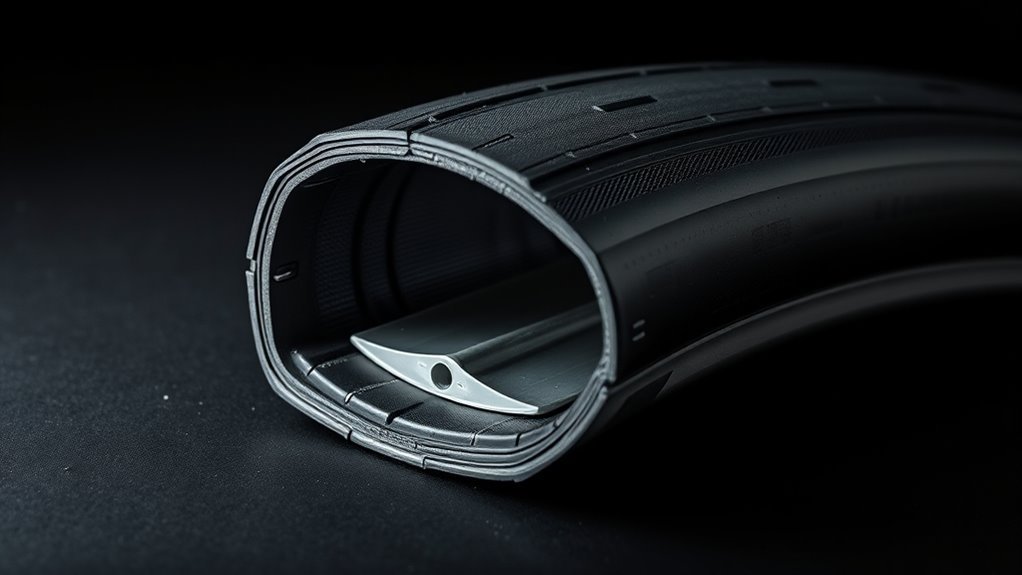
Because thread-per-inch (TPI) directly affects casing construction, you’ll trade off ride quality and rolling resistance against puncture resistance and sidewall stiffness: TPI trade offs, durability considerations, demand intentional choice. Higher TPI uses finer threads for a supple, lower-rolling-resistance casing, but thinner material can lower puncture resilience and sidewall stability. Lower TPI employs thicker, coarser threads to create a stiffer casing that resists cuts and holds shape on rough terrain, improving durability and predictable handling.
Note bead and tubeless constraints: many tires below 50 TPI have non-folding beads, limiting tubeless setups and associated puncture-mitigation benefits. Manufacturers sometimes weave supplemental nylon or polymer layers into higher-TPI casings to regain protection without surrendering performance. You’ll weigh intended terrain and risk tolerance: choose higher TPI plus reinforcements when you prioritize speed and comfort, or lower TPI when maximum toughness and sidewall support are liberation tools for uncompromised exploration.
Choosing the Right TPI for Road, Gravel, Commuter, and MTB
When you pick tires for a specific discipline, TPI becomes a targeted trade-off between performance and protection: higher TPI (90–120+) yields supple, low-rolling-resistance road rubber ideal for speed, while mid-range TPI (60–120) on gravel balances comfort and puncture resilience, and lower TPI (30–60) on commuters and mountain bikes favors toughness, cut resistance, and sidewall support for daily use and rough trails. For road tire recommendations, choose 90–120+ TPI casings if you seek minimal rolling drag and responsive ride quality; accept slightly higher cut risk for liberation through speed. For gravel tire characteristics, target 60–120 TPI to handle mixed surfaces—opt for the lower end when you need extra protection, higher when you want suppleness. For commuter tire durability, select 30–60 TPI to prioritize longevity and flat resistance under urban hazards. For mountain bike performance, use 30–60 TPI to maximize sidewall robustness, traction control, and impact tolerance on technical terrain.
TPI and Tire Formats: Tubeless, Folding Beads, and Multi‑Ply Casings
Tire format directly shapes how TPI affects performance: tubeless and folding‑bead designs usually pair with higher TPI to enable airtight sealing, suppleness, and lower rolling resistance, while lower‑TPI, non‑folding and multi‑ply constructions trade flexibility for increased cut and impact resistance. You should expect tubeless tires to leverage higher TPI counts to improve sealing effectiveness and reduce micro‑leakage at the bead and casing interface, which enhances tire performance across varied conditions. Folding beads use fine, high‑TPI cords to lower mass and boost ride comfort without compromising structural integrity. Multi‑ply casings may combine layers with different TPIs—manufacturers sometimes quote cumulative values—to balance puncture resistance and suppleness; that’s a deliberate durability trade offs strategy. When you choose, prioritize the format that aligns with your freedom to ride: pick high‑TPI tubeless or folding‑bead options for speed and comfort on smooth surfaces, or lower‑TPI, robust multi‑ply builds when you need increased protection on rough terrain.
Comparing TPI Claims Across Brands and What to Test on Real Rides
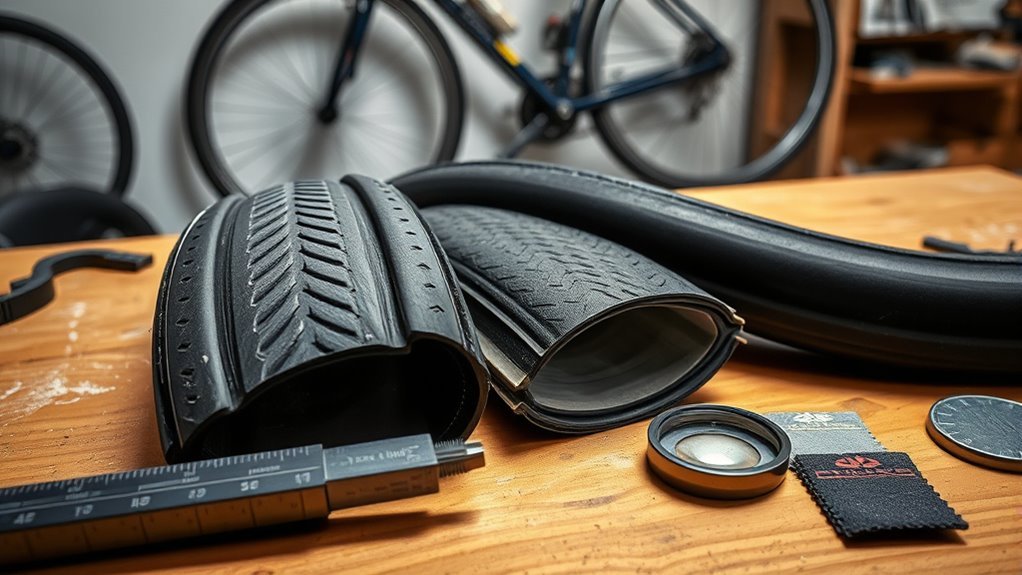
Although TPI numbers give a quick comparison point, you should treat manufacturer claims skeptically and verify performance on the road. TPI variability impacts how you interpret specs: brands sometimes stack multiple 110-TPI plies to claim 330 TPI, which won’t equal a single 120-TPI cotton casing in flexibility or puncture resistance. When comparing brands, note casing material (cotton vs nylon), tread and protection layers; these alter real-world behavior more than raw thread count.
For tire performance testing, ride several tires on identical routes, pressures, and loads. Measure rolling resistance, ride comfort, and sidewall vulnerability—especially at lower pressures and on rough surfaces. Track puncture frequency and handling in turns. Record subjective feedback on compliance and vibration, then correlate with construction notes. That disciplined approach frees you from marketing claims and reveals which casing architecture actually delivers the balance of suppleness, durability, and speed you need.
Frequently Asked Questions
Is 60 Tpi or 120 Tpi Better?
120 TPI is better for Tire performance and Riding comfort if you prioritize speed and supple feel; 60 TPI’s durability and puncture resistance suit rugged use. You should choose based on whether you want performance or resilience.
Is Higher or Lower Tpi Better?
Higher TPI’s better for speed and comfort; lower TPI’s better for durability. For example, you’d pick 120+ TPI racing tires in a criterium for superior tire performance and ride quality while staying free to attack.
Conclusion
You’ll feel TPI in the way a tire breathes under load: high‑TPI casings flex like fine silk, smoothing pavement and shaving watts; low‑TPI feels like canvas, rugged and forgiving when you’re off‑track. Match thread count to terrain and risk tolerance, not marketing. Combine TPI with rubber compound, protection layers, and bead type to get the ride you want. Test on real rides, and let feel—measured and repeatable—decide.
Related Articles
Butyl vs TPU Inner Tubes: Weight, Durability & Feel
Compare butyl and TPU inner tubes—lightweight responsiveness versus pressure reliability—and discover which trade-offs matter most for your ride.
Read More
Butyl Rubber vs Latex Inner Tubes: Which Performs Better?
Great comparison: weigh speed, comfort, puncture risk and maintenance to decide—discover which tube truly fits your riding priorities.
Read More
Tire and Rim Fitment Guide: Ensure a Perfect Match
Make sure your tires and rims truly match—learn the crucial fitment checks, clearances, and ratings that could save your ride and your safety.
Read More