Risks of Overinflated Tires on a RAV4: What Can Happen?
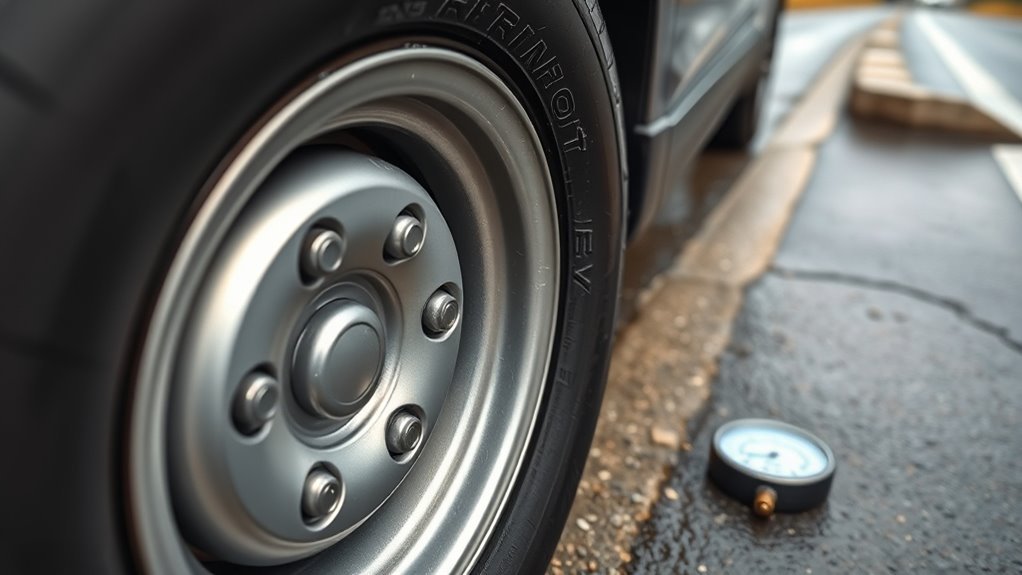
Overinflated tires on your RAV4 can compromise safety markedly. You risk reduced traction, which makes handling your vehicle more precarious, especially in sharp turns or wet conditions. You’ll experience a harsher ride quality, leading to discomfort and an increased chance of blowouts due to heat buildup. Additionally, the anti-lock braking system may be impaired, resulting in longer stopping distances. Maintaining the correct tire pressure is essential for peak performance. Let’s explore further the importance of regular tire maintenance.
How Overinflation Affects Safety and Handling
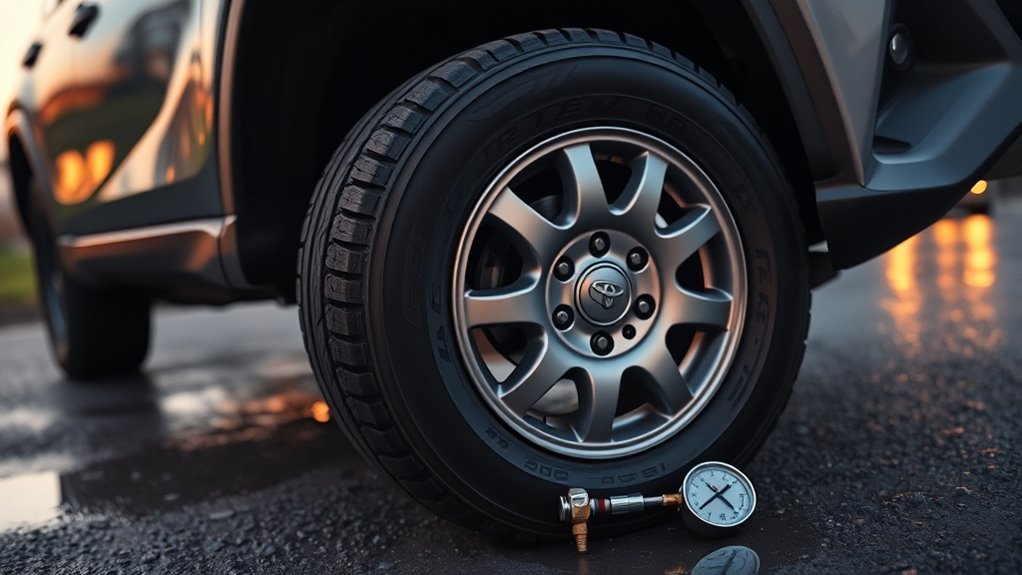
When you overinflate the tires on your RAV4, you compromise both safety and handling. Increased tire pressure reduces the contact patch with the road, leading to traction loss, especially during sharp turns or slippery conditions. This diminished grip can make your vehicle feel unstable and difficult to control, undermining your driving experience.
Moreover, the added stiffness from overinflated tires results in a harsh ride, making it challenging for your RAV4 to absorb road imperfections. This instability can negatively affect your ability to navigate safely, particularly in emergencies. Overinflated tires are also more prone to blowouts, posing serious risks at high speeds due to excessive pressure and heat buildup.
Finally, improper tire pressure can hinder your anti-lock braking system (ABS), increasing stopping distances and the likelihood of accidents. Regularly check your tire pressure to guarantee maximum safety and handling on the road.
Signs of Overinflated Tires
Recognizing the signs of overinflated tires on your RAV4 is vital for maintaining safety and performance. First, check your tire pressure; if it exceeds the manufacturer’s recommended 32 psi, that’s a red flag. Overinflated tires often show accelerated center tread wear, meaning they’re losing proper contact with the road. You might notice a harsher ride quality, leading to discomfort during your travels. This stiff nature can also reduce your vehicle’s handling and grip, especially in sharp turns or adverse conditions.
Additionally, keep an eye out for increased susceptibility to blowouts. The excessive pressure stretches the tire beyond its safe limits, which can compromise safety. If you observe these signs, it’s important to adjust your tire pressure promptly to guarantee peak performance and safety on the road. Regular checks can prevent costly accidents and enhance your driving experience.
What Happens When Tires Wear Unevenly?
Uneven tire wear can considerably impact your RAV4’s performance and safety. When tires wear unevenly, especially due to overinflation, the center tread wears faster, leading to premature replacements. This uneven tire wear decreases traction, increasing the risk of hydroplaning and lengthening stopping distances.
| Effect on Vehicle | Consequences | Solutions |
|---|---|---|
| Decreased Traction | Higher risk of hydroplaning | Regularly check tire pressure |
| Compromised Handling | Less responsive steering | Rotate tires every 5,000-7,500 miles |
| Increased Fuel Consumption | Higher rolling resistance | Monitor tread wear regularly |
| Shortened Tire Lifespan | More frequent replacements | Align wheels as needed |
These issues not only jeopardize driving safety but also increase fuel consumption. Regularly monitoring tire pressure and wear can help maintain peak performance and extend tire lifespan. Prioritize these checks to guarantee a safer driving experience.
Correcting Overinflated Tires Safely
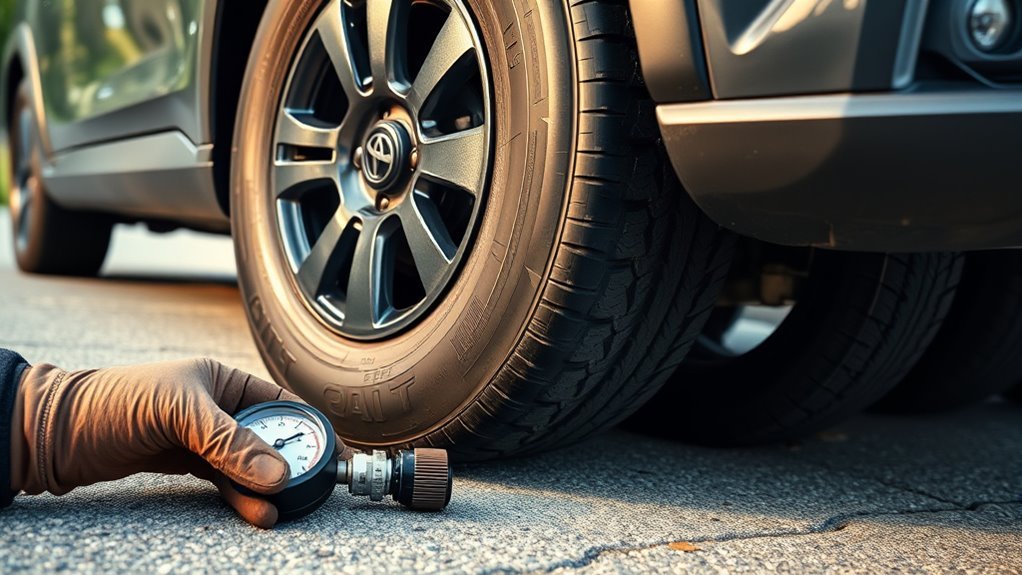
To guarantee safe driving, you’ll need to correct overinflated tires promptly. Start by removing the valve cap from the tire stem, allowing access to the valve. Using a reliable air pressure tool, press the valve pin gently to release air. Monitor the tire’s PSI closely to avoid over-deflation, aiming for the manufacturer-recommended level—usually around 32 psi for a RAV4.
After adjusting, verify you inspect the tires for any signs of wear or damage. This step is essential for maintaining safety and performance. It’s also a good practice to check tire pressure regularly, especially after making any adjustments or following dealer services. Keeping your tire pressure in check not only enhances your vehicle’s performance but also contributes to your overall driving safety. With these steps, you can liberate yourself from the risks associated with overinflated tires.
Why Regular Tire Maintenance Matters
While many drivers overlook tire maintenance, regularly checking your tires is essential for both safety and performance. Keeping ideal tire pressure is critical; underinflated or overinflated tires can compromise handling and lead to dangerous situations. Make checking tire pressure part of your maintenance checklist, especially after temperature changes, as fluctuations can impact safety.
Monitoring tire wear patterns helps you catch issues early, allowing for timely replacements and preventing uneven wear. This proactive approach not only boosts safety but also saves you money in the long run. Adhering to manufacturer recommendations, like the Toyota RAV4’s suggested 32 psi, enhances fuel efficiency and extends tire lifespan.
Regular inspections for signs of damage are important. They help maintain your tires’ structural integrity, minimizing the risk of blowouts. Prioritizing tire maintenance empowers you to drive confidently, knowing you’re safeguarding both yourself and your passengers.
Consequences of Overinflation on Performance and Safety
Overinflated tires can severely impact your RAV4’s performance and safety, leading to a range of potential hazards. Maintaining proper tire pressure is vital for both driving comfort and vehicle control.
Overinflated tires jeopardize your RAV4’s performance and safety, making proper tire pressure essential for comfort and control.
- Reduced road contact increases the risk of blowouts.
- Uneven tread wear may necessitate premature tire replacement.
- A harsher ride can damage suspension components.
- Diminished braking efficiency leads to longer stopping distances.
- Increased susceptibility to road hazards raises the chance of punctures.
When your tires exceed the recommended 32 psi, you compromise not only your vehicle’s handling but also your safety. The stiffer tires result in less grip, especially during sharp turns or emergency maneuvers. Prioritizing correct tire pressure guarantees a smoother ride and mitigates the risk of accidents. Stay vigilant about your tire maintenance; it’s your key to a safe and comfortable journey in your RAV4.
Frequently Asked Questions
Is It Okay to Overinflate Tires by 3 PSI?
No, it isn’t okay to overinflate tires by 3 PSI. Doing so raises safety concerns, compromising handling and comfort while increasing the risk of uneven wear and potential blowouts. Proper tire pressure guarantees peak performance and safety.
Is It Okay to Overinflate Tires by 5 PSI?
No, overinflating tires by 5 PSI isn’t okay. It heightens safety concerns, risking blowouts and uneven wear. Keep tire pressure within recommended limits to guarantee a smooth ride and maintain your vehicle’s performance.
What Happens if You Overfill Your Tires by 10 PSI?
If you overfill your tires by 10 PSI, you’ll compromise driving safety, reduce fuel efficiency, and increase tire wear. Proper tire pressure guarantees peak performance, giving you a smoother ride and better control on the road.
Conclusion
In the grand symphony of driving, overinflated tires can turn a harmonious ride into a discordant nightmare. By regularly monitoring your tire pressure, you’re not just avoiding uneven wear and potential blowouts—you’re ensuring a smooth, safe journey every time you hit the road. Think of your tires as the foundation of your vehicle; neglecting them can lead to catastrophic cracks in your driving experience. Stay vigilant, and let your RAV4 glide effortlessly, not stumble through the streets.

Related Articles
Upsizing Wheels on a Toyota RAV4: Pros, Cons, and Considerations
Boost your Toyota RAV4's performance with larger wheels, but discover the hidden trade-offs that could impact your ride before you decide.
Read More
Can I Change Tire Size on My Toyota RAV4? Rules and Recommendations
Are you considering changing the tire size on your Toyota RAV4? Discover the essential rules and recommendations before making a decision.
Read More
What to Do If the TPMS Light Comes On in Your RAV4
Understand the steps to take when the TPMS light illuminates in your RAV4, as overlooking it could lead to serious tire problems.
Read More