
225/65R17 vs. 225/60R18 for Toyota RAV4: What’s the Difference?
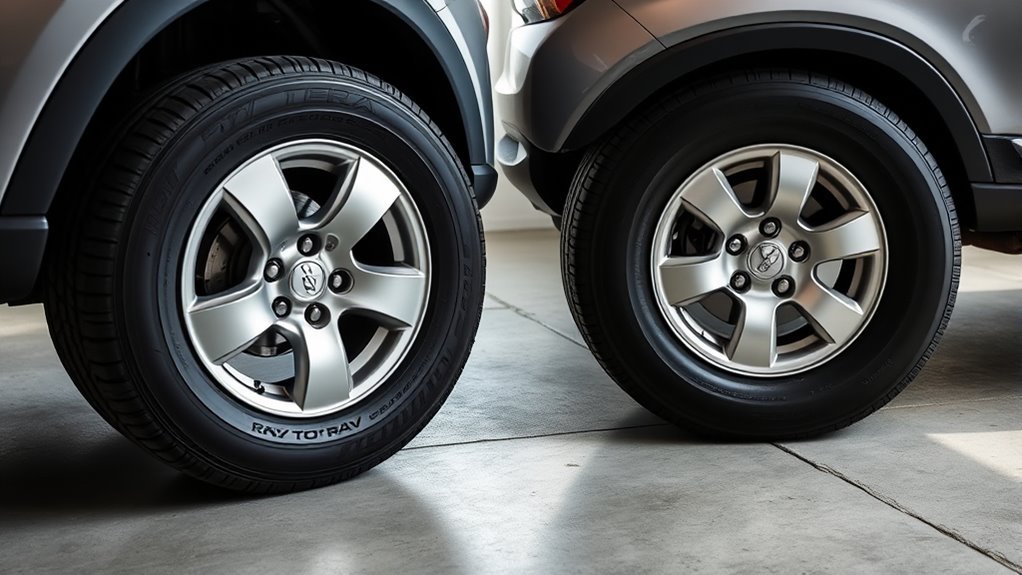
When choosing between 225/65R17 and 225/60R18 tires for your Toyota RAV4, consider the differences in ride comfort and handling. The 225/65R17 offers a taller sidewall, providing better shock absorption and off-road capability, while the 225/60R18 delivers a sportier performance with a slightly stiffer ride. You’ll also notice differences in fuel economy and speedometer accuracy. To make the best choice for your needs, explore more about how these tires can affect your driving experience.
Understanding Tire Specifications: What Do the Numbers Mean?
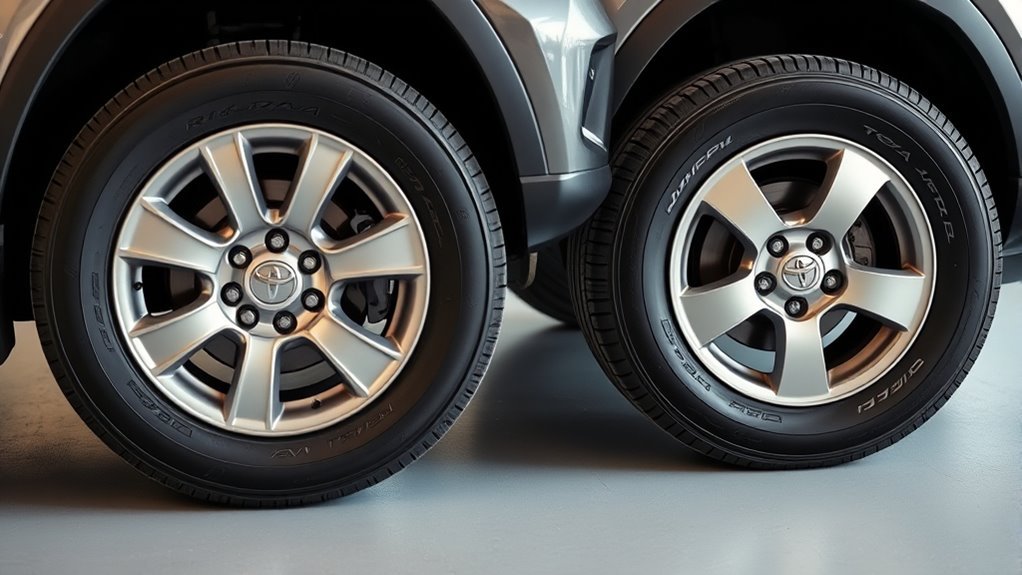
When you’re choosing tires, it’s essential to understand what the numbers mean in the specifications. Each tire size, like 225/65R17, breaks down into three key components: the width in millimeters, the aspect ratio, and the rim diameter in inches. Here, “225” indicates a width of 225 mm, while “65” tells you the sidewall height is 65% of that width, vital for ride comfort and handling.
Tire construction and tread patterns also play significant roles in performance. A taller sidewall, as seen in the 225/65R17, provides more cushioning, enhancing comfort over bumps. In contrast, the 225/60R18 offers slightly less height, affecting how your vehicle grips the road. Understanding these specifications helps you choose the right tire for your Toyota RAV4, ensuring compatibility and ideal performance tailored to your driving conditions. Embrace the knowledge, and drive with confidence!
Key Differences: Tire Diameter & Sidewall Height
Tire diameter and sidewall height are essential factors that influence your Toyota RAV4’s performance and comfort. The differences between the 225/65R17 and 225/60R18 tires can impact your ride quality considerably.
| Tire Size | Overall Diameter (inches) | Sidewall Height (inches) |
|---|---|---|
| 225/65R17 | 28.5 | 5.8 |
| 225/60R18 | 28.6 | 5.3 |
| Diameter Diff. | 0.1 | 0.5 |
| Aspect Ratio | 65 | 60 |
| Circumference | 89.6 | 89.9 |
The 225/65R17 tire has a taller sidewall, which generally enhances ride quality by providing more cushioning. Meanwhile, the slightly larger diameter of the 225/60R18 may offer marginally improved tire performance. However, with a height difference of just 0.1 inches, both tires remain very similar for clearance.
How Tire Size Affects Handling and Comfort
Choosing the right tire size not only affects your RAV4’s diameter and sidewall height but also plays a significant role in handling and comfort. The 225/65R17 tire, with its taller sidewall, excels in driving comfort by better absorbing road imperfections. This flexibility enhances stability, especially during cornering, making it a solid choice for varied terrains. On the other hand, the 225/60R18 boasts a performance-oriented design, prioritizing responsiveness on smooth roads. While it may provide a sportier feel, the stiffer sidewall can compromise comfort on bumpy surfaces.
When it comes to tire performance, the 225/65R17 may offer slightly improved traction, thanks to its greater revolutions per mile. If your priority is a smoother ride and versatility, the 225/65R17 is your best bet. For those who favor sharp handling on well-paved roads, the 225/60R18 will meet your needs.
Off-Road Capabilities: Which Tire Performs Better?
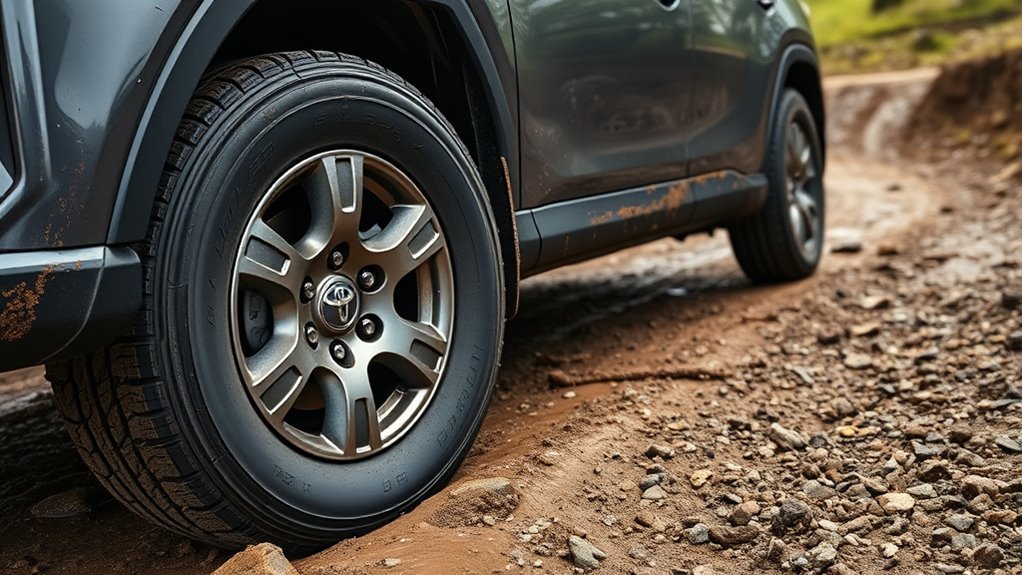
When hitting the trails, tire choice greatly influences your RAV4’s off-road performance. The 225/65R17’s taller sidewall height provides better traction and flexibility, while its design enhances durability on rugged terrains. Let’s explore how these factors stack up against the 225/60R18.
Sidewall Height Comparison
For those venturing off the beaten path, the sidewall height of your tires can considerably impact your vehicle’s performance. The 225/65R17 tire, with a sidewall height of 5.8 inches, offers greater sidewall flexibility, enhancing off-road performance. This taller sidewall absorbs shocks better, allowing you to tackle uneven surfaces with confidence. You’ll enjoy a more comfortable ride over rugged terrain, reducing the risk of wheel damage compared to the 5.3-inch sidewall of the 225/60R18 tire. Users often report improved handling and stability with the 225/65R17, as its ability to flex and conform to obstacles makes a noticeable difference in challenging conditions. The lower profile of the 225/60R18 can negatively impact your off-road adventures, leading to a harsher ride.
Traction and Flexibility
While both tire options have their strengths, the 225/65R17 clearly excels in off-road capabilities, particularly in traction and flexibility. Its taller sidewall (5.8 inches) provides significant traction benefits, allowing for better shock absorption on uneven terrain. This flexibility difference makes traversing rugged conditions much smoother and more controlled. With a lower overall diameter of 28.5 inches, the 225/65R17 maintains greater ground contact, enhancing stability during off-road adventures. Users often report that this tire handles rough surfaces more adeptly than the 225/60R18, which, with its stiffer sidewalls, may struggle under similar conditions. If you’re seeking liberation in your off-road experience, the 225/65R17 is the clear choice for tackling diverse terrains.
Durability on Terrain
Choosing the right tire for off-road adventures hinges on durability and performance on challenging terrain. The 225/65R17 tire stands out with its taller sidewall, measuring 5.8 inches, which enhances shock absorption and flexibility. This feature translates to superior terrain performance, providing better traction on uneven surfaces. Users report that these tires also exhibit greater puncture resistance and overall durability during rugged use, ensuring tire longevity. In contrast, the 225/60R18, while better for smooth roads, struggles to absorb impacts and maintain stability on rough terrain due to its shorter sidewall. If you’re looking for tires that deliver reliability and performance in tough conditions, the 225/65R17 is the way to go.
Does Your Speedometer Tell the Real Story?
When you switch tire sizes, your speedometer might not tell the whole truth. For instance, the 225/65R17 tires can lead to a slightly higher reading compared to the 225/60R18, which could impact your driving accuracy. Understanding these calibration variances is essential for safe and informed driving.
Speedometer Calibration Variances
Understanding speedometer calibration variances is essential for ensuring your driving experience is safe and accurate. When you switch from 225/65R17 to 225/60R18 tires, you’ll notice speedometer discrepancies. The latter provides a precise reading at 60 mph, while the former shows only 59.8 mph. This 0.2 mph difference may seem small, but it can greatly impact your compliance with speed limits and overall safety. Additionally, the 225/65R17 tires yield 707 revolutions per mile, compared to 704 for 225/60R18. This affects your engine RPM, potentially altering driving feel and responsiveness. Staying aware of these calibration effects helps you make informed decisions, ensuring your speedometer tells the real story on the road.
Impact on Driving Accuracy
Your speedometer plays an essential role in your driving experience, and the difference between 225/65R17 and 225/60R18 tires can considerably impact its accuracy. The 225/65R17 tires, with a diameter of 28.5 inches, may under-report your speed by about 0.2 mph at 60 mph compared to the more accurate 225/60R18 tires. This slight discrepancy leads to 707 revolutions per mile for the 225/65R17 tires versus 704 for the 225/60R18, affecting not just speedometer calibration but also fuel economy. Accurate readings are crucial for driving safety, as misjudging your speed could lead to risky situations. Choosing the right tire size guarantees peak tire performance and keeps you informed on the road.
Fuel Economy: How Tire Size Influences Efficiency
Choosing the right tire size can considerably affect your vehicle’s fuel economy, especially when comparing the 225/65R17 and 225/60R18 options for a Toyota RAV4. The 225/65R17 tires can lead to approximately 0.4% worse fuel economy, which adds up to higher fuel costs over time. With a final drive ratio of 2.73, these tires operate at around 2,091 RPM, slightly increasing engine load and impacting efficiency.
While you might enjoy a more responsive feel in city and hilly conditions with the 225/65R17, it’s essential to take into account that the 225/60R18 offers slightly better efficiency due to its lower sidewall height. To maximize fuel economy regardless of tire size, maintain proper tire pressure and follow regular maintenance tips. Making the right choice doesn’t just enhance your driving experience; it also liberates your wallet from unnecessary fuel expenses.
Compatibility: Do You Need New Wheels?
Switching from 225/65R17 to 225/60R18 tires often means you’ll need new wheels. The primary reason is the difference in rim diameter—18-inch wheels aren’t interchangeable with 17-inch wheels without modifications. If you’re considering this change, make certain you check the wheel compatibility with your Toyota RAV4’s braking system and overall fitment specifications.
While the 225/60R18 tires have a smaller sidewall height (5.3 inches) compared to the 225/65R17 (5.8 inches), this alteration can affect ride quality, especially off-road. A reduced sidewall height can lead to a harsher ride, so it’s crucial to weigh the benefits against potential downsides.
If you opt for larger tires, verify your new wheels meet the necessary rim specifications for a safe and enjoyable driving experience. Ultimately, investing in compatible wheels will help enhance your RAV4’s performance while giving you the freedom to explore new terrains.
RAV4 Owner Insights: Real Experiences With Tire Sizes
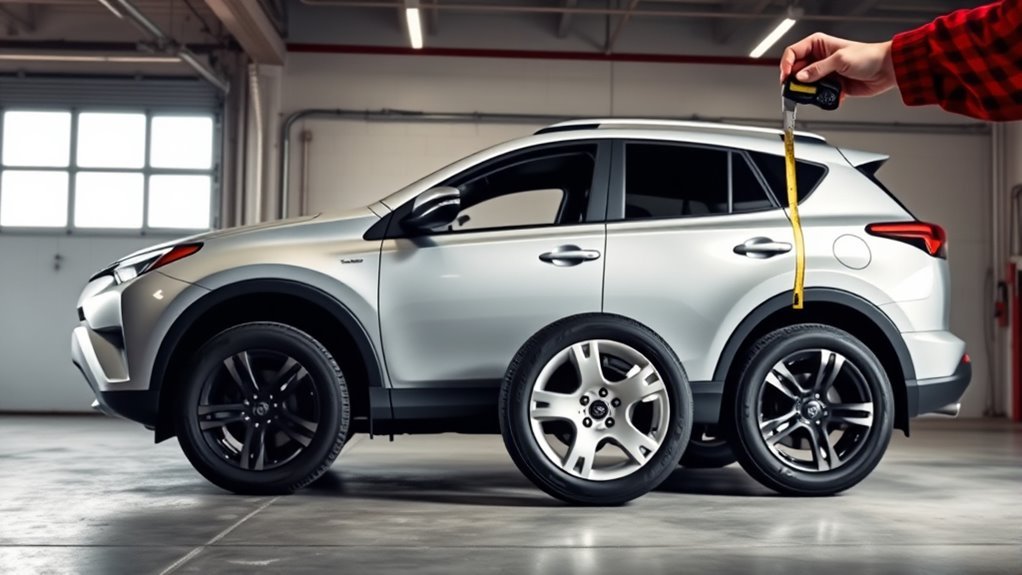
Many RAV4 owners have shared their experiences with tire sizes, highlighting the impact on performance and comfort. Switching from 225/60R18 to 225/65R17 has improved off-road capabilities for many drivers, thanks to the increased sidewall height that enhances impact absorption. Users have found success with all-terrain tires like Falken Wildpeak Trails, boosting their RAV4’s ruggedness.
Community feedback stresses the significance of sticking to OEM sizes, such as 225/65R17, to maintain peak handling. While some note that these tires offer slightly worse fuel economy—around 0.4%—the increase in responsiveness during city driving makes up for it. Additionally, the minimal diameter difference of just 0.1 inches has negligible effects on speedometer accuracy. As seasons change, keeping an eye on tire pressure becomes essential to guarantee safety and performance, regardless of the tire size you choose.
Tire Recommendations: Which Size Is Best for You?
When considering tire options for your Toyota RAV4, how do you determine which size best meets your needs? The choice between the 225/65R17 and 225/60R18 is essential for performance and comfort.
| Feature | 225/65R17 | 225/60R18 |
|---|---|---|
| Sidewall Height | 5.8 inches | 5.3 inches |
| Overall Diameter | 28.5 inches | 28.6 inches |
| All-Terrain Capability | Better | Moderate |
If you prioritize tire longevity and off-road flexibility, the 225/65R17 might suit you better. It’s designed for rugged conditions, providing improved impact absorption. On the other hand, the 225/60R18 offers a sleek look but might be less flexible. Consider a cost comparison as well—often, the 225/65R17 is more budget-friendly over time due to its durability. Choose wisely!
Frequently Asked Questions
What Is the Difference Between 17 and 18 Tire Size?
The main difference between 17 and 18-inch tires is their performance and fuel efficiency. Larger tires often enhance handling and stability, while smaller ones can improve ride comfort and potentially increase fuel efficiency. Choose based on your needs.
Conclusion
Choosing between 225/65R17 and 225/60R18 tires for your RAV4 is like picking the right shoes for a hike. The former offers a cushier ride, while the latter enhances handling. Think of it this way: if you’re trekking over rocky trails, the comfort of a sturdy boot matters; if you’re racing down a smooth path, you’ll want something light and nimble. Ultimately, it’s all about matching your driving style to the terrain ahead. Choose wisely!

Related Articles
Upsizing Wheels on a Toyota RAV4: Pros, Cons, and Considerations
Boost your Toyota RAV4's performance with larger wheels, but discover the hidden trade-offs that could impact your ride before you decide.
Read More
Can I Change Tire Size on My Toyota RAV4? Rules and Recommendations
Are you considering changing the tire size on your Toyota RAV4? Discover the essential rules and recommendations before making a decision.
Read More
What to Do If the TPMS Light Comes On in Your RAV4
Understand the steps to take when the TPMS light illuminates in your RAV4, as overlooking it could lead to serious tire problems.
Read More