P-Metric vs LT-Metric Tire Sizing: What’s the Difference?
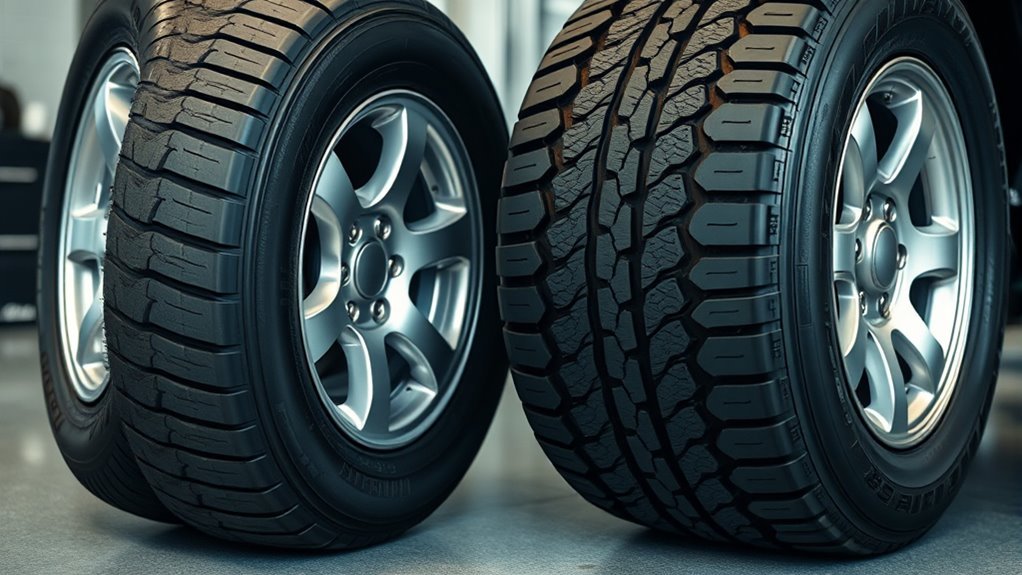
You’ll pick P‑metric tires for everyday comfort, better fuel economy, and smoother city driving, while LT‑metric tires are built with higher load indexes, stronger ply ratings, and higher inflation needs for towing, heavy payloads, or rough terrain. P‑metric sizes (e.g., P215/65R15) prioritize ride and efficiency; LT sizes specify load capacity and often require different pressures and wheel fitment. Choose based on payload, GVWR, and towing needs—keep going to see specific size, pressure, and legal considerations.
P‑Metric vs LT‑Metric: Which Tire for Your Truck?
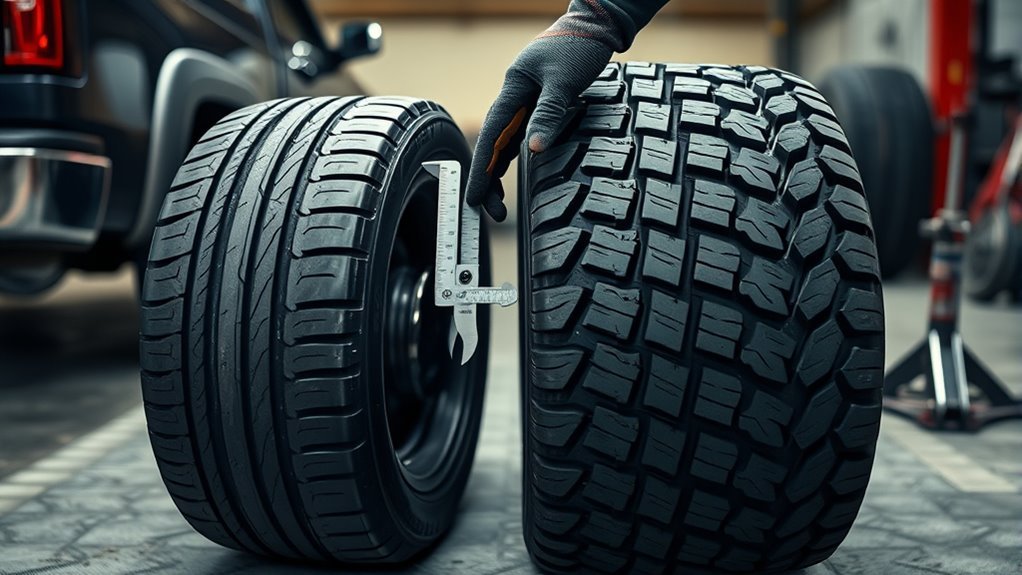
Wondering whether P‑metric or LT‑metric tires are right for your truck? You’ll choose based on truck performance needs and tire compatibility with payload and terrain. If you drive mostly on pavement, seek a smoother ride, and want better fuel economy, P‑metric tires fit: they have softer sidewalls, lower load capacity, and typically last around 60,000 miles under light use. If you haul heavy loads, tow frequently, or tackle rough roads, LT‑metric tires are the practical choice: reinforced sidewalls, higher load capacity, and longer service life in demanding conditions. Check your vehicle’s GVWR and the manufacturer’s recommended tire class to guarantee compatibility—using P‑metric tires on a truck rated for LT loads undermines safety and performance. You’ll gain freedom by matching tire design to mission: prioritize comfort and economy with P‑metric, or durability and hauling capability with LT‑metric, and you’ll attain confident, capable truck performance every mile.
Who This Guide Is For and How to Use It
This guide is for truck owners, fleet managers, and DIYers who need to match tire design to real-world use—readers who care about payload, towing, ride comfort, fuel economy, or off‑road durability. You’ll get clear distinctions between P‑metric and LT‑metric tires so you can choose without guessing.
Use this guide to assess Tire compatibility with your vehicle: P‑metric favors comfort and fuel efficiency for passenger‑like use; LT‑metric gives reinforced load capacity for towing and heavy jobs. Apply simple checks against Vehicle performance goals—load index, rolling resistance, and construction—so choices align with what you haul. Consider Driving conditions: highway commuting, heavy towing, or rough trails change the right tradeoffs.
Finally, follow the Maintenance tips included to preserve load capability and economy: proper inflation, regular inspections, and rotation schedules. You’ll leave equipped to pick the tire that frees you to work harder, ride smarter, and stay safer.
Read P‑Metric Sizes (What the Numbers Mean)
Reading a P‑metric size is straightforward once you know what each element stands for: P215/65R15 tells you the tire specifications using clear measurement standards. You read left to right.
| Element | Symbol | Meaning |
|---|---|---|
| Tire type | P | Passenger tire designation |
| Width (mm) | 215 | Sidewall-to-sidewall width in millimeters |
| Aspect ratio (%) | 65 | Sidewall height as percent of width |
| Construction | R | Radial construction |
| Wheel diameter (in) | 15 | Rim diameter in inches |
You’ll see the width first (215 mm), then the aspect ratio (65), the construction letter R, and finally the wheel diameter (15 in). This format ties metric width to imperial rim size so you can choose replacements that match your vehicle’s measurement standards and performance needs. Use these clear, compact tire specifications to make empowered, liberated choices about fit and handling.
LT Sizes and Load Ratings : What the Numbers Mean
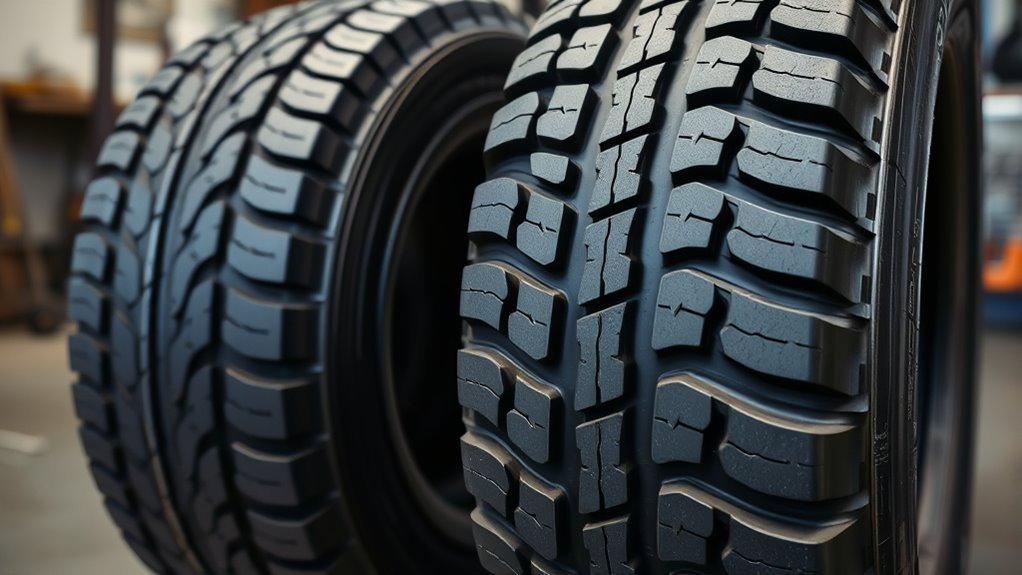
Now you’ll learn how LT markings translate to real-world capacity: the numeric load index tells you the maximum weight each tire can carry, while letter load ratings (C/D/E) map to standardized payloads. You’ll also see why ply-equivalent ratings matter for sidewall strength and load-sharing, and why LT tires need much higher inflation pressures to meet those ratings. Keep an eye on load index, ply rating, and recommended PSI together when choosing or inflating LT tires.
Load Index Explained
Think of the load index as a compact code that tells you how much weight a tire can safely carry when it’s inflated to the correct pressure. You’ll use that number to gauge load index significance and tire safety implications: LT tires usually carry higher indices than P-metric ones, so they handle heavier loads and towing. Match index to your vehicle’s GVWR to avoid overload and potential tire failure.
| Tire Type | Example Index | Max Load (lbs) |
|---|---|---|
| LT | 120 | 3,086 |
| P-metric | 95 | 1,521 |
| Note | Index maps to pounds when specified | Use correct inflation |
You’ll choose tires that liberate your hauling needs without compromising safety.
Ply Rating Significance
A ply rating is a shorthand for a tire’s internal strength and load capacity, and on LT tires you’ll see it represented as letters (C, D, E) that correspond to traditional 6-, 8- and 10-ply constructions; the higher the rating, the more carcass strength and load the tire’s designed to carry. You should read ply ratings to match your vehicle’s demands—LT tires with C–E ratings carry far more weight than P-metric counterparts. That difference matters when you tow, haul, or push boundaries; ply rating benefits include increased load capacity and tougher sidewall construction. Use a durability comparison between similar sizes to choose confidently: LT load indices will usually exceed P-metric numbers, giving you clear performance and safety margins for heavy use.
Inflation And Capacity
Having picked up how ply ratings (C, D, E) reflect carcass strength and load expectations, you should next focus on how inflation and load indices determine the real-world weight a tire can carry. You’ll read the load index on LT tires to see their load capacity—often from about 1,000 to over 4,000 pounds per tire—so you can match them to trailers or heavy loads. LT tires usually require higher tire pressure, commonly 35–80 PSI, to reach those ratings; P-metric tires run lower pressures and carry less. Under-inflation cuts load capacity and raises failure risk, so maintain manufacturer-specified pressure and check loads against the tire’s index. Knowing this frees you to choose tires that safely expand your hauling options.
Ride, Fuel Economy, and Towing: Practical Performance Differences
When you compare P-metric and LT tires, you’ll notice P-metrics give a noticeably smoother, more comfortable ride in everyday city and highway use because of their more flexible sidewalls. LT tires trade some comfort for stiffer construction and higher load capacity, which helps with heavy towing and off-road stability but can reduce fuel economy by up to about 2 MPG versus P-metrics. Consider how often you tow and what ride quality you need—P-metrics suit daily commuting and light towing, while LTs are engineered for frequent heavy loads and harsher conditions.
Ride Comfort Differences
Although both tire types will get you down the road, you’ll notice P-metric tires deliver a noticeably smoother, more compliant ride in everyday urban driving thanks to their more flexible sidewalls and lower recommended pressures. You’ll appreciate superior ride quality in stop-and-go traffic; sidewall flexibility soaks bumps, reduces vibration, and feels freeing compared with LT firmness. LT tires trade comfort for towing stability and load capacity—necessary when you haul heavy gear, but heavier construction raises ride harshness and inflation needs. Choose P-metric for liberated daily commuting and lighter duty; choose LT when stability under load and off-road resilience matter.
| Aspect | P-Metric | LT-Metric |
|---|---|---|
| Ride comfort | High | Low |
| Urban driving | Ideal | Compromised |
| Towing stability | Limited | High |
Towing And Economy
Choosing between P-metric and LT-metric tires comes down to a trade-off between everyday efficiency and heavy-duty capability: P-metric tires give you a smoother ride and better fuel economy for daily driving, while LT tires deliver the reinforced construction and higher inflation pressures needed for safe towing and heavy loads. You’ll prefer P-metrics if you want maximum fuel efficiency and comfort; they typically return a slight MPG advantage and work well for light towing without compromising ride quality. If you demand higher towing capacity and stability under heavy load, pick LT tires and keep them properly inflated to their higher pressure spec. Expect a stiffer ride and roughly a 2 MPG hit in stop-and-go driving, but gain predictable load performance and safety.
When to Choose P‑Metric or LT‑Metric for Your Vehicle
Need help picking tires for your vehicle? You’ll choose P‑metric when you prioritize tire performance for daily commuting, smoother ride quality, and better fuel economy on city streets. P‑metric tires suit passenger cars and light-duty trucks that rarely haul heavy loads; they’re cost-effective and tuned for comfort.
Opt for LT‑metric if your driving demands durability and higher load capacities. LT tires have reinforced sidewalls and are built for towing, off-road use, and larger SUVs or pickup trucks that regularly carry weight. Check load considerations against your vehicle’s GVWR and typical payloads: if you frequently tow, carry heavy gear, or drive rugged terrain, LT is essential.
Don’t guess—match tire choice to use-case. If liberation means hauling gear or exploring off-grid, pick LT for strength. If you crave efficient, comfortable urban mobility, choose P‑metric. Both choices hinge on honest assessment of load and performance needs.
Changing Tire Class: Effects on GVWR, TPMS, and Legal Fitment
If you switch from P‑metric to LT tires, you’ll usually gain load-carrying capacity but also change several vehicle systems and legal obligations that you must address. You’ll improve payload and towing potential because of LT tire construction—tire classification implications directly affect GVWR and load capacity considerations—yet you must confirm the vehicle’s placard and manufacturer specs first.
- Check GVWR compliance: federal rules require tires that meet or exceed the vehicle’s rated capacity at sale.
- Monitor TPMS: LT tires need higher pressures and can trigger sensors more often; plan regular checks.
- Assess ride and handling: reinforced casings raise stiffness and change dynamics; adjust driving accordingly.
- Verify fitment: rim, clearance, and suspension limits must match LT attributes to avoid safety hazards.
You’re reclaiming capability, but you’re also accepting regulatory and mechanical responsibilities. Follow manufacturer guidance and legal limits to keep your vehicle safe, compliant, and liberating on the road.
Care, Service Life, and a Quick Decision Checklist

When you decide between P‑metric and LT tires, think about how you’ll maintain them and how long you expect them to last: P‑metric tires give a smoother, more fuel-efficient ride for daily driving and typically reach around 60,000 miles under normal use, while LT tires’ reinforced construction and deeper treads often extend service life—especially under heavy loads or off‑road conditions. You’ll maximize either choice with routine tire maintenance: keep pressures correct, rotate on schedule, and inspect for uneven wear or damage. For lifespan comparison, expect P‑metric to serve well for commuting and light hauling; choose LT if you need durability, higher load capacity, or frequent rough-terrain travel. Quick decision checklist: match tire class to vehicle use, confirm load ratings, consider fuel and comfort tradeoffs, and plan a maintenance routine. If you want freedom from frequent replacements and safe performance under strain, lean toward LT; if liberation means efficiency and smoother daily driving, pick P‑metric.
Frequently Asked Questions
Can I Replace P Tires With LT Tires?
You can, but you shouldn’t unless your vehicle’s rated for them; P Metric advantages include softer ride and fuel economy, while LT Metric drawbacks involve stiffer ride and higher pressure—check your owner’s manual and GVWR first.
Are LT Tires Good for Daily Driving?
About 2 MPG worse on average, so yes—you can use LT tires for daily driving if you value durability and higher load capacity; they’ll improve tire performance and ruggedness but may reduce ride comfort and fuel economy.
Conclusion
Think of P‑metric and LT‑metric like commuter shoes versus work boots: both get you there, but they’re built for different loads and terrain. Match tire class to your truck’s payload, towing needs, and manufacturer limits—don’t assume bigger is better. Check GVWR, axle ratings, TPMS compatibility, and local laws before swapping classes. Choose P‑metric for comfort and efficiency, LT for heavy duty; when in doubt, follow your vehicle’s placard and a trusted tech’s advice.
Related Articles
Euro-Metric vs P-Metric Tires: Sizing Differences Explained
Know how switching Euro‑metric and P‑metric tires affects load, pressure, and handling—discover the critical differences before you buy.
Read More
Tire Diameter vs Rim Diameter: Key Differences to Know
Understanding the critical differences between tire diameter and rim diameter can prevent costly mistakes—discover how fitment, speedometer calibration, and safety are affected.
Read More