
Choosing the Right Tyre Rubber: Natural vs. Synthetic
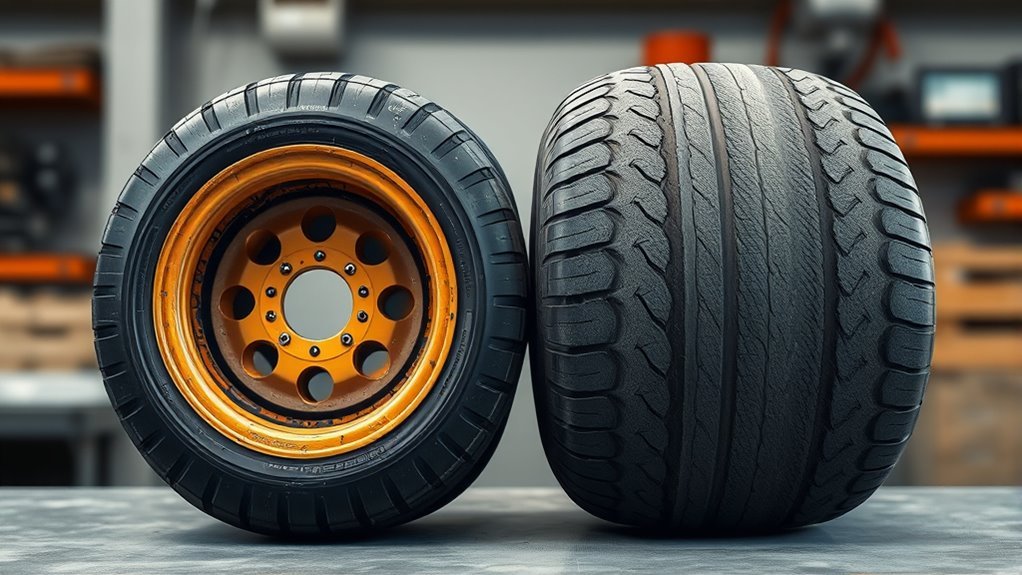
Natural rubber is the best choice for high elasticity, wet grip, and responsive handling. Synthetic rubbers, such as styrene-butadiene rubber (SBR), are better for abrasion resistance, thermal stability, and a steady supply chain. Tire makers vulcanize and blend these polymers to balance wear, cost, and ride comfort. Most tire blends use between 30% and 60% natural rubber. The material you choose affects the tire’s lifespan, fuel efficiency, and environmental impact. Read on to learn more about different formulas, testing methods, and real-world trade-offs.
Quick Answer
- Natural Rubber: Best for wet grip, flexibility, and high-performance handling. It biodegrades faster but degrades quicker under constant UV exposure.
- Synthetic Rubber (SBR/BR): Best for long-lasting wear, heat resistance, and a consistent supply. It is made from petroleum and takes much longer to break down.
- Tire Blends: Most modern tires use a mix (typically 30–60% natural rubber) to balance grip, durability, and total cost.
How to Use This Guide to Choose Tyre Rubber
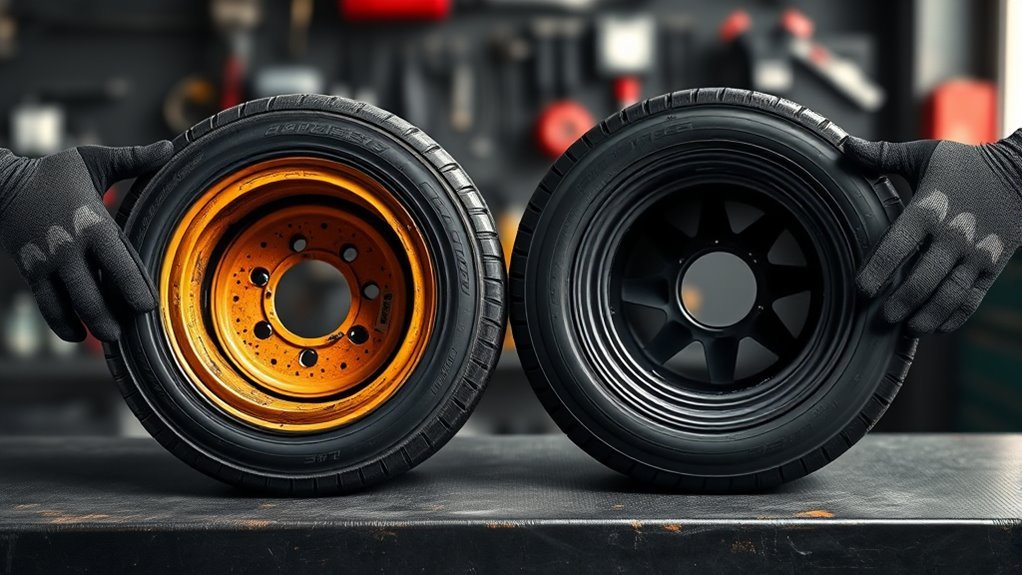
When choosing tire rubber, start by matching the material properties to your driving needs. Prioritize natural rubber for tensile strength and elasticity if you need maximum grip and flexibility. Select SBR or other synthetics for abrasion resistance and a longer lifespan. For the best of both worlds, look for blended compounds.
Use this guide to compare performance. List the attributes you need most, such as traction, wear, or cost, and weigh them based on how you drive. Natural rubber is ideal when control relies on elasticity. SBR or nitrile-butadiene is better when you care most about resisting wear and oil while keeping costs low. To make the most informed decision, check manufacturer test data rather than marketing claims to ensure you get the best lifespan and performance for your vehicle.
How Tyre-Grade Natural and Synthetic Rubber Are Made
Tyre-grade natural rubber starts as latex harvested from Hevea brasiliensis rubber trees. Workers convert this latex into usable sheets through controlled coagulation and drying to maximize elasticity and strength.
Synthetic rubber, on the other hand, is made by polymerizing petroleum-derived monomers. The most common types are styrene-butadiene and polybutadiene. Manufacturers tune the chemical reaction to achieve specific durability and performance goals.
Both types of rubber undergo vulcanization. This process introduces sulfur cross-links to the rubber, giving it the heat resistance and elasticity required for road tires.
Natural Rubber Harvesting
Harvesting natural rubber requires precise tapping, collection, and stabilization to preserve the material’s quality. Workers extract latex by making controlled cuts in the tree bark and collecting the sap in cups. The latex is then quickly coagulated and dried to lock in its molecular integrity, ensuring good elasticity and tensile strength.
Careful processing prevents contamination and manages moisture. This harvesting process provides the essential grip and flexibility needed for high-performance tires, connecting agricultural practices directly to technical road specifications.
Synthetic Rubber Polymerisation
Synthetic rubber is created through controlled polymerization techniques, usually solution or emulsion polymerization. These methods convert petroleum-derived monomers into long polymer chains. Chemists control the molecular weight to fine-tune the rubber’s abrasion resistance and temperature behavior.
After production, both natural and synthetic rubbers are vulcanized with sulfur to create cross-links that improve durability. Blending both types combines the high tensile strength of natural rubber with the aging resilience of synthetics. This creates optimized tire compounds for different driving conditions.
- Solution vs. emulsion polymerization: trade-offs in control and properties.
- Molecular weight targeting for performance tuning.
- Vulcanization: sulfur cross-link density control.
- Blend design for optimized tire behavior.
Tyre Performance: Mechanical Differences and Handling Effects
Natural and synthetic rubbers handle grip, traction, and wear differently. Natural rubber usually provides better wet adhesion, while synthetics offer tailored temperature resilience.
For damping and ride comfort, natural rubber’s elasticity absorbs road vibrations better because it generates less internal heat. Synthetic compounds are often tuned for a firmer, stiffer response. When it comes to longevity, synthetics resist aging and abrasion better than natural rubber. Blended compounds help optimize these trade-offs.
Grip And Traction
When you corner or brake on wet pavement, the rubber’s elasticity determines how well the tire grips the road and sheds water. Natural rubber’s high elasticity provides excellent wet grip and hydroplaning resistance. Synthetic compounds, like styrene-butadiene, trade some of that elasticity for better wear resistance and cold-weather performance.
Tire makers choose specific blend ratios to match different driving styles and surfaces. The goal is to balance immediate grip with a long lifespan. Traction tests often show mixed results across different weather conditions, which is why combined formulas generally work best. Maintaining proper tire pressure is also essential to preserve consistent traction.
- Select tread patterns to complement chosen rubber compounds.
- Use traction tests for objective performance metrics.
- Adapt to surface types and weather conditions.
- Tune for your driving style and maintain proper tire pressure.
Damping And Ride Comfort
Damping controls how a tire absorbs and dissipates vibration energy, which directly affects ride comfort and handling. Natural rubber’s superior elasticity improves damping, resulting in smoother shock absorption and less vibration. Its high tensile strength also limits how much the tire deforms under pressure, keeping steering inputs precise across different terrains.
Synthetic formulas allow engineers to tune damping for a specific ride feel or thermal resilience. However, they often lack the inherent compliance of natural rubber. By combining both polymers, manufacturers balance handling and comfort, giving you crisp steering without sacrificing a smooth ride.
Wear And Longevity
Wear characteristics and longevity dictate how long a tire’s performance lasts. Natural rubber offers excellent grip and handling when new, but it degrades faster when exposed to UV light and ozone. This shortens its overall service life.
Synthetic rubbers provide better abrasion and heat resistance. This extends the tire’s lifespan and reduces the risk of failure under sustained stress. Blends balance these factors, offering a good mix of grip, wear resistance, and longevity.
- Natural: Superior grip, but faster environmental degradation.
- Synthetic: Better abrasion resistance and heat stability.
- Blend: Optimized performance and durability.
- Choice: A necessary trade-off between immediate handling and total service life.
How Temperature Affects Tyre Rubber
Temperature plays a major role in how tire rubber behaves on the road. Natural rubber remains flexible at lower temperatures, which is why winter tires use a higher percentage of it to maintain grip on snow and ice. However, natural rubber can soften too much and degrade quickly in extreme heat.
Synthetic rubbers are highly tunable. Manufacturers can formulate synthetic compounds to withstand the high heat of summer driving without becoming overly soft or wearing out prematurely. However, standard synthetic blends can become hard and brittle in freezing temperatures, drastically reducing traction. This temperature sensitivity is a primary reason why tire makers rely on precise blends to create all-season tires that perform reliably year-round.
Cost Drivers, Supply Risks, and Lifecycle Economics for Tyres
While both rubbers are essential for tire manufacturing, their cost drivers and supply risks are very different. Natural rubber costs fluctuate based on weather conditions and agricultural cycles. Because rubber trees take five to seven years to mature, natural rubber supplies cannot quickly adapt to sudden demand changes. Synthetic rubber costs are tied directly to crude oil and gas markets, generally offering more supply stability.
When calculating lifecycle costs, buyers must consider upfront material costs, wear rates, and end-of-life disposal. Natural rubber has better biodegradability metrics, which can lower long-term environmental costs. However, its price volatility forces manufacturers to use blended formulations. Synthetic rubber provides predictable quality and lower short-term price risks. The most cost-effective tires optimize the total cost of ownership by balancing blend ratios, commodity prices, and supply stability.
Environmental Impacts and End‑of‑Life for Tyre Rubber
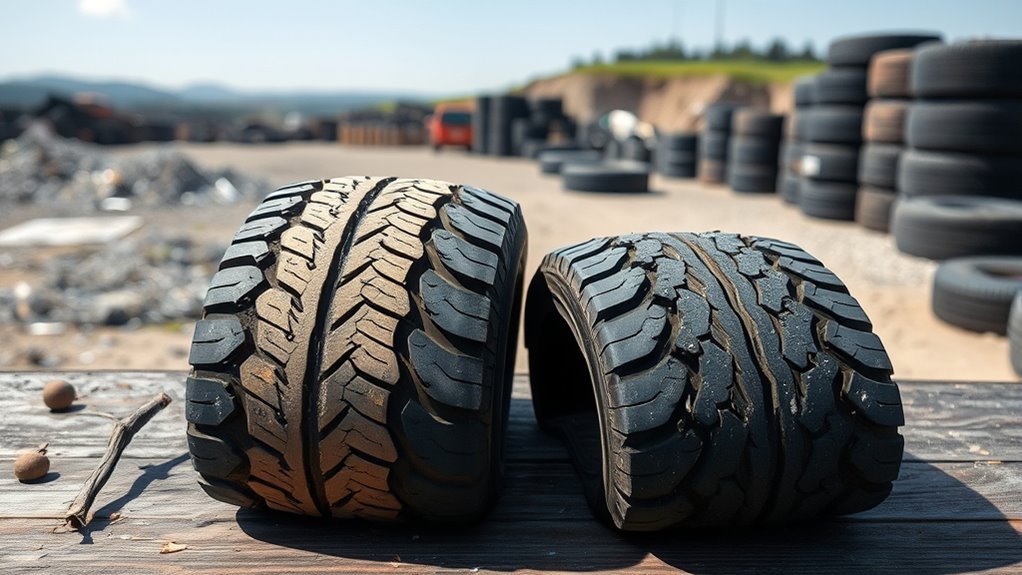
When comparing end-of-life environmental impacts, natural rubber generally produces lower lifecycle emissions and biodegrades faster. Synthetic rubber, derived from petroleum, has a higher carbon footprint and takes decades to break down. Furthermore, as synthetic tires wear down, they release microplastic contamination that can wash into terrestrial and marine ecosystems.
Prioritizing natural rubber where feasible reduces the cumulative environmental burden, especially when the rubber is responsibly sourced. Synthetic rubbers require energy-intensive manufacturing and complex recycling methods to reclaim the materials. Without advanced recycling, they persist in landfills as microplastics and greenhouse gas contributors. Choosing sustainable tire options and supporting circular economy strategies can help minimize this harm.
- Assess feedstock carbon intensity and prioritize sustainable sourcing.
- Support targeted recycling methods for devulcanization and material recovery.
- Monitor tire wear particles and mitigate their runoff into ecosystems.
- Favor circular economy strategies to reduce landfill waste.
How Manufacturers Blend Natural and Synthetic Rubber in Tyres
To meet performance, durability, and environmental targets, manufacturers carefully balance natural and synthetic rubbers. Blending techniques typically combine 30% to 60% natural rubber with synthetics like SBR. This captures the best traits of elasticity, traction, and temperature resistance. Producers strictly control batch composition, mastication (the process of softening the rubber), and mixing steps to ensure consistent properties throughout the compound.
Engineers tune process controls—such as temperature, shear, and mixing time—to prevent material degradation. In the lab, dynamic mechanical analysis and abrasion testing validate the tire’s grip and wear metrics. Once the formulation is proven, quality control systems lock in the recipe to guarantee reproducible on-road behavior. This precise blending results in tires that balance natural rubber’s resilient grip with synthetic rubber’s long-lasting durability.
Choosing the Right Tyre Rubber Mix for Your Vehicle and Use Case
Choosing the right rubber mix depends entirely on your driving conditions. Lean toward natural rubber for high tensile strength and flexibility when you need superior grip. Favor SBR‑rich compounds for everyday commuting, where abrasion resistance and longevity matter most. Select specialized synthetics for extreme temperatures to avoid winter brittleness or summer heat-softening.
Consider your vehicle type, local climate, mileage goals, and desired rolling resistance. Synthetic blends can lower rolling resistance to improve fuel efficiency, while natural blends preserve aggressive traction.
- High-performance cars: Higher natural rubber fraction for maximum grip and responsive handling.
- Daily commuters: SBR‑heavy mixes to prioritize abrasion resistance and lifespan.
- All‑season use: Engineered blends tuned for consistent tire performance across varied temperatures.
- Extreme climates: Specialized synthetic formulations to resist heat softening or cold brittleness.
Frequently Asked Questions
How Does Natural Rubber Differ From Synthetic Rubber?
Natural rubber is a biodegradable product harvested from trees, offering superior elasticity and tear resistance. Synthetic rubber is manufactured from petrochemicals. It is not readily biodegradable, but it provides enhanced temperature stability and aging resistance.
Is Synthetic Rubber Better Than Natural Rubber for Tires?
It depends on the application. Synthetic rubber is better for durability and heat resistance in extreme conditions. Natural rubber is better for grip, flexibility, and comfort. Because both have clear benefits, manufacturers blend them to provide optimized performance, cost stability, and longevity.
What Are the Disadvantages of Natural Rubber?
Natural rubber has a shorter outdoor lifespan, can become brittle in extreme cold, and has poor chemical resistance. It also faces supply instability and price volatility because it relies on agricultural yields that take years to scale up.
What Are the Advantages of Natural Rubber?
Natural rubber provides superior wet grip, high elasticity, and excellent heat dispersion. It also offers sustainability benefits because it is biodegradable and sourced from a renewable agricultural process.
Conclusion
Choosing tire rubber requires balancing performance, cost, and environmental impact. Natural rubber brings exceptional grip and tear resistance, while synthetics supply uniformity, longevity, and tunable properties. Tire blends strike an engineered compromise between the two.
Understand your driving conditions, lifespan goals, and budget, and then match the compound to those priorities. Making an informed selection improves vehicle handling, controls your total cost of ownership, and limits environmental exposure over the life of the tire.
Related Articles

Motorcycle Tire Pressure Chart: Recommended PSI by Type
Discover ideal PSI ranges for road, track, and wet motorcycle tires — practical tips and adjustments await to optimize grip and safety.
Read More
Bicycle Tire Pressure Chart by Rider Weight: PSI Guide
Want optimal ride feel and fewer flats? Discover PSI baselines by weight, tire type, and wheel size to fine-tune grip and comfort.
Read More
How Altitude Affects Tire Pressure: High Elevation Guide
Note how tire PSI drops with elevation—learn the simple adjustments to maintain safety, efficiency, and tire life as you climb.
Read More