Load Range Explained: What It Means for Your Toyota RAV4 Tires
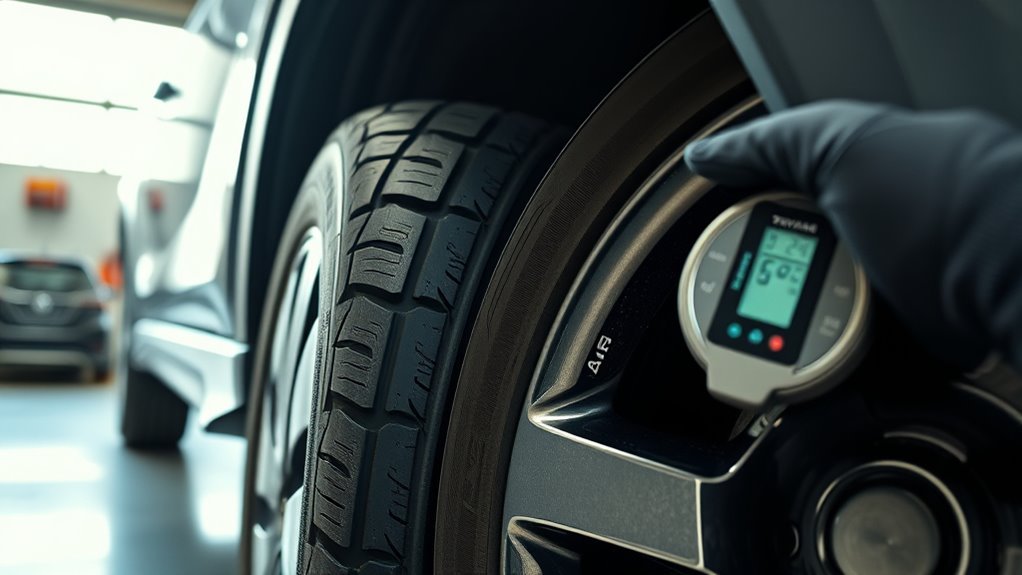
You need tires with the correct load index and lettered load range to safely carry your RAV4, passengers, cargo and any trailer without risking blowouts or handling loss. Load index is a numeric per-tire capacity; load range (C, D, E, F, XL) denotes carcass strength and maximum PSI, so higher letters let you inflate more and carry more. Match or exceed OEM 101/225‑65R17 specs for towing; continue for practical sizing, pressure and inspection guidance.
Which Load Range Should Your RAV4 Use?

Which load range should you fit to your RAV4? You’ll choose based on tire compatibility with the vehicle’s specifications and intended use. OEM RAV4 tires commonly come in sizes like 225/65/R17 with a load rating of 101, which supports the vehicle’s weight and normal cargo. Many RAV4 models accept tires with load rating 99 or higher; 99 corresponds to roughly 1,709 pounds per tire, but falling below the recommended index can increase blowout risk under heavy loads. If you tow or carry frequent heavy payloads, target a more robust load range—consult your owner’s manual to confirm the correct index and consider Load Range E for heavy-duty towing scenarios. You’ll maintain performance and safety by matching tire compatibility and load rating precisely. Don’t guess: verify the sticker in the door jamb or the manual, and select tires that preserve your freedom to travel without compromise.
Load Range: What It Is and Why It Matters
Because tires carry the vehicle’s mass and any cargo, you should pick a load range that matches your RAV4’s maximum loaded weight and intended use. You’ll use load range importance to guarantee tire strength and maximum air pressure meet real-world demands; higher letters and matching load indexes let you carry heavier loads without structural failure. For liberation-minded drivers, that means freedom to haul gear safely, not bound by inadequate equipment. Tire safety isn’t optional: under-rated tires raise risks of blowouts, handling loss, and instability when you approach the vehicle’s loaded weight.
Match tire load range and index to your RAV4’s GVWR—higher ratings mean safer hauling, fewer blowouts, and stable handling.
- Match manufacturer gross vehicle weight rating (GVWR) to tire load range and load index.
- Verify load index numerically on the sidewall to confirm per-tire capacity for your fully loaded RAV4.
- Choose higher load ranges when you routinely carry heavy cargo or tow, balancing ride quality and durability.
- Inspect pressures regularly; correct inflation guarantees declared load capacity and preserves tire safety.
Load-Range Letters (C, D, E, F, XL): Capacity & PSI
Think of load-range letters as a quick specification for a tire’s structural strength and maximum inflation: C, D, E, F and XL correspond to progressively higher load capacities and PSI limits, so you can match tires to your RAV4’s payload and towing needs. You’ll see Load Range Comparisons show C at about 1,750 lbs at 50 psi, D at roughly 2,540 lbs at 65 psi, E between 3,042–3,640 lbs at 80 psi, F up to 4,480 lbs at 95 psi, and XL handling 1,600–1,900 lbs at 41–50 psi. Use these figures to evaluate Weight Capacity Factors against your typical cargo and tongue weight when towing.
Assess Tire Pressure Impacts: higher load-range allows higher inflation for stiffer sidewalls and greater carrying capacity, but consider Performance Tradeoffs—firmer ride, altered traction, and potential fuel penalty. Follow Selection Guidelines: match or exceed vehicle requirements, prioritize safety margins, and choose the letter that liberates you to carry and tow without compromising control.
How to Read Load Index and Load Range on Your Tire
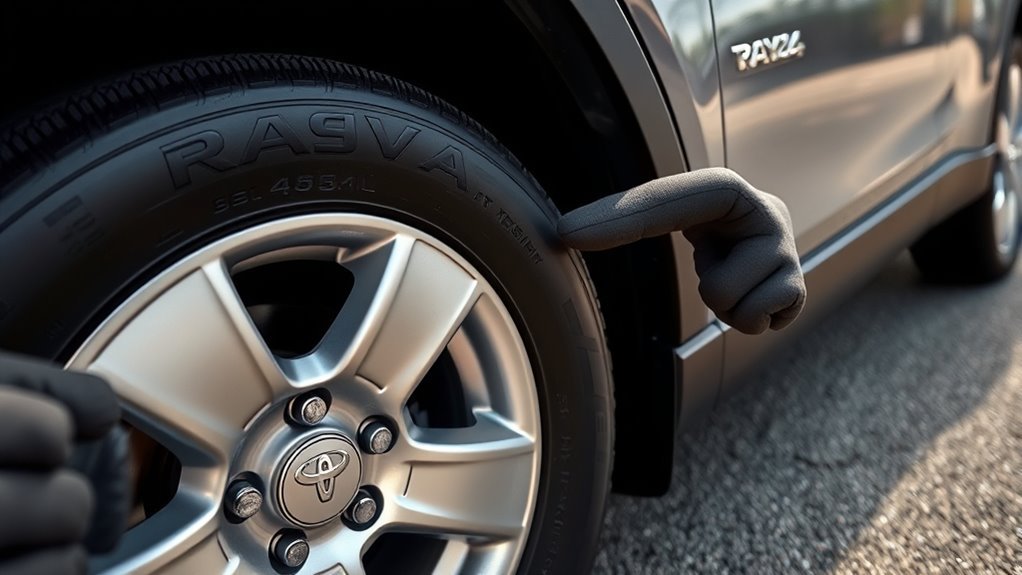
When you inspect your RAV4’s tire sidewall, you’ll see a numeric load index and a lettered load range that together tell you the tire’s maximum carrying capacity and the inflation/structure limits required to reach it. Read the load index number, then find the load range letter. The load index maps to a kilogram (and pound) capacity—e.g., 100 = 800 kg (1,764 lb), 99 = 775 kg (1,709 lb). The load range letter denotes construction strength and maximum safe inflation pressure; higher letters support heavier loads and higher psi. Use both values: the index gives per-tire capacity at its rated pressure, the range tells you what pressure the tire can safely accept to meet that capacity.
- Verify current load index matches OEM specification.
- Confirm load range letter supports required max psi.
- Convert index to kg/lb for total-vehicle planning.
- If replacing, choose tires with equal or higher index and compatible load range to preserve safety and freedom on the road.
OEM RAV4 Load Ranges : What They Mean in Practice
Now that you know how to read load index and load range, apply that to OEM RAV4 tires to understand real-world capacity and safety margins. OEM tire performance on a RAV4, like the 225/65R17 Yokohama with load rating 101 (1,819 lbs per tire), gives you a clear safety buffer versus typical loading. For a fully loaded 2007 RAV4 at roughly 4,000 lbs, the average per-tire load is about 1,537.5 lbs, well under the 101 rating but above the minimum OEM option rating of 99 (1,709 lbs). Use a load ratings comparison when evaluating replacements: manufacturers intentionally choose conservative ratings to preserve handling, heat tolerance, and margin for error. Don’t downrate below OEM minimums; doing so raises risk of failure under stress. Practically, match or exceed the OEM rating to maintain designed performance and your freedom to carry passengers and cargo without compromising safety.
Choosing Load Range for Towing, Cargo, and Passengers
When planning towing or heavy loads, match the tire load range to your RAV4’s towing capacity so each tire can carry its share without exceeding the specified load index. Check how cargo weight is distributed fore-to-aft and side-to-side and choose a load range that maintains adequate margin at recommended tire pressures. Factor in passenger load—extra occupants raise per-tire demand—so don’t substitute a lower load range when you expect full payloads.
Towing Capacity Match
Start by matching your RAV4’s towing capacity to tire load range so each wheel can carry its share without overstress. You’ll assess towing dynamics and tire compatibility: know your model’s 1,500–3,500 lb limit, then pick tires with load ratings that meet or exceed per-wheel demands. Load Range E supports ~3,640 lb per tire at 80 psi and suits heavy towing; standard RAV4 ratings (99/775 kg+) handle typical loads. Remember the front axle often bears ~60% of total weight, raising per-tire requirements. Choose tires that prevent overstress, blowouts, and handling degradation so you stay free to tow confidently.
- Verify vehicle towing capacity.
- Calculate per-wheel load with passengers.
- Select load rating ≥ required load.
- Confirm tire pressure and compatibility.
Cargo Weight Distribution
Because cargo and passengers shift the load across axles, you should calculate per-axle and per-wheel forces before choosing a tire load range. For a fully loaded RAV4 (~4,000 lb) use weight balance assumptions (front ~60%) to estimate per-axle loads, then divide by two for per-wheel forces. That average (~1,537.5 lb per tire) requires a tire with at least a 99 load index; for towing or heavy cargo management choose higher indices (e.g., 100 or Load Range E at 3,640 lb capacity) to provide safety margin. Maintain correct tire pressure for rated loads—underinflation risks blowouts. You’ll liberate your decision-making by quantifying loads, selecting conservative load ratings, and implementing consistent cargo management to preserve handling and safety.
Passenger Load Considerations
If you plan to carry multiple passengers, heavy cargo, or tow regularly, select tires with a load index and range that exceed the per-wheel forces you calculate for your RAV4 rather than merely matching the stock rating. You’ll want a minimum load rating of 99, but for heavier duty use consider Load Range E for margin. Check load index on the sidewall and confirm each tire’s capacity exceeds the calculated ~1,537.5 lb per wheel for a fully loaded 4,000 lb RAV4 given your weight distribution. Maintain proper tire pressure to achieve rated capacity and reduce blowout risk when towing. Choose tires that liberate you from limitations by prioritizing safety margins and documented capacities.
- Verify per-wheel load vs. load index
- Prefer higher load range (E) for towing
- Monitor tire pressure under load
- Balance weight distribution before departure
Upsizing to Load Range E or XL on a RAV4: Real Tradeoffs

When you consider upsizing a RAV4 to Load Range E or choosing XL-rated tires, weigh the clear tradeoffs between increased payload/towing capacity and impacts on fuel economy, ride comfort, and handling; Load Range E can support up to about 3,640 lb per tire at 80 psi—useful for heavier towing—while adding roughly 10–15 lb per tire that typically reduces fuel economy by about 1–2 MPG and introduces firmer sidewall feel, whereas XL tires (1,600–1,900 lb at 41–50 psi) often hit a middle ground with improved capacity but gentler ride characteristics. You’ll gain towing stability and higher load capacity, improving durability under heavy duty cycles. Expect changes in weight distribution and measurable impacts on tire performance: acceleration, braking, and cornering shift as unsprung mass increases. Sidewall stiffness with Load Range E sacrifices ride comfort; XL preserves more compliance. Prioritize matching ratings to your RAV4’s specs to address safety concerns. Choose based on real payload needs, not perceived toughness, to maintain liberation through informed, practical selection.
How Load Range Changes RAV4 Tire Pressure & Safety
Although tire load range is often treated as a spec on a sticker, it directly dictates the maximum safe inflation pressure and consequently how much weight each RAV4 tire can carry, so you should match load range to your typical payload and towing needs. You’ll use tire inflation as the control variable: higher load ranges accept higher pressures and therefore higher per-tire carrying capacity. That’s critical when you liberate your mobility with heavier loads or towing.
- Load range defines maximum psi; e.g., Load Range E accepts up to 80 psi and supports ~3,042–3,640 lbs per tire.
- Under-rated load range forces lower tire inflation, raising heat and rupture risk; this violates common safety standards.
- Match load range and inflation to the vehicle’s axle loads—2007 RAV4 front axle ~60% of weight—so front tires meet rating ≥99.
- Monitor pressure with quality gauges, adjust with load changes, and document settings to maintain predictable handling and legal compliance.
Common Mistakes Matching Load Range to Vehicle Specs
After you’ve matched load range to typical payload and towing needs, the next risk is choosing the wrong tire rating for the vehicle. You’ll often encounter tire selection pitfalls when you pick a tire with a lower load index than the OEM specification; for example, substituting a 97-rated tire where the RAV4 requires a minimum 99 reduces margin for error and raises blowout risk. You must treat load rating misconceptions as operational hazards: the load index quantifies maximum carrying capacity, and mismatches accelerate wear and degrade handling. Don’t ignore heavier construction options—load range E tires provide superior support for towing and hauling even if they feel stiffer. Practically, verify the vehicle placard and tire sidewall codes, compare rated capacities under expected load, and reject any tire that undercuts the OEM numbers. Your goal is freedom from preventable failure: match specs deliberately, avoid compromises for aesthetics or cost, and preserve safety and performance.
When to Consult a Pro and Quick Pre-Buy Checklist
If you’re uncertain about load range suitability—particularly for towing or frequent heavy cargo—you should call a tire professional for a load-capacity assessment and model-specific recommendation. Inspect the tire sidewall for load index, confirm OE load range on the vehicle placard or owner’s manual, and compare measured needs to the tire’s rated capacity (e.g., index 99 ≈ 1,709 lb). Before buying, have the pro verify that the replacement tires meet or exceed OE load range and collect documentation of specifications and warranty.
When To Call
When you’re unsure about the correct load range for your RAV4—especially if you tow, carry heavy loads, or plan to replace only two tires—consult a tire professional so you don’t compromise safety or performance. You should call when load safety or tire pressure questions affect your payload, towing setup, or wheel replacement plans. A pro will confirm OEM load range specs, read sidewall load index numbers, and advise on mixing new and existing tires for balanced handling. Use this quick checklist before buying so your choices free you from anxiety and risk.
- Verify OEM load range and index meet or exceed manufacturer recommendations.
- Confirm sidewall load index matches vehicle requirements.
- Ask about mixing two new tires on 4WD models.
- Get written load-capacity recommendation.
What To Inspect
Start by inspecting the tire sidewall for the load index and load range designation—these codes tell you the maximum weight per tire (e.g., load index 100 = 800 kg/1,764 lbs) and whether the tire is standard load (SL) or extra load (XL), which affects allowable pressure and capacity (XL commonly supports higher loads at ~41 psi). Check that all four tires share compatible load ratings; mismatches can violate safety standards and reduce tire longevity. If ratings don’t match your RAV4 requirements or you’re unsure, consult a professional before installing. Quick pre-buy checklist:
| Item | Action |
|---|---|
| Load index | Verify number equals or exceeds OEM spec |
| Load range | Confirm SL vs XL matches vehicle needs |
| Consistency | Ascertain all tires match for safety standards and longevity |
Pre-Purchase Paperwork
Having confirmed sidewall load index and range on the tires you’re considering, gather the paperwork that will validate compatibility and guide any expert consultation: check your RAV4 owner’s manual or the tire placard for the OEM minimum load index (many models specify 99+), record the exact load index and load range stamped on each candidate tire, and note intended use (passenger, towing, or heavy cargo). Then consult a pro if you’re uncertain, especially before choosing lower-rated options or Load Range E for towing. Include tire warranty considerations and planned seasonal tire adjustments in your documentation so a technician can advise on pressures, load capacity, and legal compliance.
- Owner’s manual/placard spec and vehicle VIN
- Sidewall photos with load index/range
- Intended use and load scenarios
- Warranty terms and seasonal adjustment plan
Frequently Asked Questions
What Happens if I Exceed the Load Range?
You’ll risk tire blowouts, overheating, poor handling and uneven wear when you exceed load capacity; protect tire safety by respecting load ratings, offloading cargo, and choosing tires with higher load indexes to reclaim confident, liberated mobility.
How Do I Choose the Right Tire Load Range?
Think of your RAV4 as a ship; match tire specifications to your load capacity and OE rating. You’ll choose the load range that meets or exceeds requirements, balancing capacity, ride comfort, and intended towing demands.
Conclusion
So you’ll pick the right load range—because your RAV4 isn’t auditioning for a truck show. Treat load range as the tire’s CV for weight duty: match load index and recommended PSI, don’t oversize blindly, and remember higher letters mean stiffer, heavier tires with different pressure needs. Ignore this and you’ll be gambling with handling, wear, and safety. When in doubt, consult a pro and check load ratings before you buy.

Related Articles
Upsizing Wheels on a Toyota RAV4: Pros, Cons, and Considerations
Boost your Toyota RAV4's performance with larger wheels, but discover the hidden trade-offs that could impact your ride before you decide.
Read More
Can I Change Tire Size on My Toyota RAV4? Rules and Recommendations
Are you considering changing the tire size on your Toyota RAV4? Discover the essential rules and recommendations before making a decision.
Read More
What to Do If the TPMS Light Comes On in Your RAV4
Understand the steps to take when the TPMS light illuminates in your RAV4, as overlooking it could lead to serious tire problems.
Read More