
Inner Tube Sizing for Tractor Tires: Complete Guide
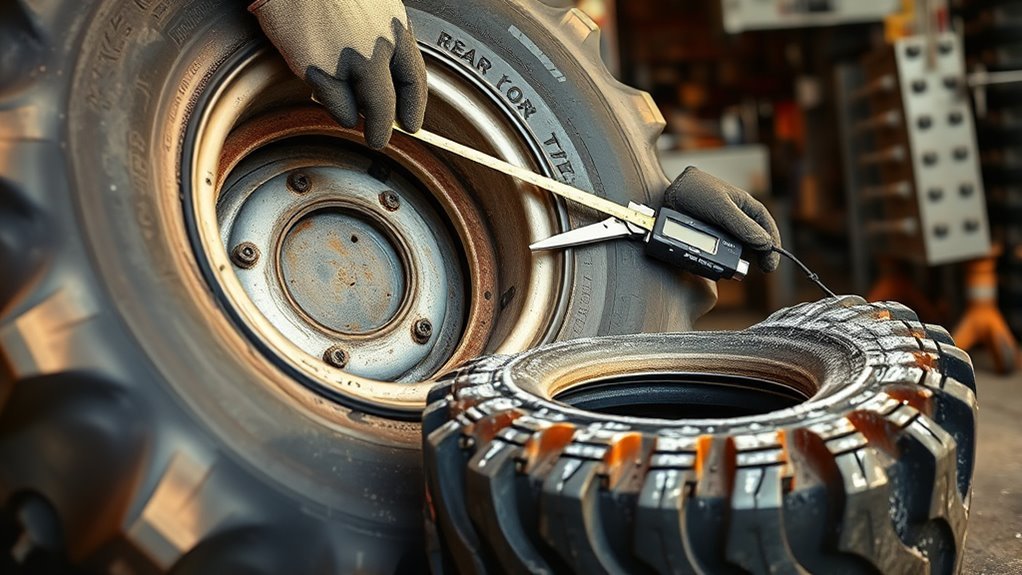
You’ll start by confirming your tire diameter and rim profile so the tube seats correctly, then decide between tubeless or tube‑type based on puncture risk and maintenance. Match tube size to tire width and diameter, and pick a valve stem (TR13/TR15/TR300) that fits the rim hole and pressure needs. Install carefully—preinflate slightly, avoid pinches, reseat beads, check O‑rings—and test for leaks. Keep going to learn precise specs, valve dimensions, and step‑by‑step tips.
Confirm Your Tire Diameter and Rim Profile
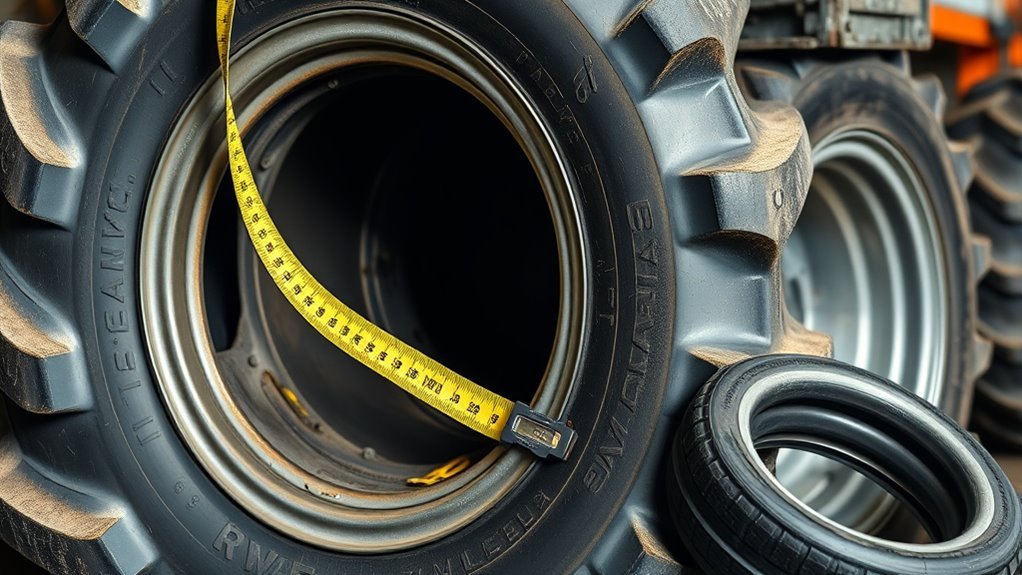
When you’re preparing to fit an inner tube, first confirm that the tire diameter matches the rim diameter printed in the tire designation (for example, a 540/65 R30 uses a 30‑inch rim); mismatched diameters will prevent a safe seal. You’ll then check rim specifications: the recommended rim for a 30‑inch tire is W18L, so confirm the profile and width match the tire maker’s chart for tire compatibility. Measure or read rim dimensions F (interior width), H (flange height), and P (seat width) against the tire’s requirements to guarantee the tube will sit and seal correctly. Verify the rim reference positioning stamped on the seat or disc to avoid misalignment during mounting. Don’t guess—consult the technical documentation for precise rim specifications before you buy tubes or tires. Accurate matching keeps you independent of roadside failures and gives you control over safe, reliable tractor operation.
Decide: Tubeless or Tube‑Type Tires?
Because your choice affects fit, performance, and maintenance, decide early whether you’ll run tubeless or tube‑type tires. You’ll favor tubeless when you want modern tire advantages: fewer pinch‑punctures, improved fuel and traction efficiency, and simplified bead sealing on compatible rims. Manufacturers like Michelin design agricultural tubeless units for those gains, and you can still install a tube in a tubeless tire when conditions demand it.
Choose tube‑type when the application or rim profile requires an inner tube for reliable inflation; tube‑type tires won’t operate without one. For liberated operators, the freedom to switch setups matters: tubeless gives lower upkeep and a cleaner system, while tube‑type offers compatibility with legacy wheels and specific field conditions. Use a performance comparison focused on puncture resilience, maintenance time, and compatibility. Remember valve selection and inner tube references are critical if you opt for tube use—matching valve type and tube specs preserves safety and ideal performance.
Match Inner Tube Size to Tire Width and Diameter
When matching inner tubes, you’ll first confirm the tire diameter so the tube seats correctly on the rim and valve aligns with the stem hole. Check width compatibility next—choose a tube rated for your tire’s width range, and note that you can use a tube one size smaller if the exact match isn’t available. Finally, account for tubing tolerances specified by manufacturers to guarantee proper stretch, inflation (typically 10–15 psi), and load-bearing performance.
Tire Diameter Matching
Tire diameter matching is central to choosing the right inner tube, since the tube’s listed diameter and compatible width must align with the tire sidewall marking (for example, a 540/65 R30 tire needs a tube that fits a 30″ rim and the tire’s width range). You check the sidewall, confirm the rim diameter, and select a tube rated for that diameter; if the exact tube isn’t available, one size smaller is acceptable. Accurate diameter matching preserves inflation pressure, reduces abnormal tire wear, and maintains load-bearing stability under heavy work. You’ll avoid fitment issues that compromise steering and flotation. Properly sized tubes support liberation from downtime and inefficient operation—keep measurements precise and prioritize diameter compatibility for reliable field performance.
Width Compatibility Check
Matching diameter was only the first step; you now need to check the tube’s width range against the tire’s marked width so the tube sits without pinching or stretching. You’ll read the tire notation (for example, 540/65 R30 or 15 x 6.00-6) and select an inner tube sized for that width and rim diameter. If an exact tube isn’t available, choose one size smaller for a secure fit rather than oversizing. Verify the tube’s listed width range and confirm its compatibility with common examples like 11×4.00-4 (tube 533211). Consider inner tube materials and the manufacturer’s pressure ratings to guarantee durability and safe inflation. Accurate matching prevents under-inflation, poor performance, and premature failure.
Tube Sizing Tolerances
Because proper fit determines performance, you should match inner tube diameter and width to the tire exactly and only deviate one size down if an exact tube isn’t available. You’ll measure with slight inflation to avoid sizing discrepancies caused by under-inflated tubes; for example, a 540/65 R30 tire needs a tube that accommodates a 30-inch rim. Consider tolerance implications: going one size down can work but may change stress distribution, inflation behavior, and wear patterns. Maintain recommended pressures—typically 10–15 psi for many tractor tires, higher for specific applications—so the tube seats correctly. Always cross-check tire specs against tube dimensions to prevent instability, premature wear, and reduced control. Make deliberate, informed choices for safer, freer operation.
Choose the Correct Valve Stem for Your Rim Hole
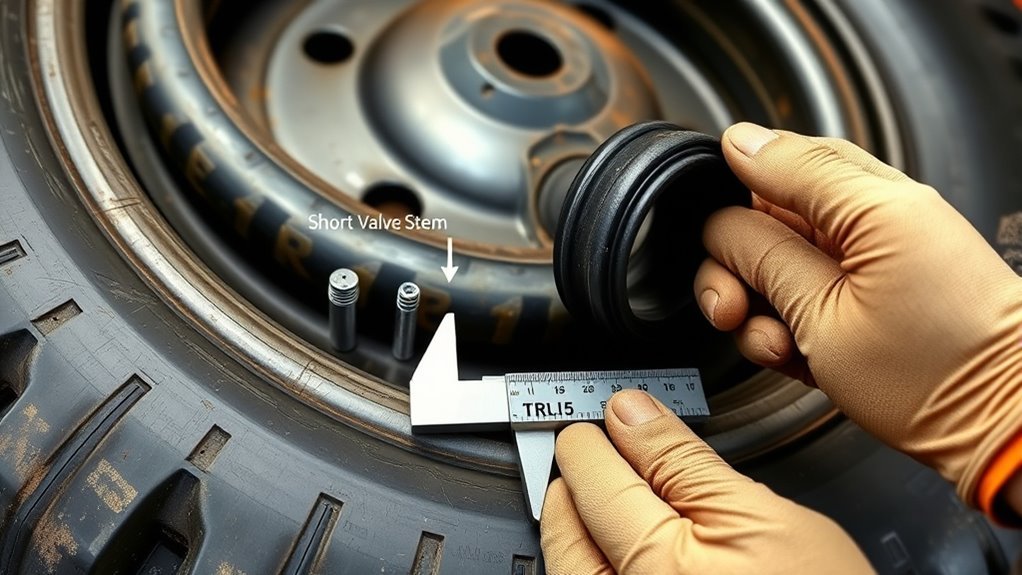
When you pick a valve stem, make sure its stem type and base dimensions match your rim hole so you avoid leaks or pressure limits; use valve selection tips and check pressure compatibility against your equipment. Choose stems that physically fit: TR13 suits 0.445 or 0.631-inch rim holes; TR15 and TR300 work with 0.618–0.633-inch holes. Match base diameter—TR15 has a 2.20-inch base—to your rim specs. Consider max inflation: TR13, TR15, and TRJS2 support up to 60 psi; TR300 and TR22O handle up to 150 psi. The TR22O is built for a 0.625-inch hole and 150 psi applications.
- Verify rim hole diameter versus valve model before ordering.
- Confirm base width/diameter aligns with rim seat dimensions.
- Select a valve rated for required inflation pressure.
- Prefer versatile stems (TR300/TR15) for broader compatibility.
You’ll gain freedom from failure by specifying the right stem—precise choices protect performance and safety.
Install Inner Tubes Safely : Step‑by‑Step
Before you start, clear a level workspace and gather tools: tire irons, valve tool, soap solution, gloves, and a low-pressure inflator. You’ll fully deflate the tire and use safe removal techniques—support the wheel, loosen beads carefully, and avoid sharp pry angles that could damage the rim or tube. With the workspace secured and tire off the rim, you’re ready to slightly inflate and position a size‑matched tube for smooth installation.
Prepare Tools And Workspace
Gather the right tools and set up a clean, well-lit workspace before you touch the tire: have tire levers, a valve stem tool, an air pump, and protective gloves within reach, and clear enough room to roll and flip the wheel without scraping or pinching the tube. Maintain strict tool organization and proper workspace lighting so you can work efficiently and safely. Inflate the inner tube slightly before fitting to shape it and reduce pinch risk. Move deliberately; haste damages tubes.
- Lay tools on a pegboard or mat for immediate access.
- Position lights to eliminate shadows on bead and rim interfaces.
- Wear cut-resistant gloves and keep a clean floor area.
- Pre-inflate tube to low pressure and inspect for defects.
Safe Tire Removal Techniques
Start by fully deflating the tire so you can safely depress the bead and get a clear gap between the tire and rim; this minimizes stored energy and makes levering much easier. Wear protective gloves and follow safety precautions: stand clear of potential pinch points and secure the wheel. Use proper tire levers to pry the bead over the rim lip steadily, avoiding sharp metal contact that could damage the tire or rim. Remove the inner tube carefully, then inspect tube and tire for cuts, bulges, or embedded debris as part of routine tire maintenance. When reinstalling, seat the tube loosely, guarantee it isn’t pinched, and re-seat the bead evenly before partial inflation to verify correct placement.
Fix Leaks: Valve, Bead, O‑Ring, and Common Issues
Check the valve, bead seating, O-rings, and the tube itself methodically to pinpoint leaks before they worsen. You’ll use leak detection and maintenance tips to free yourself from downtime: pressurize the tube, apply soapy water, and watch for steady bubbles. Inspect valve stems for corrosion or wrong valve types that won’t seal; replace mismatched stems. Verify bead seating by deflating, reseating the tire on the rim, and inflating to spec while checking for leaks along the bead.
- Check valve compatibility and replace worn stems; torque or clamp as required.
- Reseat and inspect bead edges; clean rim and tire bead surfaces before mounting.
- Fit or replace O-rings on multi-part rims; confirm correct size and material for pressure.
- Examine inner tube for punctures, abrasions, or seam failures; patch or swap damaged tubes.
Follow these maintenance tips regularly to prevent small faults from becoming critical, restoring mobility and control.
Where to Buy Tubes : Specs to Verify Before Purchase
Before you buy inner tubes, confirm the exact tube size, valve type, and maximum inflation pressure to guarantee compatibility with your tire and rim. Start by matching tube size to tire size—accuracy preserves handling and prevents failures. Check whether your tire is tubeless or tube-type; you can fit a tube in a tubeless tire, but tube-type tires demand the correct tube. Verify valve specifications (for example TR218A for reference 754) so the valve fits the rim hole and sealing hardware. Confirm the tube’s max inflation pressure and never exceed it.
Buy from vendors with clear supplier reputation, documented specs, and returns policy. Compare trusted retailers like Tires4That.com for selection and promotions, then run pricing comparisons across outlets to avoid overpaying. Inspect stock condition, shipping practices, and warranty terms before ordering. Do this, and you’ll secure durable tubes that free you from repeated failures and unnecessary downtime.
Frequently Asked Questions
What Is the Difference Between TR13 and TR15?
You’ll find TR13 has a 0.46″ stem and fits 0.445/0.631″ rim holes, while TR15 uses a 0.65″ stem for 0.618/0.633″ holes; both 1.38″ long, 60psi, affecting inner tube tire compatibility and selection.
What Does 18X8 50 8 Mean?
About 80% of small tractor tires follow standard codes: 18×8.50-8 means 18-inch diameter, 8.50-inch width, 8-inch rim. You’ll check tire dimensions to confirm inner tube compatibility for safe, liberated field use.
Conclusion
You’ve learned how to confirm tire diameter, pick tubeless vs tube-type, match tube size to tire width and rim diameter, and choose the right valve stem. Picture yourself kneeling by a tractor wheel, feeling the rim profile, sliding a correctly sized tube into place, and watching it seat perfectly as you inflate to spec. That exactness prevents pinch flats, bead leaks, and downtime—so measure, match, and install with methodical care every time.
Related Articles
Signs of a Bad Inner Tube: When Repair Won’t Work
Find out which cuts, bulges, or repeated patch failures mean you must replace your inner tube—and why patching might not save it.
Read More
Golf Cart Tire & Tube Guide: Sizes, Pressure & Care
Practical tips on golf cart tire sizes, pressures, tubes, and maintenance to save wear and avoid flats—discover what pros adjust next.
Read More
Inner Tube Sizing for ATV Tires: Matching Tube to Tire
Sizing ATV inner tubes correctly ensures durability and safe inflation — discover how to match tire sidewall markings, choose the larger fit, and confirm valve details.
Read More