Inner Tube Sizing for ATV Tires: Matching Tube to Tire
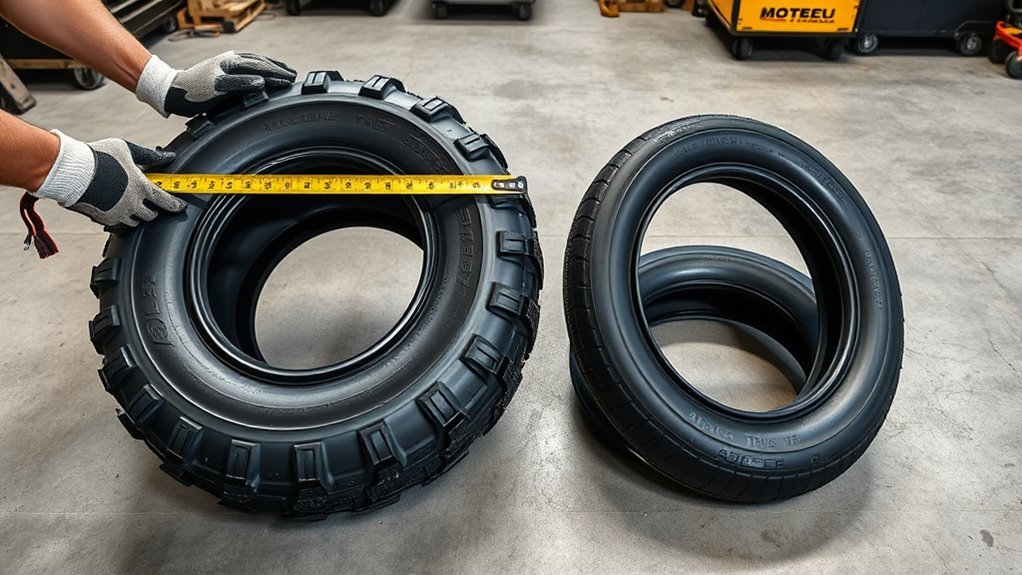
You’ll match an ATV inner tube by reading the tire sidewall (width×height–rim diameter) and choosing a tube whose specified range includes that exact size. Pick the larger tube option within the range to reduce stretching and improve durability. Confirm valve stem type (TR‑13 common), stem length, and rim hole compatibility for secure inflation access. Install with rim tape, use a calibrated gauge, and inspect regularly; continue for detailed sizing charts, valve specifics, and installation tips.
Quick Guide: Which ATV Inner Tube to Buy
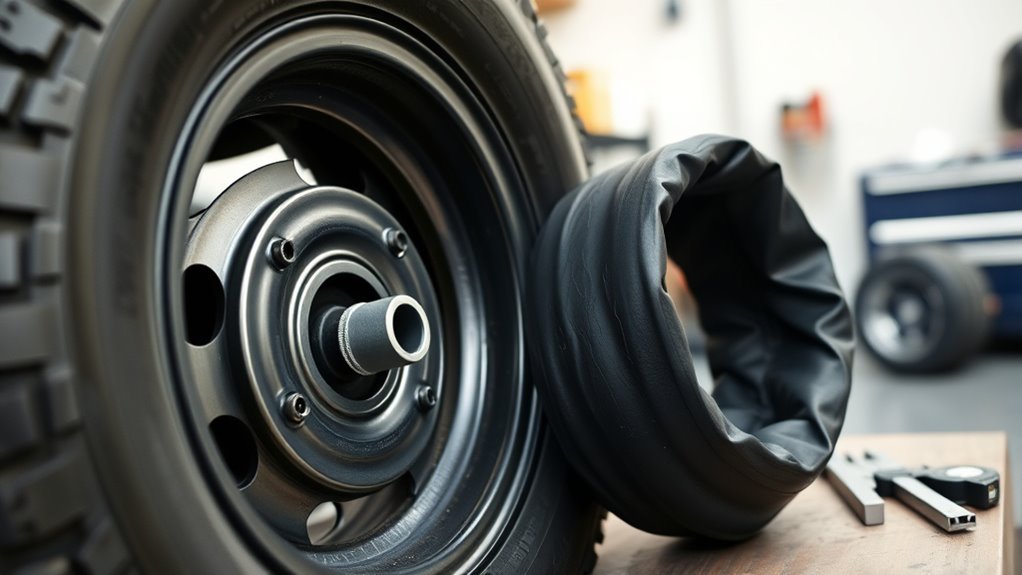
Which inner tube should you buy for your ATV? You’ll choose by matching tube size to tire size precisely and by considering tube materials and performance factors. Use fitment charts to cross-reference: select TU0077 for 18X8.50/9.50R8 through 22X12R8 applications, or TU0112 for larger 24×11-9 to 25×13.5-9 tires. Verify valve stem compatibility—TR-13 is most common—because rim requirements vary and incorrect stems impair sealing. Inspect tire and tube regularly for cuts, abrasions, and aging; proactive inspection prevents blowouts and preserves ride reliability. Prioritize tubes made from durable compounds that balance puncture resistance and flexibility to optimize traction response and shock absorption. You want freedom on challenging terrain, so pick components that enhance control and reduce maintenance interruptions. Follow documented fitment and maintain condition monitoring to guarantee liberated, uninterrupted riding rather than frequent roadside repairs.
Read Your Tire Sidewall to Pick the Exact Tube Size
Reading the tire sidewall gives you the exact numbers to pick a compatible inner tube; tires are marked in a width x height–rim diameter format (for example, 25×8-12 or 20×10.00-8), and you should select a tube specified for that same size or within the manufacturer’s allowed range. You read tire markings, note width, aspect/height, and rim diameter, then match those figures to the tube’s listed fitment. Size accuracy prevents bead stress, pinch flats, and valve misalignment. Also check load rating and maximum pressure on the sidewall to confirm the tube’s working range. When in doubt, use the tube size range that includes your exact sidewall numbers.
- Close-up of embossed numbers on a dusty sidewall
- Matching printed tube size ranges beside the tire
- Valve stem aligned with rim hole for correct fit
- Specified PSI stenciled on the tire shoulder
- Technician confirming bead seating while inflating
Read precisely; pick confidently; gain mobility without compromise.
Larger vs. Smaller Tubes: Fit, Durability, and Risks
While you can sometimes install a slightly larger tube without immediate issues, choosing one that closely matches your tire size minimizes stretching and improves durability, braking, and handling. You’ll find larger tubes tend to suffer less material strain, lowering blowout risk in demanding terrain and supporting consistent tube performance. They distribute stress across more material, which preserves pressure and reduces leakage.
Smaller tubes may fit but introduce installation challenges: forced seating, uneven bead contact, and excessive stretching. Over-stretched butyl tubes are prone to rapid pressure loss and premature failure, compromising power delivery and control during aggressive riding. A mismatched tube can alter tire geometry, accelerating wear and degrading handling precision.
For liberation-minded riders, select the closest size to the tire spec to maintain ideal tire pressure, maximize durability, and avoid common installation pitfalls. That choice directly preserves performance, safety, and the freedom to push your ATV when conditions demand it.
Valve Stem & Rim Fit: TR-13, Stem Length, and Clearance
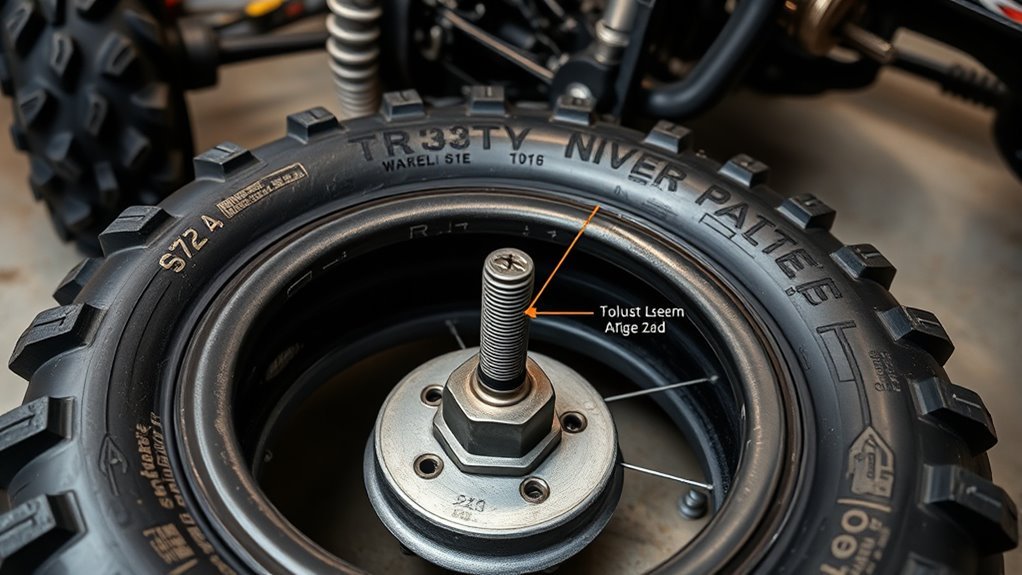
After matching tube size to your tire, check the valve stem and rim fit—most ATVs use the TR-13 stem, which fits standard rim holes and provides a reliable interface for inflation. You’ll confirm valve compatibility with your rim hole, then choose a stem length that extends beyond the rim lip for unobstructed access. Guarantee clearance around the stem to prevent pinching or bending during mounting and operation. Selecting a stem matched to rim specifications preserves inflation integrity and reduces failure risk. When replacing a stem, verify hole type and secure fit for peak performance. Focus on practical installation techniques that respect rim geometry and serviceability, empowering you to maintain independence on trail and road.
- TR-13 seated in standard rim hole, flush and centered
- Stem length projecting past rim lip for pump access
- Radial clearance preventing pinch during bead seating
- Secure fit matching rim hole diameter and type
- Visual inspection for straightness and seal integrity
Installation, Inflation, and Maintenance Tips to Maximize Tube Life
When you install and care for ATV inner tubes, precise sizing, correct inflation, and routine inspection are essential to maximize service life and safety. Match the tube size to the tire specification or specified range before mounting; mismatches cause stress concentrations and risk blowouts. Use controlled installation techniques: seat the bead, avoid pinching the tube, and fit rim tape to guard against spoke and rim-edge punctures. For inflation methods, use a calibrated gauge and follow manufacturer pressure; under- or over-inflation shortens tube life and alters handling. Apply slow fills to detect leaks and verify bead seating.
Adopt routine maintenance practices: inspect for cuts, abrasions, and valve integrity at regular intervals, and replace damaged tubes immediately to preserve reliability. Store spare tubes in cool, dry conditions to prevent deformation. Consider approved sealants to enhance puncture prevention, understanding they alter repair options. These disciplined steps free you from avoidable failures and extend operational autonomy.
Frequently Asked Questions
What Does 25X10 12 Mean on ATV Tires?
25×10-12 means the tire dimensions: 25″ overall diameter, 10″ width, fit for a 12″ rim. You’ll choose matching tubes and maintain ATV performance, preventing leaks or failures while preserving freedom to ride.
What Is the Difference Between TR4 and TR6 Inner Tube?
TR4 and TR6 differ by rim hole size, length and pressure rating: you’ll choose based on rim diameter and tube pressure, considering inner tube materials compatibility; pick the stem matching rim specs to prevent leaks and failure.
Conclusion
Picking the correct ATV inner tube matters: mismatched tubes cause blowouts or pinch flats. Studies show improper tube-tire pairing contributes to over 30% of off-road tire failures. Read the tire sidewall for diameter and width, match valve type (TR-13) and stem length to your rim, and choose a snug tube—not oversized. Install carefully, inflate to recommended PSI, and inspect regularly. Proper selection and maintenance maximizes durability and safety.
Related Articles
Signs of a Bad Inner Tube: When Repair Won’t Work
Find out which cuts, bulges, or repeated patch failures mean you must replace your inner tube—and why patching might not save it.
Read More
Golf Cart Tire & Tube Guide: Sizes, Pressure & Care
Practical tips on golf cart tire sizes, pressures, tubes, and maintenance to save wear and avoid flats—discover what pros adjust next.
Read More
Inner Tube Sizing for Tractor Tires: Complete Guide
Understand how to choose the right tractor inner tube—diameter, rim profile, valve type, and installation tips—so you avoid costly failures and learn the exact specs.
Read More