How to Wash Tires on a Toyota RAV4: A Safe Cleaning Guide
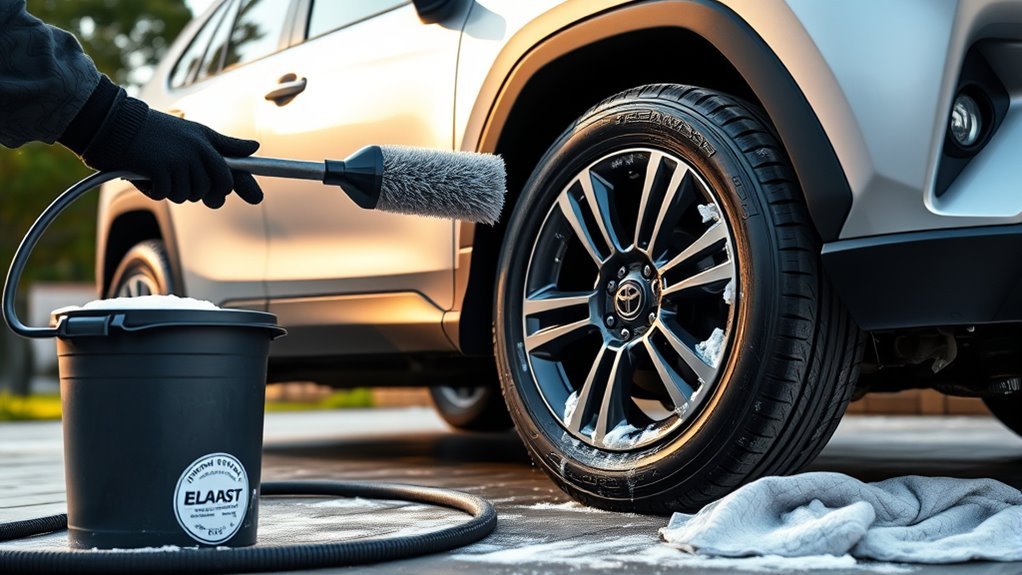
You can keep your Toyota RAV4’s tires and wheels clean without damaging the finish by using a simple, careful routine: work in the shade, let the wheels cool, rinse away loose grit, use wheel-safe cleaner on the rims, scrub the tire sidewalls with a separate tire brush, rinse fully, dry, inspect, and apply dressing only to dry sidewalls.
Quick Answer
To clean RAV4 tires and wheels safely, wash one cool wheel at a time with a neutral, wheel-safe cleaner, use soft brushes on the wheel finish, use a dedicated tire cleaner and stiff tire brush on sidewalls, rinse until the water runs clear, dry with microfiber, inspect for damage, and apply dressing only to the sidewalls.
Key Takeaways
- Use a neutral, non-abrasive wheel cleaner and avoid acidic, alkaline, or abrasive products on RAV4 wheels.
- Clean wheels and tires with separate brushes so brake dust and tire grime do not scratch the wheel finish.
- Never apply tire dressing to the tread; use it sparingly on clean, dry sidewalls only.
- After cleaning, check tire pressure cold, inspect tread depth, and look for cracks, bulges, uneven wear, and wheel damage.
At a Glance
| Time Required | 30–60 minutes for cleaning, plus cooling time after driving |
| Difficulty | Easy beginner DIY maintenance |
| Tools Needed | Hose, neutral wheel cleaner, tire cleaner, soft wheel brush, stiff tire brush, lug-nut brush, microfiber towels, tire-pressure gauge, tread-depth gauge |
| Cost | About $20–$60 if you already own basic wash supplies |
What This Guide Helps You Achieve With RAV4 Tires and Wheels
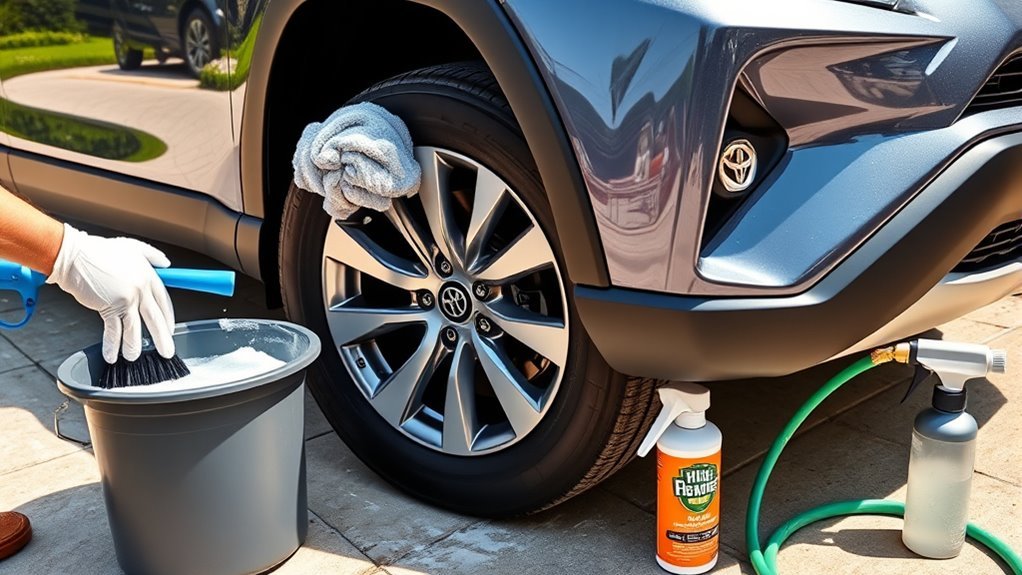
This guide helps you clean RAV4 wheels and tires without scratching the finish, drying out rubber, or creating a traction hazard. The goal is not just shine. The goal is to remove brake dust, road film, salt residue, mud, and old tire dressing while keeping the wheel finish and tire sidewall safe.
Toyota’s owner guidance for RAV4 wheel care recommends removing dirt promptly, using neutral detergent when needed, rinsing detergent off right away, avoiding acidic, alkaline, or abrasive cleaners, avoiding hard brushes, and not using detergent on hot wheels. That makes a controlled, cool-surface wash the safest routine for factory wheels, alloy wheels, and coated wheel finishes. You can review Toyota’s exterior cleaning guidance here: Toyota RAV4 cleaning and protecting the vehicle exterior.
Use this process every 2–4 weeks for normal driving, sooner after road salt, heavy mud, long highway trips, or visible brake-dust buildup. If you drive through winter salt or construction dust often, a quick rinse between full washes can help prevent stubborn deposits from bonding to the wheel finish.
Warning: Never spray cleaner onto hot wheels, never use steel wool or abrasive pads, and never put tire shine or dressing on the tread. Slippery tread can reduce traction.
[Products Worth Considering]

Adam’s Pro Tire Hex Grip applicators are molded foam sponges designed for precise, even tire dressing application. The ergonomic grip helps you spread product without overapplying, reducing sling that can splash onto paint and helping keep your hands clean during wheel and trim detailing. They’re durable, washable, and reusable for repeated detailing sessions.

Blackline Blackout is a water-based trim and tire dressing that restores rubber, vinyl, and plastic with a rich satin, blackout look. Its no-sling formula dries quickly and helps prevent messy transfer onto paint. The coating repels water and offers UV protection to help prevent fading, cracking, and discoloration for a clean, long-lasting finish.

This wheel brush kit delivers pro-level cleaning at home, lifting dirt, grime, and brake dust to help restore wheel appearance. It includes multiple brush styles and applicator pads for tackling different wheel surfaces, with gentle, metal-free bristles designed to reduce scratching risk. The flat and double-ended brushes are built for comfort and reach, making wheel care easier for cars, trucks, and RVs.
Tools and Cleaners to Use and Avoid for Toyota RAV4 Wheels
Start with the least aggressive products that will do the job. For most RAV4 wheels, that means a neutral or pH-balanced wheel cleaner, a separate dedicated tire cleaner, soft wheel brushes, a stiff tire brush for rubber sidewalls, and clean microfiber towels.
Recommended Wheel Cleaners
Choose a wheel cleaner labeled as pH-balanced, neutral, non-abrasive, and safe for your specific wheel finish. A product such as Chemical Guys Diablo Wheel Cleaner is marketed as pH-balanced and non-caustic for wheel finishes, but always read the label and test a hidden spot first. You can check the manufacturer’s current product guidance here: Chemical Guys Diablo Wheel Cleaner.
For Toyota factory wheels, a neutral car-wash soap or diluted neutral detergent is usually safer than an aggressive wheel acid. Use soft-bristled brushes for the face, spokes, lug nuts, and inner barrel. Keep a separate brush for tires because tire grime and old dressing can carry grit that may scratch a wheel finish.
Cleaners to Avoid
Avoid acidic wheel cleaners unless the product label specifically says it is safe for your wheel finish and you know how to use it. Also avoid alkaline degreasers, household bleach, ammonia, steel wool, scouring pads, harsh scrub brushes, and petroleum-heavy products on tire tread. These can damage finishes, leave residue, or make the cleaning job riskier than it needs to be.
WD-40 Multi-Use Product is useful for many metal, moisture-displacing, lubricating, and protective tasks, but it is not a tire cleaner and should not be used on tire tread. If you need to remove road grime from rubber, use a tire cleaner designed for tires and rinse it thoroughly. WD-40’s product positioning is available here: WD-40 products.
Note: Matte painted wheels may need different care than standard painted or alloy wheels. Toyota notes that matte wheels require special care, so use water first, diluted neutral detergent only when needed, and contact a Toyota dealer if you are unsure about the finish.
Prep Your RAV4 and Wheels: Cooling, Location, and Safety Checks
Good prep prevents most wheel-cleaning mistakes. Park on a level surface, choose shade, and let the wheels become cool to the touch before you apply any cleaner. After a drive, this may take 30–60 minutes depending on temperature, braking, and sun exposure.
Park in a Shaded Area
Shade gives cleaners more working time and helps prevent streaks. Direct sun can dry cleaner before you rinse it, especially on dark wheels. Set your bucket, cleaners, brushes, and towels within reach before you begin so you can clean one wheel completely before moving to the next.
Let Wheels Cool
Hot brakes and wheels can make cleaner evaporate too quickly and may leave residue or spots. Touch the wheel carefully near the outer face; if it still feels hot, wait. Cleaning a cool wheel is safer for the finish and gives the product time to loosen brake dust.
Engage the Parking Brake and Check Condition
Engage the parking brake, keep the RAV4 secure, and do a quick visual inspection before washing. Look for sidewall cracks, bulges, exposed cords, nails, missing valve caps, bent rims, severe curb rash, or one tire sitting noticeably low. If you see a bulge, exposed cord, bent wheel, or repeated pressure loss, do not treat it as a detailing problem. Have the tire or wheel inspected by a qualified technician.
Pre-Rinse, Clean RAV4 Wheels, and Scrub Safely
Work one wheel at a time so cleaner does not dry on the surface. Start with a strong water rinse to remove loose sand, grit, salt, and brake dust. Spray from the top down, then aim into lug-nut pockets, between spokes, and around the inner barrel if you can reach it safely.
- Pre-rinse thoroughly. Remove loose grit before touching the wheel with a brush.
- Apply wheel cleaner. Spray evenly on the wheel face, spokes, lug area, and accessible barrel. Follow the label dwell time, often 1–2 minutes, and do not let it dry.
- Agitate gently. Use a soft wheel brush or microfiber mitt on the finish. Use a smaller brush around lug nuts and tight corners.
- Rinse until clear. Keep rinsing until no foam or dirty runoff remains.
- Dry the wheel. Use a clean microfiber towel to prevent water spots and reveal any remaining grime.
Do not use the same dirty brush on every surface without rinsing it. Brake dust can be abrasive, and dragging it across a clear-coated wheel can create fine scratches.
Pro Tip: Clean the dirtiest area last. Wash the visible wheel face first, then the lug pockets, then the inner barrel. This reduces the chance of dragging heavy grime over the most visible finish.
Clean Tire Sidewalls and Tread Without Causing Damage
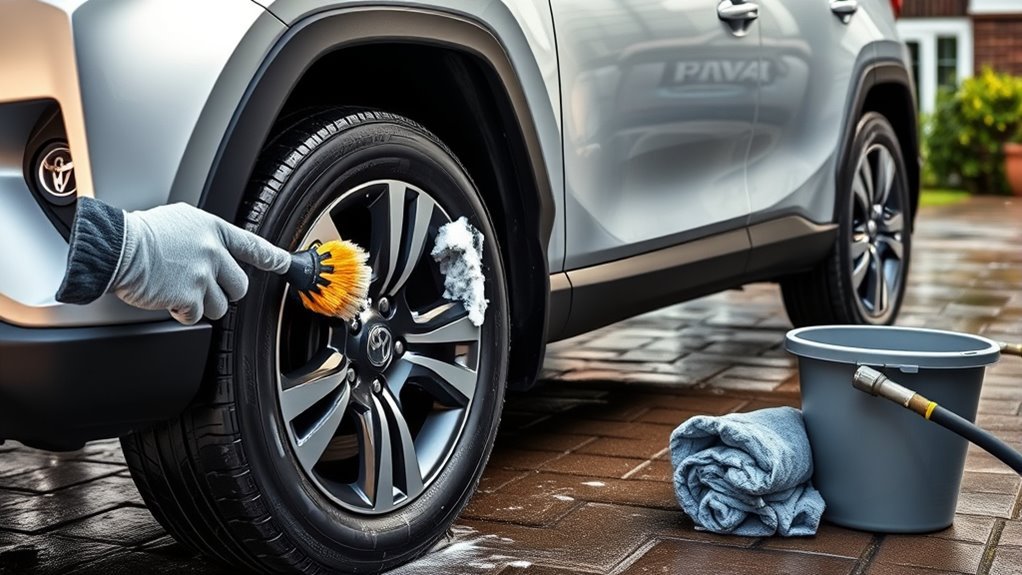
After the wheel face is clean, move to the tire. A dedicated tire cleaner helps remove old dressing, brown residue, road film, and embedded grime from the sidewall. Simple Green’s tire-cleaning guidance, for example, recommends spot testing, applying cleaner to cool wheels one tire at a time, letting it sit briefly, scrubbing, rinsing thoroughly, and drying. You can review that guidance here: Simple Green tire cleaning directions.
Spray tire cleaner evenly on the sidewall, let it dwell according to the product label, and scrub with a stiff tire brush. Brown foam or runoff usually means old dressing and grime are lifting. Rinse fully before the cleaner dries. If the tire still looks brown after rinsing, repeat the tire-cleaning step rather than using a harsher chemical.
Clean the tread only with water and a brush if it has mud or stones packed into the grooves. Do not apply tire shine, silicone dressing, oil-based products, or slick protectants to the tread surface.
Rinse, Dry, Inspect, and Spot Hidden Wheel Damage
Rinse the tire, wheel, lug-nut pockets, and valve-stem area until all cleaner is gone. Residue left behind can streak the wheel, attract dirt, or irritate rubber and coatings. Dry with a microfiber towel so you can inspect the surface clearly.
While drying, check the tire and wheel carefully:
- Sidewalls: Look for cracks, cuts, bulges, bubbles, or exposed cords.
- Tread: Look for nails, stones, uneven wear, flat spots, cupping, or one shoulder wearing faster than the other.
- Wheel: Look for bends, cracks, deep curb damage, peeling finish, or heavy brake-dust staining.
- Valve stem: Make sure the valve cap is present and the stem is not cracked.
Toyota’s tire guidance says to check for treadwear indicators and uneven wear, and to replace or rotate tires according to maintenance schedules and treadwear. You can review Toyota’s tire section here: Toyota RAV4 tires.
Tread depth matters before a tire looks bald. AAA testing found that tires worn to 4/32 inch had much longer wet stopping distances than new tires, even though many wear bars appear at 2/32 inch.
[Products Worth Considering]

This oesee 8-piece wheel care kit helps you clean, scrub, and dry wheels safely with purpose-built brushes and towels. The scratch-free microfiber wheel brush lifts brake dust and grime, while the stiff pro-grip tire brush removes tire browning and embedded dirt. A twist loop microfiber drying towel and an applicator help achieve a streak-free finish and cleaner, more even product application.

Cristal Products Untouchable Tire Shine Spray delivers a deep, wet-look gloss that enhances your vehicle’s tires. It’s quick-drying and spreads smoothly for consistent, streak-free coverage, while forming a protective coating against UV rays, road grime, and weather. Suitable for all tire types, it helps restore dull, faded tires to a showroom-quality finish.
Apply Tire Dressing Safely: When to Use It and When to Skip It
Tire dressing is optional. Use it only when the tire sidewalls are clean and fully dry. Choose a water-based, low-sling, non-greasy dressing if you want a natural finish. Apply a thin coat to the sidewall with an applicator, let it absorb, and wipe off excess before driving.
Skip tire dressing if the tire is damaged, oily, still wet, caked with cleaner, or near the end of its life. Never apply dressing to the tread, shoulder edge, brake parts, or wheel surface. If dressing slings onto the paint after driving, you used too much or did not allow enough drying time.
Warning: Tire dressing belongs on the sidewall only. Keep it off the tread because any slick residue on the contact patch can reduce grip.
Maintenance Schedule and Quick Tips to Keep RAV4 Wheels Like New
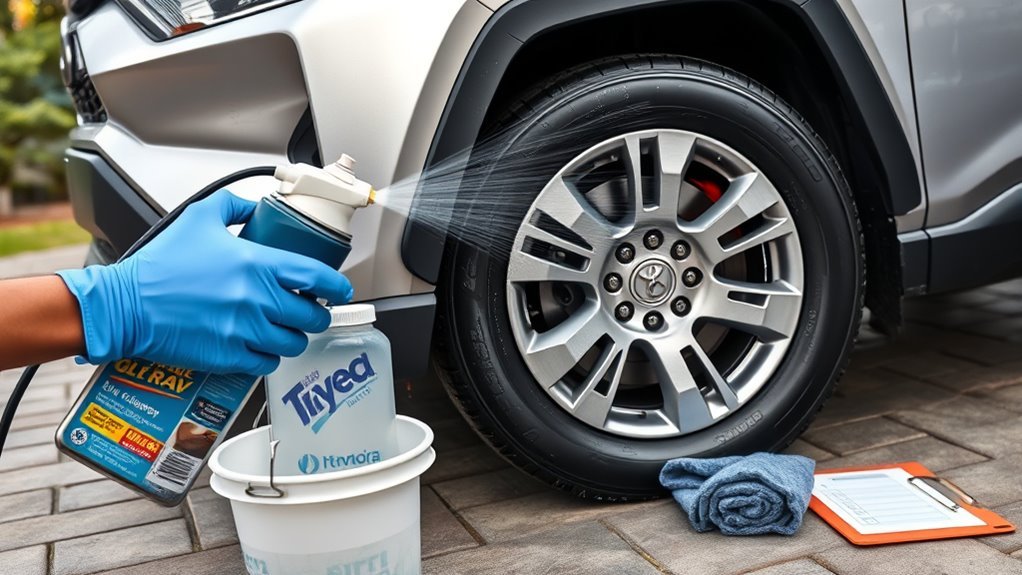
For normal driving, clean RAV4 tires and wheels every 2–4 weeks. Clean sooner after road salt, mud, beach sand, construction dust, or a long trip with heavy brake-dust buildup. If the vehicle is mostly parked indoors and the wheels stay clean, you can stretch the interval, but do not let brake dust or salt sit for months.
After cleaning, do three quick maintenance checks:
- Check tire pressure cold. Toyota says cold pressure readings are accurate after the vehicle has been parked for at least 3 hours or driven less than 1 mile / 1.5 km. Use the driver-door placard or owner’s manual, not the maximum pressure printed on the tire sidewall. See Toyota’s tire-pressure guidance here: Toyota RAV4 tire inflation pressure.
- Measure tread depth. Use a tread-depth gauge. Built-in wear bars typically indicate the 2/32-inch worn-out point, but plan earlier replacement around 4/32 inch if you drive in heavy rain often. AAA’s wet-road testing is summarized here: AAA worn tire testing.
- Rotate on schedule. Follow your RAV4 maintenance guide. A practical range for many Toyota vehicles is every 5,000–7,500 miles, but your model year, tire type, road conditions, and driving habits can change the ideal interval.
Keep a simple note in your phone with the cleaning date, tire pressure, tread depth, rotation mileage, and any unusual wear. This turns wheel cleaning into a quick inspection habit instead of just a cosmetic wash.
Frequently Asked Questions
Is Dawn a good tire cleaner?
Dawn can remove light grime in a pinch, but it is not the best routine tire cleaner. For regular RAV4 tire care, use a cleaner made for automotive tires, rinse thoroughly, and avoid letting soap dry on rubber or wheels. If you use dish soap on wheels, keep it mild, rinse immediately, and do not use abrasive tools.
Is WD-40 good for cleaning tires?
No. WD-40 Multi-Use Product is not a tire cleaner, and oily residue should never be used on tire tread. Use a dedicated tire cleaner for rubber sidewalls and rinse it off fully. If any slick product gets on the tread, wash it off before driving.
Is Simple Green safe to use on tires?
Some Simple Green automotive products are designed for tires and rims, but you should still spot test, work on a cool surface, follow the label, use short dwell time, scrub with the right brush, and rinse thoroughly. Do not assume every household degreaser is safe for every wheel finish or tire sidewall.
How often should I clean RAV4 wheels and tires?
Every 2–4 weeks works well for most drivers. Clean sooner after road salt, mud, sand, or heavy brake dust. If the wheels are lightly dusty, a gentle rinse and microfiber dry may be enough between full cleanings.
Can I use the same brush for tires and wheels?
It is better to use separate brushes. Tire sidewalls collect old dressing, rubber residue, and coarse grime. Using that same brush on a clear-coated or painted wheel can drag grit across the finish and create fine scratches.
Should I clean the tire tread?
You can rinse and brush mud, stones, and debris out of the tread, but do not apply dressing, shine, oil, or slick protectant to it. The tread is the contact patch, so it should stay clean and residue-free.
Conclusion
A safe RAV4 tire and wheel cleaning routine is simple: work in shade, clean only cool wheels, use neutral wheel-safe products, scrub wheels and tires with separate brushes, rinse completely, dry with microfiber, inspect for damage, and dress only the sidewalls if you want a finished look. Add cold tire-pressure checks, tread-depth checks, and scheduled rotations, and your wheel-cleaning routine becomes a practical safety habit as well as a cosmetic upgrade.
Sources
- Toyota RAV4 exterior cleaning guidance — backs up neutral detergent, cool-wheel, and avoid-harsh-cleaner advice.
- Toyota RAV4 tire inspection guidance — backs up tire inspection, treadwear indicators, and rotation/replacement guidance.
- Toyota RAV4 tire inflation pressure guidance — backs up cold tire-pressure checking.
- NHTSA TireWise — backs up tire safety, maintenance, and consumer tire-care guidance.
- AAA worn tire wet-road testing — backs up 4/32-inch wet-traction replacement planning.
- Simple Green tire cleaning directions — backs up spot testing, cool-surface cleaning, scrubbing, rinsing, and drying advice.

Related Articles

Why These 10 Wheel Locks Are Perfect for Your RAV4
Protecting your RAV4 starts before you lock the doors. Wheel theft is an avoidable cost and a hassle that interrupts your routine, and choosing…
Read More
10 Best 80000 Mile Tires for Rav4
You want tires that last, keep you safe, and save you money over the long run. Choosing 80,000 mile tires for your RAV4 matters…
Read More
10 Long Warranty Tires That Will Transform Your RAV4 Experience
You spend a lot of time behind the wheel of your RAV4, and the right tires change everything from ride comfort to fuel economy…
Read More