How to Use Glueless Tire Patches: Quick Repair Guide
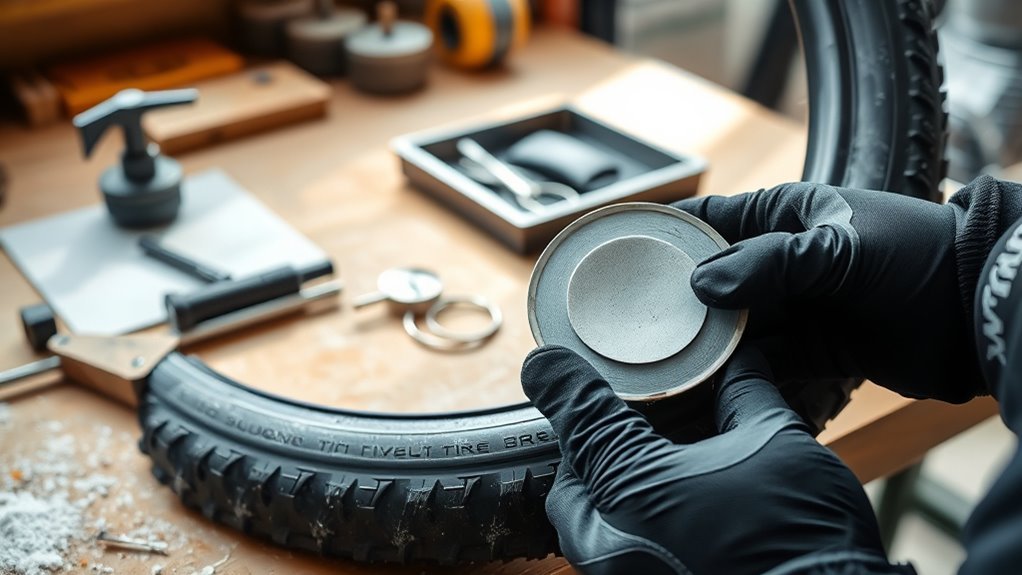
You can make a fast temporary repair to a small puncture using a glueless patch: inflate the tube so the hole is visible, locate the leak by listening or submerging, lightly abrade and alcohol‑clean the area, center a self‑adhesive patch, press firmly to expel air, then wait 10–30 minutes before mounting and inflating inside the tire. Monitor pressure frequently and replace the tube for large cuts or multiple punctures. Keep a compact kit and follow the full procedure below for tips.
Quick Answer: When to Use a Glueless Patch – And When Not To
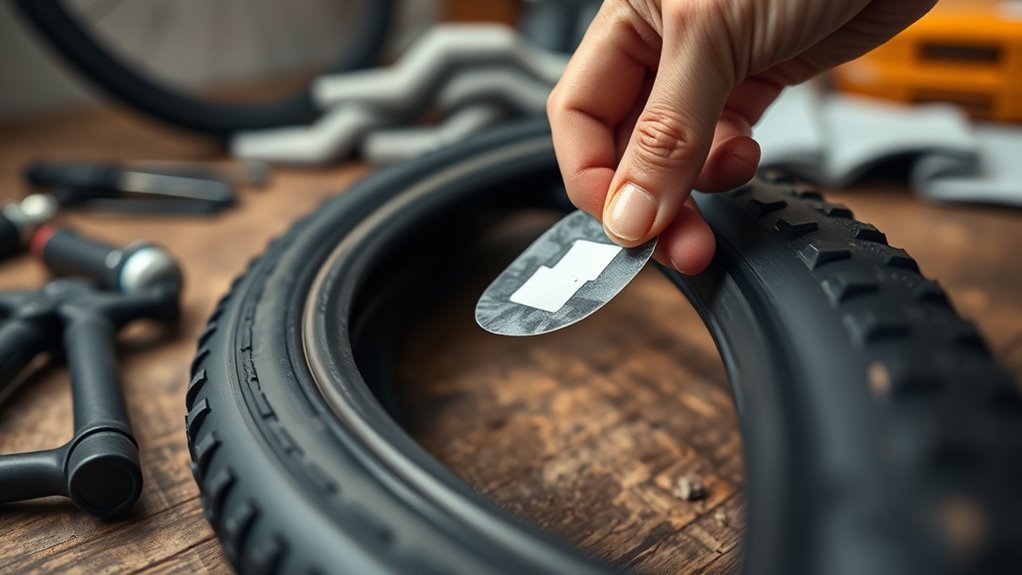
When you need a fast, emergency fix for a small puncture, use a glueless patch—but don’t treat it as permanent. You’ll apply these in emergency situations when speed and simplicity matter more than durability. Clean the puncture area, lightly scuff the tube, then position the patch to maximize contact. Expect reduced adhesion compared with vulcanizing patches; glueless options commonly fail under sustained pressure. Don’t rely on them for long term reliability or for large tears. After installing a glueless patch, monitor pressure frequently and replace the tube or fit a vulcanizing patch as soon as practical. For long rides, carry a spare tube: glueless patches are a last-resort stopgap, not a durable repair method.
Pack a Glueless Patch Kit
Pack a compact glueless patch kit that fits your pack or saddlebag without adding bulk, and include spare tubes for quick swaps when repairs aren’t feasible. Choose self-adhesive patches in multiple sizes that match your tube material, plus sandpaper and clear instructions. Check patch condition and expiry regularly so you’re not stuck with ineffective adhesive on the road.
Choose Compact Kit
A compact glueless patch kit gives you a lightweight, easy-to-use solution for roadside tube repairs and should be stowed where you can reach it quickly. Choose a kit that highlights compact benefits and portability features: low mass, small footprint, and organized compartments for patches and instructions. Verify it contains multiple self-adhesive patches sized for common punctures and clear application steps emphasizing tube cleaning and light scuffing for adhesion. Treat patches as temporary fixes; they’ll get you to a repair station or home but aren’t a guaranteed long-term solution under sustained pressure. Store the kit with basic tools, but keep spare inner tubes separate for longer rides. Inspect patch backing integrity before departure and replace kits with expired or damaged components.
Include Spare Tubes
If you’re heading out for a long ride, include at least one properly sized spare tube plus a compact glueless patch kit so you can choose replacement over temporary repair and minimize downtime. Pack the spare tube with a valve compatible with your rim and verify diameter and valve length before departure. Treat the glueless patch kit as repair essentials: multiple patch sizes, sandpaper, and alcohol wipe. In a puncture, swap to the spare tube for a reliable, immediate fix; reserve glueless patches for secondary use or when you can’t replace the tube. Store everything in a waterproof bag to prevent adhesive contamination and tube degradation. Inspect spare tube periodically for folds, nicks, and proper inflation capability to guarantee readiness.
How to Find the Puncture Fast
How can you locate a puncture quickly? Inflate the inner tube to at least twice its normal width so the defect widens and’s easier to detect. Use a methodical sweep—listen, look, submerge—and mark the site precisely. These steps also support puncture prevention and routine maintenance tips by revealing weak spots before they worsen.
Inflate the tube well, then listen, inspect, and submerge—mark the leak to spot weak spots early.
- Listen: use your lips or ear to detect escaping air; move slowly along the tube to find faint leaks.
- Inspect visually: scan the entire surface, including sidewall areas; don’t assume damage is only in the tread.
- Submerge: place the inflated tube in water and watch for bubbles; mark the hole with four pen dots for accurate reference.
Prepare the Tube Surface for Adhesion
Scuff the tube surface lightly with sandpaper or an abraider, then clean and dry the area thoroughly before applying the glueless patch. Inflate the tube to at least twice its normal width so the puncture is visible and easier to access. Locate the hole, mark it with a pen, then scuff a circular area around the mark to remove glossy finishes and create micro‑abrasions for mechanical grip. Perform surface cleaning using a rag and a degreasing agent to remove grease, dirt, and talc; rinse or wipe until contaminants are gone. Allow the tube to dry completely; moisture compromises bond strength. Confirm the marked spot remains centered and unobstructed to guarantee accurate patch placement. Proceed only when the surface is clean, dry, and properly abraded.
Step‑by‑Step: Apply a Glueless Patch Correctly
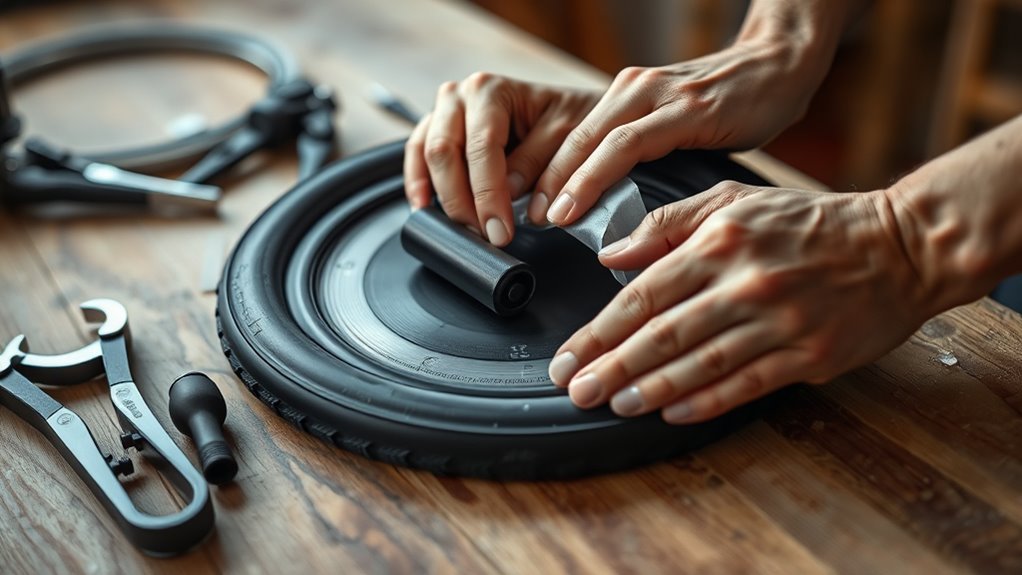
Begin by confirming the tube is inflated to at least twice its normal width so the puncture is visible, then lightly abrade the marked area, clean it with alcohol, and let it dry completely. You’ll proceed methodically to maximize patch durability and follow tire maintenance best practices.
- Peel the backing carefully, touching only edges; align the patch centered over the hole to prevent misplacement.
- Press firmly with your thumbs, rolling from center outward to expel air and achieve full contact; avoid creases or bubbles.
- Reinstall the tube into the tire before inflating; inflating outside the tire can stress the bond and reduce patch durability.
Work deliberately; contamination or misalignment compromises the repair and future tire maintenance.
Testing Glueless Patches : Wait Times & Checks
Now that the patch is pressed and the tube is back inside the tire, wait before you inflate. Wait 10–30 minutes for adhesion; this improves patch longevity. Then perform systematic checks: visually inspect and feel for gaps or air pockets, avoiding inflation outside the mounted tire. For leak detection submerge the patched area in water and watch for bubbles. If bubbles appear or adhesion is poor, replace the tube.
| Step | Action | Criteria |
|---|---|---|
| 1 | Wait | 10–30 min |
| 2 | Visual | No gaps |
| 3 | Tactile | No air pockets |
| 4 | Inflate | Mounted tire only |
| 5 | Water test | No bubbles |
Follow this methodical sequence for reliable temporary repairs.
Why Glueless Patches Fail : And How to Stop It
You’ll see most failures trace back to three controllable causes: poor surface preparation, adhesive aging, and improper application technique. Clean, lightly abraded rubber and a fresh patch reduce air gaps and help adhesion under pressure and temperature swings. Apply with even pressure, avoid stretching the patch, and replace old stock to minimize premature loss of grip.
Poor Surface Preparation
When glueless patches fail, it’s almost always due to poor surface preparation: lightly scuff the tube with fine sandpaper, wipe away grease or talc, and stretch the rubber slightly across the puncture so the adhesive can bond to a clean, textured surface. You must eliminate surface contaminants and apply consistent technique to maximize patch longevity. Follow this methodical sequence:
- Scuff: Use fine sandpaper to roughen a 1–2 cm area; this creates a reliable bonding profile.
- Clean: Remove oils, talc, and debris with a solvent-free wipe; allow the rubber to dry—no residue tolerated.
- Tension: Slightly stretch the tube while seating the patch to expel air and guarantee intimate contact.
Skip any step and you risk glue-channel leaks and premature failure.
Adhesive Aging Effects
Because the pressure, heat, moisture, and UV exposure your patch sees accelerate polymer breakdown, glueless adhesives tend to lose tack and cohesive strength far sooner than vulcanizing compounds. You’ll note adhesive lifespan is limited: lab and field reports show tack decline and bond creep after weeks under cycling loads. Environmental factors — repeated flexing, water ingress, and sunlight — cleave polymer chains and leach plasticizers, reducing shear resistance. Inspect patches regularly for lifting, edge darkening, or softening; these are signs of adhesive aging that precede sudden leaks. To mitigate failure, store spare patches dry and shaded, fit only when surfaces are dry and temperature within product spec, and plan short-term fixes rather than assuming permanent repair with glueless systems.
Improper Application Technique
If you don’t prepare and apply a glueless patch correctly, adhesion problems and leaks follow quickly. You must follow precise patching techniques and adhesion tips to avoid failure. Surface prep needs scuffing and cleaning; skip it and the patch won’t bond. Inflate the tube to its in-tire shape before you work so the patch lays true. Apply firm, even pressure to expel air and seat the patch; inadequate pressure lets air escape through the glue layer. Remove center bubbles immediately to prevent weak points. Follow manufacturer instructions—variations cause inconsistent results.
- Scuff, clean, and dry surface thoroughly.
- Inflate to in-tire size, then position and press firmly.
- Smooth center, remove bubbles, verify instructions.
When to Replace the Tube Instead of Patching
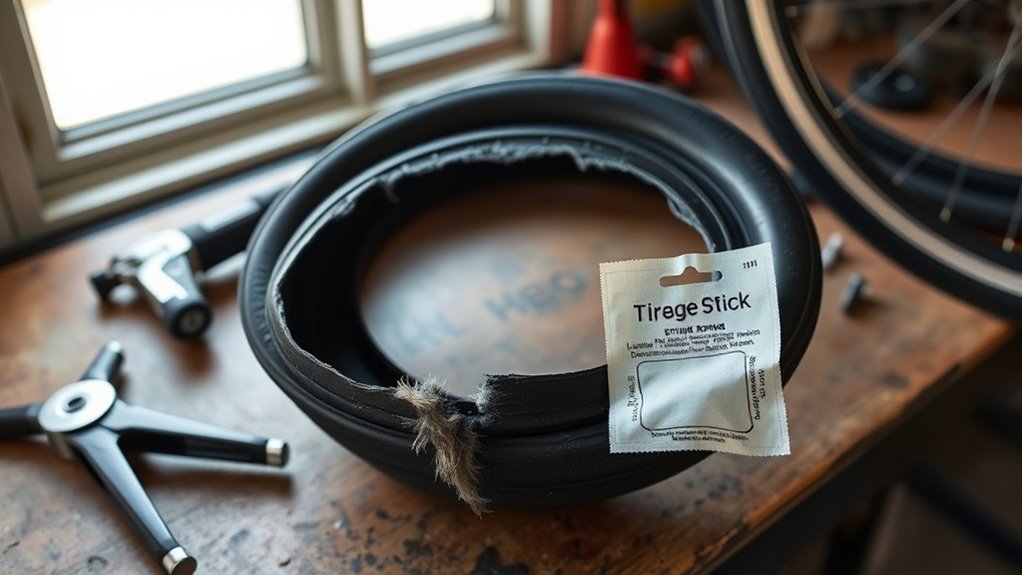
Although patches can fix many flats, you should replace the tube when the damage exceeds what a glueless patch can reliably seal: holes larger than a quarter-inch, multiple punctures—especially clustered within a few inches—visible cuts or tears, or extensive wear. During puncture assessment, inspect diameter, count punctures, and measure spacing; clustered or numerous repairs reduce tube longevity and increase failure risk. Replace any tube with preexisting self-adhesive patches to avoid compounding repairs. For commuting or long rides, prefer a fresh spare tube over patched tubes—patches are temporary. When damage is borderline, err on the side of replacement: a new tube restores original strength, simplifies maintenance, and minimizes roadside failures. Carry one spare and basic tools.
Using a Tire Boot for Torn Casings (Temporary Fix)
If you tear the tire casing, use a tire boot to protect the tube from the exposed inside and restore temporary structural support. Clean the interior around the rip, center the boot over the damage, peel the backing, and press firmly so it seats snugly. Treat this as a short-term safety measure: inspect the boot frequently and replace the tire as soon as possible.
Inside Tire Protection
When a tire casing rips, you’ll use a tire boot as a temporary inside patch: locate the tear and verify the boot size matches the damage. Clean the interior around the rip thoroughly; contaminants reduce adherence and compromise tire durability. Peel the boot backing and position it centered over the tear, then press firmly to eliminate air pockets.
- Inspect rip size and pick matching boot — maintenance tips demand correct sizing.
- Clean and dry inside surface — any residue reduces bond strength.
- Align, apply, and press firmly — confirm full contact with no blisters.
This methodical, technical approach preserves the casing temporarily. Note that a boot is a stopgap; replace the tire promptly to restore full structural safety.
Temporary Safety Measure
Having prepared the inside of the tire and sized a boot to the rip, you can apply a tire boot as a short-term safety measure for a torn casing. Locate the rip, clean surrounding rubber, peel the backing, center the boot, and press firmly. Re-inflate to recommended pressure and limit use; this is a temporary solution within tire maintenance protocols. Replace the tire promptly; don’t rely on the boot for long distances. Monitor pressure and inspect the booted area before each trip.
| Step | Action | Note |
|---|---|---|
| 1 | Locate rip | Verify size |
| 2 | Clean area | Remove debris |
| 3 | Apply boot | Center and press |
| 4 | Re-inflate | Set correct PSI |
| 5 | Replace tire | Permanent repair needed |
Pack and Maintain Glueless Patches for Rides
Pack a few glueless patches in your repair kit and check them before every ride so you can perform a rapid repair without glue or drying time. You’ll want systematic checks for patch storage and patch expiration to guarantee reliability. Store patches in a cool, dry compartment away from sunlight and heat sources to preserve adhesive integrity. Verify expiration dates and discard any beyond their listed life.
Pack glueless patches, store them cool and dry, check expiration, and practice repairs for fast, reliable roadside fixes.
- Inspect: confirm sealed pouch, no moisture, and visible expiration date.
- Practice: apply a patch at home to build speed and avoid mistakes under stress.
- Maintain: keep tire pressure within spec to reduce puncture risk and reliance on patches.
Follow this routine so patches perform predictably when you need them.
Frequently Asked Questions
How Long Do You Let Tire Patch Glue Dry?
You should let tire patch glue dry until tacky—typically 5–10 minutes—to optimize patch adhesion; after applying the patch, let the repair cure at least 30 minutes before reinflating, adjusting drying time for temperature and humidity.
Conclusion
Glueless patches give you a fast, reliable fix when the hole’s clean, small, and the tube’s otherwise sound. Pack a kit, find the puncture quickly, and prep the rubber so the patch bonds—press firmly and hold for full contact. If the cut is large, the valve’s damaged, or the casing’s shredded, replace the tube. Treat glueless patches like a precision tool: used correctly they’re as effective as a spare wheel in your pack.
Related Articles
How to Read Motorcycle Tire Size: Complete Breakdown
Often misunderstood, this guide decodes motorcycle tire sizes like 180/55ZR17—learn what each number and letter means to ensure safe, perfect fitment.
Read More
How to Read Bicycle Tire Size: Inches, Metric & ISO
Get the essential trick to decoding ETRTO/ISO codes so you’ll always pick rim-compatible tyres—discover what to check next.
Read More
How to Read Tire Size Numbers: Decode the Sidewall
Step-by-step guide to decode tire sidewalls—sizes, load, speed, DOT and winter symbols—so you’ll know what fits and when to replace.
Read More