How to Use a CO2 Cartridge to Inflate a Bike Tire Fast
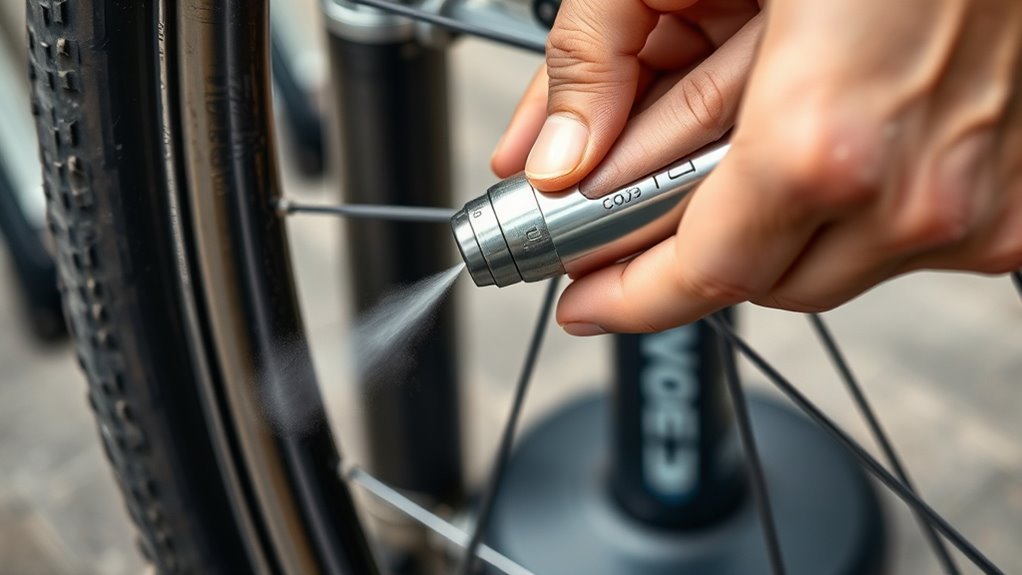
Grab a matched CO₂ inflator and cartridge, confirm valve type (Presta/Schrader) and tire integrity, then screw or press the head firmly onto the valve. For threaded heads, puncture by turning the cartridge; for non‑threaded, press to release—use flow‑control if available to avoid overshoot. Inflate in 1–2 seconds, check bead seating and PSI with a gauge, reseat or top up if needed, wear gloves for cold, and keep spare cartridges; continue for detailed tips and troubleshooting.
Quick 60‑Second Fix: Inflate a Tire With CO₂
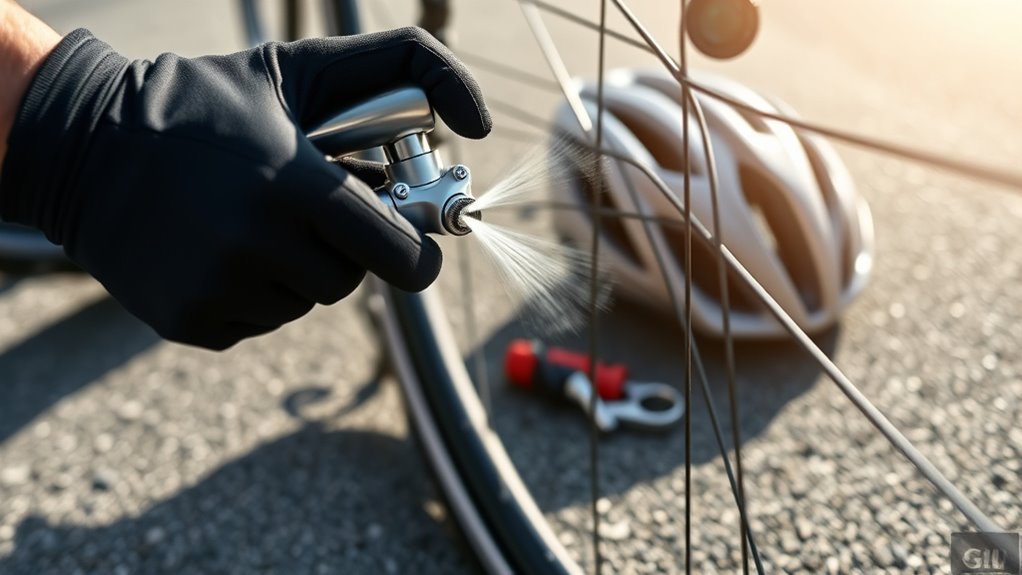
Grab a fresh CO₂ cartridge and confirm your tire and tube are intact, then firmly attach the inflator to the valve. You check the tube for punctures and replace it if needed, then secure the inflator so no gas escapes during engagement. Screw in the cartridge to release gas; inflation completes in 1–2 seconds and can spike to ~110 PSI with a 16g canister, so hold the wheel steady and control the valve if your inflator allows metering. Immediately verify tire seating and inspect for bulges or leaks; adjust if bead hasn’t seated. Carry extra cartridges and practice deployments to reduce fumbling. Treat this as core emergency preparation: fast, repeatable steps keep you rolling and prevent unsafe pressures or improper seating.
CO₂ Inflator Kit: Parts, Cartridges, and Valve Types
You’ll first want to identify the inflator head type—threaded vs. non-threaded and flow-control vs. single-burst—since that determines ease of use and pressure management. Match cartridge size (12g, 16g, 20–25g) to your tire’s volume and max PSI so you don’t under- or over-inflate. Finally, check valve compatibility (Presta vs. Schrader) and carry the appropriate adapter to guarantee a secure connection.
Inflator Head Types
There are two main CO₂ inflator head designs you’ll encounter: flow-control heads that let you meter gas for precise pressure and non-flow-control heads that dump a cartridge in one quick burst. Choose flow-control if you need fine pressure management and to avoid overinflation; it slows inflation speed so you can top off accurately. Non-flow-control heads maximize inflation speed for rapid roadside fixes but require practice to avoid waste. Match head threads to threaded cartridges for easiest use; non-threaded systems are faster to swap but less secure. Confirm compatibility with Presta or Schrader valves before riding. Store cartridges upright in cartridge storage that protects threads and prevents accidental discharge. Position the cartridge vertically during setup for full gas release.
Cartridge Sizes Explained
Because tire volume and target pressure vary, choosing the right CO₂ cartridge size matters: 16g cartridges will top off most road tires up to about 110 PSI, 20g works well for typical mountain-bike tubes (around 30 PSI), and 25g or larger is best for high-volume or fat-bike tires that need pressures above 120 PSI. You should match cartridge types to tire volume and desired PSI to avoid under- or over-inflation. Threaded cartridges screw into inflators for repeatable connections; non-threaded are often one-time-use and need a compatible head. Use vertical orientation during discharge to maximize gas flow. Prefer inflators with flow control so you can modulate release for precise inflation techniques; non-flow models dump gas instantly and risk overshooting pressure.
Valve Compatibility Guide
One- to two-minute check: match your inflator head, cartridge type, and valve stem before you need to inflate. Confirm whether your wheel uses Presta or Schrader valve and select an inflator head that fits both or a dedicated Presta adapter. Threaded cartridges give a secure connection; verify cartridge size compatibility with the nozzle—12g, 16g, 25g matter for volume and pressure. Use 16g for road tires (up to ~110 PSI), 25g for larger volumes. If your inflator has flow control, meter release to avoid overinflation; non-flow heads dump rapidly, so brace the tire. Keep inflation tips simple: bleed small bursts, recheck pressure, then top off. Store cartridges dry and cool—cartridge storage affects performance and safety.
Pick the Right CO₂ Cartridge Size for Your Tire
Match the cartridge to your tire by selecting a CO₂ size that provides the pressure and volume you need. For typical road tires a 16g cartridge reaches up to ~110 PSI, mountain tires often use 20g for ~30 PSI, and larger-volume or fat tires benefit from 25g cartridges. Test cartridges at home and confirm compatibility with your inflator—threaded cartridges are usually easier to use.
Match Cartridge To Tire
When picking a CO₂ cartridge, match its size to your tire volume and target pressure: 16g for most road tires (up to ~110 PSI), 20g for typical mountain-bike setups (around 30 PSI), and 25g for high-volume fat-bike tires.
You’ll select based on tire pressure targets and cartridge compatibility with your inflator head. Use 16g for quick, high-pressure fills on narrow road tubes; choose 20g when you need moderate pressure without wasting gas on MTB casings; pick 25g for fat tires where volume demands extra gas. Prefer threaded cartridges for reliable seals and easier control. Test at home to confirm the cartridge yields your desired pressure and that your inflator mates securely. Carry a spare if you expect multiple roadside fills.
Consider Tire Volume
Because tire volume dictates how much gas you need, pick a cartridge sized to your wheel: 16g for most road tires (up to ~110 PSI), 20g for typical mountain-bike setups (~30 PSI), and 25g for fat or high-volume tires. You should test at home to confirm exact tire pressure needs, since rim width, tire casing, and tube type change required gas. Use 16g for low-volume, high-pressure road setups; 20g covers common MTB volumes at lower PSI; 25g handles large-volume or fat tires without underinflation. Selecting the right cartridge reduces risk of overinflation that can damage tubes and complicate roadside repairs. Track inflation frequency—higher-frequency users may carry multiple cartridges or larger sizes to match repeated fills.
Quick Prep Checklist Before Using CO₂
Before you start, confirm the cartridge size (12g, 16g, or 25g) matches your inflator and the pressure needed for the tire, and check that you’ve removed any remaining air and inspected the casing for debris or sharp objects. You’ll follow basic tire maintenance and proven inflation techniques: prep the tube, verify valve type, and stage backups.
| Item | Action | Check |
|---|---|---|
| Cartridge | Verify size | Compatible with inflator |
| Tube | Insert slight air | Shapes tube for CO₂ |
| Valve | Identify type | Schrader/Presta fit |
| Spares | Carry extras | 1–2 cartridges more |
Confirm your inflator’s attachment method now so you won’t fumble when inflating. Keep spare cartridges for larger volumes and repeatable pressure targets.
Step‑By‑Step: Attach Inflator and Release CO₂
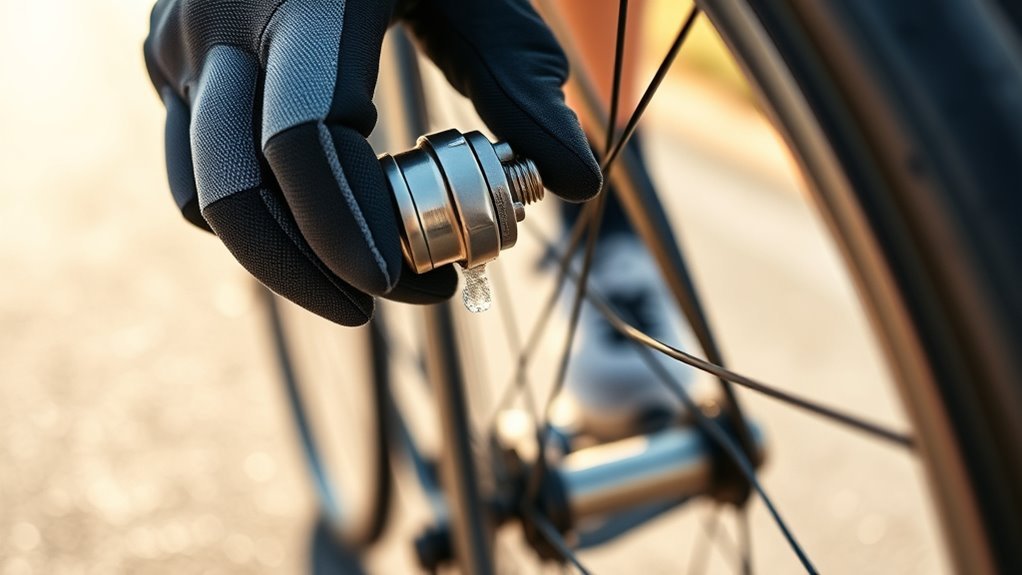
With your cartridge size confirmed and the inflator ready, firmly seat the inflator on the valve (ensuring correct alignment for Schrader or Presta) to prevent leaks; then screw the CO₂ cartridge into the inflator until you hear a hiss indicating the seal has been pierced. Keep a gloved hand on the cartridge—CO₂ gets cold—and position the tire so you can observe inflation. Engage the release lever or button briefly; most inflation techniques call for a controlled, short burst since tires fill in 1–2 seconds. Monitor for hissing that indicates improper seal or thread issues. Once inflated, shut the valve, remove the inflator, and replace the valve cap. Follow safety tips: handle cartridges cold, dispose of spent cartridges responsibly, and avoid prolonged skin contact.
Check the Tire: Seating, PSI, and Top‑Off Tips
1 check you should do before riding is to confirm the tire is properly seated and at the right pressure. Perform a quick tire inspection: verify the bead sits evenly on both rim walls, look for embedded debris or cuts, and confirm there are no bulges. Use a pressure gauge for pressure verification; match PSI to tire type (road high, MTB low). CO₂ gives a rapid fill but can cool and leak, so don’t trust cartridge inflation alone. After releasing CO₂, re-check bead seating and gauge the pressure. If readings are low or variable, top off with a hand pump to reach target PSI and stabilize the seal. Finish with a visual spin and squeeze test to confirm even seating and no leaks.
CO₂ for Tubeless Tires : Sealing & Plugging Fast
Use CO₂ cartridges to rapidly seat tubeless beads and drive sealant into a puncture, then plug larger cuts before pressure equalizes. You’ll attach the inflator to the valve, insert the cartridge, and release a controlled burst to snap the tire bead into the rim. That burst forces sealant toward the hole, aiding puncture sealing immediately.
Have the Lezyne tubeless kit (five plugs, hardened steel reamer) ready. Ream the wound if ragged, insert a plug, then top up pressure with a 16g (road), 20g (most MTB), or 25g (large-volume) cartridge as required. Practice the sequence so you can re-seat the bead, mobilize sealant, and install a plug in under a minute during emergencies.
Cold Safety, Hand Protection, and Cartridge Disposal
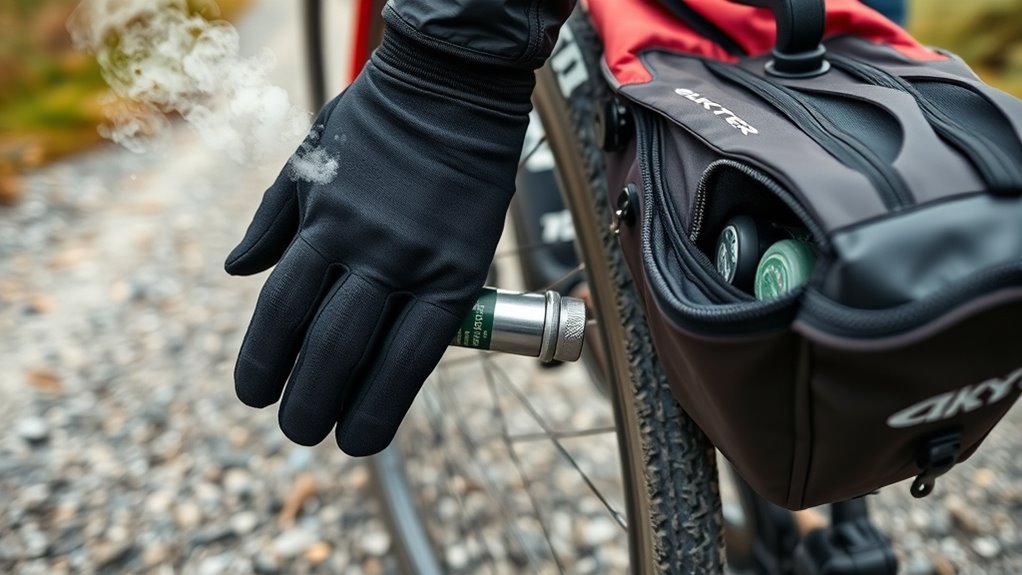
Because CO₂ cools rapidly as it expands, protect your hands and skin by wearing gloves or using a sleeve when handling cartridges and inflators—failure to do so can cause frostbite or painful cold burns. You’ll check compatibility (threaded vs non-threaded), close the valve after use, and use a barrier to avoid skin contact. Practice cold injury prevention: limit exposure time, avoid direct contact, and inspect skin after deployment.
| Topic | Action |
|---|---|
| Hand protection | Gloves or fabric sleeve |
| Cartridge type | Prefer threaded for reliability |
| Post-use valve | Close to maintain pressure |
| Disposal | Recycle when possible |
Discard emptied cartridges responsibly to support cartridge recycling awareness and prevent littering or misidentification as paraphernalia.
Troubleshooting: Leaks, Underfill, and Malfunctions
If the tire won’t hold pressure, first check the valve connection for proper seating and tightness against the inflator. If pressure is low after use, you may have used an undersized cartridge for the tire volume—swap to a larger gramage. If the cartridge or head gets excessively cold and won’t release CO₂, inspect for blockages and warm the head briefly while wearing gloves before retesting.
Valve Connection Issues
1 common cause of failed CO₂ fills is a poor valve connection—make sure the inflator is firmly seated before you puncture the cartridge, since a loose or mismatched attachment will leak or vent pressure and give an underfilled tire. Do valve maintenance: clear debris, inspect for damage, and confirm threads match the cartridge. Use controlled inflation techniques; prefer flow-control inflators to avoid rapid venting. If underfill occurs, swap to a fresh cartridge and recheck the seal. Inspect both inflator and cartridge for compatibility and visible faults.
| Issue | Cause | Fix |
|---|---|---|
| Leak at stem | Debris/damage | Clean/replace valve |
| Thread mismatch | Incompatible parts | Use matched inflator |
| Rapid venting | No flow control | Use flow-control tool |
| Underfill | Low cartridge pressure | Replace cartridge |
Insufficient Cartridge Volume
When you find a tire underfilled after a CO₂ burst, insufficient cartridge volume is a common cause and needs a fast, systematic check: confirm cartridge compatibility with your tire size and target PSI. A single 16g cartridge typically reaches about 110 PSI in narrow road tires; larger volume tires will need multiple cartridges or a larger canister. Inspect valve and bead for leaks—small leaks will bleed pressure quickly and mimic underfill. Verify the cartridge is threaded fully into the inflator and the release mechanism functions; a partial puncture can limit output. Test inflation techniques at home to measure how many cartridges your setup requires. Remember CO₂ dissipates faster than air, so rapid post-fill drop also suggests leakage or insufficient volume.
Cold Cartridge Malfunction
After checking cartridge size and valve seals, you’ll also need to account for cold-induced cartridge malfunction: rapid cooling during discharge can contract gas and stiffen seals, causing weak fills or leaks. In cold conditions, temperature effects reduce pressure and make seals brittle; you’ll see underfill or sudden leaks if a cartridge cools too fast. For reliable cartridge handling, wear gloves and pre-warm the cartridge briefly in your hands or a pocket before use. Inspect cartridges and inflator for dents, corrosion, or worn O-rings; replace any suspect components. Verify a tight connection to avoid partial discharge from a loose fit or a partially used canister. If malfunction persists, swap cartridges and test the inflator on a spare tube to isolate failures.
When to Carry CO₂ vs. a Pump (Ride‑Type Guide)
Choice matters: carry a CO₂ inflator when speed and one-shot convenience matter—urban commutes, races, or long solo rides—because a cartridge will top a tire in 1–2 seconds and quickly reseat tubeless beads; bring a frame pump for relaxed rides, group outings, or trips where you might face multiple flats, since pumps give unlimited air without recurring cartridge costs.
For urban biking and competitive settings you want rapid restoration: CO₂ handles emergency punctures and reseating tubeless beads fast, minimizing lost time. For leisurely rides and group rides choose a pump: it’s reusable, avoids per-use cartridge expense, and lets you assist others. If you expect multiple flats, long remote routes, or prefer redundancy, pack a pump. For races or long solo efforts, carry CO₂ and at least one spare cartridge.
Frequently Asked Questions
How Much CO2 to Inflate a Bike Tire?
You need about 16g for road, 20g for mountain, and 25g for fat tires; test at home, carry spare cartridges, and use compatible inflator—cartridge types and inflation tips guarantee you reach desired PSI quickly and safely.
Can You Use CO2 to Air up Tires?
Yes — you can use CO2 to air up tires. You’ll benefit from CO2 benefits like rapid Inflation speed for quick roadside fixes, especially tubeless setups, but note pressure loss over time and limited refill control compared to pumps.
How Many CO2 Cartridges Does It Take to Fill up a Motorcycle Tire?
Often two 25g cartridges will fill a motorcycle tire to typical motorcycle tire pressure; for example, a rider used two 25g cartridges to reach 36 PSI. Check motorcycle tire pressure and CO2 cartridge sizes before inflating.
Conclusion
So you want instant tire nirvana? Grab the right cartridge, attach it properly, and don’t pretend freezing metal in your palm is fun—wear gloves. CO₂ won’t replace patience or a pump’s precision; it’s a desperate, glorious shortcut for quick rides, races, or saving face. Use it when speed matters, respect valve types, seat seals on tubeless, and dispose of empties responsibly. Rely on CO₂ smartly—don’t make it your lazy habit.
Related Articles
How to Read Motorcycle Tire Size: Complete Breakdown
Often misunderstood, this guide decodes motorcycle tire sizes like 180/55ZR17—learn what each number and letter means to ensure safe, perfect fitment.
Read More
How to Read Bicycle Tire Size: Inches, Metric & ISO
Get the essential trick to decoding ETRTO/ISO codes so you’ll always pick rim-compatible tyres—discover what to check next.
Read More
How to Read Tire Size Numbers: Decode the Sidewall
Step-by-step guide to decode tire sidewalls—sizes, load, speed, DOT and winter symbols—so you’ll know what fits and when to replace.
Read More