How to Mount a Tire on a Rim at Home: DIY Tutorial
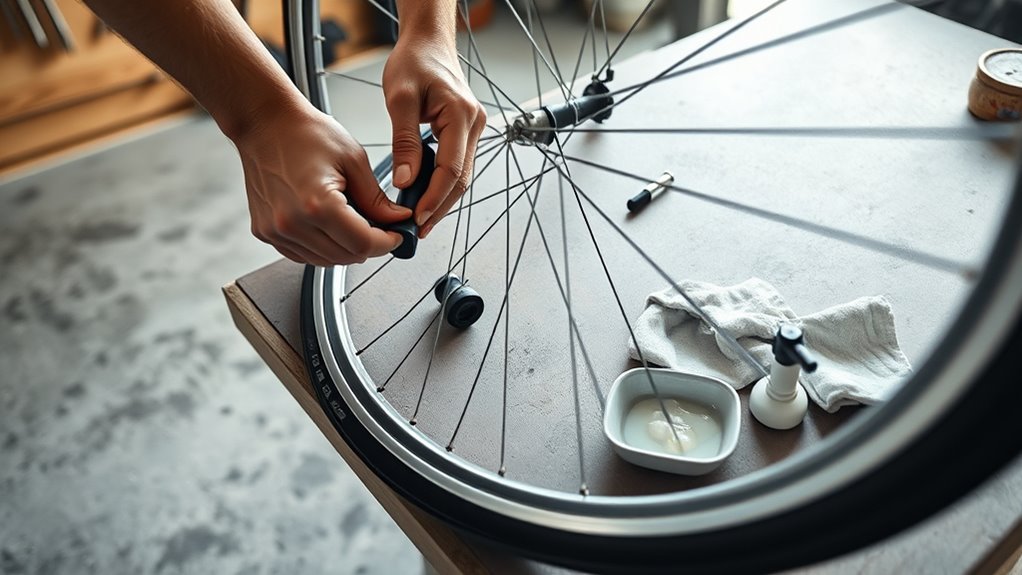
You can mount a passenger tire at home with care: confirm tire/rim compatibility, clean and inspect the rim, lubricate beads with soapy water, and use tire irons or a manual changer to remove the old tire and lever the new bead onto the rim while protecting the tube if present. Seat beads in the drop center, tap gently with a rubber hammer, and inflate slowly to recommended PSI while checking for leaks and pinches. Continue for detailed step-by-step tips and troubleshooting.
Can You Mount This Tire at Home? Quick Checklist
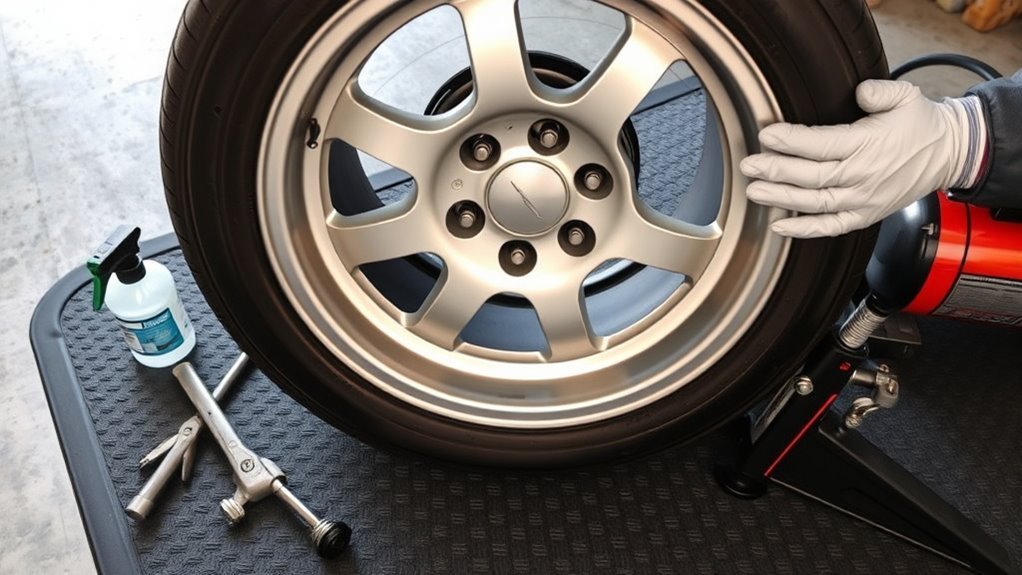
Start by confirming you’ve got the right tools and fit: check the tire size against the rim specs, grab tire irons, a manual tire changer and a dead‑blow hammer, and have soapy water ready as a lubricant. First, verify tire compatibility—match width, diameter, and load rating to the rim and vehicle. Inspect rim condition for bends or corrosion that can prevent proper bead seating. Lay out tools and clear a flat, well‑lit workspace. Use soapy water on bead and rim to ease mounting; don’t overuse—excess can hide leaks. Mount one bead into the rim drop center so the opposite bead stretches in more easily. After inflation at low pressure, confirm both beads are fully seated and check for air leaks before final inflation.
Tools & Supplies : Home Essentials (No Shop Machine)
Gather the essential hand tools—tire irons, a Schrader valve removal tool, and Vise Grips—so you can work securely and control airflow during inflation. Keep a large rubber mallet and a sturdy work surface (vice or tractor loader) nearby to help seat stubborn beads without risking damage. Mix tire soap or soapy water as a lubricant to let the bead slide smoothly over the rim and reduce force required.
Essential Hand Tools
1 key to mounting a tire safely at home is having the right hand tools: tire irons (not screwdrivers) and a manual tire changer to protect tubes and simplify work, a 3–4″ dead blow hammer to seat beads without damage, Vise Grips to prevent bead slippage, tire soap or soapy water as a lubricant, and a Schrader valve removal tool to maximize airflow during inflation. Lay out tools, inspect for wear, and follow tire maintenance tips: keep irons smooth, check the changer’s clamps, and confirm the hammer faces are undamaged. Use Vise Grips to hold bead position while you work both sides. Remove the valve core before inflation, then seat beads steadily. Observe safety precautions: eye protection, gloves, and controlled inflation.
Lubricants And Accessories
When you mount a tire at home, using the right lubricants and accessories makes the job faster and safer: use tire soap or a soapy water mix to lubricate the bead so it slides over the rim—tire soap benefits include reduced pinch risk and easier mounting techniques. Use a manual tire changer to simplify labor without shop machinery. Keep a Schrader valve removal tool handy to maximize airflow for quick bead seating during inflation. Use Vise Grips to prevent bead slippage while you work, and a dead blow hammer with a 3–4 inch head to seat the bead without damage on smaller tires. Inspect tools before use, wear eye protection, and work slowly to maintain control and avoid injury.
Prepare the Wheel and Tire for Safe Mounting
Before you start mounting, thoroughly prepare the wheel and tire to prevent damage and guarantee a safe fit: Clean the rim with a wire brush to remove rust and debris so the bead seats on a smooth surface. Inspect the tire for cuts or punctures and verify rim/tire size compatibility. Apply tire soap or soapy water to rim and bead to ease sliding, and position the valve stem correctly to avoid pinching. Set the tire bead in the rim’s drop center before stretching it over the edge.
- Check rim surface and remove corrosion for tire safety and proper seating.
- Confirm tire condition and size to prevent fitment issues.
- Lubricate bead and rim using recommended mounting techniques.
Remove the Old Tire From the Rim, Step by Step
Now that the wheel and tire are prepped and lubricated, you can start removing the old tire. Apply liquid soap around the bead to aid sliding. Tuck the opposing side of the tire under the rim edge so one side stays low while you work. Insert a tire iron between bead and rim, then work around the rim in one direction using consistent motion—this is a core tire removal technique. Keep the tube supported and avoid pinching or puncturing it as you go. After loosening, leverage the tire iron to carefully pry the bead over the rim lip, maintaining control to prevent sudden releases or rim damage. Follow these tire maintenance tips: move slowly, keep hands clear of pinch points, and stop if resistance feels abnormal.
Position and Lubricate the New Tire Beads
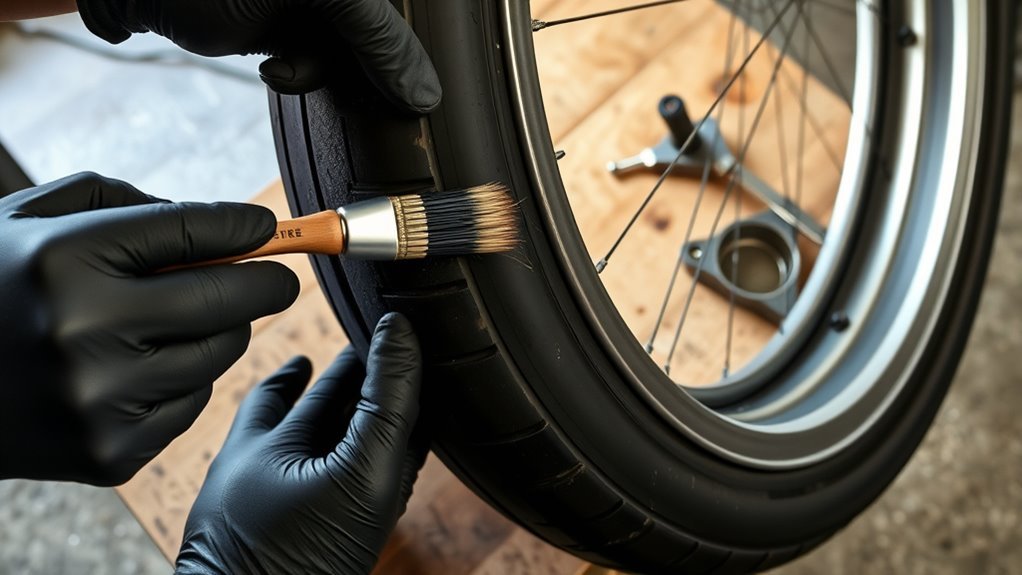
Set the tire upright and align one bead with the rim’s drop center so it sits low and easier to work; apply a thin layer of dish soap or tire lubricant to the bead and rim to reduce friction. Position the opposite bead in the rim’s deep center so it stays below the edge—this Bead alignment makes stretching the tire safer and more controlled. Use Lubrication techniques sparingly; too much soap can drip, too little creates drag.
- Check bead seating frequently as you work to maintain alignment.
- Work the bead in small increments, keeping pressure toward the drop center.
- Keep hands and tools clear of pinch points; wear gloves for grip.
Confirm even seating before proceeding to mounting steps.
Mount the Tire Using Tire Irons (Safe Technique)
Start by seating one bead in the drop center and use one tire iron as a steady anchor while you lever the opposite bead over the rim, working around in a single direction. Keep the other iron placed shallow and flat against the rim flange to avoid cutting the tube, and push the opposite side of the tire down under the rim edge to create slack. Soap the bead for easier sliding and watch the tube as you work to prevent pinches or punctures.
Proper Tire Iron Placement
When you mount a tire with irons, position the first iron and work consistently in one direction around the rim to apply steady leverage and avoid damaging the bead or rim; hold that iron while you insert a second opposite it so the tire edge stays tucked under the rim, use tire soap to ease the bead over the lip, take care to keep the irons clear of any inner tube, and finally check that the bead sits evenly around the entire circumference. You place irons with controlled movements, using proven tire iron techniques and deliberate leverage application. Hold the first tool steady, insert the second opposite, then walk the bead around the rim in small steps. Keep irons away from any tube, reapply soap as needed, and verify even seating before inflation.
- Controlled steps
- Opposing support
- Verify bead seating
Preventing Tube Pinches
Now that you’ve got the irons placed and the bead walking around the rim, focus on preventing tube pinches by keeping the tube visible and the tools moving in one direction. Work clockwise (or counterclockwise) only, holding one iron steady to let the opposing side sit under the rim edge. Watch tube positioning at all times—keep the tube pulled slightly inward from the bead so it can’t get trapped between tire and rim. Apply tire soap to the bead for friction reduction and smoother sliding; this lowers the chance of catching the tube on the iron. After each few inches, pause and check bead seating and tube placement before continuing. Maintain steady motion, avoid jerky pulls, and don’t rush inflation until you’ve confirmed no pinches.
Seat the Bead & Inflate Tubeless Tires Without a Compressor
Fit the tire bead into the rim’s drop center so you’ve got as much slack as possible, then work methodically to seat and inflate the tubeless tire without a compressor. You’ll focus on safe bead seating and practical inflation techniques. Apply soapy water to the bead, check valve core access, and use a rope or strap around the tread to compress the tire toward the rim. Tap gently with a large rubber hammer around the circumference to encourage the bead to drop into the rim flange. If you have a Schrader valve removal tool, briefly remove the core to increase airflow and speed seating, then reinstall and inflate to the recommended pressure with a hand pump, checking the seal as you go.
- Use soapy water for lubrication and leak detection
- Tighten a rope to push beads inward
- Tap evenly with a rubber hammer
Common Problems (Bead Slip, Pinched Tube, Inflation) & Quick Fixes
Once the bead’s seated and you’ve got the tire snug in the drop center, watch for a few common problems that can undo your work: bead slip, a pinched tube, and stubborn inflation. If you spot bead slip, clamp the bead with Vise Grips and re-seat evenly around the rim; work slowly so the bead stays aligned. To avoid a pinched tube, keep the opposite tire bead under the rim edge while using tire irons so the tube can move freely; if pinched, deflate, reseat, and inspect the tube for damage. For inflation issues with tubeless tires, remove the Schrader valve to maximize airflow and use a large rubber hammer on low-profile beads to coax seating. Quick fixes: clamp, protect, deflate, reseat, then re-inflate and recheck bead seating.
Final Safety Checks Before You Drive
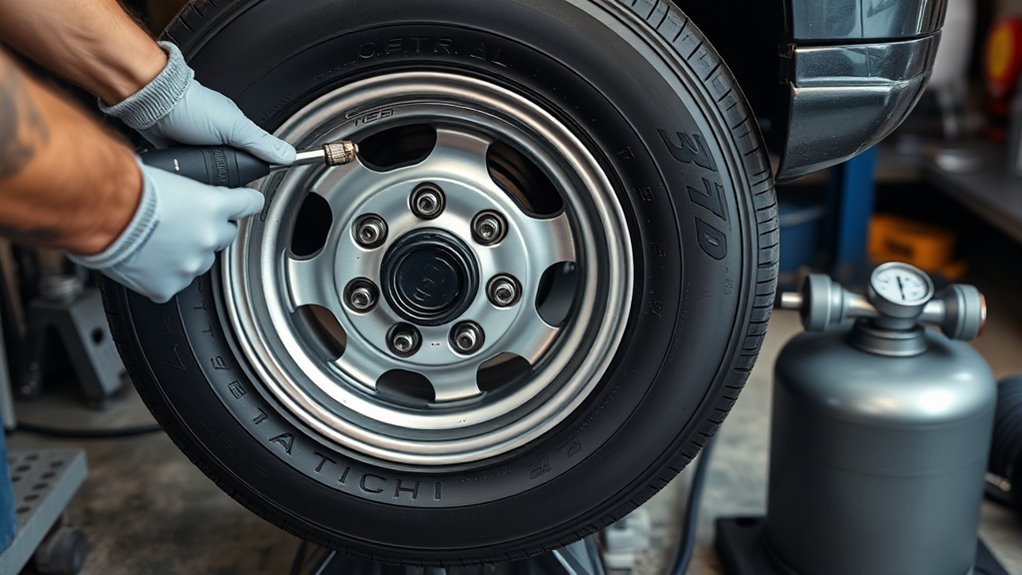
Before you hit the road, perform a final safety sweep: visually confirm the bead is fully seated with no gaps or bulges, set tire pressure to the manufacturer-recommended PSI, inspect the valve stem for damage or leaks, torque the lug nuts to spec with a torque wrench, and scan the tread and sidewalls for cuts, bulges, or embedded debris. Now follow these concise procedural steps to finish tire maintenance and safety inspections.
- Verify PSI with a calibrated gauge and adjust to the door-jamb/owner’s manual value.
- Use a torque wrench to tighten lug nuts in a star pattern to the vehicle spec.
- Rotate the wheel and recheck the bead, valve stem, and tire surface for leaks or damage.
Only drive after all items pass inspection.
Frequently Asked Questions
Can You Put a Tire on a Rim by Yourself?
Yes — you can mount a tire on a rim yourself using tire changing steps and DIY tools. Work methodically: seat one bead in the drop center, use soapy lubricant, avoid pinching tubes, and check bead seating for safety.
Conclusion
You’ve learned the steps to safely mount a tire at home—check tools, prep wheel and tire, remove the old tire, lubricate beads, use tire irons correctly, and seat the bead before inflating. Work deliberately, double-check torque and bead seating, and never rush a step that risks injury. If anything feels wrong, stop and get professional help—your life isn’t worth a DIY miracle, even if your stubborn rim begs otherwise. Drive safely.
Related Articles
How to Read Motorcycle Tire Size: Complete Breakdown
Often misunderstood, this guide decodes motorcycle tire sizes like 180/55ZR17—learn what each number and letter means to ensure safe, perfect fitment.
Read More
How to Read Bicycle Tire Size: Inches, Metric & ISO
Get the essential trick to decoding ETRTO/ISO codes so you’ll always pick rim-compatible tyres—discover what to check next.
Read More
How to Read Tire Size Numbers: Decode the Sidewall
Step-by-step guide to decode tire sidewalls—sizes, load, speed, DOT and winter symbols—so you’ll know what fits and when to replace.
Read More