How to Install Tire Liners for Extra Puncture Protection
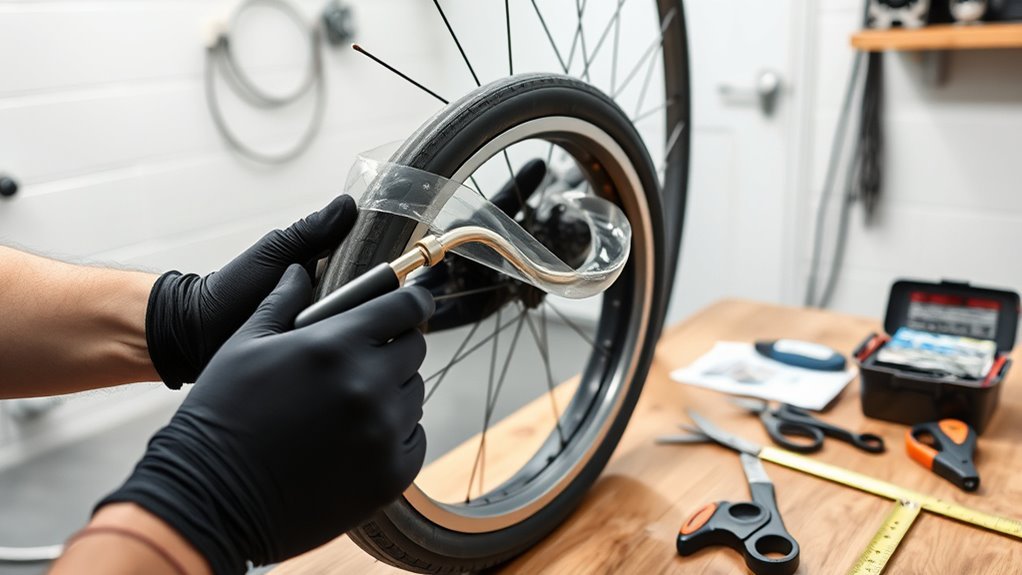
Choose a liner that matches your tire width and protection needs, remove the tire, clean the interior, and deflate fully. Trim the liner to the inner circumference with no overlap, insert it at the valve stem for centering, align seams, and secure with Velcro if needed. Mount the tire starting at the valve, seat beads evenly, and inflate to the recommended pressure while checking alignment. Follow basic maintenance and troubleshooting steps below to learn detailed tips.
Quick Summary: Install Tire Liners in 5 Steps
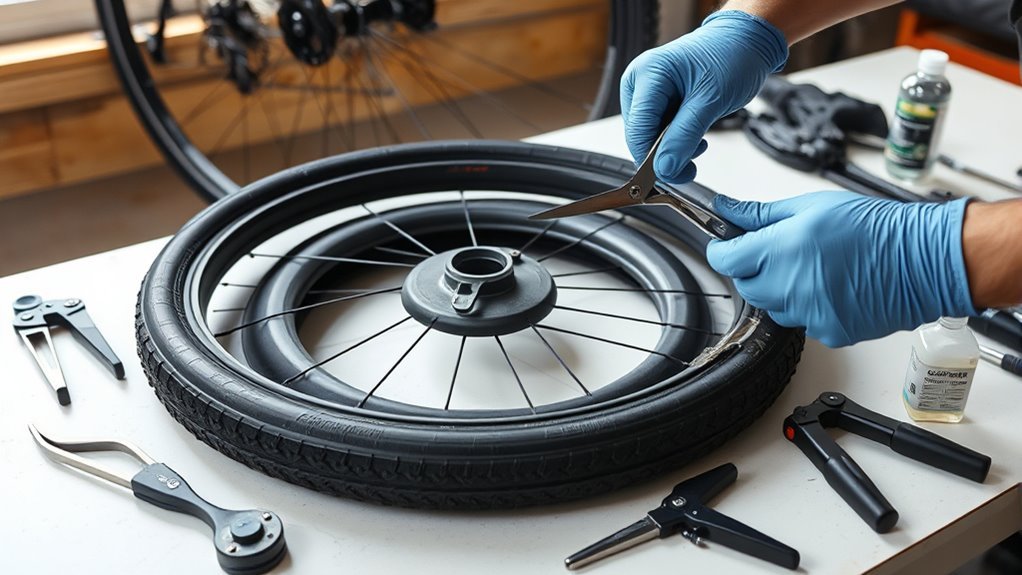
Follow five clear steps to install tire liners and cut your risk of punctures: choose a liner that fits your wheel and needs (for example, Mr. Tuffy or Tannus Armor) noting installation challenges. First, verify tire and liner width compatibility. Second, remove the tire from the rim and clean the interior thoroughly. Third, trim the liner to prevent overlap that can cause pinch flats; this is a key installation tip. Fourth, insert and center the liner, using Velcro strips for stability and inflating slightly to aid positioning without overpressurizing. Fifth, reinstall the tire and inflate to recommended pressure. Maintain the setup by removing debris and inspecting liner condition regularly to retain tire liner benefits and prevent flats.
Choose a Tire Liner: Size, Protection Level, and Compatibility
How do you pick a tire liner that actually fits and protects? Match liner width to your tire width precisely—overlap causes bunching and pinch flats. Compare tire liner types: thin fabric sleeves trade weight for flexibility; dense rubber or foam (Tannus Armor) adds stiff sidewalls but can compress over time. For e-bikes, consider proven options like Mr. Tuffy; users report drastic flat reduction. Verify rim and tire compatibility—some liners are awkward on narrow rims or specific bead profiles. Read installation techniques notes: proper seating and smooth placement influence performance as much as material choice. Balance puncture resistance, durability, and ease of fit for your riding conditions, prioritizing a liner that installs cleanly and won’t deform under load.
Prep the Wheel: Tools, Deflation, and Rim/Tire Checks for Liners
Start by laying out your tools and clearing the work area: you’ll need tire levers, a pump, sharp scissors, and a little dish soap for lubrication. Deflate the tire completely so you can remove the bead without stressing the rim or tire. Inspect both rim and tire carefully for burrs, embedded debris, or damage that could compromise rim protection or puncture the liner.
- Tire levers for controlled bead removal
- Pump for final seating and pressure checks
- Sharp scissors for precise trimming
- Dish soap to lubricate the bead
- Clean rag to remove dirt and debris
Address any rim sharpness with a file or tape, and remove glass or wire from the tire. Good prep reduces installation errors and supports long-term tire maintenance.
Insert and Center the Tire Liner (Trim to Fit; Avoid Overlap)
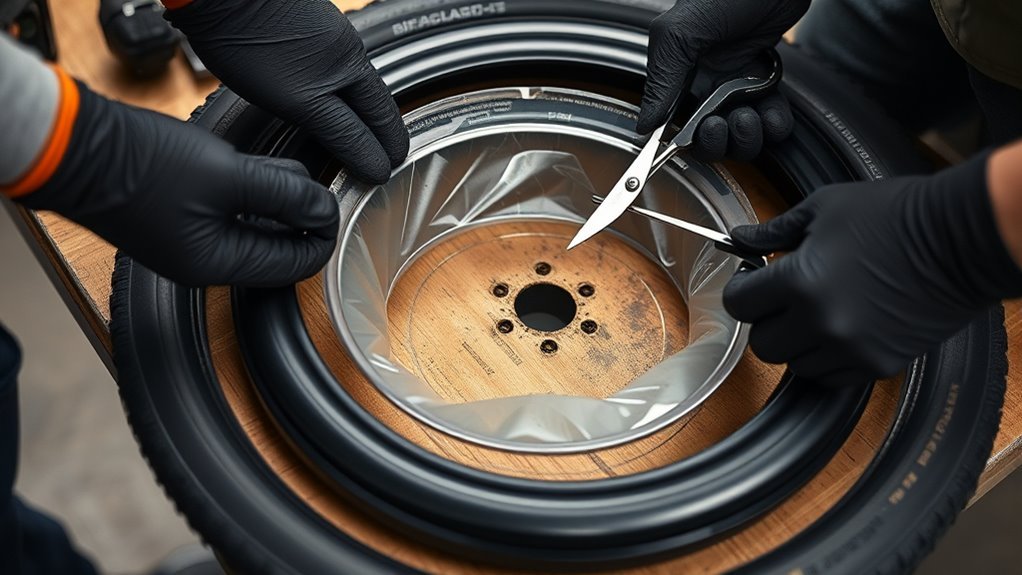
Trim the liner to the tire’s inner circumference so it seats flat without overlapping, then insert it beginning at the valve stem to center it as you work around the bead. Cut precisely to match the internal length of the casing; overlap creates pressure points and pinch-flat risk. Use your fingers to push the liner into the channel, keeping its seam aligned with the rim direction. With basic installation techniques, inflate the tire slightly to let the liner settle and to reveal any misalignment. Secure the liner with short Velcro strips at spaced intervals to prevent migration during rotation. Inspect for debris or folds, and verify the liner materials sit flush against the casing before final mounting and full inflation.
Mount, Seat, and Inflate the Tire : Maintenance & Common Fixes
Mount the tire onto the rim beginning at the valve stem and work the bead evenly around the wheel so it seats flush in the rim channel; once seated, inflate slowly to the manufacturer’s recommended pressure while watching bead alignment to prevent pinch flats. Use soap-based lubricant to ease mounting without degrading rubber. Verify the tire bead sits uniformly; uneven seating causes leaks or pinch flats. Clean liners and tire interiors to remove debris that can abrade liners or compromise seating. If you struggle, consult visual tutorials for centering and overlap avoidance.
- Start at valve stem, work bead evenly
- Use mild dish soap as lubricant sparingly
- Inflate gradually, monitor bead alignment
- Inspect and clean liners regularly
- Watch tutorials for troubleshooting and tips
Frequently Asked Questions
How to Install Fat Tire Liners?
You install fat tire liners by matching liner width, cleaning tire, lubricating with dish soap, seating and trimming excess, partially inflating to center, then fully inflating. These installation tips keep liners effective and reduce pinch-flat risk.
How Do Tire Liners Work?
Tire liners block sharp debris, adding a sacrificial layer between tube and tread to provide puncture prevention; their liner materials—rubber compounds, dense polymers or aramid blends—distribute impact and resist penetration while minimally affecting ride.
How to Fit Zefal Z Liner?
You fit the Zefal Z Liner by removing the tire, cleaning the bead seat, measuring and cutting to circumference, centering the liner, remounting evenly, and inflating slightly to settle. Zefal installation tips highlight durability; Zefal liner benefits include reliable puncture protection.
How to Make Tyre Puncture Proof?
Use liners, use sealant, use heavy tubes—these puncture prevention techniques and tire maintenance tips reduce flats: install Mr. Tuffy or Tannus, trim overlaps, add Slime, check debris often, replace tubes timely, carry repair kit.
Conclusion
Installing tire liners is a straightforward step that can protect your tubes like armor shields a knight. Follow sizing and compatibility guidelines, prep the rim and tire, trim and center the liner without overlap, then remount, seat and inflate to the recommended pressure. Check bead seating and balance, and inspect the liner periodically for wear. If you get flats, remove the liner to locate damage, trim or replace as needed, and reseat carefully.
Related Articles
How to Read Motorcycle Tire Size: Complete Breakdown
Often misunderstood, this guide decodes motorcycle tire sizes like 180/55ZR17—learn what each number and letter means to ensure safe, perfect fitment.
Read More
How to Read Bicycle Tire Size: Inches, Metric & ISO
Get the essential trick to decoding ETRTO/ISO codes so you’ll always pick rim-compatible tyres—discover what to check next.
Read More
How to Read Tire Size Numbers: Decode the Sidewall
Step-by-step guide to decode tire sidewalls—sizes, load, speed, DOT and winter symbols—so you’ll know what fits and when to replace.
Read More