
How to Fix a TPMS Sensor Fault in a RAV4: Diagnosis and Solutions
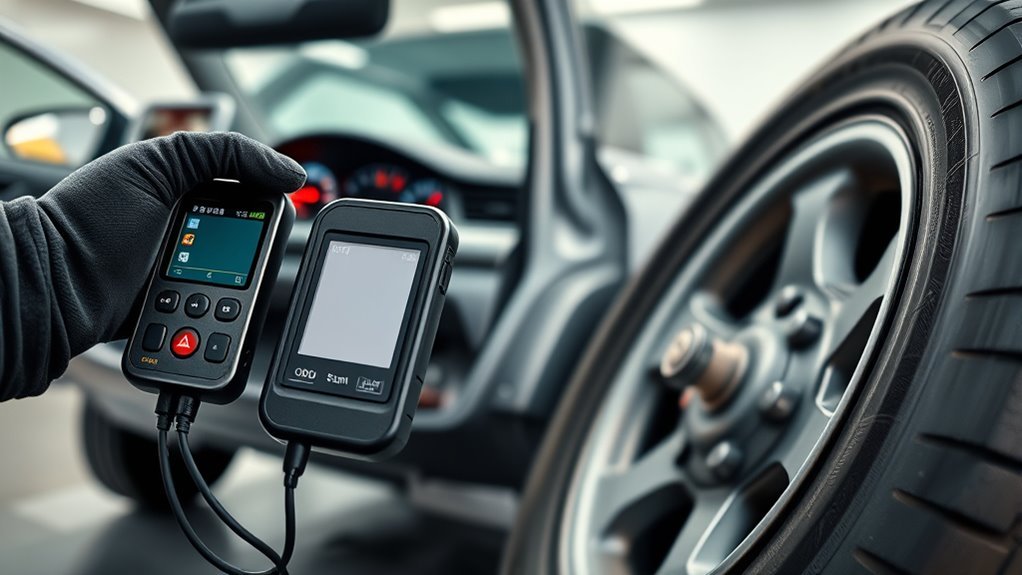
To fix a TPMS sensor fault in your RAV4, start by checking the tire pressures of all tires, including the spare, ensuring they meet recommended levels. Observe the TPMS warning light; a blinking light often indicates a sensor issue. Inspect the sensor valves for damage or corrosion, and reset the system via the menu or by driving above 50 mph. If problems persist, it may be time to consult a professional for a detailed diagnosis and solutions.
Common Symptoms of TPMS Issues
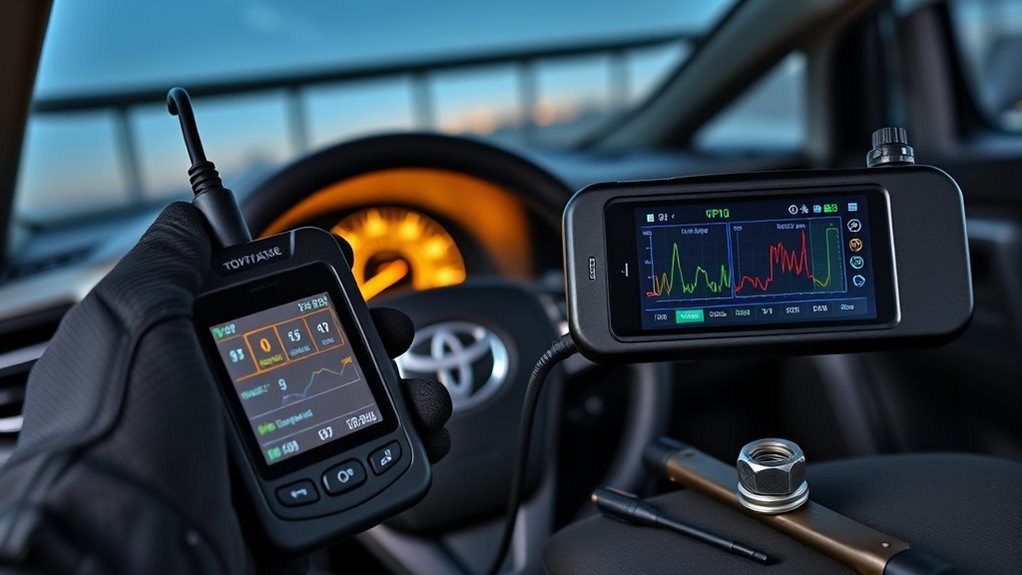
When you’re driving your RAV4 and notice a persistent TPMS warning light, it often signals a sensor malfunction. Initially, the light may blink for about a minute, indicating a potential issue with bad or unregistered sensors. After that, it typically stays solid. You might also receive low tire pressure alerts, even if all tires are properly inflated. This can happen if the spare tire’s pressure is unmonitored or low. Different sensor types or variations in tire brands and sizes can complicate TPMS readings, leading to false alerts or malfunctions. Regularly checking all tire pressures, including the spare, is essential for accurate TPMS functionality and to prevent unnecessary warning signals. Being proactive can help you address these issues swiftly, ensuring your RAV4 operates safely and efficiently.
Steps to Diagnose Common TPMS Symptoms
To diagnose common TPMS symptoms, start by checking the tire pressures of all tires, including the spare, ensuring they meet the recommended PSI levels. Next, observe the TPMS warning light; a blinking light followed by a solid one can indicate a malfunction. Addressing these initial checks can help pinpoint the issue efficiently.
Common Warning Symptoms
A solid TPMS warning light is your RAV4’s way of signaling a malfunction, which could stem from a bad or unregistered sensor rather than just low tire pressure. If the TPMS light blinks for a minute before staying solid, it indicates a system error that requires attention. Regularly check all tire pressures, including the spare, as low pressure there can also trigger warnings. Many RAV4 owners have noticed that recent tire work, like alignment or balancing, may affect sensor readings and cause false alerts. To diagnose the issue accurately, use diagnostic tools like Carista or Techstream, which help you read and edit sensor data, pinpointing any sensor malfunction that might be causing the warning light to illuminate.
Checking Tire Pressures
Checking tire pressures is essential for diagnosing TPMS issues effectively. Start by ensuring all tires, including the spare, are inflated to the recommended PSI—typically around 35 PSI for regular tires and 50-60 PSI for spares. A drop of 25% from the set level triggers a TPMS alert, so maintaining proper tire pressure is vital. Use a reliable tire pressure gauge for accurate measurements, as temperature changes can cause fluctuations. Don’t forget to inspect the spare tire; low pressure here can also activate warnings, even if your main tires are fine. If tire pressures are correct but alerts persist, investigate potential faulty sensors or loose connections, which may require dealership diagnostics.
Checking Tire Pressures First
Begin the process of addressing a TPMS sensor fault by checking the tire pressures of all four tires, including the spare. Verify each tire is inflated to the recommended PSI levels—typically around 35 PSI for regular tires and 50-60 PSI for spares. Use a reliable tire pressure gauge to measure each tire’s pressure accurately; low tire pressure can trigger TPMS alerts. Regularly monitor tire pressures, especially during temperature changes, as fluctuations can affect gauge accuracy and system functionality. If a TPMS warning light activates, inflate any low-pressure tires to the appropriate levels and observe if the alert clears. Document the tire pressures and any adjustments made, as this information can aid in further diagnosis if issues persist. Taking these steps not only enhances your vehicle’s safety but also maintains peak performance, empowering you to take control of your driving experience.
How to Inspect and Reset Your RAV4’s TPMS Sensors
After confirming all tires are properly inflated, it’s time to inspect and reset your RAV4’s TPMS sensors. Start with a thorough sensor inspection by checking for loose connectors at the tire pressure ECU behind the right rear interior quarter panel trim. Loose connections can trigger malfunction alerts, so verify everything is secure. Next, examine the TPMS sensor valves for corrosion or damage, which can affect pressure readings.
Once you’ve addressed any issues, initiate the reset procedure. You can reset the TPMS system through the vehicle’s menu or by driving above 50 mph for several minutes, which helps recalibrate the sensors. Regularly monitor tire pressures, including the spare, to maintain recommended levels—typically 35 PSI for regular tires and 50-60 PSI for spares. If problems persist, consider using diagnostic tools like Carista or Techstream for deeper analysis and potential ECU reprogramming.
Signs It’s Time to Consult a Professional for TPMS Issues?
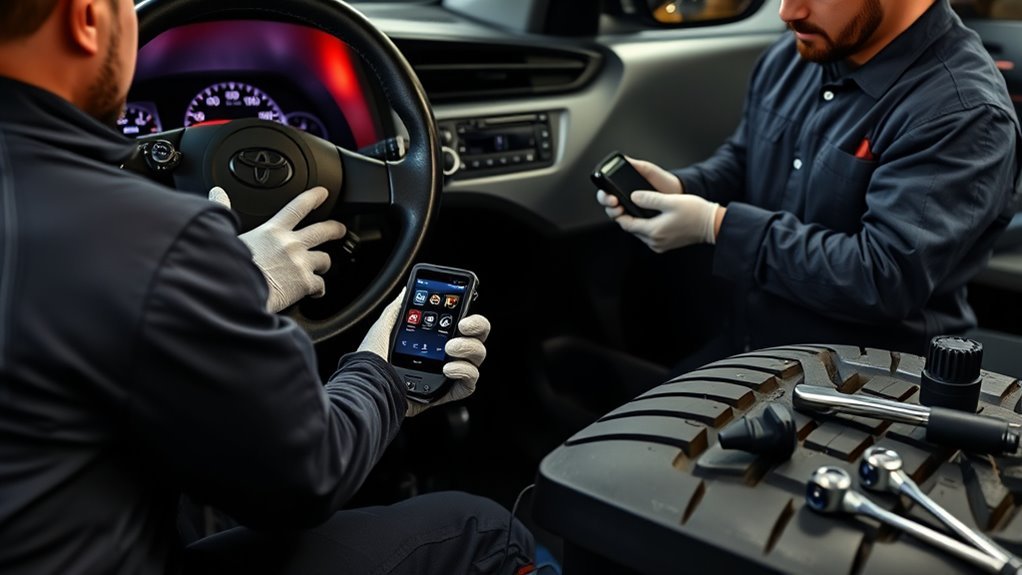
If your TPMS warning light stays on despite correct tire pressures, it’s a sign of a malfunctioning sensor that needs a professional diagnosis. Inconsistent pressure readings can indicate issues with sensor registration, making it essential to consult an expert. Ignoring these signs may lead to further complications in your vehicle’s tire monitoring system.
Persistent Warning Lights
When the TPMS warning light stays solid despite confirming that all tire pressures are correct, it’s essential to recognize this as a sign of a potential malfunction. This could indicate issues with a faulty sensor or the ECU, necessitating professional diagnosis. A blinking light that turns solid often points to a bad or unregistered sensor, requiring inspection or sensor calibration by a technician. Additionally, if your TPMS sensors are over eight years old, low battery voltage might be the culprit, making battery replacement vital. Regularly checking tire pressures can help avoid unnecessary visits for false alerts. Using diagnostic tools like Toyota Techstream can further assist professionals in pinpointing specific faults within your TPMS system.
Inconsistent Pressure Readings
Inconsistent pressure readings from your TPMS can signal underlying issues that require professional attention. If you notice fluctuations in tire pressure despite proper inflation, it may indicate battery issues or a malfunctioning sensor, especially in older models where the sensor lifespan is around eight years. Additionally, if the TPMS warning light remains illuminated, a bad or unregistered sensor may be the culprit. Regularly monitor all tire pressures, including the spare; low pressure in the spare can trigger false alerts. While driving over 50 mph for several minutes might recalibrate sensors, persistent inconsistencies warrant a professional diagnosis. Tools like Techstream or Carista can help in accurately identifying and resolving TPMS issues, ensuring reliable functionality.
Essential Tools for DIY TPMS Troubleshooting
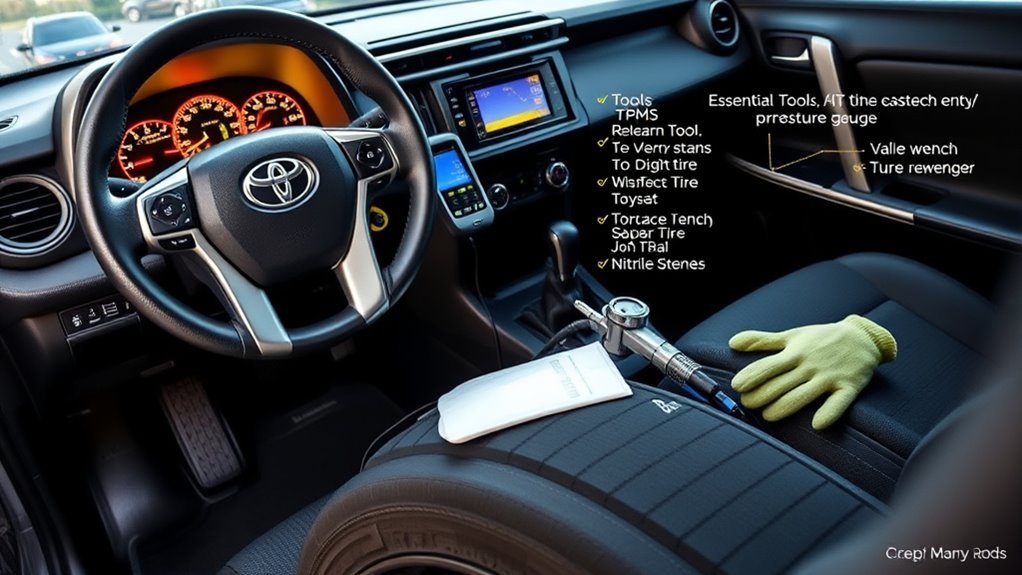
To effectively troubleshoot and fix TPMS sensor faults in your RAV4, you’ll need a few essential tools. A diagnostic tool like the Autel MaxiTPMS TS508 is vital for sensor programming and updating the TPMS ECU, typically priced at around $140. For DIY replacements, a valve core removal tool is necessary to dump air and replace sensors, while a larger air compressor will help reseat tire beads effectively.
If you’re working with OEM sensors, Techstream software is required for ID updates; however, aftermarket sensors often clone existing IDs without it. Regularly checking tire pressures with a reliable gauge, including spare tires, prevents false TPMS alerts and maintains system functionality. Finally, documenting serial numbers and sensor details will streamline future troubleshooting and reprogramming efforts, ensuring you’re always prepared for any issues that arise.
Preventative Maintenance Tips for Your RAV4’s TPMS
Maintaining ideal tire pressure is essential for your RAV4’s TPMS functionality and overall driving safety. Regular tire maintenance not only enhances performance but also guarantees accurate sensor calibration. Here are some key tips:
| Action | Frequency | Recommended PSI |
|---|---|---|
| Check tire pressures | Monthly | 35 PSI |
| Monitor spare tire pressure | Monthly | 50-60 PSI |
| Use a reliable gauge | Before long trips | Accurate readings |
| Document adjustments | Each rotation | Maintain records |
Frequently Asked Questions
How Much Does It Cost to Replace a TPMS Sensor on a Toyota RAV4?
Replacing a TPMS sensor on your Toyota RAV4 typically costs between $25 for aftermarket options to $68 for OEM sensors. Consider DIY replacement to save on labor, which usually totals around $346 for all four sensors.
How Do You Diagnose a TPMS Sensor?
To diagnose a TPMS sensor, check for TPMS malfunction signs like warning lights, use diagnostic tools to read sensor data, and verify tire pressures meet specifications. Inspect connections for any loose wiring that could disrupt signals.
Conclusion
Just like a lighthouse guiding ships through foggy waters, a well-functioning TPMS keeps your RAV4 safe on the road. By diagnosing and addressing sensor faults promptly, you guarantee a smooth journey ahead. Don’t ignore those warning lights; they’re your car’s way of communicating. With the right tools and knowledge, you can navigate these issues yourself. Remember, regular maintenance is the compass that steers you clear of future problems, keeping your vehicle on the path to reliability.

Related Articles

Upsizing Wheels on a Toyota RAV4: Pros, Cons, and Considerations
Boost your Toyota RAV4's performance with larger wheels, but discover the hidden trade-offs that could impact your ride before you decide.
Read More
Can I Change Tire Size on My Toyota RAV4? Rules and Recommendations
Are you considering changing the tire size on your Toyota RAV4? Discover the essential rules and recommendations before making a decision.
Read More
What to Do If the TPMS Light Comes On in Your RAV4
Understand the steps to take when the TPMS light illuminates in your RAV4, as overlooking it could lead to serious tire problems.
Read More