How to Fix a Flat Bicycle Tire: Step-by-Step Guide
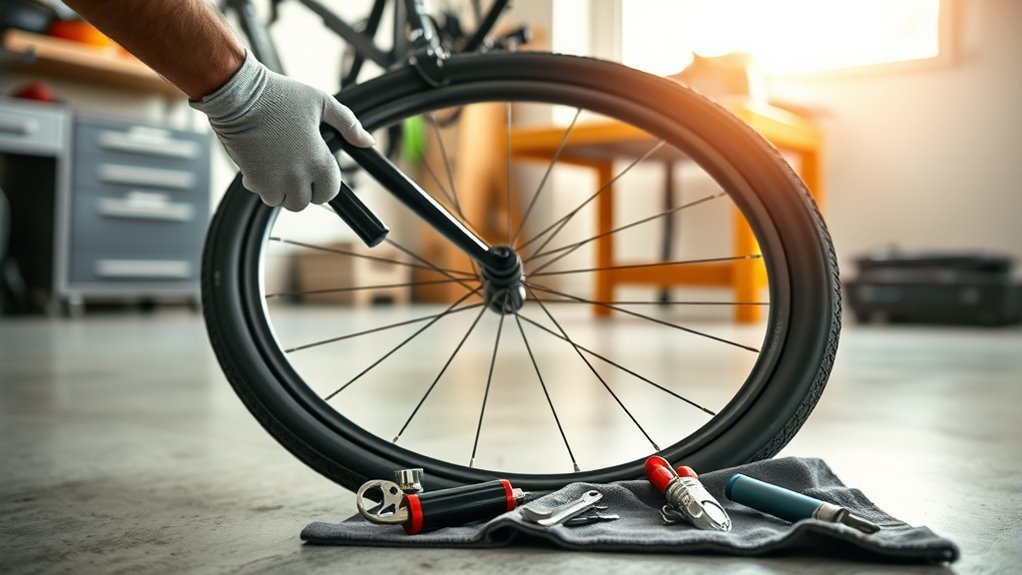
You can fix a flat quickly: remove the wheel (open the quick‑release or unthread the thru‑axle), deflate the tube, pry a bead off with levers, and pull the tube out. Inspect tire and rim tape for embedded debris or spoke ends. Patch small punctures or install a matched spare tube, reseat the tire, and inflate to the correct pressure. Reinstall the wheel, secure the axle, and test brakes; follow the full step‑by‑step guide to learn tips and prevention.
What You Need to Fix a Flat Bike Tire
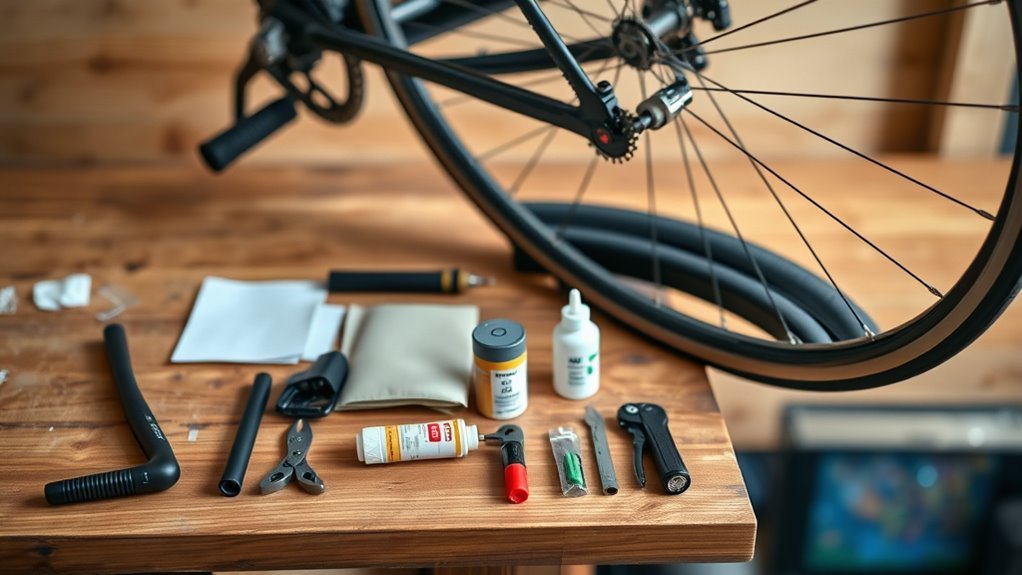
Before you start repairing a flat, gather the right tools so the job’s quick and clean: an adjustable wrench, tire levers, a patch kit or a correctly sized spare inner tube, and a pump or CO2 inflator that fits Presta or Schrader valves. You’ll want a spare tube matching tire diameter and width so you can swap quickly if a patch isn’t practical. Tire levers let you remove the tire without nicking the rim or tube. Carry a portable pump or CO2 that’s compatible with your valve type to restore proper pressure. Keep a basic adjustable wrench for axle nuts or wheel removal. Inspect and replace worn items in your kit regularly—good tire maintenance means you won’t be caught unprepared.
Remove the Wheel Quickly and Safely
Start by lifting the bike and opening the quick-release or unthreading the thru-axle, making sure rim brakes are released. For the front wheel, slide it straight down out of the dropouts; for the rear, shift the chain and pull the wheel back and out past the derailleur. Keep the quick-release open and pull evenly and straight to avoid stressing the frame or components.
Front Wheel Removal
1 quick, confident motion lets you remove the front wheel safely: open the quick-release lever or unthread the axle, release rim-brake calipers if fitted, lift the bike’s front end, and slide the wheel out of the dropouts while keeping cables and components clear. Keep the bike stable—lean it against a wall or flip it onto handlebars and saddle if you prefer. If you have a thru-axle, fully unscrew it before withdrawing the wheel. Watch that brake pads or disc rotors don’t snag cables or calipers; disengage calipers for rim brakes to prevent interference. After repairing or replacing the tube, reseat the wheel squarely, secure the axle or quick-release, and test brake adjustments. Regular wheel maintenance prevents surprises during removal.
Rear Wheel Procedure
Shift into the hardest gear to slacken chain tension, open the quick-release or unthread the thru-axle, and disengage any brake calipers so they won’t block the wheel. Flip the bike or rest it on the saddle and handlebars to keep the drivetrain accessible. Use quick release techniques: open the lever fully and back off the nut slightly if needed. Support the wheel, then carefully lift the chain off the rear derailleur to avoid bending pulleys or misaligning links—this is basic rear derailleur maintenance during removal. Pull the wheel gently backward out of the dropouts, ensuring the cassette clears the derailleur and the chain stays free. Set the wheel aside on a clean surface to prevent grease contamination while you repair the tube.
Remove the Tire and Tube, and Inspect for Damage
Fully deflate the tube by pressing the valve center, then use tire levers to pry one bead off the rim starting opposite the valve so you don’t damage it. Pull the valve stem out first and remove the tube, then check the tube thoroughly—submerge it in water to spot slow leaks. Inspect the tire’s outer surface and run your fingers inside the casing to find any embedded debris or hidden punctures.
Remove Tire Carefully
Start by letting all the air out of the tube—press the valve pin until no hiss remains—so the tire will sit loose on the rim. Use tire levers from your repair tools to pry the bead over the rim edge, starting opposite the valve to protect it. Once one side’s off, pull the valve stem out first, then slide the tube free. Inspect the tire’s outer surface and inside casing for embedded glass, thorns, or cuts that likely caused the flat. Keep tire maintenance in mind: remove debris and note worn spots before reinstalling.
- Use two tire levers, never metal directly on bead
- Start opposite the valve stem
- Pull valve stem through rim first
- Scan outer surface for sharp objects
- Check inner casing for punctures
Inspect Tube Thoroughly
With the tire off, deflate the tube by pressing the valve pin so it isn’t under pressure, then take the tube out and lay it flat for inspection. Use tire levers carefully, start opposite the valve, and avoid pinching the stem. Check the tire’s inner surface for glass, thorns, or metal that caused the flat. Run your fingers along the tube, feel for punctures, tears, or weak spots near the valve stem and along its length. If you can’t find the leak, submerge the tube in water and watch for bubbles to locate escaping air.
| Step | Action | Tip |
|---|---|---|
| 1 | Deflate fully | Prevents pressurized surprises |
| 2 | Remove tube | Start opposite valve |
| 3 | Inspect | Look for debris |
Maintain tire maintenance and correct air pressure afterward.
Find the Cause of the Flat (Puncture, Pinch, or Valve)
Wondering why your tire went flat? Start with puncture identification and valve inspection: you’ll find the cause faster if you check methodically. Run your eyes and fingers over the tire, then inspect the tube closely.
- Look for embedded glass, thorns, or metal on the tire’s outer surface.
- Feel the inside casing for hidden sharp edges or seam failures.
- Examine the tube for tears, especially around the valve stem.
- Check for protruding spokes or rim tape failures that can nick the tube.
- Submerge the tube in water to watch for bubbles from tiny leaks.
Determine whether it’s a puncture, pinch (snakebite), or valve issue before you decide to patch or replace the tube.
Patch or Replace the Tube: Step‑by‑Step
One clear decision you’ll make is whether to patch the tube or swap in a replacement; small, clean punctures away from the valve are patchable, while large tears, valve-area damage, or on-the-road convenience usually call for a new tube. If you patch, locate the hole, clean the area, lightly sand the rubber, and apply glue evenly; let the glue tack before pressing the patch firmly and holding per kit instructions. Use proper patching techniques to avoid future leaks and store patched tubes as backups. If you replace the tube, choose one matching tire size and valve type—Presta or Schrader—to guarantee tube compatibility with rim and pump. Inspect patched tubes periodically and prefer replacement for reliability on long rides.
Reinstall, Inflate, Final Checks, and Prevention Tips
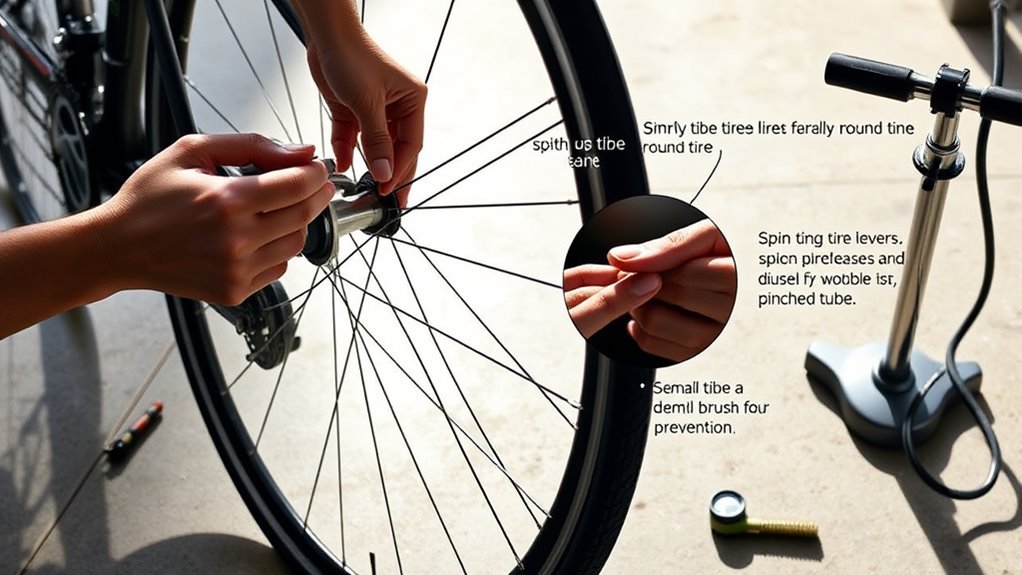
Seat the tube and tire carefully, then pump it slightly to confirm the tube sits evenly and the bead is seated on both sides of the rim before you inflate to the pressure stamped on the sidewall. Check the bead again, align the wheel in the frame or fork, and spin it to guarantee it clears the brake calipers and doesn’t rub. Close or tighten the quick release (or axle) securely, making sure the wheel stays centered. Inflate to the recommended pressure and recheck for bulges or uneven seating. Finally, perform routine prevention: inspect tread and remove debris, monitor pressure, and carry repair essentials.
- Inspect tire bead seating visually and by feel.
- Verify wheel alignment and brake clearance.
- Secure quick release properly.
- Inflate to sidewall pressure.
- Carry spare tube, levers, pump.
Frequently Asked Questions
How to Fix-A-Flat Bike Tire Step by Step?
You remove the wheel, deflate the tube, use tire levers to unseat one side, inspect for debris, patch or install a tube, reseat the tire, inflate to pressure, reattach wheel—keep tire maintenance tips and emergency repair tools ready.
Can You Fix-A-Flat Tire on a Bike?
Yes — you can fix a flat tire on a bike by patching or replacing the tube; carry tire levers, pump, patch kit or spare, fully inspect for debris, sand patch area if needed, and practice puncture prevention through tire maintenance.
Conclusion
You’ve got this. With the right tools and a calm plan, you’ll remove the wheel, strip the tire, find the culprit, and either patch or swap the tube in a few efficient steps. Reinstall, inflate to the correct pressure, check for leaks, and spin the wheel true—then you’re ready to ride. Do a quick inspection before every trip; it’s like giving your bike a tiny superhero check-up that saves you hours of roadside frustration.
Related Articles
How to Read Motorcycle Tire Size: Complete Breakdown
Often misunderstood, this guide decodes motorcycle tire sizes like 180/55ZR17—learn what each number and letter means to ensure safe, perfect fitment.
Read More
How to Read Bicycle Tire Size: Inches, Metric & ISO
Get the essential trick to decoding ETRTO/ISO codes so you’ll always pick rim-compatible tyres—discover what to check next.
Read More
How to Read Tire Size Numbers: Decode the Sidewall
Step-by-step guide to decode tire sidewalls—sizes, load, speed, DOT and winter symbols—so you’ll know what fits and when to replace.
Read More