
How to Change a Tire on a Toyota RAV4: Step-by-Step Instructions
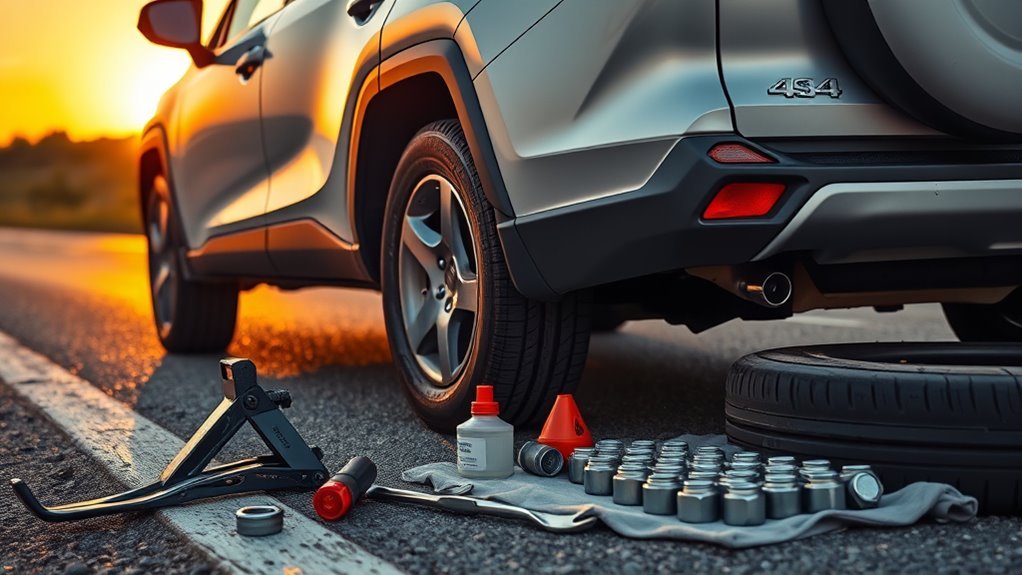
To change a tire on your Toyota RAV4, first find a flat, stable area away from traffic. Gather your tools: a spare tire, lug wrench, and car jack. Loosen the lug nuts, elevate the vehicle, and remove the flat tire. Install the spare by aligning it with the wheel hub and tightening the lug nuts in a star pattern. After securing the spare, check its pressure and verify everything’s stowed. Next, let’s explore maintenance tips for your spare tire.
Find a Safe Spot to Change Your Tire

When you need to change a tire on your Toyota RAV4, finding a safe spot is crucial. Look for a flat, straight road with a wide shoulder. Avoid areas with oncoming traffic, like curves or narrow shoulders, to enhance roadside safety. Confirm the ground is solid and level; this prevents your vehicle from rolling or becoming unstable during the tire change.
Once you’ve chosen your location, set up reflective warning signs behind your vehicle to alert other drivers of your presence. This small step can greatly improve your safety. If you can’t find a suitable spot nearby, don’t hesitate to think about towing your vehicle to a safer location. Remember, prioritizing safety not only protects you but also promotes confidence in your tire-changing abilities. Following these tire changing tips will help you navigate the process more smoothly, empowering you to handle unexpected situations with ease.
What Tools Do You Need to Change a Tire?
After you’ve found a safe spot, gathering the right tools is the next step in changing a tire on your Toyota RAV4. You’ll need a fully inflated spare tire, a lug wrench, and a car jack, all typically stored in the back door compartment. For ideal tire maintenance, verify your spare tire is inflated to the manufacturer’s recommended tire pressure.
Additional items can enhance your efficiency: wheel wedges to prevent rolling, gloves for hand protection, and a flashlight for visibility in low-light conditions. A 2×6” piece of wood can provide stability under the jack on uneven surfaces. Don’t forget to consult your vehicle owner’s manual for proper jack placement and safety measures. Always check that your tools are in good condition before starting. Being prepared not only makes the process smoother but also empowers you to handle tire changes confidently.
How to Remove a Flat Tire
To remove a flat tire on your Toyota RAV4, first park on a flat, stable surface and engage the parking brake to prevent any movement. Next, loosen the lug nuts on the flat tire by turning them ¼ to ½ turn counterclockwise. Don’t fully remove them yet. Position the jack under the recommended lifting point on the vehicle frame and raise the vehicle until the flat tire is off the ground. Now, fully unscrew and remove the lug nuts, placing them in a safe location. Pull the flat tire straight off the wheel hub. Before stowing the flat tire for potential tire rotation, inspect the wheel for any damage or debris. Confirm all lug nuts are accounted for and ready for reinstallation. This careful process sets you up for a smooth shift to your spare tire.
Securely Install Your Spare Tire
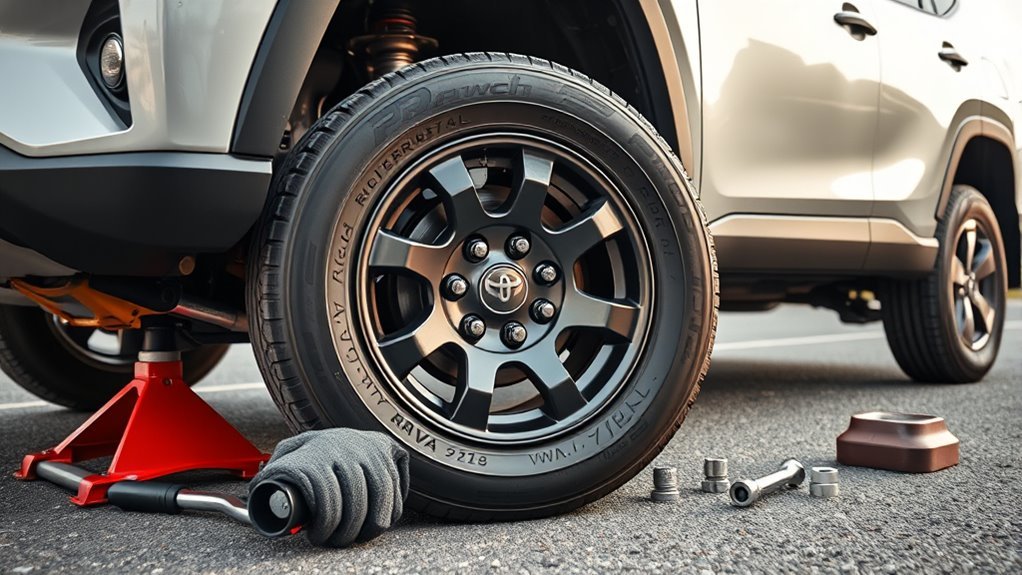
Align the spare tire with the wheel hub, guaranteeing the holes on the rim match the lug bolts for a proper fit. Once aligned, hand-tighten the lug nuts onto the spare tire in a star pattern. This method guarantees even distribution of pressure, which is essential for secure installation. Next, use a lug wrench to perform lug nut tightening, applying a torque specification of 76 ft.*lbf. (103 n*m). This step is critical for ideal security, preventing any loosening during your drive.
After the spare tire is securely attached, lower the vehicle back to the ground by rotating the jack anticlockwise. This relieves the weight from the jack, allowing the tire to settle properly. If applicable, complete the installation by reinstalling the center wheel ornament, pushing it from the reverse side. You’re now ready to hit the road with confidence!
Perform Key Checks After Changing Your Tire
With the spare tire securely installed, it’s important to perform key checks to confirm your safety on the road. First, check the tightness of the lug nuts; verify they’re secure by applying a torque of 76 ft.*lbf. (103 n*m) if possible. Next, inspect the tire pressure of the spare. Validate it meets the manufacturer’s recommended PSI for safe driving. If your spare supports a hubcap, double-check that it’s properly reinstalled; if not, store it safely.
Before hitting the road, make certain all tools and the flat tire are stowed securely in your vehicle to prevent hazards. Remember, drive cautiously and avoid speeds over 50 mph on a temporary spare. Plan to visit a technician for a permanent tire replacement as soon as possible. These checks are essential for maintaining control and guaranteeing your safety while you navigate back to freedom on the road.
How to Maintain Your Spare Tire for Safety
Maintaining your spare tire is essential for guaranteeing safety during unforeseen circumstances. Start with regular spare tire inspections; check for visible damage like cracks or bulges that could compromise reliability. You should also perform tire pressure maintenance monthly, confirming it meets the manufacturer’s recommended PSI, typically around 60 PSI for most spares.
Store your spare in a clean, dry environment to prevent deterioration from moisture and contaminants. It’s vital to rotate your spare into regular use every six months. This practice helps maintain its functionality and prevents flat spots from prolonged storage.
Finally, always keep your spare tire properly secured in its designated compartment to prevent movement and damage while driving. By following these steps, you’ll make certain that your spare tire is ready when you need it, enhancing your safety on the road.
Frequently Asked Questions
How Do I Know When to Replace My Spare Tire?
You’ll know it’s time to replace your spare tire if it’s over six years old or shows signs of damage. Regular tire maintenance tips include checking tread depth and inspecting for cracks or bulges.
Can I Drive on a Flat Tire for a Short Distance?
Driving on a flat tire is like playing with fire. It’s risky and can cause further damage. If you must, keep it short—temporary solutions aren’t safe long-term. Prioritize getting it replaced ASAP for safety.
What Should I Do if My Lug Nuts Are Stuck?
If your lug nuts are stuck, apply a penetrating lubricant. Let it sit for a few minutes, then use an impact wrench to loosen them. This method often provides the necessary torque to free stubborn nuts.
Is It Safe to Change a Tire on a Slope?
Changing a tire on a slope’s like walking a tightrope—one misstep can lead to disaster. For ideal tire safety, always find level ground; slope stability’s essential for a secure and safe tire change.
How Often Should I Check My Tire Pressure?
You should check your tire pressure at least once a month as part of regular maintenance. This guarantees peak performance, enhances safety, and extends tire lifespan, giving you the freedom to drive confidently on any road.
Conclusion
Changing a tire on your Toyota RAV4 doesn’t have to be intimidating. With the right tools and steps, you can get back on the road quickly and safely. Remember to check your spare tire’s condition regularly—wouldn’t you rather be prepared than caught off guard? By following these guidelines, you’ll guarantee your vehicle is ready for any unexpected flat. Drive confidently, knowing you can handle a tire change when it matters most.

Related Articles

Upsizing Wheels on a Toyota RAV4: Pros, Cons, and Considerations
Boost your Toyota RAV4's performance with larger wheels, but discover the hidden trade-offs that could impact your ride before you decide.
Read More
Can I Change Tire Size on My Toyota RAV4? Rules and Recommendations
Are you considering changing the tire size on your Toyota RAV4? Discover the essential rules and recommendations before making a decision.
Read More
What to Do If the TPMS Light Comes On in Your RAV4
Understand the steps to take when the TPMS light illuminates in your RAV4, as overlooking it could lead to serious tire problems.
Read More