
How Does TPMS Work on a Hyundai Sonata? Complete Explanation
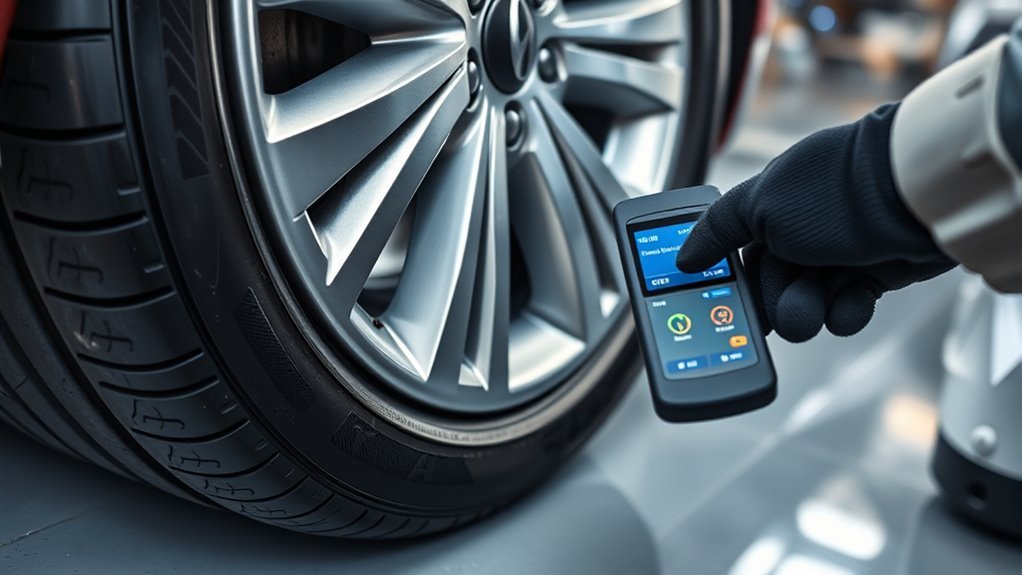
Your Hyundai Sonata uses two TPMS types: older 2006–2010 models use indirect systems that infer pressure changes from ABS wheel speeds, while 2011+ models use direct sensors at each wheel reporting real pressure and temperature. Indirect systems detect faster-rotating low tires and need manual resets; direct systems broadcast sensor IDs and trigger precise alerts until sensor batteries fail (~10 years). The dash lamp warns of low pressure or sensor faults, and continued information explains diagnostics, resets, and maintenance.
Who Should Read This Guide (Hyundai Sonata Owners, Technicians)
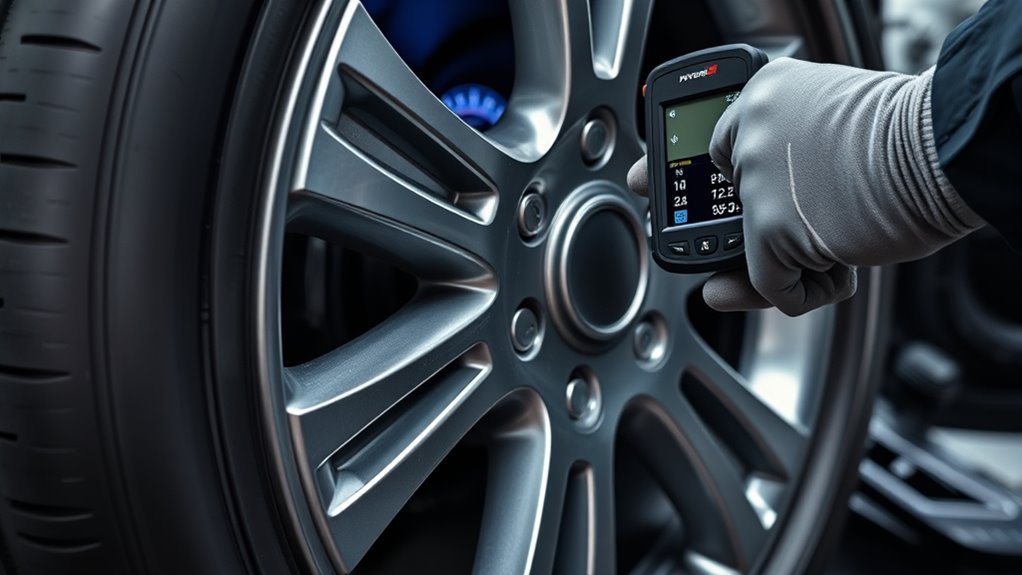
This guide is for two primary audiences: Hyundai Sonata owners who want to understand how their vehicle’s TPMS works and technicians who service these systems. You’ll get focused, actionable distinctions so you can act without hesitation. As an owner, you’ll learn that your Sonata may use indirect TPMS (wheel speed-based) or direct TPMS (in-tire pressure sensors). Know that indirect systems will require resets after inflation or rotation, while direct systems give actual tire pressure readings and improve system reliability when monitored correctly.
As a technician, you’ll apply diagnostic rigor: identify the installed system before troubleshooting, use proper reset or resynchronization procedures, and recognize that direct sensors contain non-serviceable batteries likely needing replacement after about ten years. Both audiences benefit from clear procedures that free you from guesswork: owners gain autonomy over maintenance choices; technicians maintain consistent service standards that preserve safety and performance.
Hyundai Sonata TPMS: Indirect vs Direct Systems
You’ll compare Indirect TPMS, which infers pressure changes from wheel speed and requires resets after rotations, with the Sonata’s Direct TPMS that uses per-wheel sensors to report actual pressure and temperature. The Direct system sends wireless data with unique sensor IDs to the control module for immediate low-pressure alerts and avoids rotation resets. Expect more precise readings from Direct TPMS but higher maintenance cost when sensor batteries expire.
Indirect TPMS Overview
When comparing TPMS options on a Hyundai Sonata, the indirect system leverages the ABS wheel-speed sensors to infer tire underinflation rather than measuring pressure directly. You’ll rely on wheel-speed differentials to detect a faster-spinning tire that signals low pressure, so tire inflation is managed by inference instead of direct measurement. This approach uses existing ABS hardware, reducing cost and maintenance because you avoid battery-equipped valve sensors. Be aware it’s sensitive to tire size variations and uneven wear; accuracy can drift and you’ll need sensor calibration via a manual reset after inflation or rotation. You’ll gain affordability and simplicity, but accept reduced precision and no explicit pressure readouts—tradeoffs that favor pragmatic freedom over absolute telemetry.
Direct TPMS Features
Although it uses dedicated sensors inside each wheel, Hyundai’s direct TPMS gives you precise, real-time tire pressure and temperature readings by identifying each sensor’s unique serial number. You get direct sensor technology that reports absolute pressure values to the ECU and dashboard, delivering superior pressure accuracy compared with indirect systems. It tracks each wheel independently, alerts you immediately to low-pressure conditions, and logs temperature trends for safety diagnostics. When you rotate or replace tires, resynchronization is straightforward and requires minimal tools, letting you reclaim control quickly. Sensor batteries last roughly a decade but aren’t serviceable; when they fail you’ll replace the whole sensor. This system prioritizes transparency, reliability, and actionable data so you can drive free.
Which Sonata Model Years Use Indirect or Direct TPMS
If you’re checking Sonata TPMS types by year, note that Hyundai used an indirect system on most 2006–2010 models, switching to a direct TPMS for 2011 and later vehicles. Regarding TPMS history, that shift marks the move from wheel-speed–based diagnostics to per-wheel sensing. You’ll find 2006–2010 Sonatas employ indirect TPMS; they flag pressure anomalies without measuring absolute PSI.
From 2011 onward, Hyundai standardized direct TPMS across the Sonata lineup, so you’ll get real-time pressure readings and individual-wheel alerts. By 2015, sensor technology improved: the enhanced direct sensors deliver better accuracy, longer battery life, and increased reliability. In 2020, Hyundai extended direct TPMS capability to monitor the spare tire as well, closing a coverage gap in earlier vehicles.
If you want liberation from uncertainty, choose a post-2011 Sonata or retrofit direct sensors; they give definitive, immediate data rather than inference, simplifying maintenance decisions and roadside responses.
How Indirect TPMS Detects Low Pressure Using ABS Wheel Speeds
You use ABS wheel speed sensors to compare each wheel’s rotation rate against the others and against vehicle speed. The TPMS flags a tire when its rotation rate is consistently higher than expected, indicating a reduced effective diameter from low pressure. After you correct pressures or rotate tires, you must reset the system so subsequent wheel speed comparisons remain accurate.
Wheel Speed Comparison
When the Sonata’s indirect TPMS monitors tire condition, it taps the ABS wheel-speed sensors to compare each wheel’s rotational rate against the vehicle’s speed and the other wheels; a tire losing pressure will have a smaller rolling circumference and consequently rotate faster, so the system flags that discrepancy as a probable low-pressure condition. You’ll rely on that comparison to detect underinflation without dedicated pressure sensors. The ECU estimates tire size from relative speeds, discriminates a fast-rotating wheel, and triggers an alert indicating tire inflation issues. After you inflate tires or change positions, perform sensor calibration (TPMS reset) so the system re-learns baseline speeds. This method empowers you to maintain safety and freedom from unpredictable tire failures.
Rotation Rate Differences
Because a deflated tire has a smaller rolling circumference, the Sonata’s indirect TPMS uses ABS wheel-speed sensors to detect faster rotation on that corner and flag it as a probable low-pressure condition. You’ll see how rotation rate differences reveal underinflation: the system compares each wheel’s revolution speed, computes effective tire size, and infers pressure changes. If one wheel consistently spins faster, the dash warns you. After inflating or rotating tires, you must reset the system so comparisons remain valid. This method preserves tire performance and highlights safety implications without sensors in each tire.
| Input | Process | Output |
|---|---|---|
| Wheel speeds | Compare rates | Flag faster wheel |
| Result | Compute size | Warn driver |
How Direct TPMS Reports Actual Tire Pressure and Temperature
A set of pressure sensors mounted inside each tire continuously measures actual pressure and temperature and transmits that data wirelessly to the Sonata’s central control module. You’ll rely on sensor technology that supplies real time data for precise monitoring. Each sensor samples pressure and temperature, timestamps the reading, and sends packets over RF to the receiver. The control module decodes values, compares them to thresholds, and triggers dashboard alerts if limits are breached.
Inside-tire sensors continuously send timestamped pressure and temperature readings via RF to the Sonata’s control module for real-time alerts.
- Sensor sampling: pressure and temperature captured inside each tire.
- Wireless transmit: RF packets sent to the central module with unique serial IDs.
- Data processing: module validates, timestamps, and compares readings to set thresholds.
- Identification and maintenance: serial numbers let you resynchronize sensors after rotations; batteries last about ten years.
You get direct, actual measurements rather than inferred estimates, enabling immediate, actionable awareness of tire conditions and reinforcing your autonomy on the road.
Common Hyundai Sonata TPMS Warnings and Step‑by‑Step Fixes
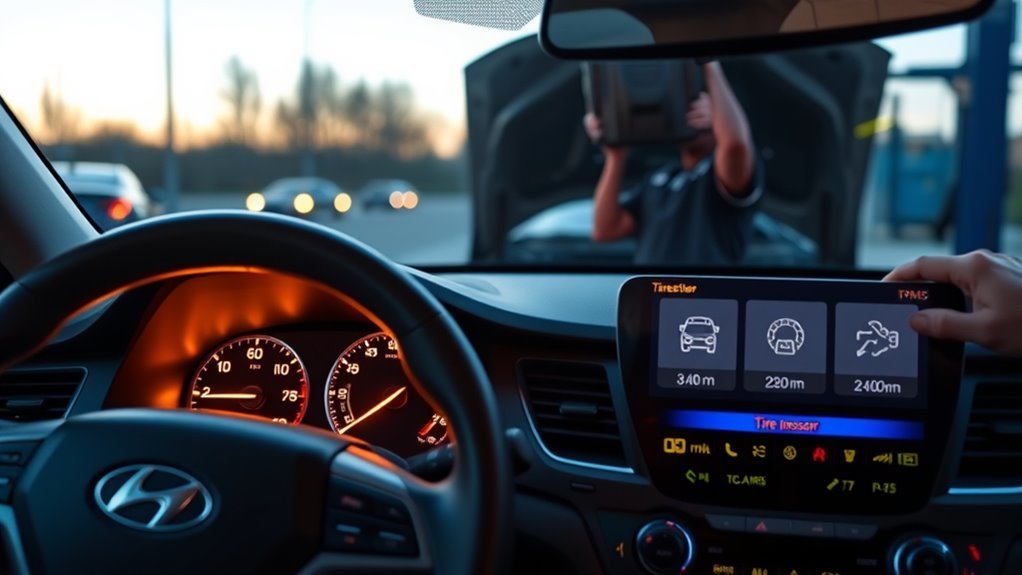
If your Sonata’s TPMS warning light comes on, you’ll first confirm tire pressures with a calibrated gauge and inflate any low tires to the recommended PSI; if pressures are correct but the light stays illuminated, perform the TPMS reset (ignition to ON, press the reset button under the steering wheel) and allow the system to relearn sensor values. Next, follow a structured checklist: 1) Visual inspection — scan tires for punctures, damage, or valve-core leaks. 2) Recheck pressures after short drive — verify direct TPMS sensor transmission. 3) Interpret warning light meanings — steady light = underinflation or required reset; blinking ~1 minute then steady = system malfunction or sensor failure. 4) If blinking occurs, record fault pattern and plan sensor diagnosis or replacement. 5) If light persists after reset and inspection, isolate by checking each wheel sensor with a diagnostic tool. These TPMS troubleshooting tips let you act decisively, preserve mobility, and resist dependence on immediate shop visits when safe, practical intervention suffices.
Maintenance, Reset Procedures, and When to See a Technician
1 clear routine keeps your Sonata’s TPMS reliable: check tire pressures against the driver‑side door jamb, inspect sensors when you change or rotate tires, and reset the system after any pressure adjustment or rotation using the onboard settings or the reset button near the steering column. You’ll perform simple sensor maintenance and routine checks to keep control.
- Verify tire pressure monthly and before long trips; correct to the spec on the door jamb.
- Reset TPMS after inflation, deflation, or wheel rotation via settings or the reset switch; follow the owner’s menu prompts.
- Replace TPMS sensors when tires are replaced or sensors exceed ~10 years; aging sensors cause inaccurate readings.
- If the TPMS warning lamp stays on after checks and reset, get diagnostic scanning by a certified technician to test sensor batteries, valve stems, and receiver integrity.
Stay proactive: scheduled maintenance and prompt sensor maintenance free you from unexpected alerts and preserve driving autonomy.
Frequently Asked Questions
Where Is the TPMS Reset Button on a Hyundai Sonata?
The TPMS reset button’s under the dashboard near the steering column or lower driver’s side dash; you’ll press and hold it to trigger TPMS sensor calibration so your Tire pressure monitoring system relearns and frees you from false alerts.
What Is the TPMS System on a Hyundai Sonata?
The TPMS functionality on your Hyundai Sonata is a direct tire pressure monitoring system that uses in-wheel sensors to send real-time tire pressure data wirelessly to the vehicle, so you can maintain safety, efficiency, and control.
Conclusion
You now know how Sonata TPMS works, whether it’s indirect (using ABS wheel‑speed comparisons) or direct (sensing pressure/temperature at each wheel). Keep in mind that about 25% of roadside breakdowns in the U.S. relate to tire issues, so TPMS isn’t just convenience — it’s safety. Do routine pressure checks, follow reset steps in your owner’s manual, and see a technician if a warning stays on, sensors fail, or you suspect slow leaks or sensor battery end‑of‑life.

Related Articles

Hyundai Sonata Tire Road Hazard Warranty: What Does It Cover?
Find out when Hyundai's Sonata tire warranty actually pays for punctures, blowouts, and pothole damage—and what extra coverage you might need.
Read More
What Are Directional Tires on a Hyundai Sonata? Full Explanation
In exploring directional tires on your Hyundai Sonata, discover how their unique tread design boosts performance—but what happens if they're installed incorrectly?
Read More
Hyundai Sonata TPMS Sensor Malfunction: How to Diagnose & Fix
Step into the world of Hyundai Sonata TPMS sensor malfunctions and discover essential diagnostic tips—your solution awaits just beyond the next click.
Read More