
Difference Between All-Season and Winter Tires for RAV4
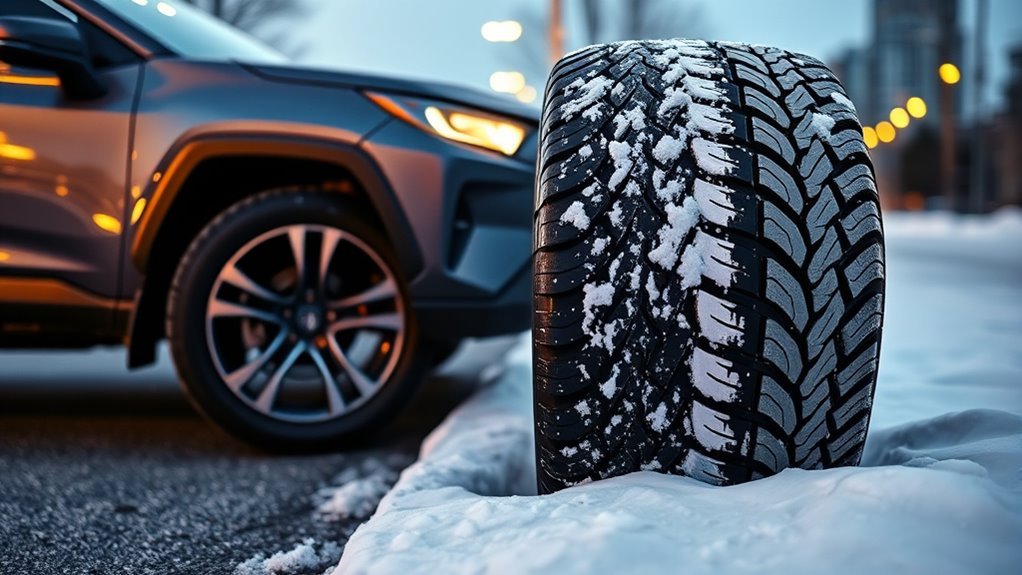
When choosing tires for your RAV4, all-season tires excel in moderate weather but struggle below 7°C, making them less effective on ice and snow. In contrast, winter tires feature specialized tread patterns and materials to provide superior grip and safety in harsh conditions. They can greatly enhance performance during winter months while prolonging the life of your all-season tires. To make the best choice for your driving habits, there’s a lot more to take into account.
Understanding All-Season Tires for Your RAV4
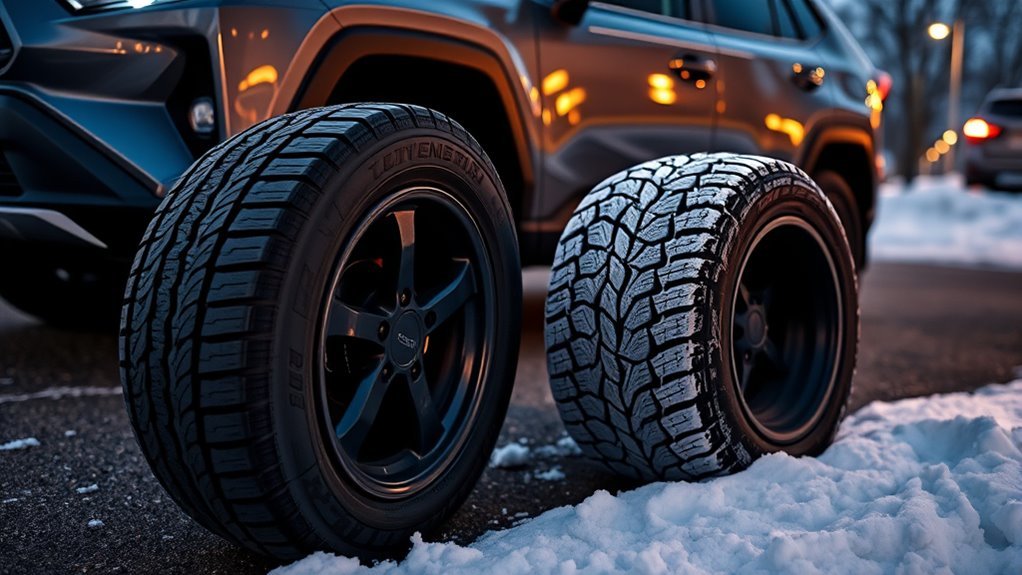
When you’re considering tires for your RAV4, understanding all-season options can make a significant difference in your driving experience. All-season tires are designed for moderate weather, offering a balance of performance in dry, wet, and light winter conditions. Their tread design optimizes traction, making them suitable for year-round use in milder climates. While they excel in comfort levels, especially on highways, their performance drops in temperatures below 7°C (45°F).
These tires provide decent tire longevity, reducing the need for seasonal changes and saving you money. However, they can’t match the specialized grip of winter tires in extreme conditions. If you live in an area with mild winters, all-season tires can be a cost-effective solution that enhances your daily commute while ensuring you stay connected to the road. Embrace the freedom of choosing a tire that meets your needs without the hassle of constant changes.
Understanding Winter Tires for Your RAV4
- Improved Winter Safety: Shorter stopping distances in icy conditions compared to all-season tires.
- Enhanced Handling: Optimized performance metrics that boost driver confidence during severe weather.
- Climate Adaptation: Tailored for regions with heavy snowfall, prolonging the lifespan of your all-season tires.
Switching to winter tires not only provides better traction and safety but also reduces seasonal wear on your all-season tires, making it a smart choice for winter driving. Embrace the liberation of confident driving, no matter the weather!
Key Differences Between All-Season and Winter Tires
Winter tires provide standout performance in harsh conditions, but understanding how they differ from all-season tires is key to making an informed choice. Here’s a breakdown of the key differences:
| Feature | All-Season Tires |
|---|---|
| Temperature Range | Best above 7°C |
| Tread Design | Smoother, optimized for rain |
| Winter Tires | |
| Temperature Range | Ideal below 7°C |
| Tread Design | Blocky patterns for snow/slush |
All-season tires might seem cost-effective year-round, but winter tires utilize advanced tire technology to enhance grip and safety in colder weather. They feature softer rubber compounds, which greatly reduce stopping distances on ice and snow. If you frequently drive in harsh winter conditions, dedicated winter tires guarantee better seasonal performance, especially when maneuvering through heavy snowfall.
Performance of All-Season and Winter Tires in Various Weather Conditions
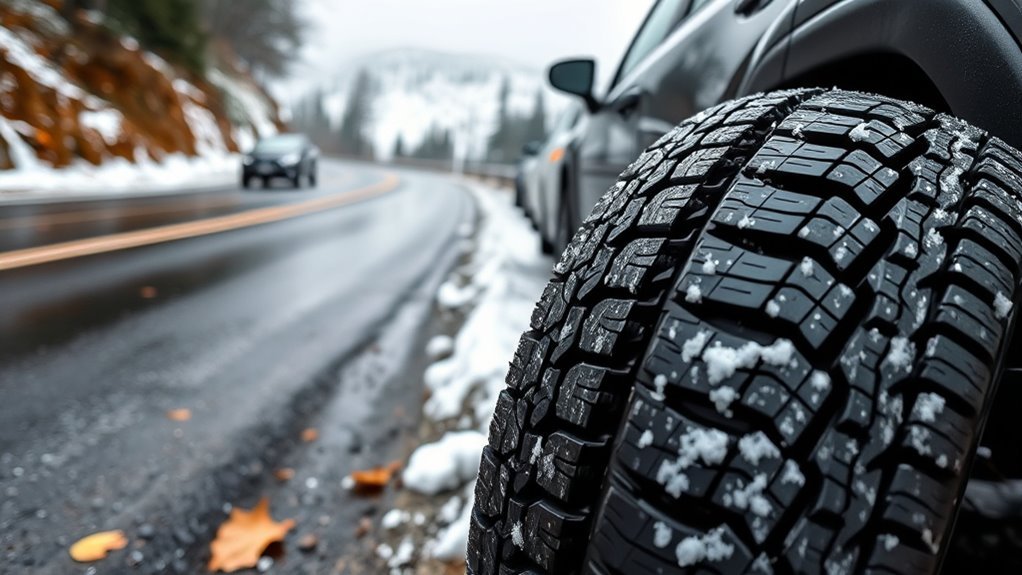
When choosing between all-season and winter tires, understanding their performance in different weather conditions is essential. All-season tires excel in dry and wet conditions above 7°C, but they struggle in snow and ice. In contrast, winter tires are specifically engineered to grip icy surfaces, ensuring safety and better handling when temperatures drop.
Dry and Wet Performance
While all-season tires offer a balanced performance in both dry and wet conditions, their capabilities begin to wane as temperatures drop. You’ll notice that, while they effectively channel water and reduce hydroplaning risks, their traction performance diminishes below 50°F.
- All-season tires excel in warm, dry conditions, maintaining decent tread wear.
- In wet weather, they provide reliable handling, but winter tires outperform them in slushy situations.
- Winter tires, with their specialized compounds, offer better grip and shorter stopping distances on icy roads.
Choosing the right tire for your RAV4 means understanding how these factors influence safety and performance. Ultimately, knowing when to switch can enhance your driving experience and keep you safe in changing weather conditions.
Snow and Ice Handling
Understanding how tires perform in snowy and icy conditions is essential for your safety on the road. All-season tires may handle light snow, but they struggle in deep snow and icy situations. Winter tires, engineered with softer rubber compounds and specialized tread patterns, offer superior snow traction and ice stability. In severe winter weather, they can greatly reduce stopping distances, providing a vital safety advantage.
| Tire Type | Performance in Snow and Ice |
|---|---|
| All-Season Tires | Adequate in light snow, poor in deep snow and ice |
| Winter Tires | Excellent traction and stability in all winter conditions |
Choosing the right tire can be liberating, ensuring you navigate winter roads with confidence and safety.
Why Tire Choice Matters for Safety

Choosing the right tires is essential for your safety on the road, especially in varying conditions. The differences in tread design, temperature performance, and stopping distances between all-season and winter tires can dramatically impact your vehicle’s handling. Understanding these factors helps you make informed decisions that keep you safe, no matter the weather.
Tread Design Differences
When it comes to tire safety, the tread design plays an essential role in determining how well your vehicle performs under various conditions. All-season tires feature smoother tread patterns, fine-tuned for dry and wet traction but struggle below 7°C, making them inadequate for snow and ice. In contrast, winter tires boast larger, blocky treads and softer rubber compounds, enhancing tire flexibility and grip in cold temperatures. This design channels snow and slush away from the contact patch, greatly improving traction.
- All-season tires are rated M+S, indicating moderate winter capability.
- Winter tires reduce stopping distances in icy conditions.
- Tread patterns in winter tires are engineered for peak safety in extreme weather.
Temperature Performance Impact
Tire performance isn’t just about tread design; it heavily depends on the temperature and driving conditions you encounter. All-season tires can lose traction and performance below 7°C (45°F), making them a risky choice in cold weather. In contrast, winter tires, crafted from softer rubber compounds, excel in these temperatures, offering superior grip on icy and snowy roads. Their specialized tread patterns channel snow and slush effectively, enhancing tire longevity and greatly improving stopping distances—up to 30% shorter compared to all-season options. Choosing the right tire type is vital for safety; the wrong choice can compromise your vehicle’s performance and increase the risk of accidents. Stay informed about temperature sensitivity to guarantee a safer driving experience.
Stopping Distance Variations
Stopping distance can vary dramatically based on your tire choice, especially in winter conditions. Winter tires greatly enhance tire safety, offering up to 30% shorter stopping distances on icy roads compared to all-season tires. This difference is essential, as all-season tires can lose traction below 50°F, leading to dangerously extended braking distances.
- Winter tires grip cold surfaces effectively with specialized tread patterns.
- All-season tires may harden in low temperatures, diminishing performance.
- In severe weather, the risks of accidents increase with inadequate tire choice.
Choosing the right tires is important for your safety. Investing in winter tires not only improves stopping distance but can also save lives on slippery roads. Don’t compromise safety for convenience; make an informed choice.
Comparing Costs: All-Season vs. Winter Tires
While you might think all-season tires are the more economical choice, the total cost of ownership can be more complex. All-season tires usually range from $100 to $200, making them budget-friendly upfront. However, winter tires, priced between $120 and $300, offer superior grip in icy conditions, potentially preventing costly accidents.
Investing in winter tires may seem pricey initially, but they can actually enhance tire longevity for all-season tires by reducing wear through seasonal switching. This means fewer replacements over time.
When conducting a cost analysis, remember to factor in annual tire changes and possible storage fees for winter tires. While all-season options might seem cheaper, winter tires can lead to savings in the long run by enhancing safety and preserving your all-season set. Ultimately, a thoughtful approach to costs can empower you to make the best tire choice for your RAV4.
How Driving Habits Affect Tire Choice
Your driving habits play an essential role in determining the right tire for your vehicle. If you frequently face snowy roads or icy conditions, winter tires can greatly enhance your safety and control. On the other hand, if your winters are mild or you’re mainly traversing urban settings, all-season tires might be a more practical choice.
Frequency of Winter Driving
Frequent winter driving demands careful consideration of tire choice, as it significantly impacts safety and performance. If you’re commuting daily in icy conditions, investing in dedicated winter tires is essential for peak performance metrics and tire longevity. While all-season tires might work for occasional use, they can lose traction below 50°F, posing risks in consistent winter settings.
- Dedicated winter tires offer superior grip for snowy roads.
- Shorter stopping distances enhance safety during icy conditions.
- All-weather tires may compromise in severe winter environments.
Climate and Weather Conditions
When it comes to tire choice, climate and weather conditions play a pivotal role in guaranteeing safety and performance on the road. If you live in a milder climate, all-season tires are your go-to, handling temperatures above 7°C with ease. However, if you frequently drive in snowy regions or icy conditions, winter tires are essential; they excel in temperatures below 7°C, offering superior grip and stopping power. Your driving habits directly impact tire longevity and tread wear. Regular winter commuting demands dedicated winter tires for enhanced safety. For those in areas with variable weather, consider all-weather tires as a balanced option, providing decent performance without the hassle of seasonal changes. Choose wisely to guarantee your safety and optimize tread life!
Vehicle Usage and Lifestyle
Choosing the right tires isn’t just about the weather; it also hinges on how you use your vehicle. Your driving habits directly impact tire longevity and driving comfort, so consider the following:
- If you frequently drive on highways, all-season tires may provide a quieter ride.
- Maneuvering icy roads? Winter tires excel in traction and control, ensuring your safety.
- For those who prefer convenience, all-weather tires can be a practical choice in areas with moderate winters.
Understanding your lifestyle helps you make an informed decision. If you commute daily in severe winter conditions, dedicated winter tires offer better performance than all-season options. Ultimately, aligning your tire choice with your driving habits promotes both safety and comfort on every journey.
When to Switch Tires for Seasonal Conditions
As temperatures start to dip consistently below 7°C, it’s important to evaluate switching to winter tires for maximum safety and performance. All-season tires may handle light winter conditions, but they lose traction in colder weather, putting you at risk. If you live in an area with heavy snowfall, aim to make the switch by late fall to guarantee ideal grip during winter storms.
On the flip side, spring is the perfect time to return to all-season or all-weather tires, particularly when temperatures rise above 7°C. This change enhances your vehicle’s performance in warmer conditions. Regularly monitoring local weather forecasts is vital; unexpected shifts can prompt an earlier switch. Additionally, don’t forget about tire storage—properly storing off-season tires guarantees they remain in good condition, making seasonal maintenance easier and safer. Prioritizing these changes will keep you liberated on the road, ready for whatever nature throws your way.
Maintenance Tips for All-Season and Winter Tires
Switching to winter tires can greatly enhance your vehicle’s performance during colder months, but maintaining both all-season and winter tires is just as important for safety and durability.
Here are some key maintenance tips:
- Check tire pressure regularly; under-inflated tires can hurt fuel efficiency and handling.
- Inspect tread depth frequently; aim for at least 6/32 inches on winter tires and keep an eye on all-season ones, too.
- Store winter tires properly when not in use; keep them in a cool, dry place, preferably stacked or upright to prevent deformation.
Don’t forget about tire rotation, either—every 5,000 to 7,500 miles helps guarantee even wear. Finally, clean your tires to remove dirt and debris that can affect performance. By following these maintenance tips, you’ll enjoy safer driving and extend the lifespan of your tires.
Consulting the Experts for the Right Tire Fit for Your RAV4
How can you guarantee your RAV4 is equipped with the right tires for peak performance? Consulting experts at Anchor Toyota can provide you with personalized recommendations tailored to your typical driving conditions and regional weather patterns. Tire specialists can clarify the performance metrics between all-season and winter tires, focusing on traction and safety in harsh winter conditions.
If you often drive in milder climates, an expert might suggest all-weather tires as a suitable compromise for tire longevity. However, if heavy snowfall and icy roads are common for you, switching to dedicated winter tires becomes crucial. Accessing tailored advice from professionals guarantees you make informed decisions that enhance both your RAV4’s performance and your safety on the road. Don’t underestimate the power of expert guidance—it’s a liberating step toward maximizing your driving experience.
Frequently Asked Questions
Can You Put Snow Tires on a RAV4?
Yes, you can put snow tires on your RAV4. They boost performance in icy conditions, offering better grip and handling. Enjoy the snow tire benefits and drive confidently through winter’s challenges with enhanced safety.
Is It Better to Get Winter Tires or All-Season Tires?
For seasonal driving conditions, winter tires outperform all-season options in cold, icy weather. If you frequently face harsh winters, investing in winter tires enhances safety and performance, making them a smarter choice for your RAV4.
Do AWD SUVS Need Snow Tires?
Yes, AWD SUVs need snow tires. For peak AWD performance and superior snow traction, dedicated winter tires provide enhanced grip and stopping power, ensuring safer driving in icy or snowy conditions. Don’t compromise your safety.
Conclusion
Choosing between all-season and winter tires for your RAV4 isn’t just about convenience; it’s about safety and performance. While all-season tires offer versatility, winter tires grip the road when conditions turn treacherous. Imagine maneuvering a snow-covered street with confidence versus the anxiety of slipping on ice. Your driving habits and local weather dictate your choice, so don’t underestimate the impact of your tires. Make the right decision, and you’ll transform your driving experience from stressful to secure.

Related Articles

Upsizing Wheels on a Toyota RAV4: Pros, Cons, and Considerations
Boost your Toyota RAV4's performance with larger wheels, but discover the hidden trade-offs that could impact your ride before you decide.
Read More
Can I Change Tire Size on My Toyota RAV4? Rules and Recommendations
Are you considering changing the tire size on your Toyota RAV4? Discover the essential rules and recommendations before making a decision.
Read More
What to Do If the TPMS Light Comes On in Your RAV4
Understand the steps to take when the TPMS light illuminates in your RAV4, as overlooking it could lead to serious tire problems.
Read More