
Can a Hyundai Sonata Handle Snow on All-Season Tires?
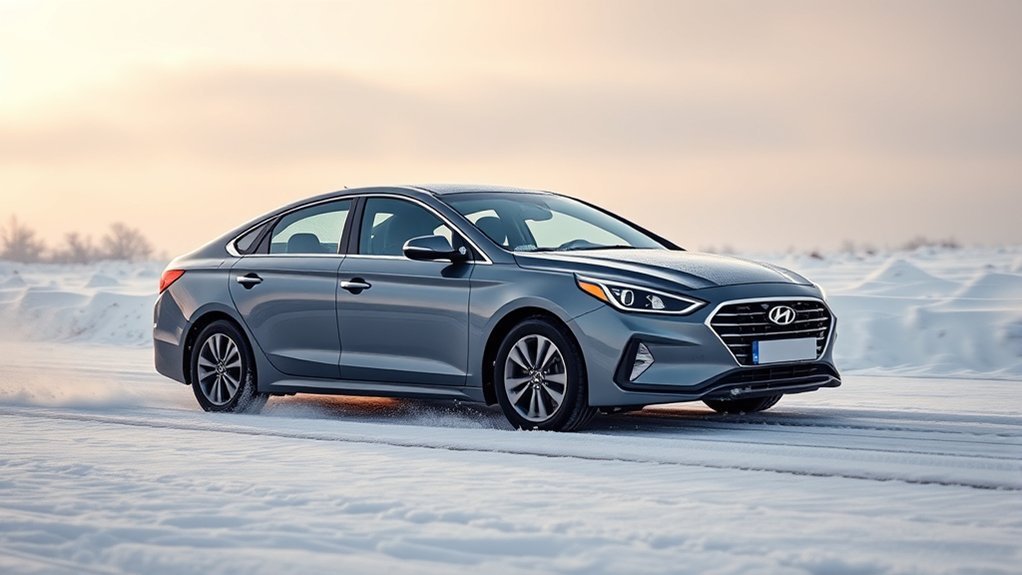
Yes, a Hyundai Sonata can handle moderate snow conditions pretty well on all-season tires, like the Goodyear Assurance WeatherReady. These tires provide decent grip in light snow but struggle as snow depth increases. If you live in an area with heavy snowfall, dedicated winter tires are a smarter choice. Regular maintenance, such as checking tire pressure and tread depth, is essential for safety. Stick around to discover more about keeping your Sonata safe and reliable in winter conditions.
How Does the Hyundai Sonata Perform in Snow?
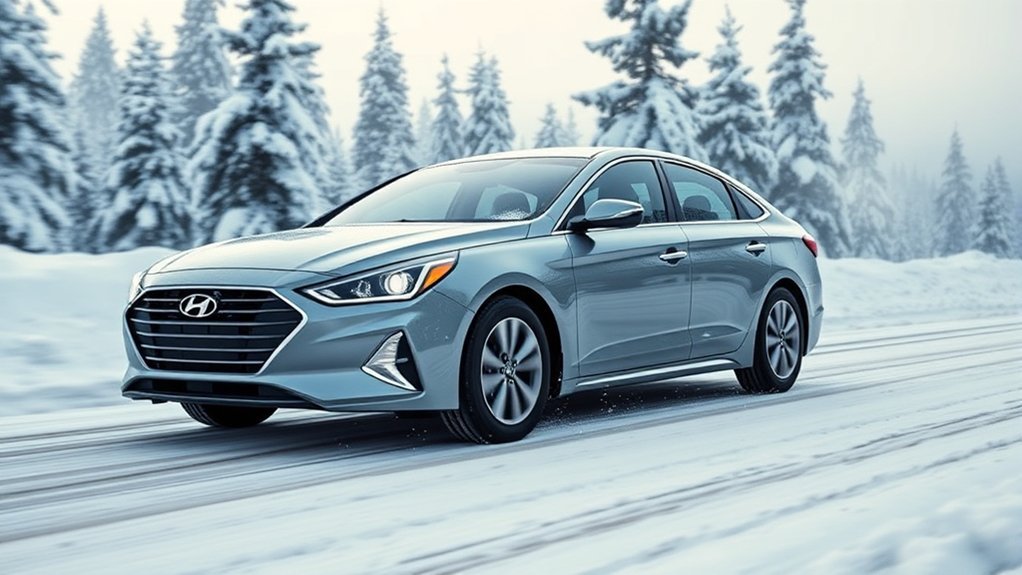
When it comes to maneuvering snowy roads, how well does the Hyundai Sonata really perform? The Sonata handles moderate snow conditions reasonably well, especially with all-season tires like the Goodyear Assurance WeatherReady. These tires boost traction performance in light snow, giving you a decent grip. However, as snow depth increases, their effectiveness can wane.
If you live in an area prone to heavy snowfall, consider switching to dedicated winter tires. Users consistently report enhanced safety and superior snow handling with these options. Regular maintenance is essential too; keeping an eye on tread depth and tire pressure can greatly influence the Sonata’s performance. In short, while the Sonata can manage snowy conditions with the right tires, embracing winter tires is your best bet for ideal handling and safety during those harsh winter months.
What Are the Limitations of All-Season Tires in Winter Conditions?
Although all-season tires offer versatility for various driving conditions, their limitations in winter weather can be significant. These tires are designed for moderate winter conditions but often struggle with deep snow and icy surfaces. The tread design typically lacks the necessary grooves and rubber compounds to grip icy roads effectively, leading to compromised traction and handling.
As temperatures drop below 40°F, many drivers notice reduced grip, making it challenging to navigate snowy conditions. Additionally, the risk of hydroplaning increases in wet weather, as all-season tires may not channel water as efficiently as dedicated winter tires. While they can handle light snow, they often fall short in heavy snowfall or severe winter scenarios. In these conditions, relying solely on all-season tires can compromise your safety, making dedicated winter tires a smarter choice for true winter performance.
Best All-Season Tires for Your Hyundai Sonata
Finding the right all-season tires for your Hyundai Sonata can greatly enhance your driving experience, especially in varying weather conditions. Here are some top contenders to evaluate based on tire comparisons and seasonal performance:
| Tire Model | Key Features |
|---|---|
| Michelin Defender T+H | Up to 80,000 miles tread life; excellent grip |
| Bridgestone Turanza QuietTrack | Focuses on comfort and low noise levels |
| Goodyear Assurance WeatherReady | Outstanding snow performance; durable |
| Continental TrueContact Tour | Balances performance with fuel efficiency |
| BFGoodrich Advantage T/A Sport | Budget-friendly; reliable in various conditions |
Each of these tires offers unique benefits, from durability to comfort. Depending on your driving needs, any of these options can provide the versatility your Sonata requires, whether you’re facing rain, snow, or dry roads.
Maintain Your All-Season Tires for Winter Safety
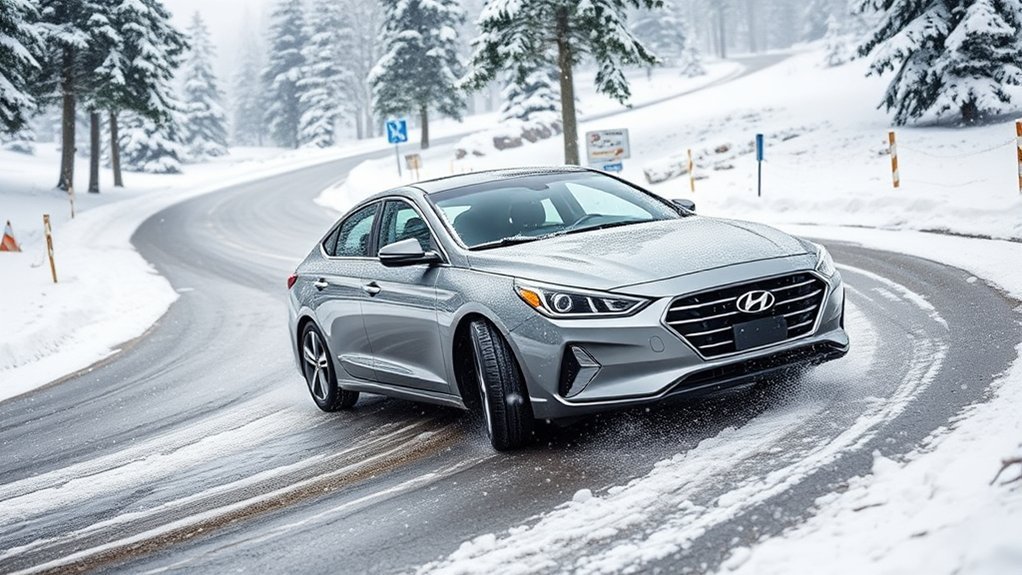
Maintaining your all-season tires is essential for guaranteeing safety during winter months, especially as temperatures drop and road conditions worsen. Start by regularly checking your tire pressure; cold weather can cause it to drop, affecting your tires’ performance. Aim for the manufacturer’s recommended pressure to enhance grip on slick surfaces.
Next, monitor your tread depth. If it’s less than 4/32 of an inch, your tires may struggle for traction on snow and ice, putting you at risk. Rotate your tires every 5,000 to 7,500 miles to promote even wear, enhancing overall performance in winter weather.
Don’t forget to inspect for damage or uneven wear, as these issues can drastically reduce grip. Finally, verify your tires are properly aligned and balanced; misalignment can lead to further traction problems. Taking these steps will help you navigate winter roads with greater confidence and safety.
How to Adjust Your Driving for Snowy Conditions?
Driving in snowy conditions requires a shift in your approach behind the wheel. To navigate safely and confidently, you’ll need to adopt key driving techniques and safety precautions tailored for winter weather.
Driving in snowy conditions demands a careful shift in technique and safety to ensure a confident, secure journey.
- Reduce your speed considerably to maintain control and avoid skidding.
- Increase your following distance to five to six seconds, providing ample time for braking.
- Use gentle acceleration and braking; abrupt actions can lead to loss of traction.
- Anticipate turns early and steer gently to avoid sudden movements that could cause sliding.
When Should You Consider Switching to Winter Tires?
When should you consider switching to winter tires? If you live in an area with frequent heavy snowfall or icy conditions, it’s time to make the switch. All-season tires may not provide the snow traction improvement you need for safety and performance. In regions with mandatory winter tire regulations, like Quebec, you’ll have no choice but to comply from December 1 to March 15. If your Hyundai Sonata struggles on small inclines or feels slippery during winter months, dedicated winter tires can greatly enhance your driving experience. For those in harsher climates, such as upstate New York, prioritizing winter tires is essential for superior grip on slick surfaces. Regularly changing your tires before winter storms can prevent safety issues and boost your confidence behind the wheel. Embrace the winter tire benefits to enjoy a safer, more controlled ride through challenging weather conditions.
Real-Life Drivers’ Experiences With Sonata in Snowy Conditions
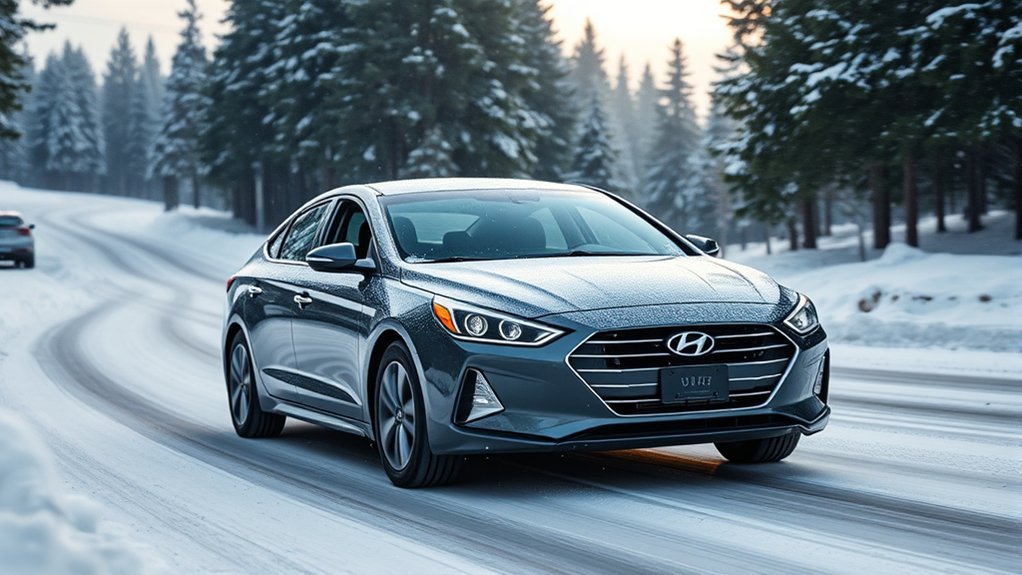
Many Hyundai Sonata owners have shared their firsthand experiences traversing snowy roads, offering valuable insights into the vehicle’s performance in winter conditions. Driver testimonials reveal a mixed bag regarding snow performance, especially with all-season tires.
- Many drivers report adequate handling in light to moderate snow.
- Some experienced reduced traction during heavy snowfall, leading to dissatisfaction.
- Switching to dedicated winter tires has notably improved traction and handling for several owners.
- Issues like vibrations from snow and ice buildup can affect control when using stock tires.
Experiences vary widely based on regional snowfall, with those in harsher climates strongly advocating for dedicated winter tires. If you’re in an area prone to considerable snowstorms, investing in winter tires could enhance both safety and driving enjoyment.
Frequently Asked Questions
Are Hyundai Sonata Good in Snow?
Hyundai Sonatas perform decently in snow, especially with quality all-season tires. However, for ideal snow performance, consider dedicated winter tire options if you frequently face harsh winter conditions. Your safety and control matter most.
Conclusion
In the end, can your Hyundai Sonata tackle snowy roads on all-season tires? While it might handle light flurries with grace, the real challenge comes with deeper snow and icy patches. If you’re not careful, you could find yourself slipping and sliding. So, what’s the right choice for your winter driving? It might just be time to contemplate those winter tires. Don’t wait until you’re caught in a storm to make the switch—your safety depends on it!

Related Articles
Do Tires Affect Hyundai Sonata Gas Mileage? Yes, Here’s How
The surprising ways your tires change Hyundai Sonata fuel economy — from pressure to tread and size — reveal easy MPG gains you’ll want to learn.
Read More
Hyundai Sonata Tire Keeps Losing Air With No Puncture: Causes
Hyundai Sonata tires may lose air mysteriously; discover the hidden causes and prevent further frustration. Explore the solutions now!
Read More
Hyundai Sonata Tire & Wheel Protection Plan Explained
Benefit from five years of zero‑deductible tire and wheel coverage—learn how reimbursements, exclusions, and winter options actually work.
Read More