
All-Season vs Summer Tires: Grip, Wear & Best Climate
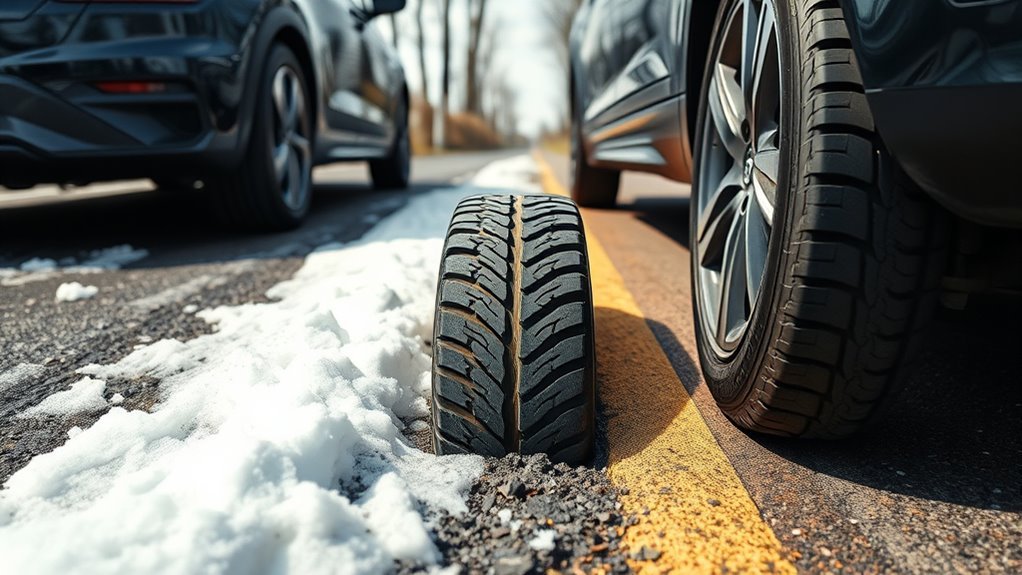
Pick summer tires if you want sharper grip and quicker braking in warm weather; they use softer compounds and flatter treads for 10–20% better cornering but wear faster and lose performance below about 40–44°F. Choose all‑season tires for longer life, wider grooves, and reliable wet or light‑snow traction in mixed climates. Match tires to your local temperature trends and driving style, check size and markings, and keep maintenance up—keep going to get specifics on fit, care, and thresholds.
How to Choose: All‑Season vs Summer Tires
Which tire suits you depends mostly on where and when you drive. You’ll pick summer tires if you live in consistently warm areas and want sharper grip, shorter stopping distances and crisper cornering—typically 10–20% better in heat—because their higher land-to-sea ratio and shallower grooves maximize road contact. If you crave freedom from seasonal swaps and occasional light snow, you’ll favor all-season tires; their deeper tread patterns boost versatility, longevity and lower replacement urgency. Compare wear: summer rubber wears faster, often replaced around 4/32″, while all-season blocks last to 2/32″. Expect tradeoffs in comfort and tire noise—summer compounds can be quieter on smooth roads but may transmit more road feel; all-seasons usually smooth the ride. Base your choice on local climate and driving style: prioritize peak performance and handling freedom with summers, or choose all-seasons for dependable, lower-maintenance mobility across mild conditions.
When to Switch: Temperature Thresholds for Tires
When temperatures regularly stay above about 44°F, swap on summer tires to enjoy noticeably better grip, shorter stops and sharper cornering; if you see readings around freezing or occasional light snow, keep all‑season tires for their greater cold‑weather flexibility and versatility. You should track local trends, not single days, and use temperature monitoring plus forecast data to plan seasonal changes confidently. In regions with frequent sub‑45°F periods, favor winter or all‑season rubber to avoid the rigidity loss that hurts summer tires below ~40°F. Make choices that free you from weather anxiety while maximizing control and tire life.
Swap to summer tires once nightly lows stay reliably above ~44°F; use all‑seasons or winter rubber when cold or snow appears.
- Monitor nightly lows and 7–14 day forecasts before committing to a change.
- Prioritize safety over calendar dates; thresholds matter more than months.
- Use all‑seasons when you need one tire for variable temps and occasional light snow.
- Choose summer tires only when warm periods are consistent and predictable.
Stay decisive, practical, and liberated by letting objective temperature signals guide your swaps.
Why Summer Tires Grip Better
You’ll feel the difference because summer tires use softer rubber that stays pliable in warm weather, so they bite the road where all-seasons stiffen up. Their shallower, streamlined tread increases actual contact area for sharper handling and shorter stopping distances. Combined with heat-activated adhesion, that chemistry and contact give you noticeably better cornering and wet traction in warm conditions.
Softer Rubber Compound
Think of grip as a chemical advantage: summer tires use a softer rubber compound that stays pliable above about 44°F, letting the tread conform to the road and deliver noticeably better traction than the harder compounds in all-season tires. You get tangible tire performance benefits from that rubber composition—shorter stops, sharper turns, and more confident acceleration in warm conditions. That freedom to push limits comes with trade-offs you should know.
- Softer compound stays flexible above ~44°F, improving grip.
- Increased traction yields 10–20% better braking and cornering vs all-seasons.
- Performance drops sharply below ~40°F, so summer tires aren’t for cold climates.
- Fewer grooves in tread design support aggressive road contact and control.
Choose summer tires when you value liberated, precise handling in consistent warmth.
Tread Contact Area
A larger tread contact area is a key reason summer tires stick better: shallower grooves and a higher land-to-sea ratio put more rubber on the road, so you get greater traction in both dry and wet conditions. You’ll notice optimized tread design concentrates rubber where it counts, improving cornering and braking so you can drive with more confidence and freedom. Traction factors aren’t just about compound; contact patch geometry multiplies the softer compound’s benefit above 44°F, yielding measurable gains in stopping distance and lateral grip. Compared to all-season tires, summer patterns minimize voids and maximize continuous contact, delivering 10–20% better cornering grip in tests. If you want liberated performance in warm climates, increased contact area is a decisive advantage.
Heat-Activated Adhesion
Having more rubber on the road improves grip, but the material itself matters just as much: summer tires use heat-activated compounds that soften and conform as temperatures climb, so you get noticeably better adhesion and control in warm weather. You feel the difference because heat activation boosts rubber flexibility, letting the tread bite into pavement and shed water more effectively. Compared to all-seasons, summer tires deliver 10–20% better stopping and cornering in warm conditions, translating to real freedom on twisty roads and safer, confident commuting.
- Heat activation keeps the compound pliant as temps rise.
- Increased rubber flexibility improves contact and traction.
- Fewer grooves and higher land-to-sea ratio maximize grip.
- Optimized tread evacuates water, reducing hydroplaning risk.
How All‑Season Tires Balance Grip and Usability
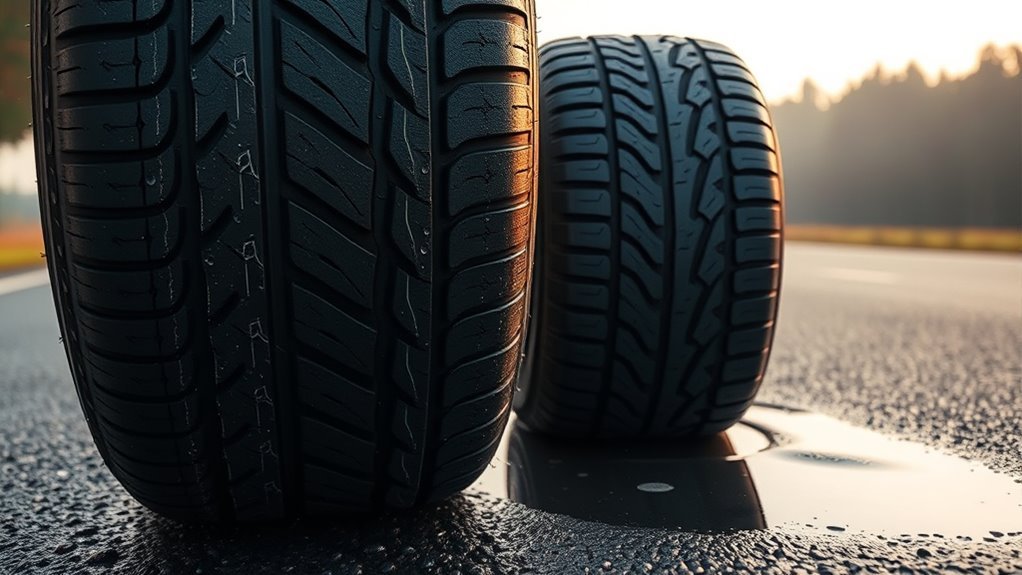
You’ll trade a bit of peak dry and wet grip for consistent, year‑round traction with all‑season tires, thanks to deeper grooves and adaptable rubber that handle wet and light snow without switching tires. That compromise also buys you longer tread life and a smoother ride—most all‑seasons wear to 2/32″ before replacement, versus many summers that need attention earlier. Consider maintenance and tread monitoring as part of the cost-benefit: fewer seasonal changes and generally better durability make them a practical, cost‑effective choice for moderate climates.
Year-Round Traction Tradeoffs
When you need one tire for most of the year, all-season models strike a deliberate balance between grip and usability by blending tread features and compound choices that handle dry, wet, and light snowy conditions without matching specialized performance. You get usable traction performance and seasonal adaptability without swapping tires every season, but there are tradeoffs.
- Wider grooves and sipes improve wet grip and light-snow handling, giving confidence in mixed weather.
- Symmetrical designs offer flexible rotation and usually longer wear than summer tires.
- Compared to summer tires, contact patch design favors durability over peak cornering grip.
- In frequent severe winter conditions, you’ll compromise safety and should choose winter-specific tires.
You’re choosing freedom and convenience, accepting modestly reduced peak performance for dependable year-round usability.
Maintenance And Tread Life
Beyond seasonal performance tradeoffs, how you care for all-season tires largely determines how well they balance grip and longevity. You’ll benefit from deeper tread depths and wider grooves that give durable mileage—typically 40,000 to 70,000 miles—while maintaining usable traction in rain and light snow. Prioritize tire health: check tread depth, pressure, and sidewalls monthly so you catch uneven wear early. Follow a consistent rotation schedule to equalize wear across axles; that simple routine often extends service life more than sporadic upgrades. Compared with softer summer tires that grip better hot pavement but wear faster, all-seasons trade a bit of peak traction for broader usability and resilience. That tradeoff frees you to drive confidently across mild climates.
Tread Life: Why Summer Tires Wear Faster

Because summer tires use softer rubber compounds and shallower tread, they deliver superior grip in warm conditions but wear noticeably faster than all-season tires; you’ll often need to replace them around 4/32″ of tread versus the 2/32″ threshold common for all-seasons. You should know tread wear reflects a deliberate trade-off: you get better traction and responsiveness at the cost of shorter service life. Temperature impact matters — softer compounds perform best above ~40°F and degrade quicker under heavy heat and abrasion.
- Softer compound: designed for grip, accelerates wear under regular driving.
- Shallower tread: reduces lifespan but improves road contact and steering feel.
- Seasonal use: switching tires each season frees you from unnecessary wear.
- Monitoring frequency: you’ll check summer tires more often than all-seasons to avoid unsafe tread levels.
Choose freedom from compromise by matching tire type to climate and driving goals; accept shorter tread life for liberated performance when conditions allow.
Handling & Braking: All‑Season vs Summer Tires
Although both tire types will get you down the road, summer tires give you noticeably sharper handling and shorter stopping distances in warm, wet, and dry conditions, typically improving cornering and braking performance by about 10–20% versus all-seasons. You’ll feel quicker turn-in, firmer steering feedback, and reduced stopping distances when temperatures stay above 44°F. That edge translates to more confident, liberated driving across varied driving conditions.
| Feature | Summer Tires | All‑Season Tires |
|---|---|---|
| Grip (warm/dry) | High | Moderate |
| Braking | Shorter distances | Longer distances |
| Tread design | Shallow grooves, more contact | Deeper grooves, compromise for light snow |
Choose summer tires if you prioritize tire performance and crisp handling in moderate-to-hot climates. All‑seasons suit varied seasons but trade peak grip for versatility. For drivers craving control and responsiveness, summer tires free you to push performance safely when roads and temperatures allow.
Hydroplaning and Wet Performance Compared
When roads are wet, summer tires give you noticeably better protection against hydroplaning than all‑season tires thanks to shallower, optimized grooves and softer warm‑weather compounds that sustain grip and evacuate water more efficiently; that typically translates to 10–20% shorter stopping distances and crisper cornering in heavy rain when temperatures stay above about 44°F. You want tires that resist hydroplaning risks and deliver reliable wet traction so you can drive boldly, not cautiously.
- Summer tires: optimized tread, shallower grooves, superior water evacuation and wet traction in warm conditions.
- All‑season tires: deeper grooves, symmetrical patterns, adequate wet grip but higher hydroplaning susceptibility.
- Temperature effect: summer compounds stay flexible above ~44°F; all‑season rubber can harden and lose wet performance.
- Use case: pick summer tires if you prioritize spirited, confident wet-road control; choose all‑season only if you need multi‑condition compromise.
This comparison helps you choose freedom on rainy roads without sacrificing safety.
Which Tire for Your Climate and Driving Style
Having looked at wet performance and hydroplaning, let’s match tire types to where and how you drive. You’ll choose based on climate impact and driving priorities: grip, longevity, or year-round convenience. Summer tires give superior handling above 44°F with shallower grooves for max road contact; pick them if you drive spiritedly in consistent warm weather. All-season tires suit varied, mild climates, trading peak performance for durability and deeper tread that eases wear.
| Driving Situation | Recommended Tire Type |
|---|---|
| Consistent warm, performance driving | Summer tires |
| Mild seasons, mixed conditions | All-season tires |
| Frequent snow/ice | Winter tires (recommended) |
| Desire fewer seasonal swaps | All-season tires |
Assess your daily routes, temperature ranges, and how much control you want. If liberation means pushing limits safely, choose summer tires in warm climates. If freedom is low-maintenance, all-seasons reduce swaps but accept some climate impact on peak grip.
Buying Checklist: Size, 3PMSF/M+S, Warranties, and Mixing
Start by matching the tire size on your vehicle’s placard exactly—diameter, width, and aspect ratio affect handling, speedometer accuracy, and fitment—then check performance markings like 3PMSF for certified winter capability or M+S for general all-season use so you know what conditions a tire is designed for. You’ll also want clear expectations on warranties and mixing rules to keep control and freedom on the road.
- Verify tire pressure specs and recommended inflation to protect ride quality and wear.
- Compare warranty coverage (e.g., Michelin Primacy Tour A/S 45,000–55,000 miles) against expected mileage.
- Match tread patterns and depth across axles; mixed treads can weaken handling and traction.
- Follow owner’s manual guidance for uniformity; replace at 2/32″ for all-season, 4/32″ for summer.
This checklist helps you choose tires that align with climate, driving style, and independence, minimizing surprises while maximizing safety and performance.
Frequently Asked Questions
At What Temperature Do Summer Tires Lose Grip?
Summer tires start losing grip around 44°F; you’ll notice temperature effects and clear performance limits below about 40°F. You’ll want to switch to more suitable tires to preserve safety, control, and driving freedom.
Do All-Weather Tires Wear Out Faster Than All-Season Tires?
Yes — you’ll often see shorter tread life with all-weather tires. In a performance comparison, they trade longevity for versatility; you’ll get better year-round grip but usually faster wear than all-season choices.
Conclusion
You’ll choose based on where and how you drive: if you live where temps dip below ~45°F, get true winter tires; if you rarely see cold, summer tires give sharper grip and quicker stops, but they wear faster. All‑seasons trade peak performance for longer tread life and year‑round convenience. Check size, 3PMSF/M+S markings, warranty and avoid mixing types. Think like a careful mechanic from the 1920s: match tire to climate and driving style.
Related Articles

Winter Tires vs Tire Chains: Traction Solutions Compared
In this comparison of winter tires vs tire chains, I reveal which traction choice keeps you safer — and when you absolutely must switch to chains.
Read More
When to Switch Winter Tires to Summer Tires: Timing, Checklist, and Cost Tips
Knowing when to swap winter for summer tires can save safety and money—learn the exact temperature cues, inspection steps, and timing tips to avoid costly mistakes.
Read More
When to Use Winter Tires: Temperature & Timing Guide
How do you know the exact moment to switch to winter tires when temperatures dip toward 45°F—discover timing tips and tradeoffs inside.
Read More