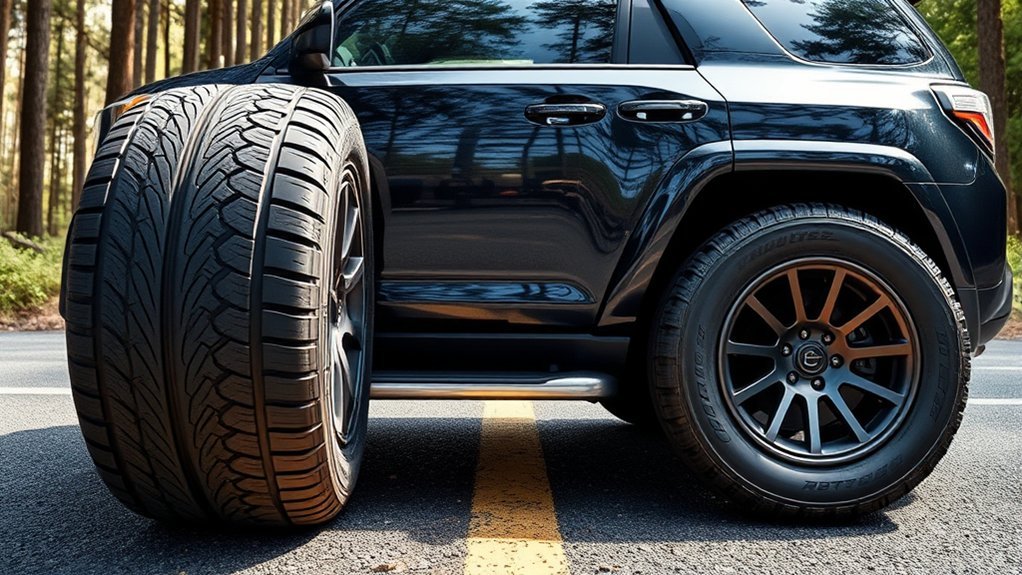
Choosing tires for your Toyota 4Runner starts with your real driving mix, not the most rugged tread pattern. If you spend most of your miles on pavement, all-season tires usually give the best blend of comfort, quietness, wet-road control, and ownership cost. If gravel roads, campsites, job sites, rocky access routes, or loaded outdoor trips show up often, all-terrain tires can be the better fit.
Last updated July 2026
Quick Answer
Choose all-season tires if your 4Runner mostly handles commuting, highway driving, rain, and mild winter roads. Choose all-terrain tires if you regularly drive gravel, dirt, mud, sand, rocky trails, remote roads, or loaded outdoor trips and can accept more road noise, firmer ride quality, and possible fuel economy trade-offs.
Key Takeaways
- All-season tires usually suit daily driving, paved roads, highway comfort, rain, and lower cabin noise.
- All-terrain tires add grip and durability for gravel, dirt, light mud, rocky access roads, and outdoor travel.
- Tire category names do not guarantee winter performance. If snow matters, check the exact tire model and severe-snow marking.
- LT all-terrain tires can add strength, but they may also add weight, stiffness, noise, and rolling resistance.
- Always match tire size, load rating, speed rating, and cold tire pressure to your 4Runner’s door-jamb placard or owner’s manual.
Understanding All-Season Tires for Your 4Runner
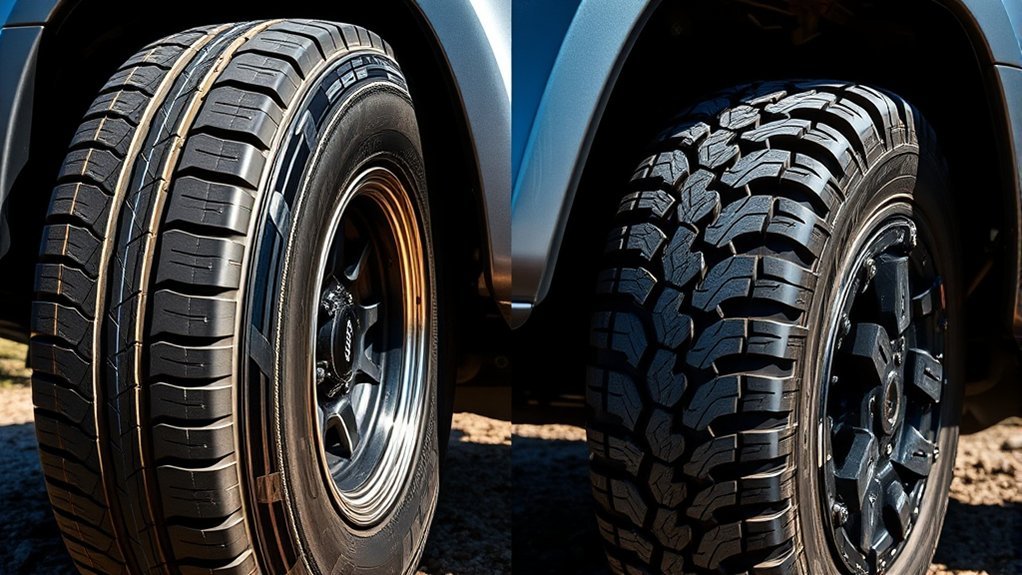
All-season tires are built for balanced road manners. On a 4Runner, they usually feel quieter, smoother, and more relaxed on pavement than aggressive all-terrain tires. They suit drivers who spend most of their time on city streets, highways, school runs, errands, and weekend road trips.
The NHTSA Tire Buyers’ FAQ explains that all-season tires can handle a variety of road conditions and have some mud and snow capability. That does not make them a replacement for winter tires in deep snow, hard-packed snow, or ice.
Pick all-season tires for your 4Runner if you want:
- Lower road noise on highways and neighborhood streets
- A smoother ride over normal pavement
- Predictable wet-road traction from a road-focused tread
- Good daily comfort for commuting and family use
- A tire that does not add unnecessary trail-focused weight or stiffness
- Better value for a 4Runner that rarely leaves paved roads
Note: “All-season” does not mean “best for every season.” If you drive in heavy snow, icy mountain roads, or long winter conditions, compare dedicated winter tires or severe-snow-rated tires before you buy.
Advantages of All-Terrain Tires for Off-Road Use
All-terrain tires are made for drivers who need one tire that can handle both pavement and rougher surfaces. NHTSA describes all-terrain tires as a compromise between on-road driving and off-road capability. That is the key point for a 4Runner owner: you gain trail confidence, but you may give up some quietness, smoothness, and efficiency.
[Products Worth Considering]

Upgrade your ride with a 2-pack set of 26x1.95 folding mountain bike tires built for dependable traction on mud, rocks, and trail surfaces. A reinforced puncture-resistant layer helps protect against sharp debris, while included butyl inner tubes provide strong sealing and shock absorption. Ready for fast swaps with included tire levers and universal sizing for most bikes.

Monitor tire tread wear with a smart, color-coded depth gauge that shows clear condition ranges at a glance. The bar is range marked for fast, easy readings, helping you maintain safer traction and performance. Each gauge is portable with a pocket clip, and the set includes 20 units for daily use and sharing.

Keep your tires properly inflated with this analog VONDIOR tire pressure gauge, designed for fast, easy readings without batteries. The swiveling, two-axis hose and large glow dial help you measure at any tire angle with instant visibility. Built with a protective rubber shield, it supports durable, low-maintenance use for cars and trucks.
Enhanced Traction Capability
All-terrain tires usually use larger tread blocks, wider grooves, and more open tread patterns than road-focused all-season tires. That design can help the tire bite into loose gravel, dirt, sand, and shallow mud. It can also help the tread clear small stones and debris better than a tightly packed highway tread.
This matters if your 4Runner often sees forest roads, hunting trails, campsites, unpaved work areas, rocky access roads, or washboard gravel. For occasional dirt parking lots or a dry campground road, an all-season tire may still be enough.
Rugged Durability Features
Many all-terrain tires use tougher sidewall construction, deeper tread, or chip-resistant compounds. These features can help on gravel and rocky surfaces, but they vary by tire model. Do not assume every all-terrain tire has the same sidewall strength, tread depth, or load capacity.
If you carry camping gear, recovery gear, tools, a roof rack, a drawer system, or a loaded cargo area, pay close attention to load index and load range. A tire that looks aggressive is not automatically the right tire for your 4Runner’s weight and use.
Versatile Terrain Adaptability
All-terrain tires make sense when your week includes both pavement and unpaved driving. They are not as smooth as a touring all-season tire, and they are not as aggressive as a mud-terrain tire. That middle-ground design is why many 4Runner owners choose them.
Choose all-terrain tires if you often drive:
- Gravel roads or forest service roads
- Dry dirt trails or rutted access roads
- Light mud, sand, or loose soil
- Rocky campground or trailhead routes
- Remote areas where sidewall durability matters more than highway quietness
- Loaded outdoor trips where tire strength matters more than a soft highway ride
Key Differences Between All-Season and All-Terrain Tires
The right tire depends on your real driving mix. A 4Runner that spends 90% of its time on pavement does not need the same tire as a 4Runner that sees gravel and trails every weekend.
| Category | All-Season Tires | All-Terrain Tires |
|---|---|---|
| Best Use | Daily driving, commuting, highways, rain, and mild winter roads | Gravel, dirt, trails, campsites, work sites, and rough access roads |
| Ride Comfort | Usually smoother and more relaxed on pavement | Often firmer, especially in LT sizes or heavier constructions |
| Road Noise | Usually lower because of a tighter tread pattern | Often higher because of larger tread blocks and wider voids |
| Off-Road Grip | Limited to light dirt, gravel driveways, and mild unpaved use | Better on loose, uneven, muddy, sandy, and rocky surfaces |
| Fuel Economy | Often easier to keep efficient when size, pressure, and load stay close to factory specs | May drop depending on tire weight, diameter, tread design, and inflation pressure |
| Winter Use | Fine for mild winter if the model supports it, but not ideal for deep snow or ice | Some models work well in snow, but check the exact severe-snow marking and tire test data |
| Best Buyer | Drivers who want a quiet, comfortable, low-hassle 4Runner | Drivers who need added traction and toughness away from pavement |
[Products Worth Considering]

Upgrade your 2024-2026 Tesla Model 3 Highland with REEVAA all-weather mud flaps designed for seamless fit along the original body lines. The set of four delivers strong splash protection against mud, gravel, and road debris while using OEM-grade durable materials. Installation is non-destructive with original hole positions and snap-in clips, and the aerodynamic design helps minimize impact on efficiency.

Measure tyre tread depth precisely with a digital gauge that reads in both MM and inches, helping you monitor safe driving conditions. The large LCD screen is easy to operate, and the compact tool fits for cars, trucks, and motorcycles. It provides high accuracy with a 0-25.4mm range and includes a 1-year warranty for added peace of mind.

Accurately measure tire tread depth with a calibrated gauge marked from 0 to 1 inch in 1/32 inch increments. The color-coded bar helps you quickly identify tread condition ranges, supporting safe driving for trucks, motorcycles, automobiles, and passenger vehicles.
Tread Design Differences
All-season tires usually have tighter tread blocks and smaller voids. This helps create stable road contact, lower noise, and better comfort on pavement. All-terrain tires usually have more open tread and larger shoulder blocks. This helps on loose surfaces, but it can add sound and vibration on highways.
Performance in Conditions
On dry and wet pavement, a quality all-season tire can feel more composed because it is designed around road contact and comfort. On gravel, dirt, and uneven terrain, a quality all-terrain tire gives your 4Runner more bite and better resistance to trail abuse.
For deep snow, ice, and harsh winter roads, do not rely on the tire category name alone. NHTSA notes that winter tires are more effective than all-season tires in deep snow. Look at the exact tire model, winter rating, tread depth, and your local weather before choosing.
Noise and Comfort Levels
Noise is one of the biggest daily trade-offs. A more aggressive tread has more edges and voids, which can create hum on pavement. If your 4Runner is your daily family vehicle, test-drive feedback and owner reviews matter almost as much as trail specs.
The best 4Runner tire is not the most aggressive tire. It is the tire that matches your pavement, trail, weather, load, and comfort needs.
Which Tire Type Fits Your Driving Profile?
Use your real mileage, not your ideal weekend plans, as the starting point. A tire that feels perfect on a rocky trail can feel annoying on a daily highway commute. A quiet highway tire can feel underbuilt when you drive rough access roads every week.
| Your 4Runner Use | Better Tire Direction | Why |
|---|---|---|
| Mostly pavement, school runs, commuting, road trips | All-season | Best chance at quiet comfort, stable wet-road manners, and lower daily trade-offs |
| Pavement plus occasional gravel roads or campsites | All-season or mild all-terrain | A mild tread may be enough if the unpaved roads are dry and maintained |
| Weekly gravel, dirt trails, hunting roads, job sites | All-terrain | Open tread and tougher construction can help with loose surfaces and impact resistance |
| Rocky trails, remote roads, heavy camping load | Stronger all-terrain, possibly LT-rated | Load support and sidewall durability matter more than a soft highway ride |
| Frequent deep snow, ice, or mountain winter travel | Dedicated winter tire or severe-snow-rated tire | Category name alone does not prove deep-snow or ice performance |
When to Choose All-Season Tires for Your 4Runner?
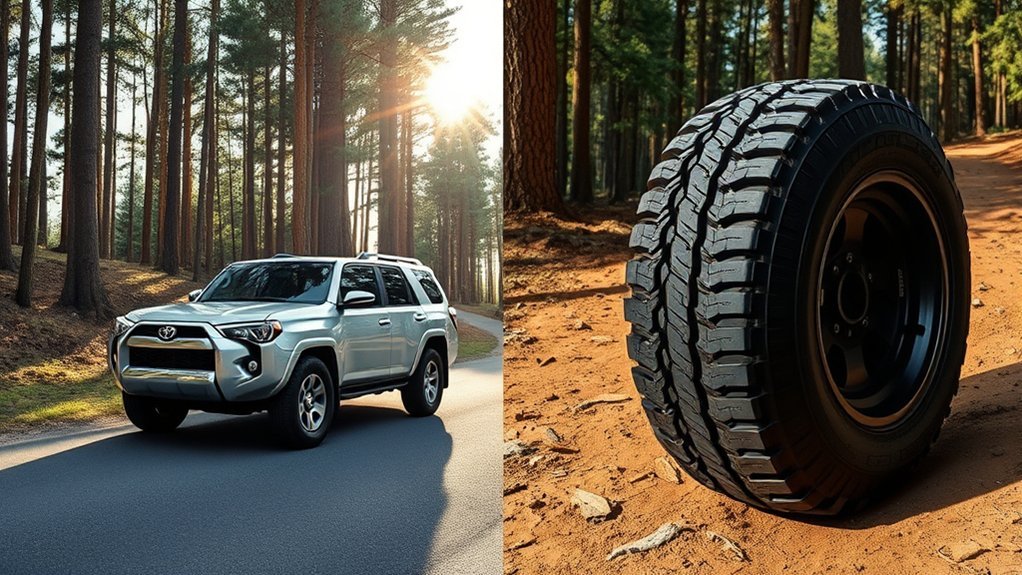
Choose all-season tires if your 4Runner spends most of its time on paved roads. They are a smart fit for drivers who want a comfortable SUV, not a louder or heavier trail setup.
All-season tires make the most sense when you:
- Drive mostly on pavement: City streets, highways, school runs, and errands are where all-season tires shine.
- Value quiet comfort: A road-focused tread usually produces less hum than an aggressive all-terrain tire.
- Want fewer daily trade-offs: Many all-season tires stay closer to factory ride feel than heavier trail-focused tires.
- Only take mild dirt roads: A dry campground road, gravel driveway, or light trailhead access road does not always require all-terrain tires.
- Want straightforward replacement: Staying close to the factory tire type, size, and load rating can reduce fitment surprises.
If your 4Runner is mostly a commuter, an all-season tire often gives you the best blend of comfort, wet-road control, and ownership cost.
How to Choose the Right All-Terrain Tires for Off-Road Performance
Start with how often you truly leave pavement. A weekend trail driver needs a different all-terrain tire than someone who only likes the rugged look. The more time you spend on rough surfaces, the more you should prioritize tread depth, sidewall strength, load capacity, and puncture resistance.
Use this checklist before buying all-terrain tires for your 4Runner:
- Confirm tire size: Check the Tire and Loading Information Label on the driver’s door edge or post, or use your Toyota owner’s manual.
- Match the load rating: The tire must support your 4Runner, passengers, cargo, accessories, and any added gear.
- Check speed rating: Do not choose a tire with a rating that falls below what your vehicle and driving use require.
- Compare P-metric and LT options: LT tires can be stronger but may ride firmer, weigh more, and need different pressure guidance.
- Think about your spare: A mismatched spare can create problems, especially if you change tire diameter.
- Check wheel and fender clearance: Larger tires can rub the fender liner, mud flaps, suspension, or body mount depending on year, trim, lift, and wheel offset.
- Check winter markings: If snow matters, look for a tire model with a severe-snow symbol, not just an aggressive tread.
- Compare tread depth and warranty terms: A deeper tread may help off-road, but mileage warranty rules and rotation requirements still matter.
Warning: Do not use the maximum pressure printed on the tire sidewall as your normal driving pressure. Use the cold tire pressure listed on your 4Runner’s Tire and Loading Information Label or in the owner’s manual. Ask a qualified tire professional for pressure guidance if you switch from P-metric to LT tires.
Toyota provides owner manuals through its Toyota Manuals and Warranties page. NHTSA also tells drivers to use the owner’s manual or Tire and Loading Information Label for the correct tire size and pressure.
[Products Worth Considering]

TIRESHIELD PRO RV tire covers in a set of four deliver year-round protection against UV rays, cracking, fading, water, and snow. The StormLock-System helps keep the covers securely fastened through high wind, while heavy-duty, double-stitched construction supports long-lasting performance. Designed for universal fit, they’re intended for RV, camper, truck, car, and trailer tires within the 26–28.75 inch diameter range, with easy wipe-clean care and storage in the included bag.

Milton S-921 pencil tire pressure gauge helps you maintain optimal tire pressure for passenger cars with accurate readings in PSI and kPa. It features a built-in deflator valve for convenient pressure adjustments, plus a single chuck head and nylon indicator bar for easy use on the go. Built from durable plated brass and designed for reliable performance, it’s a practical road trip and cold-weather maintenance tool.
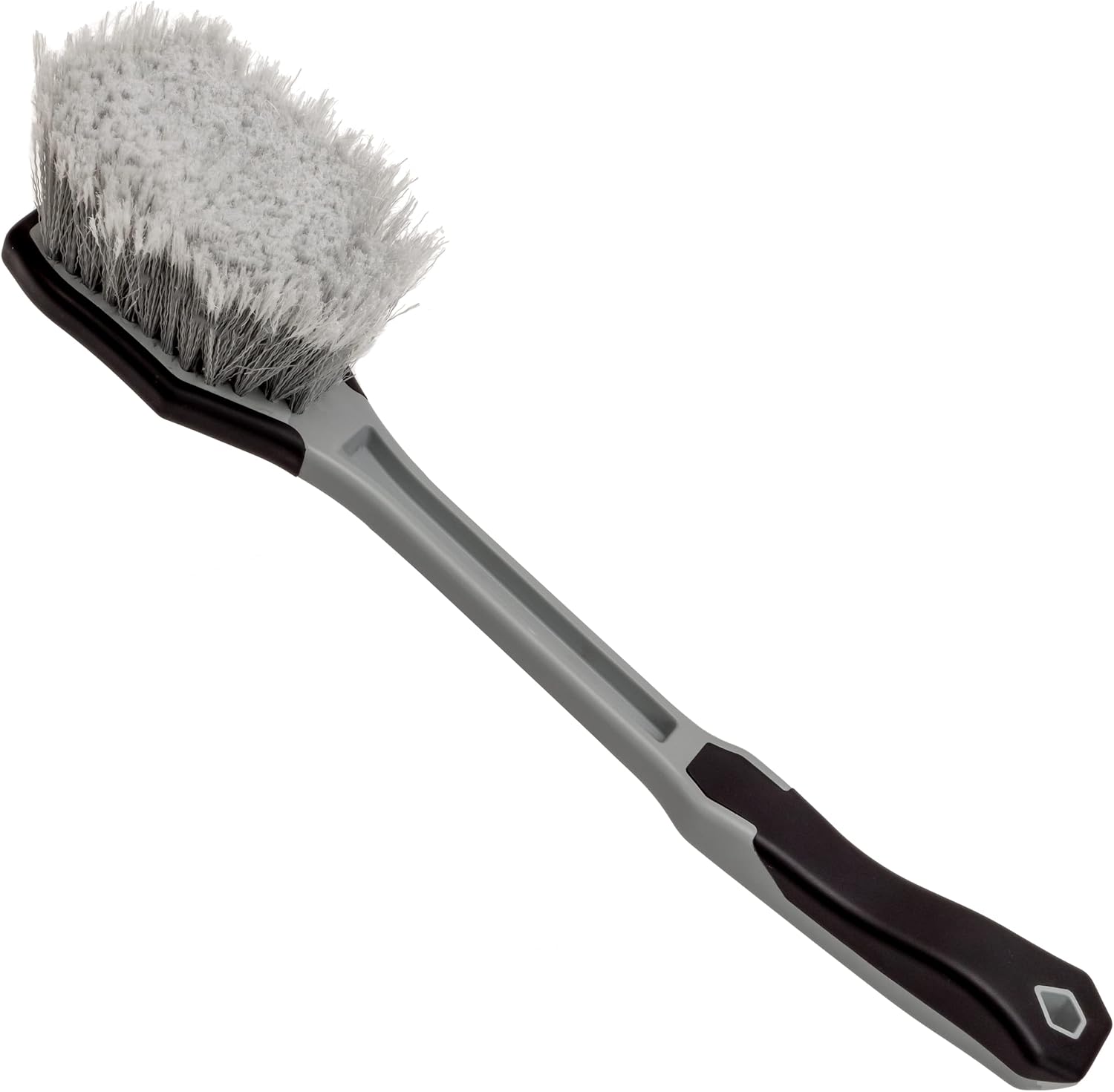
Clean grills, fenders, fender flares, bumpers, and wheel wells with a long-handled brush built for detailed car washing. The soft, triple-flagged bristles and dense scrub coverage help lift dirt gently while making coverage fast and easy. Use it with your favorite car wash soap for tires and exterior surfaces, and it also works for bike, motorcycle, boat, or RV cleaning.
What About All-Weather and Severe-Snow-Rated Tires?
Some tires sit between a quiet highway all-season tire and a rugged all-terrain tire. Many shoppers call these “all-weather” tires, but the name alone is not enough. You still need to check the exact tire model, sidewall markings, warranty terms, and manufacturer data.
If winter grip matters, look for severe-snow-rated options and compare them against dedicated winter tires. A 4Runner with four-wheel drive can help you get moving, but tires still control braking, steering, and grip. In deep snow or ice, tire compound and tread design matter more than the SUV badge.
A severe-snow-rated all-terrain tire may be a good compromise for a 4Runner that sees both winter trips and unpaved roads. A dedicated winter tire may still be the safer choice if you regularly drive icy roads, mountain passes, or long snow seasons.
Easy Maintenance Tips to Keep Your Tires in Top Shape
Good tires still need regular care. This matters even more on a 4Runner because uneven wear, underinflation, extra load, and trail damage can shorten tire life and reduce control.
- Check pressure monthly: NHTSA recommends checking all tires, including the spare, at least once a month when the tires are cold. Cold means the vehicle has not been driven for at least three hours.
- Use the correct pressure: Find the recommended pressure on the driver-side Tire and Loading Information Label or in the owner’s manual.
- Inspect tread depth: Tires are not safe and should be replaced when tread depth reaches 2/32 of an inch. You can also use the penny test as a quick check.
- Rotate on schedule: Follow your owner’s manual. NHTSA says that if the manufacturer recommends rotation, many vehicles use a 5,000 to 8,000 mile interval or sooner if uneven wear appears.
- Watch for uneven wear: Cupping, feathering, or heavy wear on one edge can point to inflation, balance, alignment, or suspension problems.
- Check tire age: The last four digits of the DOT Tire Identification Number show the tire’s manufacture week and year. Age matters even when tread looks usable.
- Inspect after trail use: Look for cuts, bulges, exposed cords, embedded stones, and sidewall scuffs after rocky or gravel driving.
Pro Tip: Check tire pressure before a long road trip, after a big temperature change, and before off-road travel. A portable gauge is cheap, easy to store, and more reliable than guessing by sight.
Frequently Asked Questions
Are all-season or all-terrain tires better for most Toyota 4Runner owners?
All-season tires are better for most 4Runner owners who drive mainly on pavement. They usually ride quieter, feel smoother, and create fewer daily trade-offs. All-terrain tires are better if you regularly drive gravel, dirt, trails, campsites, job sites, or remote roads.
Can all-terrain tires be used for daily driving?
Yes, many 4Runner owners use all-terrain tires every day. The trade-off is that they may feel louder, heavier, and firmer than all-season tires. If most of your driving is highway commuting, choose a milder all-terrain tread or stay with all-season tires.
Do all-terrain tires hurt fuel economy on a 4Runner?
They can, but the change depends on the tire. Heavier construction, larger diameter, deeper tread, and more aggressive tread blocks can increase rolling resistance. A mild all-terrain tire may have a small effect, while a heavy LT all-terrain tire can be more noticeable.
Are all-terrain tires good in snow?
Some all-terrain tires work well in snow, but not all of them do. Look for the exact tire model’s winter rating and severe-snow marking if winter grip matters. For frequent ice, hard-packed snow, or mountain winter driving, dedicated winter tires may still be the better choice.
Should I buy LT tires for my 4Runner?
LT tires can help if you carry heavy gear, drive rocky trails, or need stronger construction. They can also add weight, stiffness, road noise, and cost. For mostly paved use, a properly rated P-metric or standard-load tire may ride better.
How do tire warranties differ between all-season and all-terrain tires?
Warranty length depends on the exact tire, not just the category. Many road-focused all-season tires advertise longer mileage warranties, while some all-terrain tires focus more on durability, cut resistance, or off-road use. Always compare the manufacturer’s treadwear warranty, exclusions, rotation requirements, and road-hazard coverage before buying.
What is the expected lifespan of all-season tires?
There is no single lifespan for all-season tires. Mileage depends on treadwear rating, tire model, alignment, rotation, inflation, road surface, climate, and driving habits. Use the treadwear warranty as a guide, but inspect the tire regularly and replace it when tread depth, age, or condition becomes unsafe.
How do I know when to replace my tires?
Replace tires when tread depth reaches 2/32 of an inch, when wear bars are flush with the tread, or when you see cracks, bulges, exposed cords, puncture damage, or severe uneven wear. Also check tire age and follow the tire maker’s and vehicle maker’s service-life guidance.
Conclusion
All-season tires are the better choice if your 4Runner mostly handles daily driving, highways, wet pavement, and mild winter conditions. They usually ride quieter and smoother, which matters if your SUV doubles as a family vehicle or commuter.
All-terrain tires make more sense when your 4Runner regularly sees gravel, dirt, mud, rocks, trails, or loaded outdoor trips. They add off-road grip and durability, but they can also add noise, weight, ride firmness, and fuel economy trade-offs.
Before you buy, check the owner’s manual, door-jamb tire placard, load rating, speed rating, spare size, clearance, and winter rating. The right tire is the one that fits your real driving, not the one with the most aggressive tread.
Sources
- NHTSA TireWise: tire pressure, tread depth, tire size, rotation, aging, fuel efficiency, and safety guidance
- NHTSA Tire Buyers’ FAQ: all-season tire, winter tire, all-terrain tire, tire rating, and tire-size guidance
- NHTSA Congratulations on Your New Tire Purchase: monthly pressure checks, tire manufacture date, tread inspection, and recall alerts
- NHTSA Consumer Guide to Uniform Tire Quality Grading: treadwear, traction, and temperature rating background
- Toyota Manuals and Warranties: official Toyota owner-manual access for model-specific tire and maintenance details