
2023 Honda Accord Tire Size: Factory Specs Explained
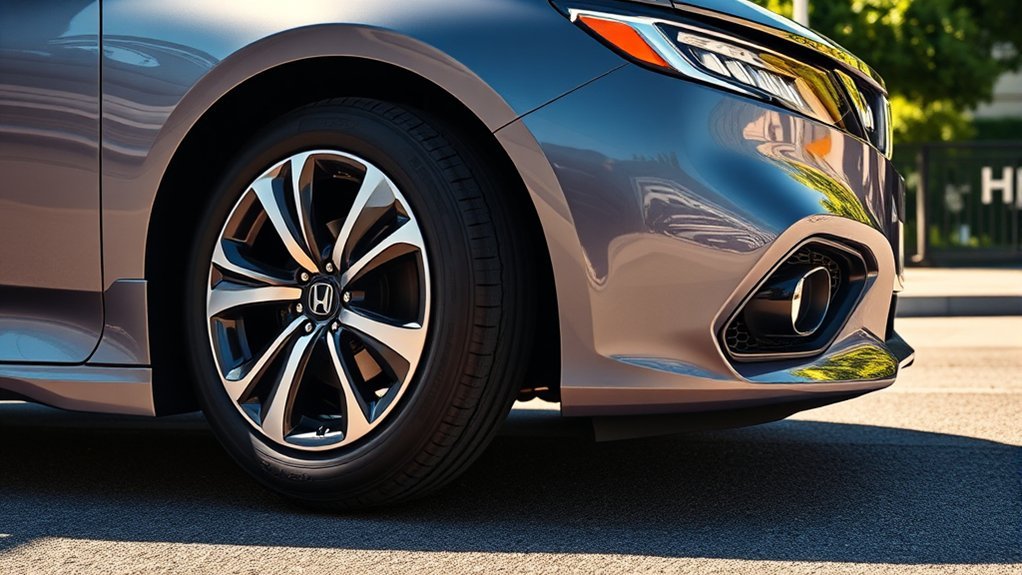
The 2023 Honda Accord tire size depends on the U.S. trim. LX, EX, and EX-L Hybrid models use 225/50R17 tires on 17-inch wheels. Sport Hybrid, Sport-L Hybrid, and Touring Hybrid models use 235/40R19 tires on 19-inch wheels. Before buying replacements, confirm the size, load rating, speed rating, and cold PSI on the Tire and Loading Information Label on the driver’s doorjamb.
Last updated: July 7, 2026 · Reviewed against: Honda 2023 Accord wheel/tire data, Honda owner manual tire guidance, and NHTSA TireWise.
Quick Answer
The correct 2023 Honda Accord tire size is 225/50R17 for LX, EX, and EX-L Hybrid trims, or 235/40R19 for Sport Hybrid, Sport-L Hybrid, and Touring Hybrid trims. Do not use older Accord trim names, generic 18-inch fitment charts, or another owner’s wheel setup unless Honda’s label or a qualified tire professional confirms the fit.
Key Takeaways
- The 2023 Accord factory tire sizes are 225/50R17 and 235/40R19.
- LX, EX, and EX-L Hybrid use 17-inch wheels with 225/50R17 tires.
- Sport Hybrid, Sport-L Hybrid, and Touring Hybrid use 19-inch wheels with 235/40R19 tires.
- Honda’s specifications list 94V for the 225/50R17 tire and 96V for the 235/40R19 tire, but your doorjamb label remains the final check.
- Always match replacement tires to the size, load range, speed rating, and cold-pressure rating recommended for your vehicle.
- Check tire pressure monthly when the tires are cold, and inspect tread, sidewalls, and valve stems at the same time.
At a Glance
| Time Required | 2–5 minutes to verify the tire size on the doorjamb label or tire sidewall |
| Difficulty | Easy |
| Tools Needed | Tire pressure gauge, tread-depth gauge or penny, phone camera, and your driver’s doorjamb label |
| Cost | Free to verify; replacement tire cost depends on brand, size, load rating, speed rating, and installation |
What Tire Size Does a 2023 Honda Accord Use?
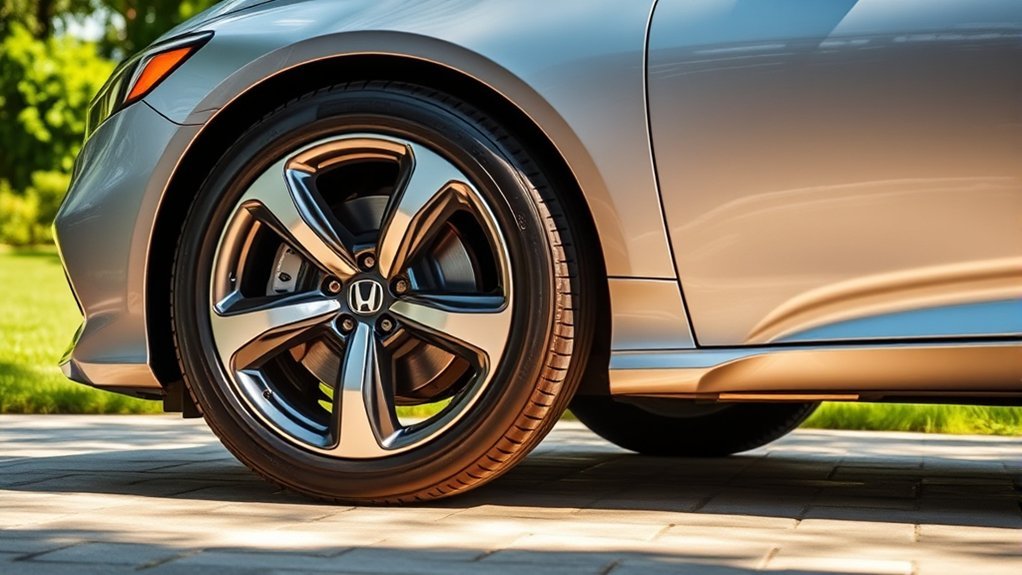
Factory tire size matters because it affects ride comfort, steering response, braking, fuel economy, speedometer accuracy, and how safety systems behave. For the 2023 Honda Accord, Honda lists two factory tire sizes for U.S. models: 225/50R17 and 235/40R19.
According to Honda’s 2023 Accord wheel and tire information, the LX, EX, and EX-L Hybrid use 17-inch alloy wheels with 225/50R17 all-season tires. The Sport Hybrid, Sport-L Hybrid, and Touring Hybrid use 19-inch alloy wheels with 235/40R19 all-season tires.
Warning: Do not choose tires based only on another Accord owner’s setup, an older Accord trim, or an online size chart. Honda warns that improper tires can affect handling and stability. Always confirm your tire size on the driver’s doorjamb label or owner information before buying.
[Products Worth Considering]

EVOULTES heavy duty tire inflator with an integrated gauge delivers accurate pressure readings from 10–120 PSI, helping you inflate, deflate, and check tires in one tool. The 16.5-inch extended dual-head air chuck with swivel base reaches hard-to-access dual wheel valves on trucks and RVs. A brass trigger core and side-mounted air release valve make operation smooth, with standard 1/4" NPT threading and quick-connect compatibility for easy setup.

This portable cordless tire inflator delivers up to 160 PSI with fast 17 L/min airflow to help you quickly top up tires and get back on the road. It features dual power mode, running on a 21V rechargeable battery or a 12V DC adapter for convenient roadside use. An automatic shut-off with digital pressure gauge helps prevent overinflation, and a built-in LED light improves visibility in low-light conditions.

The JACO FlowPro Tire Inflator measures, inflates, and airs down tires up to 100 PSI with battery-free operation and ±2% accuracy after calibration. It features a glowing pressure dial for night visibility, a heavy-duty steel build with a hybrid hose, and a precision push-to-inflate thumb trigger. The patented Lightning Air Chuck locks on for a secure seal, and the kit includes quick-connect hardware for easy inline use with your air compressor.
2023 Honda Accord Tire Size by Trim
Use this table as the starting point for factory tire sizing. Then verify the exact size on your Accord’s doorjamb label, especially if the wheels were changed by a previous owner.
| 2023 Accord Trim | Factory Wheel Size | Factory Tire Size | Honda Spec Rating |
|---|---|---|---|
| LX | 17-inch alloy | 225/50R17 | 94V |
| EX | 17-inch alloy | 225/50R17 | 94V |
| EX-L Hybrid | 17-inch alloy | 225/50R17 | 94V |
| Sport Hybrid | 19-inch alloy | 235/40R19 | 96V |
| Sport-L Hybrid | 19-inch alloy | 235/40R19 | 96V |
| Touring Hybrid | 19-inch alloy | 235/40R19 | 96V |
The 2023 Honda Accord does not use “Sport Special Edition” or “Touring 2.0T” as U.S. factory trim names. Those references usually come from older Accord generations or mixed tire-size databases, so they should not be used to choose tires for a 2023 model.
How Do You Confirm Your Exact Accord Tire Size?
The most reliable place to confirm the tire size is the Tire and Loading Information Label on the driver’s doorjamb. Honda says this label includes the original tire sizes for the front, rear, and spare, along with the proper cold tire pressure.
- Open the driver’s door and look at the doorjamb label.
- Find the tire size printed for the front and rear tires.
- Compare that size with the tire size printed on your current tire sidewall.
- If the size does not match, check whether the wheels were changed before buying new tires.
- Use the label’s cold tire pressure, not the maximum pressure printed on the tire sidewall.
Note: Tire pressure should be checked when the tires are cold, meaning the car has been parked for at least three hours or driven less than 1 mile. If you adjust tire pressure, calibrate TPMS on models that require it.
How Do You Read 225/50R17 and 235/40R19?
A tire size looks confusing at first, but each part has a clear meaning. Using 225/50R17 as an example:
- 225 = tire width in millimeters.
- 50 = sidewall aspect ratio. The sidewall height is 50% of the tire width.
- R = radial construction.
- 17 = wheel diameter in inches.
- 94V = the load index and speed rating shown in Honda’s specification data for the 17-inch tire.
For 235/40R19 96V, the tire is wider, has a shorter sidewall ratio, and fits a 19-inch wheel. That gives the Sport Hybrid, Sport-L Hybrid, and Touring Hybrid a sharper-looking wheel-and-tire package, but the shorter sidewall can also feel firmer over rough pavement.
Replacement Tire Checklist for the 2023 Honda Accord
When replacing your Accord tires, size is only one part of the match. Honda recommends replacing tires with radials of the same size, load range, speed rating, and maximum cold tire pressure rating shown on the tire sidewall.
- Match the tire size: 225/50R17 or 235/40R19, depending on trim and wheel setup.
- Match the load index: the tire must safely carry the vehicle’s required load. Honda’s specification data lists 94 for the 17-inch tire and 96 for the 19-inch tire.
- Match the speed rating: use a rating that meets or exceeds the original requirement. Honda’s specification data lists V-rated tires for both factory sizes.
- Check wheel specs: the wheel diameter, width, offset, and load rating must be compatible.
- Replace in sets when possible: replacing all four tires together helps maintain balanced grip.
- If replacing only two tires: replace the front or rear pair together rather than mixing a single new tire with three worn tires.
Pro Tip: Keep a photo of your driver’s doorjamb label on your phone. It makes tire shopping easier and helps avoid accidentally buying the wrong size, load rating, or pressure specification.
Essential Tire Maintenance Tips for Honda Accord Owners
Correct tire size helps your Accord drive the way Honda intended, but maintenance keeps those tires safe over time. NHTSA says poor tire maintenance can contribute to flats, blowouts, or tread separation, and it reported 511 deaths in tire-related crashes in 2024. Focus on pressure, tread depth, damage checks, rotation, and alignment.
Regular Tire Pressure Checks
Check tire pressure at least once a month and before long trips. Honda says properly inflated tires provide the best combination of handling, tread life, and comfort. Underinflated tires can wear unevenly, hurt fuel economy, and fail from overheating, while overinflated tires can ride harshly and wear unevenly.
- Use a reliable tire pressure gauge.
- Check pressure when the tires are cold.
- Use the cold pressure on the driver’s doorjamb label.
- Add or release air as needed.
- Recheck after adjustment and calibrate TPMS if your model requires it.
Tread Depth Monitoring
Tread depth affects wet-road grip, braking, and hydroplaning resistance. NHTSA says tires should be replaced when tread is worn down to 2/32 inch. Honda also notes that if the tread wear indicator is exposed, the tire should be replaced because worn tires have poor wet-road traction.
You can use a tread-depth gauge for the most accurate reading. In a pinch, use the penny test: place a penny into the tread with Lincoln’s head upside down and facing you. If you can see the top of Lincoln’s head, the tire is too worn.
Tire Rotation Importance
Tire rotation helps distribute wear more evenly and extend tire life. Honda says to rotate the tires according to the maintenance messages on the driver information interface. Directional tires should be rotated front-to-back only, not side-to-side, and TPMS should be calibrated after rotation on models that require it.
If you notice vibration, pulling, cupping, feathering, or rapid shoulder wear, have the tires, balance, suspension, and alignment checked by a qualified technician.
How Do You Know When to Replace Your Honda Accord Tires?
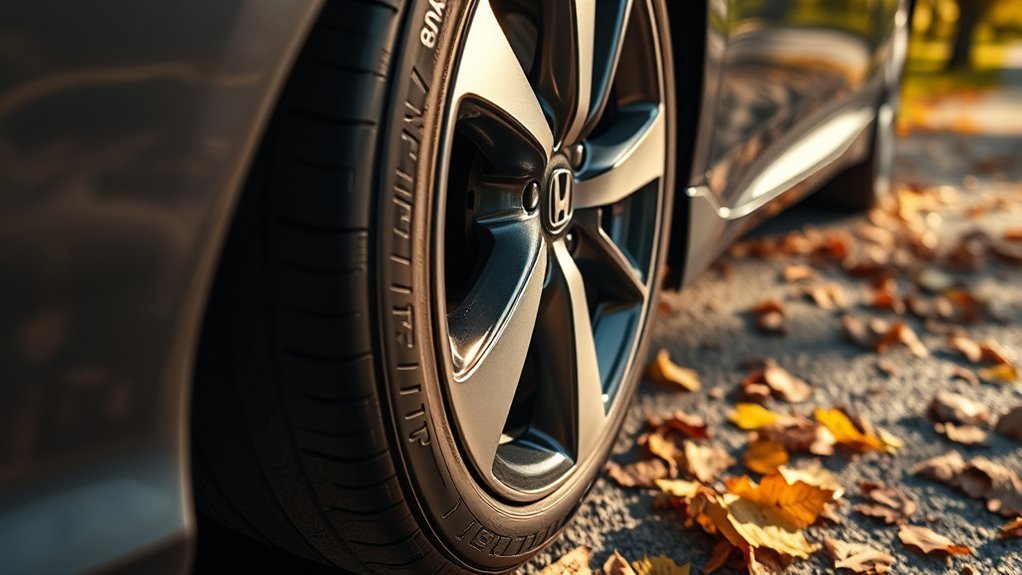
Replace your Honda Accord tires when they are worn, damaged, too old, or no longer able to hold proper pressure. Do not wait for a tire to look completely bald.
- Low tread: replace at 2/32 inch or when tread wear indicators are exposed.
- Sidewall damage: replace tires with cuts, cracks, splits, bulges, exposed cords, or impact bubbles.
- Uneven wear: have alignment and suspension checked before installing new tires.
- Age: Honda recommends annual inspections once tires reach five years old and removing all tires from service after 10 years from the manufacture date, regardless of condition or tread.
- Air loss: if one tire repeatedly loses pressure, have it inspected for punctures, rim leaks, or valve-stem damage.
Your Accord’s tires are the only contact patches between the car and the road. A correct size matters, but so do pressure, tread depth, age, and damage checks.
[Products Worth Considering]
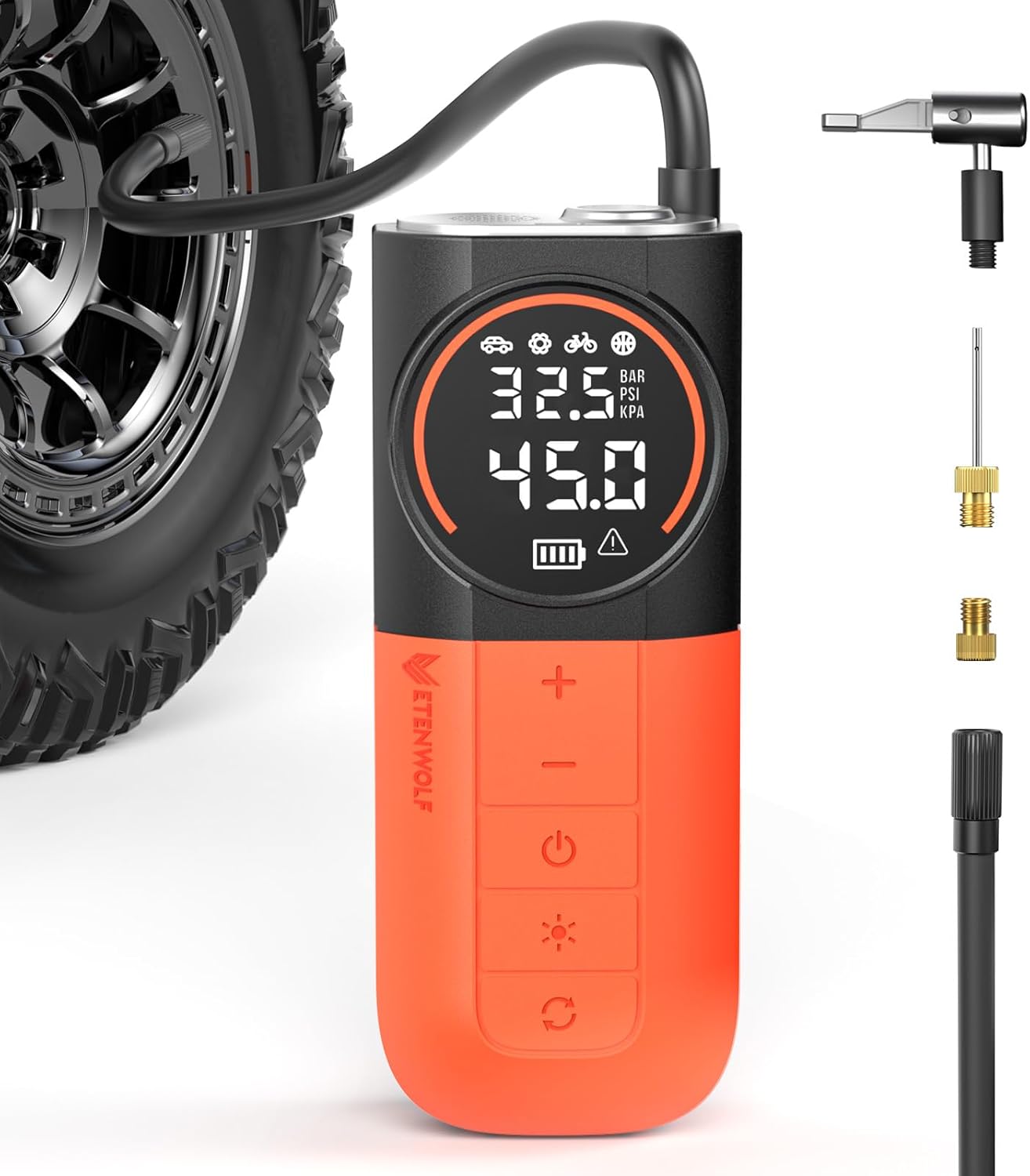
The ETENWOLF S1 cordless tire inflator delivers ultra-fast inflation with up to 160 PSI and a 20 L/min airflow for quicker tire top-offs. Its 5200mAh battery and cooling system support inflating many tires and sports balls on a single charge, while the digital pressure gauge and multi-unit display help you reach the right pressure accurately. With preset modes, pressure memory, an auto-stop feature, and an LED flashlight, it’s built for easy roadside and everyday use.

This portable cordless tire inflator delivers fast, efficient inflation for cars, motorcycles, bikes, and sports balls with a digital pressure gauge. Use the one-click PSI preset with auto shut-off for accurate, hands-free topping to your target pressure up to 150 PSI. It’s compact and rechargeable with a built-in emergency LED light plus valve adapters and accessories for quick, ready-to-go use.
How Do You Read Tire Identification Numbers (TIN)?
The Tire Identification Number, or TIN, is printed on the tire sidewall. It helps identify the tire and includes the manufacturing date code. On most modern tires, the last four digits show the week and year of manufacture. For example, a date code ending in 2523 means the tire was made in the 25th week of 2023.
Check both sides of the tire if you do not see the full TIN on the outside sidewall. Some tires show the complete code only on one side. Use the TIN to estimate tire age and to check tire recall information when needed.
Common Questions About Honda Accord Tire Specs
The safest replacement size is the one listed on your Accord’s driver’s doorjamb label. For the U.S.-market 2023 Honda Accord, that will usually be 225/50R17 on LX, EX, and EX-L Hybrid trims, or 235/40R19 on Sport Hybrid, Sport-L Hybrid, and Touring Hybrid trims.
If you want to change wheel size, do not guess. A different wheel-and-tire package must preserve safe load capacity, brake clearance, suspension clearance, overall diameter, TPMS compatibility, and handling stability. Work with a qualified tire shop if you are considering a plus-size or winter-wheel setup.
Related Honda Accord Tire Guides
- Honda Accord tire size chart for all years and trims
- Honda Accord tire size by generation
- How to properly inflate Honda Accord tires
- How rim width affects tire size on the Honda Accord
Frequently Asked Questions
What tire size does a 2023 Honda Accord LX use?
The 2023 Honda Accord LX uses 225/50R17 all-season tires on 17-inch alloy wheels. Always confirm the size on the driver’s doorjamb label before buying replacements.
What tire size does a 2023 Honda Accord Sport Hybrid use?
The 2023 Honda Accord Sport Hybrid uses 235/40R19 tires on 19-inch alloy wheels. The Sport-L Hybrid and Touring Hybrid also use 235/40R19 tires.
Are the front and rear tire sizes the same on a 2023 Accord?
On the standard U.S. factory setup, the front and rear tires use the same listed size for each trim. Check the driver’s doorjamb label if your Accord has aftermarket wheels or an unknown service history.
Does the 2023 Honda Accord use 235/45R18 tires?
Honda’s U.S. factory information for the 2023 Accord lists 225/50R17 and 235/40R19. A 235/45R18 tire may appear in older Accord discussions or aftermarket fitment charts, but it is not the factory size listed for the 2023 U.S. Accord trims.
Where do I find the official tire size on my Accord?
Open the driver’s door and look for the Tire and Loading Information Label on the doorjamb. It lists the original front, rear, and spare tire sizes, plus the proper cold tire pressure.
What load index and speed rating should I use?
Honda’s 2023 Accord specification data lists 225/50R17 94V for 17-inch trims and 235/40R19 96V for 19-inch trims. Match the original size, load range, speed rating, and pressure guidance for your exact car.
Can I put a different tire size on my 2023 Accord?
A different size may be possible only if the full wheel-and-tire package is compatible with the vehicle. It must maintain safe load capacity, overall diameter, brake clearance, suspension clearance, and TPMS compatibility. For daily driving, the safest choice is the factory size listed on your doorjamb label.
Conclusion
The correct 2023 Honda Accord tire size depends on trim. LX, EX, and EX-L Hybrid models use 225/50R17, while Sport Hybrid, Sport-L Hybrid, and Touring Hybrid models use 235/40R19. Before replacing tires, check the driver’s doorjamb label, match the original size and ratings, and keep up with pressure checks, rotation, tread inspections, and age checks. That simple routine protects handling, comfort, tire life, and safety.
Sources
- Honda Info Center — 2023 Accord Wheels and Tires — factory wheel and tire sizes by trim
- Honda News — 2023 Honda Accord Specifications & Features — factory tire size, load index, and speed rating references
- Honda Owner’s Manual — Tire and Loading Information Label — doorjamb label contents and cold tire pressure location
- Honda Owner’s Manual — Tire and Wheel Replacement — replacement tire size, load range, speed rating, and safety warning
- Honda Owner’s Manual — Checking Tires — cold tire pressure, inspection, wear, and TPMS guidance
- Honda Owner’s Manual — Tire Service Life — tire age inspection and 10-year service limit
- NHTSA TireWise — tire safety, tread depth, pressure, rotation, replacement, and tire-related crash data

Related Articles
How Tall Is a 305 70 R17 Tire? Exact Height, Width & Dimensions
Curious how tall a 305 70 R17 tire really is—and whether it fits your truck?
Read More
Can-Am Defender Tire Size Guide: Stock Specs & Upgrade Options
Just how big can you go on a Can-Am Defender before mods become necessary?
Read More
How Tall Is a 275 65 20 Tire? Exact Height, Width & Dimensions
Check the exact height, width, and hidden fitment effects of a 275/65R20 tire before you buy or upgrade.
Read More