
How to Know When Your Honda Accord Needs Wheel Alignment

You can usually tell your Honda Accord may need a wheel alignment when it drifts or pulls on a level road, the steering wheel sits crooked while you drive straight, or the tires show uneven tire wear. Before booking service, check tire pressure and inspect the tires first, because low pressure, tire damage, wheel balance, brakes, and suspension wear can mimic alignment problems.
Quick Answer
Your Honda Accord likely needs a wheel alignment if it pulls on a flat road, the steering wheel is off-center while driving straight, or the tires wear faster on one edge. Check tire pressure first; if the symptoms remain, schedule an alignment inspection.
Key Takeaways
- The biggest alignment clues are pulling, a crooked steering wheel, and uneven or rapid tire wear.
- Steering vibration can be related to alignment, but tire balance, bent wheels, brakes, or worn suspension can also cause it.
- Honda recommends checking tire pressure regularly and having uneven tread wear inspected for possible wheel alignment issues.
- After a pothole or curb hit, get the alignment checked sooner instead of waiting for the next service interval.
At a Glance
| Time Required | 10–15 minutes for a driveway check; about 45–90 minutes for a professional alignment service. |
| Difficulty | Easy for symptom checks; professional equipment is required to adjust alignment angles. |
| Tools Needed | Tire pressure gauge, flashlight, tread-depth gauge or penny, and a safe flat road for a short test drive. |
| Cost | The driveway check is free. Professional alignment pricing varies by shop, region, and whether worn suspension parts need repair. |
Signs Your Honda Accord Is Due for Alignment

Start with how the Accord behaves on a straight, level road. If the car pulls to one side even when tire pressure is correct, the steering wheel sits off-center, or you constantly make small steering corrections to stay straight, the alignment should be inspected.
Also look closely at the tire tread. Honda’s owner information says that when you see uneven tread wear, a dealer should check the wheel alignment. Edge wear, feathered tread blocks, or one tire wearing faster than the others can all point to an alignment issue.
Steering-wheel vibration can happen with misalignment, but it is not alignment-only. A vibration at highway speed often points to tire balance, a bent wheel, tire damage, worn suspension parts, or brake issues. Treat vibration as a reason to inspect the tires and front end, not as automatic proof that the alignment is bad.
Warning: Do not keep driving normally if a tire has a bulge, exposed cord, deep cuts, sudden air loss, or the car pulls sharply after hitting a curb or pothole. Drive slowly to a safe place and have the tire, wheel, steering, and suspension inspected.
[Products Worth Considering]

This portable cordless tire inflator delivers up to 160 PSI with fast 17 L/min airflow to help you quickly top up tires and get back on the road. It features dual power mode, running on a 21V rechargeable battery or a 12V DC adapter for convenient roadside use. An automatic shut-off with digital pressure gauge helps prevent overinflation, and a built-in LED light improves visibility in low-light conditions.

The JACO FlowPro Tire Inflator measures, inflates, and airs down tires up to 100 PSI with battery-free operation and ±2% accuracy after calibration. It features a glowing pressure dial for night visibility, a heavy-duty steel build with a hybrid hose, and a precision push-to-inflate thumb trigger. The patented Lightning Air Chuck locks on for a secure seal, and the kit includes quick-connect hardware for easy inline use with your air compressor.

EVOULTES heavy duty tire inflator with an integrated gauge delivers accurate pressure readings from 10–120 PSI, helping you inflate, deflate, and check tires in one tool. The 16.5-inch extended dual-head air chuck with swivel base reaches hard-to-access dual wheel valves on trucks and RVs. A brass trigger core and side-mounted air release valve make operation smooth, with standard 1/4" NPT threading and quick-connect compatibility for easy setup.
Effects of Misalignment on Vehicle Performance
Poor alignment changes how the tires meet the road. That can make the Accord feel less stable, especially during braking, cornering, lane changes, or highway driving. It can also wear out tires sooner because the tread is being scrubbed instead of rolling evenly.
Alignment problems can also make the car feel less efficient because the tires are not rolling as cleanly as they should. Tire pressure matters here too: FuelEconomy.gov says properly inflated tires can improve gas mileage by 0.6% on average and up to 3% in some cases, while underinflation can reduce mileage by about 0.2% for every 1 psi drop in the average pressure of all tires.
Here is a cleaner breakdown of what misalignment can affect:
| Effect | What You May Notice |
|---|---|
| Tire life | Inner-edge, outer-edge, feathered, or rapid tread wear |
| Handling | Pulling, wandering, loose steering feel, or reduced straight-line stability |
| Comfort | More steering corrections, driver fatigue, or vibration that needs diagnosis |
| Fuel use | Possible extra rolling resistance, especially when tire pressure is also low |
Check Tire Pressure and Road Crown First
Before you blame the alignment, check the easy causes. A low tire can make your Honda Accord drift, pull, or feel unstable. Honda says properly inflated tires give the best mix of handling, tread life, and comfort, while underinflated tires can wear unevenly and affect handling and fuel economy.
- Check all four tires when they are cold, using the pressure listed on the driver’s doorjamb label, not the maximum pressure molded into the tire sidewall.
- Look for one tire that is visibly lower than the others.
- Test drive on a safe, flat road. Roads are often crowned for drainage, so a slight drift to the right on some roads can be normal.
- If the car still pulls on different flat roads after tire pressure is corrected, schedule an alignment inspection.
Note: A TPMS light does not replace manual tire checks. Some Honda systems detect significant underinflation through wheel-speed behavior, so use a gauge when symptoms appear or before long trips.
Checking for Steering Wheel Misalignment
A simple steering-wheel check can tell you a lot. On a straight, level road, hold the wheel normally and see whether the Honda Accord tracks straight with the steering wheel centered. If the wheel is turned slightly left or right while the car drives straight, the steering wheel may need to be centered during an alignment.
If the wheel is centered but the car drifts, do not force a diagnosis. Tire pressure, tire conicity, brake drag, worn control-arm bushings, a bent wheel, or road crown can also cause a pull. A shop should inspect the tires and suspension before adjusting alignment angles.
When the shop performs the alignment, ask whether the final road test confirmed that the steering wheel is straight. A proper alignment should not leave you holding the wheel crooked just to keep the Accord in its lane.
How to Spot Uneven Tire Wear
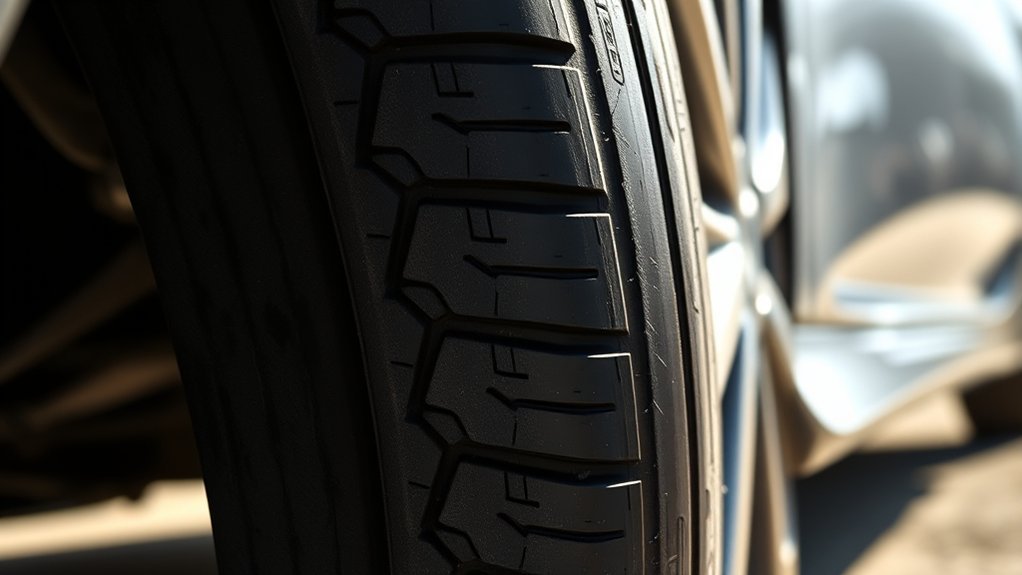
Uneven tire wear is one of the strongest clues that your Honda Accord needs alignment service or another front-end repair. Park safely, turn the steering wheel to expose more of the front tread, and inspect each tire with a flashlight.
- Inner-edge wear: Often linked to camber or toe problems, worn suspension parts, or aggressive alignment settings.
- Outer-edge wear: Can come from underinflation, cornering habits, worn parts, or alignment issues.
- Feathered tread: The tread blocks feel smooth in one direction and sharp in the other, often pointing to toe misalignment.
- Cupping or scalloping: Repeated dips around the tread can suggest worn shocks/struts, tire balance problems, or suspension wear.
- Bald spots or exposed cords: The tire needs immediate professional attention and may be unsafe to drive on.
Honda’s Accord owner information also explains that tread wear indicators sit about 1/16 inch, or about 1.6 mm, shallower than the surrounding tread. If the tread has worn enough that the indicator is exposed, the tire should be replaced.
Alignment vs. Tire Balance, Brakes, and Suspension
Not every steering or tire symptom is caused by alignment. This is where many drivers spend money on the wrong service first.
| Symptom | More Likely Causes |
|---|---|
| Pulls all the time on flat roads | Alignment, tire pressure difference, tire pull, brake drag, worn suspension |
| Pulls mainly while braking | Brake caliper, rotor, pad, hose, or suspension issue |
| Steering wheel shakes at highway speed | Wheel balance, bent wheel, tire damage, alignment, worn suspension |
| Humming or growling noise | Uneven tire wear, cupped tires, wheel bearing, tire type, road surface |
| Crooked steering wheel after service | Steering wheel not centered during alignment or unresolved suspension/tire issue |
Pro Tip: Ask the shop for a before-and-after alignment printout. It should show camber, caster, and toe readings before adjustment and after the Accord is brought back within specification.
When to Schedule Wheel Alignment Service for Your Honda
Schedule a wheel alignment inspection for your Honda Accord when you notice pulling, off-center steering, feathered tread, uneven tire wear, or handling that feels different than usual. You should also schedule one after a hard pothole hit, curb strike, suspension repair, steering repair, or new tire installation.
For routine care, have the tires inspected whenever you check inflation and during regular service. Honda says rotating tires according to the maintenance messages helps distribute wear more evenly and increase tire life. That tire-service visit is a smart time to ask whether the tread pattern suggests an alignment check.
If your Accord often drives on rough roads, construction zones, potholes, or steep driveway entrances, you may need alignment checks more often than a driver on smooth highways. The best schedule is symptom-based, road-condition-based, and tied to tire inspection—not just a fixed mileage number.
[Products Worth Considering]

Blackline Blackout is a water-based trim and tire dressing that restores rubber, vinyl, and plastic with a rich satin, blackout look. Its no-sling formula dries quickly and helps prevent messy transfer onto paint. The coating repels water and offers UV protection to help prevent fading, cracking, and discoloration for a clean, long-lasting finish.

Adam’s Pro Tire Hex Grip applicators are molded foam sponges designed for precise, even tire dressing application. The ergonomic grip helps you spread product without overapplying, reducing sling that can splash onto paint and helping keep your hands clean during wheel and trim detailing. They’re durable, washable, and reusable for repeated detailing sessions.
What Happens During a Wheel Alignment?
A wheel alignment does not adjust the tire itself. It adjusts suspension and steering angles so the tires point and contact the road correctly. The three main angles are:
- Toe: Whether the tires point slightly inward or outward when viewed from above. Incorrect toe is a common cause of feathered tread and rapid wear.
- Camber: Whether the top of the tire leans inward or outward when viewed from the front. Incorrect camber can wear the inner or outer edge.
- Caster: The forward or rearward tilt of the steering axis. Caster affects steering feel, straight-line stability, and return-to-center behavior.
A good shop will also check for loose or worn parts before making adjustments. If a ball joint, tie rod, control-arm bushing, wheel bearing, or strut is worn, the alignment may not hold until that problem is fixed.
Does Your Accord Need Four-Wheel Alignment?
Most modern Honda Accords benefit from a four-wheel alignment check because the shop can measure all four corners and confirm the rear wheels are tracking correctly with the front. Even when some rear angles are not adjustable on a specific model or trim, measuring the rear helps the technician identify bent parts, shifted components, or thrust-angle problems.
A basic front-end alignment may be cheaper, but it can miss rear tracking issues. If your tires are wearing unevenly, the steering wheel is off-center, or the car has been in a pothole or curb impact, ask for a four-wheel alignment check and a printed report.
After Alignment: Verify the Fix
After the alignment, the Accord should drive straight on a flat road, the steering wheel should be centered, and the car should no longer need constant correction. If the pull or vibration remains, return to the shop and ask them to recheck tire pressure, tire balance, tire condition, wheel damage, brakes, and suspension parts.
If tires were rotated during the service, follow your owner’s manual instructions for TPMS calibration where required. On many Accord models, the TPMS needs to relearn after tire rotation, inflation, or tire replacement.
Frequently Asked Questions
Does a Honda Accord need a 4-wheel alignment?
In most cases, yes, a four-wheel alignment check is the better choice for a Honda Accord. It lets the technician measure the front and rear angles, center the steering wheel, and confirm that the rear wheels are tracking correctly. If some rear angles are not adjustable on your specific Accord, the rear readings still help diagnose bent or worn parts.
Can wheel alignment cause a humming noise?
Poor alignment can contribute to uneven or cupped tire wear, and that tire wear can create humming or roaring road noise. However, humming can also come from a wheel bearing, tire design, tire damage, or road surface. If the noise gets louder with speed or changes when turning, have the tires and wheel bearings inspected.
Is $100 a lot for an alignment?
No, $100 can be a reasonable price for a basic alignment if it includes proper measurements, steering wheel centering, and a before-and-after printout. Prices vary by region and shop. A lower price is not a good deal if the shop skips inspection or does not check all four wheels.
Can I drive my Honda Accord if the alignment is bad?
You may be able to drive a short distance if the symptoms are mild, but do not ignore the issue. Bad alignment can wear tires quickly and reduce control. If the car pulls sharply, vibrates violently, or the tire has cords, bulges, or deep damage, stop driving normally and get it inspected right away.
Will an alignment fix steering wheel vibration?
Only sometimes. If the vibration comes from misalignment and uneven tire contact, an alignment may help. If it comes from tire balance, a bent wheel, worn suspension, brake pulsation, or tire damage, those issues must be repaired separately.
Conclusion
Keeping your Honda Accord aligned helps protect tire life, steering feel, fuel efficiency, and everyday driving confidence. Watch for the big signs: pulling, an off-center steering wheel, uneven tread wear, feathering, or new vibration. Check tire pressure first, inspect the tread carefully, and schedule a professional alignment inspection when the symptoms remain. A quick check now can prevent ruined tires and a more expensive repair later.
Sources
- Honda 2025 Accord Owner’s Manual — Checking Tires — supports tire pressure, uneven tread wear, and alignment inspection guidance.
- Honda 2025 Accord Owner’s Manual — Wear Indicators — supports the 1/16 inch / 1.6 mm tread wear indicator guidance.
- Honda 2025 Accord Owner’s Manual — Tire Rotation — supports tire rotation, tire-life, wheel-nut torque, and TPMS calibration context.
- FuelEconomy.gov — Keeping Your Vehicle in Shape — supports tire inflation and fuel-economy claims.
- NHTSA TireWise — supports tire-safety and maintenance importance.
- AAA — Guide to Vehicle Wheel Alignment and Suspension — supports common alignment symptoms and service timing after pothole, curb, or tire replacement events.

Related Articles
How Tall Is a 305 70 R17 Tire? Exact Height, Width & Dimensions
Curious how tall a 305 70 R17 tire really is—and whether it fits your truck?
Read More
Can-Am Defender Tire Size Guide: Stock Specs & Upgrade Options
Just how big can you go on a Can-Am Defender before mods become necessary?
Read More
How Tall Is a 275 65 20 Tire? Exact Height, Width & Dimensions
Check the exact height, width, and hidden fitment effects of a 275/65R20 tire before you buy or upgrade.
Read More