
Honda Accord Tire Size: What All the Numbers Mean
Honda Accord tire sizes are easy to decode once you know where to look. Start with the Tire and Loading Information Label on the driver’s doorjamb, then match the tire sidewall size, load index, speed rating, and cold tire pressure to that label for your exact Accord year, trim, and wheel package.
Quick Answer
To find the right Honda Accord tire size, open the driver’s door and read the Tire and Loading Information Label, then match the tire sidewall code and service description. Official 2026 U.S. Accord examples include 225/50R17 and 235/40R19, but exact fitment depends on year, trim, wheel package, and market.
Key Takeaways
- The tire size code tells you width, aspect ratio, construction, wheel diameter, load index, speed rating, and sometimes Extra Load construction.
- For the 2026 U.S. Accord, Honda lists 225/50R17 on LX and EX-L Hybrid trims and 235/40R19 on SE, Sport Hybrid, Sport-L Hybrid, and Touring Hybrid trims.
- The safest source for your Accord is the driver’s door-jamb Tire and Loading Information Label, not a generic online chart.
- Use the recommended cold PSI from the vehicle label or owner’s manual, not the maximum pressure molded into the tire sidewall.
- Replacement tires should match the original size and meet or exceed the original load and speed ratings unless a qualified tire professional confirms an approved alternative.
- Replace tires when tread reaches 2/32 inch, when damage appears, when wear is uneven, or when age and condition make them unsafe.
At a Glance
| Time Required | 5–10 minutes to check tire size, PSI, tread, sidewall condition, and DOT/TIN date code |
| Difficulty | Beginner |
| Tools Needed | Tire pressure gauge, tread-depth gauge or penny, flashlight, and your Accord’s door-jamb label or owner’s manual |
| Cost | Free to inspect; replacement tire cost varies by size, brand, rating, tire type, installation, balancing, valve stems, and TPMS service |
Understanding Tire Sizes for Your Honda Accord
A Honda Accord tire size may look like 225/50R17 94V or 235/40R19 96V XL. Each part tells you something important about fitment, load capacity, ride comfort, and performance.
| Code Part | What It Means | Example |
|---|---|---|
| 225 | Tire section width in millimeters | 225 mm wide |
| 50 | Aspect ratio, or sidewall height as a percentage of width | Sidewall height is 50% of tire width |
| R | Radial construction, the standard construction type for modern passenger-car tires | Radial tire |
| 17 | Wheel diameter in inches | Fits a 17-inch wheel |
| 94 | Load index, which corresponds to how much weight one properly inflated tire can carry | Must meet or exceed the vehicle’s specified rating |
| V | Speed rating, or the maximum sustained speed capability under specified test conditions | V-rated tires are commonly used on many passenger vehicles |
| XL | Extra Load construction, when shown | Often found on some 19-inch fitments |
For the 2026 U.S. Honda Accord, Honda lists 225/50 R17 all-season tires on LX and EX-L Hybrid, and 235/40 R19 all-season tires on SE, Sport Hybrid, Sport-L Hybrid, and Touring Hybrid. Older Accord years and non-U.S. models can use different sizes, so do not buy tires from a generic chart alone.
| 2026 U.S. Accord Trim | Honda-Listed Tire Size | Wheel Size |
|---|---|---|
| LX | 225/50 R17 all-season | 17-inch alloy |
| EX-L Hybrid | 225/50 R17 all-season | 17-inch alloy |
| SE | 235/40 R19 all-season | 19-inch alloy |
| Sport Hybrid | 235/40 R19 all-season | 19-inch alloy |
| Sport-L Hybrid | 235/40 R19 all-season | 19-inch alloy |
| Touring Hybrid | 235/40 R19 all-season | 19-inch alloy |
Note: The tire size printed on your current tire is useful, but it is not always proof that the tire is correct. If a previous owner installed a different size, the safest confirmation is the Tire and Loading Information Label on your Accord’s driver’s doorjamb.
[Products Worth Considering]

EVOULTES heavy duty tire inflator with an integrated gauge delivers accurate pressure readings from 10–120 PSI, helping you inflate, deflate, and check tires in one tool. The 16.5-inch extended dual-head air chuck with swivel base reaches hard-to-access dual wheel valves on trucks and RVs. A brass trigger core and side-mounted air release valve make operation smooth, with standard 1/4" NPT threading and quick-connect compatibility for easy setup.

The JACO FlowPro Tire Inflator measures, inflates, and airs down tires up to 100 PSI with battery-free operation and ±2% accuracy after calibration. It features a glowing pressure dial for night visibility, a heavy-duty steel build with a hybrid hose, and a precision push-to-inflate thumb trigger. The patented Lightning Air Chuck locks on for a secure seal, and the kit includes quick-connect hardware for easy inline use with your air compressor.
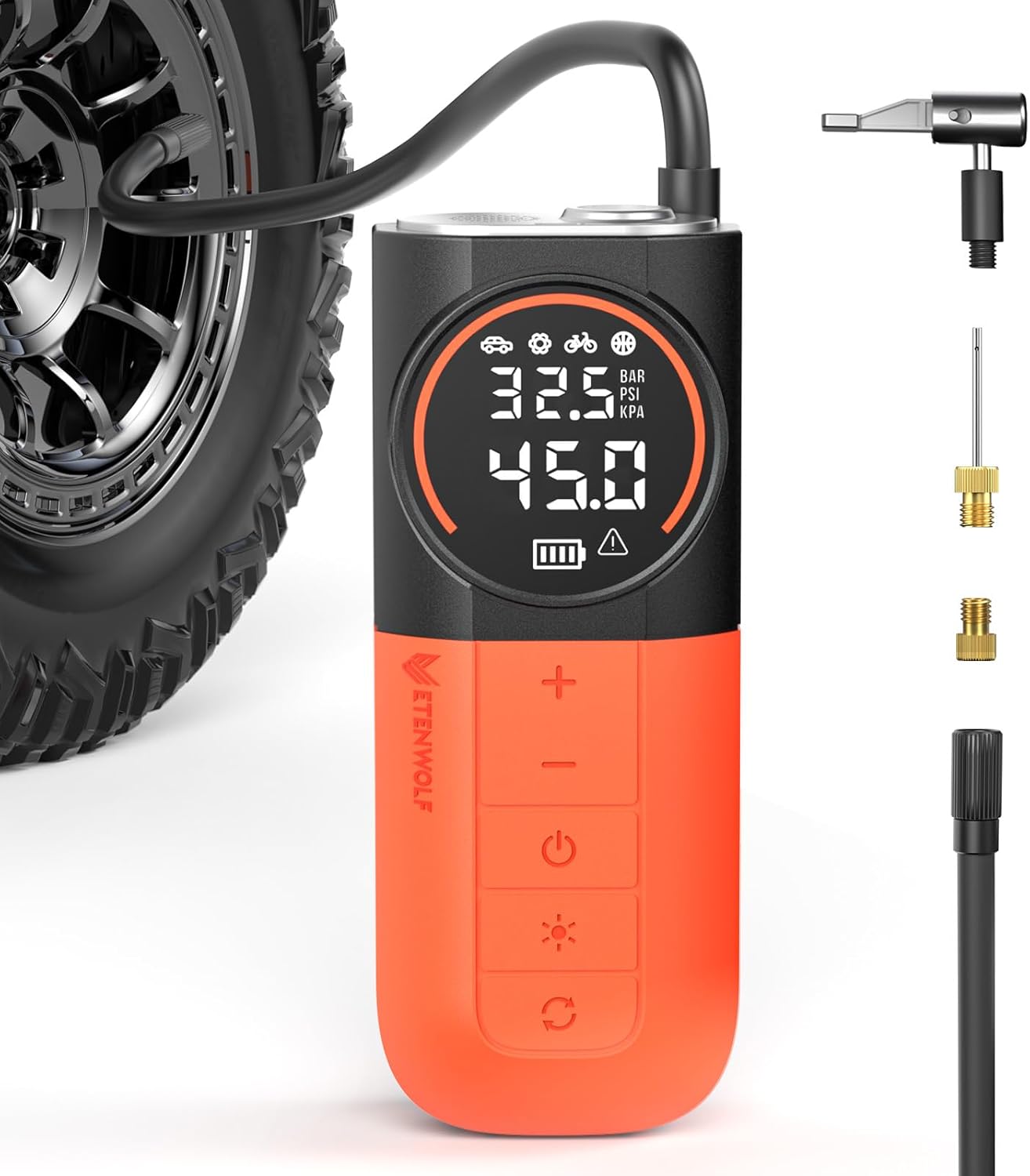
The ETENWOLF S1 cordless tire inflator delivers ultra-fast inflation with up to 160 PSI and a 20 L/min airflow for quicker tire top-offs. Its 5200mAh battery and cooling system support inflating many tires and sports balls on a single charge, while the digital pressure gauge and multi-unit display help you reach the right pressure accurately. With preset modes, pressure memory, an auto-stop feature, and an LED flashlight, it’s built for easy roadside and everyday use.
Where to Find the Correct Honda Accord Tire Size and PSI
The fastest way to confirm the correct tire size is to open the driver’s door and look for the Tire and Loading Information Label. Honda’s owner information says this label lists the number of people the vehicle can carry, the total weight the vehicle can carry, the original tire sizes for front, rear, and spare, and the proper cold tire pressure for each tire.
Use this order when checking your Accord:
- Check the driver’s door-jamb label. Confirm the original front, rear, and spare tire sizes and the recommended cold PSI.
- Check your current tire sidewall. Make sure the size and service description match the label or an approved equivalent.
- Check the owner’s manual or Honda owner information. This helps confirm tire rotation, TPMS, spare-tire, and maintenance instructions for your model year.
- Ask a tire professional before changing size. This is especially important if you want wider tires, larger wheels, winter tires, or a different load/speed rating.
A 5-Minute Accord Tire Check
- Park on level ground. Check tire pressure when the tires are cold, meaning the car has been parked for at least three hours or driven only a short distance at low speed.
- Read the door-jamb label. Write down the listed front, rear, and spare tire sizes and the cold PSI.
- Read the sidewall. Compare the tire size, load index, speed rating, and XL marking if shown.
- Check tread depth. Use a tread-depth gauge or the penny test, and look for wear bars flush with the tread.
- Inspect for damage. Look for cracks, cuts, bulges, exposed cords, punctures, uneven wear, or repeated pressure loss.
- Check the DOT/TIN date code. The final four digits show the week and year the tire was made.
Warning: Do not inflate your Accord tires to the maximum pressure printed on the tire sidewall unless that number also matches a specific service instruction. The correct everyday pressure is the cold PSI listed by Honda on the vehicle label or in the owner’s information.
What If Your Current Tire Size Does Not Match the Label?
If the sidewall size does not match the door-jamb label, do not assume the installed tire is an approved upgrade. First, confirm whether your Accord has factory wheels, accessory wheels, or aftermarket wheels. Then ask a qualified tire professional to check overall diameter, wheel width, offset, brake clearance, suspension clearance, load index, speed rating, and TPMS compatibility before buying another set in that size.
If the mismatch came from a previous owner and there is no documentation showing that the size is approved, returning to the label-listed size is usually the safest path.
Decoding the Tire Identification Number (TIN) for Honda Accords
The Tire Identification Number, often called the DOT code or TIN, helps identify the tire and its manufacturing date. You will find it molded into the sidewall. It usually begins with “DOT,” followed by a series of letters and numbers.
Understanding TIN Formats
Modern motor vehicle tires sold in the United States must carry a tire identification number. The code includes manufacturing and identification details, and the last four digits are especially useful because they show when the tire was made.
For example, if the last four digits are 2524, the tire was made in the 25th week of 2024. If the code is only visible on the inner sidewall, you may need to look behind the tire with a flashlight or ask a tire shop to inspect it.
Components of TIN
| TIN Component | What It Helps Identify |
|---|---|
| DOT marking | Shows the tire meets U.S. Department of Transportation identification requirements |
| Plant/manufacturer code | Identifies where the tire was made |
| Manufacturer-specific code | May identify tire size, construction, or internal production details |
| Date code | The last four digits show week and year of manufacture |
Why the TIN Matters
The TIN is useful when checking tire age, registering new tires, researching recalls, and comparing the date of manufacture across a set. It does not replace a physical inspection, but it helps you spot tires that may be aging even if the tread still looks usable.
The last four digits of a tire’s TIN show the week and year the tire was made, which is one of the simplest ways to check tire age before a long trip or tire purchase.
Why Load and Speed Ratings Matter for Your Honda Accord Tires
Load and speed ratings are part of the tire’s service description. They are not optional details. They tell you whether the tire is built to carry the vehicle’s weight and handle the heat generated at sustained speeds under specified conditions.
Load Capacity Explained
The load index is the number after the tire size, such as 94 in 225/50R17 94V or 96 in 235/40R19 96V XL. A higher load index generally means the tire can carry more weight when properly inflated, but the tire does not increase your Accord’s legal or safe carrying capacity. Your vehicle’s load limit is still set by Honda.
When replacing tires, choose a tire with a load index that meets or exceeds the original specification. Going lower can increase heat buildup, sidewall stress, and failure risk.
Speed Rating Explained
The speed rating is the letter after the load index, such as V or W. It represents the tire’s tested speed capability under specified conditions. This does not mean you should drive at that speed; it means the tire was engineered to meet that rating when correctly installed, inflated, and loaded.
For everyday Accord owners, the practical rule is simple: match or exceed the original speed rating unless your owner’s manual, tire manufacturer, or qualified tire professional approves a specific exception. Some winter-capable tires may carry a lower speed rating, but they must still meet safe fitment requirements and must not be driven above their rated speed.
Pro Tip: If two tires have the same size, do not assume they are equal. Compare load index, speed rating, XL marking, tread type, warranty, wet traction, road-noise reviews, rolling resistance, and UTQG grades before choosing.
How to Choose the Best Tire Type for Your Honda Accord
The best tire type depends on your climate, driving style, budget, and wheel size. Start with the correct size and ratings, then choose the tire category that fits how you actually drive.
| Tire Type | Best For | Main Trade-Off |
|---|---|---|
| All-season touring | Comfort, quiet ride, daily commuting, long tread life | Not as sharp as performance tires and not as strong as winter tires in snow |
| Grand touring all-season | Balanced comfort, wet grip, highway stability | Usually costs more than basic all-season tires |
| Performance all-season | Sharper steering and better dry grip | May ride firmer and wear faster |
| Winter tire | Cold temperatures, snow, slush, and ice | Should be swapped out in warm weather |
| Summer tire | Warm-weather dry and wet handling | Not for freezing temperatures, snow, or ice |
For most Honda Accord drivers, a quality all-season or grand touring all-season tire is the best fit. If you live where winter roads stay cold, snowy, or icy, a dedicated winter tire set can improve cold-weather control.
Why Tire Aspect Ratio Affects Performance and Comfort
The aspect ratio is the two-digit number after the slash in the tire size. In 225/50R17, the aspect ratio is 50. In 235/40R19, the aspect ratio is 40.
A higher aspect ratio usually means a taller sidewall. That can improve ride comfort because the sidewall has more room to absorb bumps. A lower aspect ratio usually means a shorter sidewall. That can sharpen steering response, but it may also create a firmer ride and make the wheel more vulnerable to pothole damage.
This is why a 17-inch Accord tire usually feels more comfort-focused, while a 19-inch Accord tire often feels sportier and firmer. Neither is automatically “better.” The right choice depends on your wheel size, road conditions, and driving priorities.
225/50R17 vs. 235/40R19 on a Honda Accord
The two common 2026 Accord examples show how wheel and tire packages change the feel of the car. The 225/50R17 size has a taller sidewall and is usually the more comfort-focused setup. The 235/40R19 size is wider and lower-profile, which can sharpen steering feel but may ride firmer over broken pavement.
| Size | Typical Feel | What to Watch |
|---|---|---|
| 225/50R17 | More sidewall, more comfort-oriented, often better suited to rough roads | Still needs the correct load index, speed rating, and cold PSI |
| 235/40R19 | Wider, lower-profile, sportier steering feel | Can ride firmer and has less sidewall protection against potholes |
Do not switch between these sizes unless the wheels, suspension clearance, tire diameter, load rating, speed rating, and TPMS setup are correct for your Accord.
Why Tire Width Matters for Your Honda Accord’s Handling
Tire width affects the size and shape of the tire’s contact patch. Wider tires can improve dry grip and steering response when matched correctly to the wheel, suspension, and vehicle. But wider is not always better.
A tire that is too wide can rub the fender liner, change steering feel, reduce fuel economy, increase road noise, or cause clearance problems. A tire that is too narrow may reduce grip or fail to meet the correct load rating. For most owners, staying with the factory size is the safest and simplest choice.
The Impact of Tire Construction Type on Performance
The letter R in a tire size means radial construction. Radial tires use cords arranged across the tire from bead to bead, with belt layers under the tread. This construction is standard on modern passenger vehicles, including the Honda Accord.
Radial construction helps support a balance of ride comfort, tread life, handling, and fuel efficiency. Still, construction type is only one part of tire performance. Tread compound, tread pattern, sidewall stiffness, load rating, inflation pressure, wheel size, alignment, and road temperature all affect how your Accord feels on the road.
[Products Worth Considering]

This portable cordless tire inflator delivers up to 160 PSI with fast 17 L/min airflow to help you quickly top up tires and get back on the road. It features dual power mode, running on a 21V rechargeable battery or a 12V DC adapter for convenient roadside use. An automatic shut-off with digital pressure gauge helps prevent overinflation, and a built-in LED light improves visibility in low-light conditions.

This compact capsule-style tire repair kit helps you quickly fix punctures and plug flats with minimal effort. The rugged stainless steel shell protects the contents for reliable roadside use, while the simple plug assembly makes repairs fast and tool-free. Suitable for motorcycles, cars, ATVs, UTVs, and even mountain bikes.
How UTQG Ratings Help You Compare Honda Accord Tires
Many passenger tires sold in the United States include Uniform Tire Quality Grading, or UTQG. These ratings compare three things:
- Treadwear: a relative wear rating. Higher numbers generally suggest longer expected wear compared with a control tire, but they are not a mileage guarantee.
- Traction: wet straight-line braking performance, graded from AA to C.
- Temperature: resistance to heat buildup, graded from A to C.
UTQG is useful when comparing tires in the same category, but it should not be the only deciding factor. Also compare wet braking tests, owner reviews, warranty, road noise, rolling resistance, and whether the tire meets your Accord’s required size and service description. Dedicated winter tires and some specialty tires may not compare cleanly against touring or performance all-season tires, so compare like with like.
Can You Use a Different Tire Size on a Honda Accord?
Sometimes, yes—but only if the replacement size is compatible with your Accord’s wheel, suspension, brakes, speedometer calibration, load rating, and clearance. This is often called plus-sizing when a larger wheel is used with a lower-profile tire to keep the overall tire diameter close to stock.
Before changing from the factory size, confirm these points:
- The overall tire diameter stays close to the original size.
- The load index meets or exceeds the factory requirement.
- The speed rating meets or exceeds the factory requirement, unless an approved winter-tire exception applies.
- The tire clears the fenders, suspension, and brake components.
- The wheel width and offset are appropriate.
- TPMS sensors and calibration are handled correctly.
- The tire shop confirms the fitment for your exact Accord year and trim.
Warning: Do not mix random tire sizes on the same Accord. Mismatched sizes can affect handling, braking, stability control, speedometer accuracy, and tire wear. If different front/rear sizes are not specified by Honda for your vehicle, use a matching set.
Replacement Tire Shopping Checklist for a Honda Accord
Before buying replacement tires, use this checklist so you do not accidentally choose a tire that fits the wheel but fails the vehicle requirement.
- Size: Match the door-jamb label or an approved equivalent.
- Load index: Meet or exceed the original specification.
- Speed rating: Meet or exceed the original rating unless an approved winter-tire exception applies.
- XL marking: If your original tire requires Extra Load construction, choose a tire that also satisfies that load requirement.
- Tire category: Choose touring, grand touring, performance all-season, winter, or summer based on your climate and driving.
- DOT/TIN age: Check the final four digits so you know when the tire was manufactured.
- Installation: Confirm balancing, valve stems, TPMS service, lug-nut torque, and alignment checks when needed.
- Registration and recalls: Keep the receipt and register the tires with the manufacturer so recall notices are easier to receive.
Essential Tire Maintenance Tips for Your Honda Accord
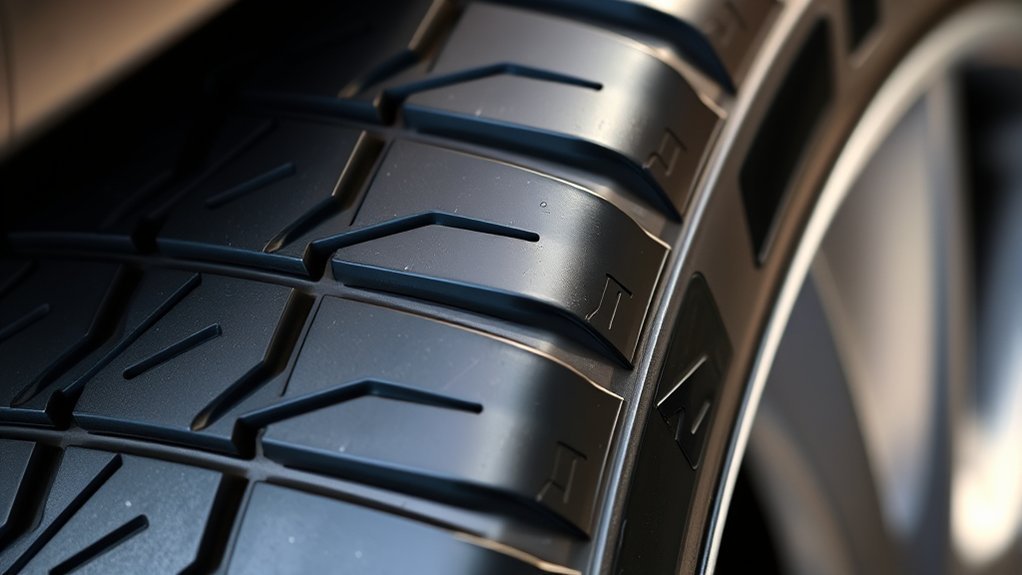
Regular tire maintenance helps your Accord brake, steer, and ride the way it should. It also helps prevent uneven wear and avoidable tire damage.
NHTSA reported 511 fatalities in tire-related crashes in 2024, which is why tire pressure, tread depth, tire age, and damage checks are safety items—not just maintenance chores.
- Check tire pressure monthly. Check all tires, including the spare if equipped, when they are cold. Cold means the car has been parked for at least three hours or driven only a short distance at low speed.
- Use the door-jamb PSI. The correct cold pressure comes from the vehicle label or owner’s information, not from the maximum PSI molded into the tire.
- Inspect tread depth. Replace tires when tread reaches 2/32 inch. For wet-weather confidence, many drivers choose replacement earlier if performance drops.
- Look for damage. Cracks, cuts, bulges, punctures, exposed cords, or repeated pressure loss need professional inspection.
- Rotate tires as recommended. Follow the Maintenance Minder or owner’s manual. A general range for many vehicles is about every 5,000 to 8,000 miles when rotation is recommended.
- Respect directional tires. If the tire has a directional tread pattern, it should rotate front-to-back on the same side unless remounted correctly.
- Calibrate TPMS when required. Honda owner information notes that TPMS calibration may be required after tire rotation on applicable Accord models.
- Check alignment and balance. Pulling, vibration, cupping, or uneven wear can point to alignment, balance, suspension, or tire issues.
- Check the spare or repair kit. If your Accord has a spare, confirm its size and pressure on the label. If it has a repair kit instead, check the expiration date and instructions.
Pro Tip: When buying new tires, keep the receipt and register the tires with the manufacturer. Registration makes recall notices easier to receive if a tire safety issue is later identified.
When to Replace Your Tires for Optimal Safety
Replace your Honda Accord tires when they no longer provide safe traction, structure, or reliability. Tread depth is important, but it is not the only factor.
Use this replacement checklist:
- Tread is at 2/32 inch: Tires are no longer considered safe at this minimum tread depth.
- Wear bars are flush with the tread: Built-in treadwear indicators show the tire is worn out.
- Sidewall damage appears: Bulges, deep cracks, cuts, or exposed cords require immediate inspection.
- Uneven wear develops: Inner-edge wear, cupping, feathering, or one tire wearing faster can signal alignment or suspension trouble.
- Tires are aging: Some vehicle and tire manufacturers recommend replacement after six to 10 years, even if tread remains. Check the DOT/TIN date code and inspect condition.
- The tire keeps losing pressure: Slow leaks, punctures, valve-stem problems, or wheel damage should be checked by a professional.
- You feel vibration or hear new noise: Do not ignore new shaking, thumping, or humming after tire damage or installation.
For best stability, replace tires as a full set when possible. If you replace only two, use the same size and compatible ratings, then follow the tire manufacturer’s and installer’s placement guidance so the vehicle remains predictable in wet conditions.
Frequently Asked Questions
Can I use different tire sizes on my Honda Accord?
You should not use a different tire size unless it is approved for your exact Accord year, trim, wheel size, load rating, and speed rating. The safest choice is the size listed on the driver’s door-jamb label. If you want a plus-size setup, have a qualified tire professional confirm clearance, diameter, wheel width, offset, and TPMS compatibility.
How do I read the tire pressure recommendations?
Open the driver’s door and look for the Tire and Loading Information Label. It lists the proper cold tire pressure for the front, rear, and spare tires. Check pressure when the tires are cold, and do not use the tire sidewall maximum pressure as the normal inflation target.
What is the difference between summer and winter tires?
Summer tires are designed for warm-weather dry and wet grip, but they are not meant for snow, ice, or freezing conditions. Winter tires use cold-weather rubber compounds and tread patterns designed for snow, slush, and ice. All-season tires sit between the two, offering broad everyday usability but less severe-winter grip than a true winter tire.
How often should I rotate my Honda Accord tires?
Follow your Accord’s Maintenance Minder or owner’s manual. As a general maintenance range, many vehicles rotate tires about every 5,000 to 8,000 miles when rotation is recommended. Directional tires must be rotated according to their tread direction, and TPMS calibration may be required after rotation on applicable Accord models.
Are all Honda Accord tires compatible with my model year?
No. Accord tire sizes vary by model year, trim, wheel package, and market. A tire that fits one Accord may not be correct for another. Always confirm your tire size, load index, speed rating, and cold PSI on the driver’s door-jamb label or in Honda’s owner information.
What does XL mean on an Accord tire?
XL means Extra Load. An XL tire has reinforced construction and can carry more load than a standard-load tire of the same size when inflated correctly. If your Accord’s original tire specification includes XL, choose a replacement that also meets that load requirement.
Should I replace all four Accord tires at once?
Replacing all four tires is usually best for balanced grip, noise, ride, and wear. If you replace only two, use the same size and compatible ratings, then follow the installer’s placement guidance. Never mix tires in a way that creates unstable handling or mismatched traction.
What should I do if the tire size on my Accord does not match the door-jamb label?
Do not automatically buy the same mismatched size again. Confirm whether the wheels are factory or aftermarket, then have a qualified tire professional verify diameter, clearance, wheel width, offset, load index, speed rating, and TPMS compatibility. If the size is not documented as approved, the door-jamb label is the safer reference.
Where is the DOT/TIN date code on a tire?
Look for a sidewall marking that begins with DOT. The final four digits show the week and year the tire was made. For example, 2524 means the 25th week of 2024. The full TIN may appear on only one side of the tire, so check both sidewalls or ask a tire shop to inspect it.
Do I need TPMS calibration after rotating Accord tires?
On applicable Accord models, Honda owner information notes that TPMS calibration may be required after tire rotation. Follow the owner’s manual for your exact model year, especially after rotation, tire replacement, pressure adjustment, or wheel service.
Conclusion
Reading a Honda Accord tire size is not just about decoding numbers. It is about confirming the correct fit, pressure, load rating, speed rating, tire age, and tire condition for your exact vehicle. Start with the driver’s door-jamb label, match the tire sidewall carefully, and use trusted maintenance habits: monthly cold-pressure checks, regular tread inspections, proper rotation, TPMS calibration when required, and professional help when you see damage or uneven wear. With the right tires and maintenance, your Accord will ride, steer, and stop the way Honda intended.
Sources
- Honda Info Center — 2026 Accord Wheels and Tires — official U.S. Accord wheel and tire size examples by trim
- Honda Owner Information — Tire and Loading Information Label — door-jamb label contents, original tire size, and proper cold tire pressure
- Honda Owner Information — Tire Rotation — rotation guidance, directional tire note, and TPMS calibration note
- NHTSA TireWise — tread depth, tire pressure, tire rotation, tire aging, UTQG, tire-related crash data, and tire safety guidance
- NHTSA — Tire Identification Number Date Code Interpretation — how the final four TIN digits show week and year of manufacture
- Michelin USA — Tire Load Rating and Speed Rating — load index, speed rating, Extra Load, and service-description basics

Related Articles
How Tall Is a 305 70 R17 Tire? Exact Height, Width & Dimensions
Curious how tall a 305 70 R17 tire really is—and whether it fits your truck?
Read More
Can-Am Defender Tire Size Guide: Stock Specs & Upgrade Options
Just how big can you go on a Can-Am Defender before mods become necessary?
Read More
How Tall Is a 275 65 20 Tire? Exact Height, Width & Dimensions
Check the exact height, width, and hidden fitment effects of a 275/65R20 tire before you buy or upgrade.
Read More