
How To Get More Miles Out of Toyota Tacoma Tires
Getting more miles from your Toyota Tacoma tires starts with simple habits you can repeat every month. The biggest wins come from using the correct cold tire pressure from your door placard, rotating tires on schedule, watching tread depth, keeping the truck aligned, and avoiding extra weight or aggressive driving. These steps can help your Tacoma ride smoother, use fuel more efficiently, and avoid early tire replacement.
Quick Answer
To improve Toyota Tacoma tire mileage, check cold tire pressure monthly, follow the PSI on the driver-side Tire and Loading Information Label, rotate tires about every 5,000 to 7,500 miles, inspect tread depth, fix alignment problems early, and keep unnecessary weight out of the truck.
Key Takeaways
- Use the Tacoma’s door placard or owner’s manual for the correct cold PSI, not a guessed number or the tire sidewall maximum.
- Check tire pressure and tread at least once a month, including the spare if your Tacoma has one.
- Rotate tires every 5,000 to 7,500 miles, or follow your Tacoma owner’s manual if it gives a different interval.
- Fix uneven wear, vibration, pulling, or cupping early because alignment and balance problems can shorten tire life.
- Choose tires that match how you drive: highway, all-season, all-terrain, winter, towing, or off-road use.
At a Glance
| Time Required | 10 to 15 minutes for monthly pressure and tread checks; longer if rotation, balancing, or alignment is due. |
| Difficulty | Easy for checks; moderate or professional for rotation, balancing, and alignment. |
| Tools Needed | Accurate tire pressure gauge, tread depth gauge or penny, air compressor, owner’s manual, and torque wrench if rotating tires yourself. |
| Cost | Low for DIY checks; shop pricing varies for rotation, balancing, alignment, and tire replacement. |
Essential Tire Maintenance Tips for Improved Mileage
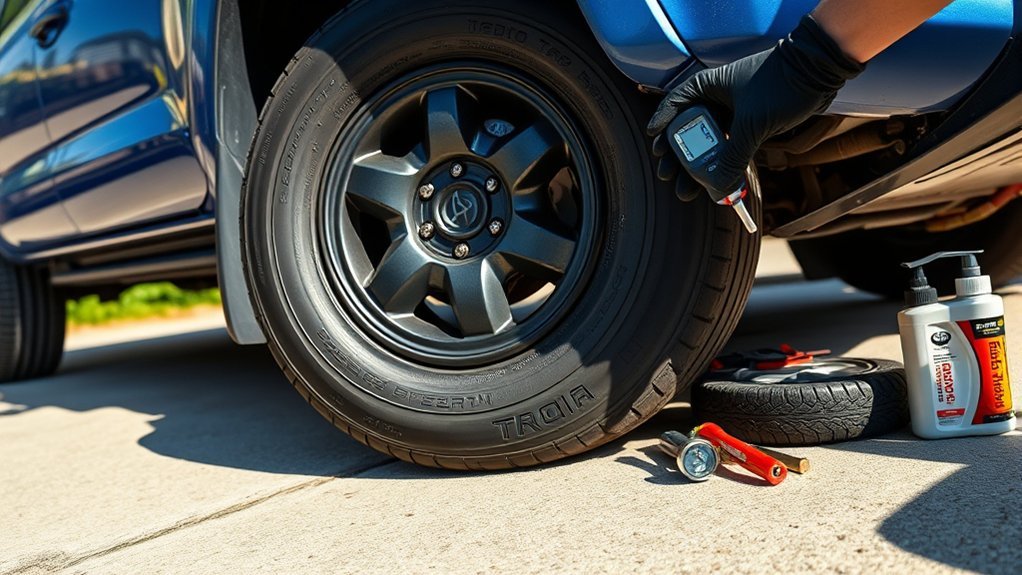
To get better mileage from your Toyota Tacoma tires, start with the basics: pressure, tread, rotation, alignment, and load. These items affect rolling resistance, tire temperature, traction, and wear pattern. Skip them, and even a good set of tires can wear out early.
Check tire pressure when the tires are cold, meaning the truck has been parked for at least three hours. The correct PSI is listed on the driver-side Tire and Loading Information Label or in your Toyota owner’s manual. The National Highway Traffic Safety Administration says the vehicle manufacturer’s recommended cold inflation pressure is the proper pressure, not the maximum PSI printed on the tire sidewall.
Warning: Do not inflate your Tacoma tires to a random number such as 40 PSI unless your door placard or owner’s manual calls for it. Overinflation can reduce ride comfort and cause uneven center wear, while underinflation can build heat and damage the tire.
Rotate your tires about every 5,000 to 7,500 miles, or follow the schedule in your Tacoma manual if it gives a different interval. Rotation helps even out front-to-rear wear, especially on trucks that see towing, hauling, gravel roads, or frequent stop-and-go driving.
Inspect tread depth and visible damage during the same monthly check. Look for cuts, bulges, nails, sidewall cracks, scalloped wear, and one-sided wear. If your Tacoma pulls to one side, shakes at highway speed, or wears one tire faster than the others, schedule an alignment and balance inspection.
[Products Worth Considering]

EVOULTES heavy duty tire inflator with an integrated gauge delivers accurate pressure readings from 10–120 PSI, helping you inflate, deflate, and check tires in one tool. The 16.5-inch extended dual-head air chuck with swivel base reaches hard-to-access dual wheel valves on trucks and RVs. A brass trigger core and side-mounted air release valve make operation smooth, with standard 1/4" NPT threading and quick-connect compatibility for easy setup.

This portable cordless tire inflator delivers up to 160 PSI with fast 17 L/min airflow to help you quickly top up tires and get back on the road. It features dual power mode, running on a 21V rechargeable battery or a 12V DC adapter for convenient roadside use. An automatic shut-off with digital pressure gauge helps prevent overinflation, and a built-in LED light improves visibility in low-light conditions.

The JACO FlowPro Tire Inflator measures, inflates, and airs down tires up to 100 PSI with battery-free operation and ±2% accuracy after calibration. It features a glowing pressure dial for night visibility, a heavy-duty steel build with a hybrid hose, and a precision push-to-inflate thumb trigger. The patented Lightning Air Chuck locks on for a secure seal, and the kit includes quick-connect hardware for easy inline use with your air compressor.
Understanding Tire Pressure and Fuel Efficiency
Tire pressure affects fuel economy because underinflated tires create more rolling resistance. According to FuelEconomy.gov, keeping tires properly inflated can improve gas mileage by 0.6% on average and up to 3% in some cases. Underinflated tires can lower gas mileage by about 0.2% for every 1 PSI drop in the average pressure of all tires.
Proper PSI Maintenance
Use this pressure routine once a month and before long trips:
- Find the correct PSI: Check the driver-side doorjamb label or your Tacoma owner’s manual.
- Check tires cold: Measure pressure before driving or after the truck has been parked for at least three hours.
- Check all tires: Include the spare if your Tacoma has one.
- Add or release air: Adjust each tire to the listed cold PSI.
- Recheck after changes: If you air down for sand, rocks, trails, or washboard roads, air back up before highway driving.
Cold mornings can trigger a low-pressure warning because tire pressure drops as temperature falls. If the TPMS light comes on, check the pressure with a gauge instead of relying on appearance. Underinflated tires are hard to spot by eye.
Impact of Underinflation
Underinflation can increase tire heat, reduce fuel economy, soften handling, and speed up edge wear. It can also make a loaded Tacoma feel less stable when turning, braking, or changing lanes. If one tire keeps losing pressure, inspect it for a puncture, valve leak, bead leak, cracked wheel, or damaged valve stem.
A monthly cold-pressure check is one of the cheapest ways to protect Tacoma tire life, fuel economy, and safety.
Choosing the Right Tires for Better Mileage
The right tire depends on how you use your Tacoma. A daily driver needs a different tire than a truck that tows, hauls, camps, or runs rocky trails. Match the tire to your real driving conditions instead of buying the most aggressive tread you can find.
- Highway tires: Best for mostly paved driving, lower road noise, and better fuel efficiency.
- All-season tires: Good for mixed daily driving in mild climates, with balanced comfort and tread life.
- All-terrain tires: Better for gravel, dirt, and light trails, but often heavier and louder than highway tires.
- Winter tires: Better for snow, ice, and freezing temperatures, but they wear faster in warm weather.
- Low rolling resistance tires: Designed to reduce energy loss. NHTSA notes that lower rolling resistance can improve fuel economy, but you should still compare traction, load rating, and durability.
Before changing tire size, load range, or wheel offset, confirm fitment and load capacity. Larger or heavier tires can change speedometer reading, braking feel, acceleration, fuel economy, and spare-tire fit. Modified Tacomas may also need alignment changes to prevent rubbing and uneven wear.
Tire Rotation and Alignment Tips
Tire rotation helps each tire share the work. On many Tacoma setups, front tires wear differently because they handle steering and much of the braking load. Rear tires can wear faster when you tow, haul, or drive off-road. Regular rotation reduces these differences.
NHTSA says tire rotation can reduce irregular wear and help tires last longer. It also recommends checking the owner’s manual for the right interval and pattern. If the manufacturer recommends it, rotating every 5,000 to 8,000 miles is a reasonable general range.
Pro Tip: Rotate your tires when you change oil if your oil interval is close to your tire rotation interval. It makes the habit easier to remember.
Alignment matters just as much. A Tacoma with poor alignment may pull to one side, wear the inside or outside shoulder of a tire, or feel unstable after hitting a pothole or curb. Balance issues usually show up as steering-wheel shake, seat vibration, or uneven cupping across the tread.
If your Tacoma has a lift kit, aftermarket control arms, larger tires, or different wheels, alignment becomes even more important. Ask the alignment shop for a printout so you can see camber, caster, and toe before and after the adjustment.
The Impact of Tread Wear on Fuel Efficiency
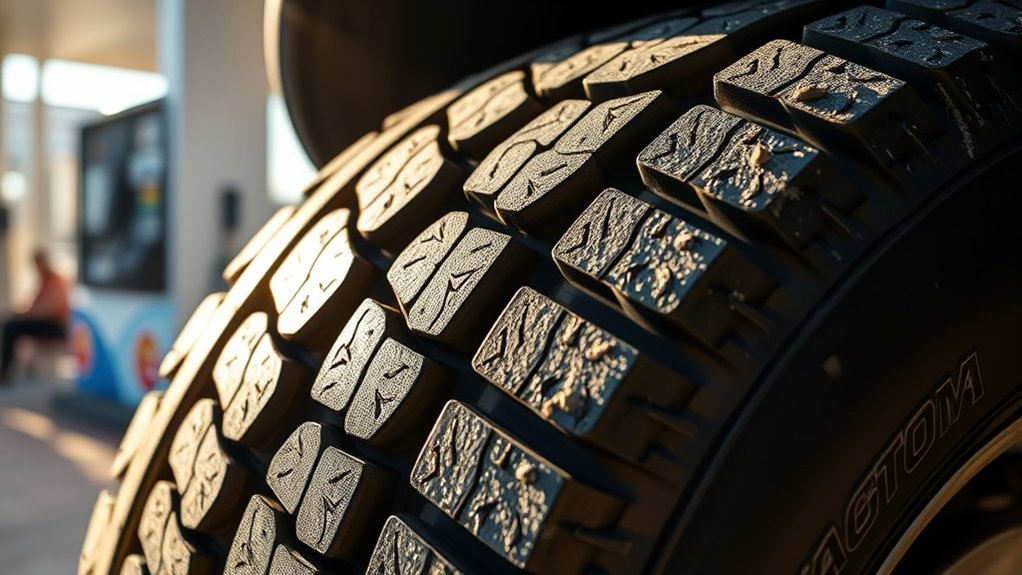
Tread wear affects more than tire life. It changes how your Tacoma grips wet pavement, tracks on rough roads, and responds during braking. Worn, damaged, or uneven tires can also create extra vibration and drag.
Tread Depth Considerations
NHTSA says tires are not safe and should be replaced when tread reaches 2/32 of an inch. That is the minimum safety threshold, not a target to wait for in every situation. If you drive in heavy rain, snow, gravel, or mountain roads, you may want to replace tires earlier for better traction.
Use a tread depth gauge for the most accurate reading. You can also use the penny test: place a penny into the tread with Lincoln’s head upside down. If you can see the top of Lincoln’s head, the tire has reached the replacement zone.
Also look at treadwear indicators. These raised bars sit inside the tread grooves. When the tread becomes level with the bars, the tire needs replacement.
Tire Rotation Importance
Uneven tread wear can reduce tire life and make your Tacoma feel rough or unstable. Rotate tires on schedule, then compare wear across all four tires. A tire that wears faster on one edge may point to alignment trouble. A tire with patchy wear may point to balance, suspension, or shock issues.
Do not rotate tires blindly if your Tacoma has different front and rear tire sizes, directional tires, or a special setup. Check the owner’s manual or ask a tire shop for the right pattern.
Driving Habits for Better Tire Lifespan and Mileage
Your driving style can either protect or punish your Tacoma tires. Quick launches, hard braking, fast cornering, and high-speed driving create more heat and scrub the tread faster. FuelEconomy.gov also notes that aggressive driving wastes fuel, especially at highway speeds and in stop-and-go traffic.
- Accelerate smoothly: Smooth throttle input reduces tire scrub and fuel use.
- Brake early: Gradual braking protects tread and reduces heat.
- Slow down on rough roads: Potholes, washboard gravel, and rocks can knock alignment out or damage sidewalls.
- Avoid sharp curb hits: Even one impact can damage a tire, wheel, or suspension part.
- Use cruise control wisely: On steady highways, it can help keep speed consistent and reduce fuel waste.
Off-road driving needs extra care. Airing down can improve traction and comfort on trails, but driving underinflated on pavement can overheat tires. Air back up before highway speeds, and inspect the tread and sidewalls after rocky or muddy trips.
Understanding the Impact of Load Weight on Tire Efficiency
Extra weight makes your tires work harder. FuelEconomy.gov says an extra 100 pounds in a vehicle can reduce MPG by about 1%, although the effect depends on the vehicle’s weight and setup. A Tacoma is heavier than a small car, but unnecessary cargo still affects fuel economy, braking, and tire wear.
Check the Tire and Loading Information Label for payload guidance. Do not exceed the truck’s rated capacity, and remember that passengers, tools, bed racks, rooftop tents, recovery gear, camper shells, trailer tongue weight, and cargo all count toward the load.
Weight distribution matters too. Heavy cargo placed too far back can change handling and rear tire wear. Secure loads, keep them as low as possible, and remove tools or gear you do not need for daily driving.
[Products Worth Considering]

The AstroAI L7 Air Tire Inflator refills car tires quickly with up to 150PSI max pressure and a fast 1-minute inflation claim. It includes 5 preset modes for car, motorcycle, bicycle, balls, and manual use, along with an auto shutoff to help prevent overinflation. Designed for convenience, it features a digital gauge with unit switching, a top LED light with multiple modes, and USB-C/USB ports for backup power.
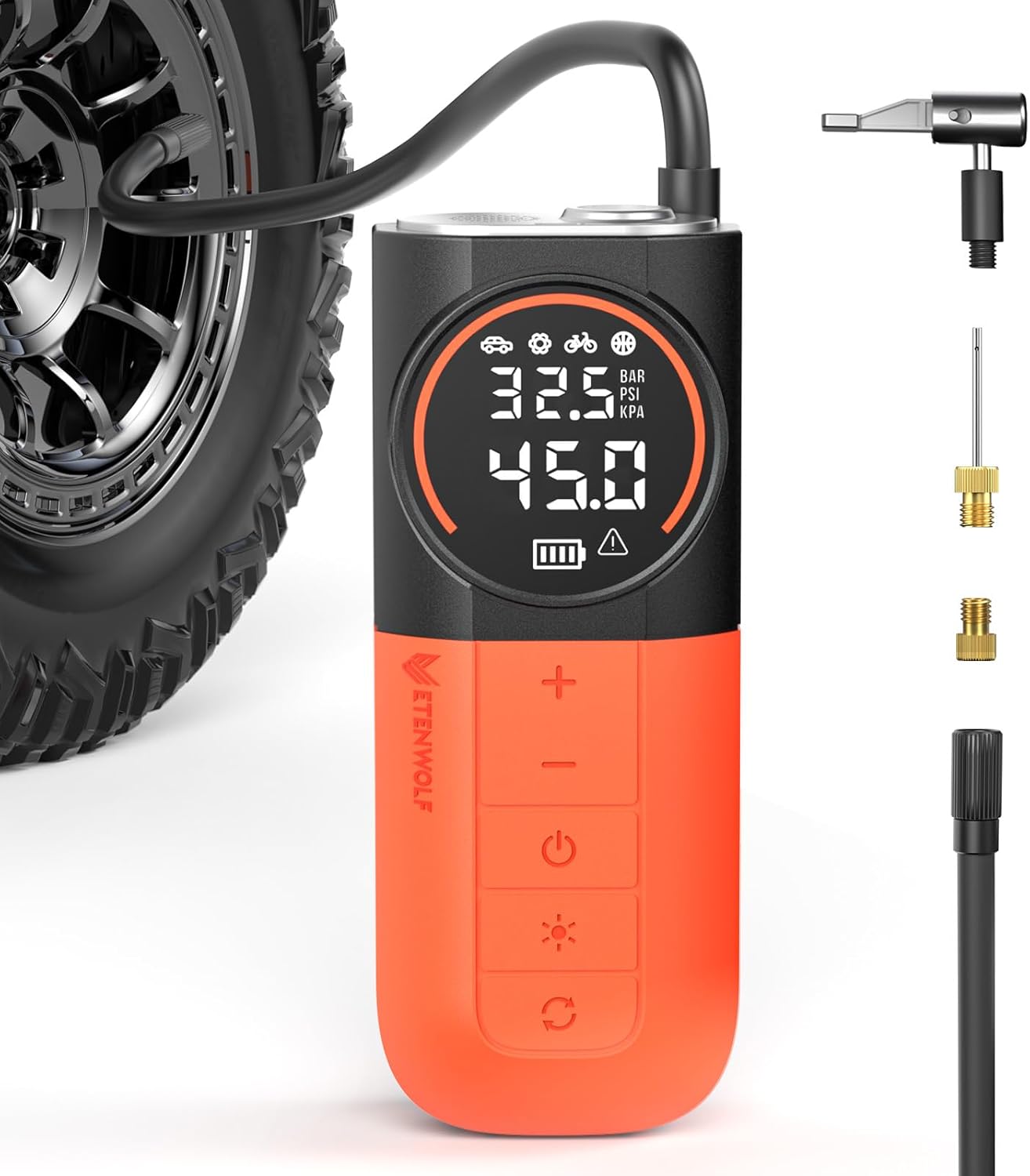
The ETENWOLF S1 cordless tire inflator delivers ultra-fast inflation with up to 160 PSI and a 20 L/min airflow for quicker tire top-offs. Its 5200mAh battery and cooling system support inflating many tires and sports balls on a single charge, while the digital pressure gauge and multi-unit display help you reach the right pressure accurately. With preset modes, pressure memory, an auto-stop feature, and an LED flashlight, it’s built for easy roadside and everyday use.
Seasonal Changes and Tire Performance
Seasonal changes affect Tacoma tire pressure and traction. Cold weather can lower tire pressure, while hot weather and long highway drives can raise tire temperature. That is why cold-pressure checks matter more than quick readings after driving.
- Winter: Check pressure more often, watch for TPMS warnings, and consider winter tires if you drive in snow or ice.
- Spring: Inspect for pothole damage, uneven wear, and alignment changes after winter roads.
- Summer: Watch load, speed, and tire condition before long highway trips or towing.
- Fall: Check tread depth before rain, mud, snow, or mountain driving season.
Note: Tire pressure naturally changes with temperature. Set pressure when the tires are cold, then recheck after major weather swings.
Using Technology to Monitor Tire Health
Technology can help you catch tire problems sooner, but it does not replace monthly hands-on checks. Use TPMS, tread gauges, service reminders, and inspection records together.
Tire Pressure Monitoring Systems
Most modern Tacomas have a Tire Pressure Monitoring System. TPMS warns you when pressure drops significantly, but NHTSA says it is not a substitute for regular tire maintenance. A tire can be low before it looks low, and TPMS may not alert you until the pressure is already well below the recommended level.
If the TPMS light stays on, check all tires with a gauge. If the light flashes for about a minute and then stays on, the system may have a fault that needs inspection.
Mobile Apps for Tracking
Maintenance apps can help you log tire rotations, pressure checks, tread depth, alignments, and replacement dates. Some Bluetooth pressure systems can also show pressure and temperature readings in real time. These tools are useful reminders, but they still need accurate setup and regular visual inspections.
Diagnostic Tools for Maintenance
A few simple tools can protect your tire investment:
- Tire pressure gauge: Use a reliable gauge instead of guessing by appearance.
- Tread depth gauge: Track wear before tires reach the replacement limit.
- Torque wrench: Use the correct lug nut torque if you rotate tires yourself.
- Alignment printout: Keep records after suspension work, new tires, or uneven wear.
- Inspection log: Record PSI, tread depth, rotation date, and mileage.
Monthly Tacoma Tire Checklist
Use this checklist once a month and before towing, hauling, road trips, or trail runs:
- Check cold tire pressure using the door placard PSI.
- Check the spare tire if your Tacoma has one.
- Measure tread depth across the inner, center, and outer tread.
- Look for nails, cuts, cracks, bulges, and sidewall damage.
- Check for uneven shoulder wear or cupping.
- Confirm valve caps are installed and valve stems are not cracked.
- Listen for new tire noise or vibration during the next drive.
- Schedule rotation, balance, or alignment if wear looks uneven.
When Should You Replace Your Tires for Optimal Efficiency?
Replace Tacoma tires when tread reaches 2/32 of an inch, when treadwear indicators are flush, or when a tire has unsafe damage such as bulges, exposed cords, deep cuts, or sidewall cracking. You should also replace tires that cannot hold pressure or keep causing vibration after proper balancing and inspection.
Age matters even if tread remains. NHTSA says some vehicle and tire manufacturers recommend replacing tires that are six to 10 years old regardless of treadwear. Find the DOT Tire Identification Number on the sidewall. The last four digits show the week and year the tire was made.
If you replace only two tires, ask a qualified tire professional where they should be installed for your Tacoma’s drivetrain and tire setup. For best handling, traction, and wear consistency, many owners replace all four tires together, especially on 4WD trucks.
Frequently Asked Questions
How often should I replace the tires on my Toyota Tacoma?
Replace your Tacoma tires when tread reaches 2/32 of an inch, when the tire has unsafe damage, when wear becomes uneven beyond correction, or when age becomes a concern. Many tires last about 25,000 to 60,000 miles depending on tire type, alignment, pressure, load, roads, and driving style.
What PSI should Toyota Tacoma tires be?
Use the cold PSI listed on your Tacoma’s driver-side Tire and Loading Information Label or owner’s manual. Do not use a universal number or the maximum PSI printed on the tire sidewall as your normal driving pressure.
How often should I rotate Tacoma tires?
A common rotation range is every 5,000 to 7,500 miles, but you should follow your owner’s manual if it gives a different interval. Rotate sooner if you notice uneven wear, vibration, or a pulling sensation.
Do all-terrain tires reduce Tacoma gas mileage?
They can. All-terrain tires are often heavier and more aggressive than highway tires, which can increase rolling resistance and road noise. The tradeoff may be worth it if you regularly drive gravel, dirt, job sites, or trails.
Can I rely on TPMS instead of checking tire pressure?
No. TPMS is a warning system, not a replacement for monthly pressure checks. Use a gauge at least once a month and before long trips, towing, or off-road driving.
Conclusion
You can improve Toyota Tacoma tire mileage by staying consistent with pressure checks, rotation, alignment, tread inspections, and load control. The most important rule is simple: use the cold PSI from your Tacoma’s door placard or owner’s manual, not a guessed pressure.
Keep a gauge in the truck, check tires monthly, and act quickly when you see uneven wear, low tread, vibration, or pressure loss. Those small habits help your tires last longer, keep your Tacoma safer, and reduce wasted fuel over time.
Sources
- NHTSA TireWise Tire Safety — tire pressure, tread depth, rotation, TPMS, tire age, and tire safety guidance.
- FuelEconomy.gov: Keeping Your Vehicle in Shape — proper tire inflation and fuel economy impact.
- FuelEconomy.gov: Driving More Efficiently — aggressive driving, speed, cargo, and excess weight fuel impacts.
- Toyota Owners Manuals and Warranties — official owner’s manual access for Toyota maintenance details.

Related Articles
How Tire Weight Affects Toyota Tacoma Performance
How does tire weight influence your Toyota Tacoma's performance and efficiency? Discover the surprising effects that could change your driving experience.
Read More
Tire Noise Levels by Tire Type on a Toyota Tacoma
A comprehensive look at how tire types affect noise levels in your Toyota Tacoma reveals surprising insights that could enhance your driving experience.
Read More
How To Choose Tires for a Dual Use Toyota Tacoma
Unlock the secrets to selecting the perfect tires for your dual-use Toyota Tacoma, ensuring optimal performance and comfort on every adventure. Discover more inside!
Read More