
How To Prepare Toyota Tacoma Tires for a Road Trip

Preparing your Toyota Tacoma’s tires for a road trip takes more than inflating every tire to a generic 30–35 PSI. The correct pressure, tire size, load capacity, spare setup, and maintenance schedule can vary by model year and configuration. A 20- to 30-minute inspection before departure can uncover low pressure, unsafe tread, impact damage, or missing tools before those problems leave you stranded.
Quick Answer
Check all Tacoma tires when cold and inflate them to the exact front and rear pressures on the driver-side door placard. Measure tread across each tire, inspect for cuts or bulges, verify the spare and tools, review the load limit, and complete any due rotation, repair, or alignment work before leaving.
Key Takeaways
- Use the cold PSI printed on your Tacoma’s Tire and Loading Information label, not a generic pressure range or the maximum molded onto the tire.
- Use a tread-depth gauge for accuracy. The penny test screens for roughly 2/32 inch, while a quarter can help screen for about 4/32 inch.
- Do not begin a highway trip with a bulge, exposed cords, deep cracking, rapid pressure loss, severe vibration, or a puncture that has not been properly evaluated.
- Follow your exact model-year maintenance guide. Toyota’s 2025 Tacoma guide lists tire rotation at 5,000-mile intervals.
- Check the spare, jack, lug wrench, wheel-lock key, payload limits, and TPMS before loading the truck.
At a Glance
| Time Required | 20–30 minutes for inspection; allow extra time for repair, rotation, or alignment |
| Difficulty | Easy inspection; professional service may be needed for damage, leaks, balancing, or alignment |
| Tools Needed | Accurate pressure gauge, tread-depth gauge or coins, flashlight, inflator, owner’s manual, and tire valve caps |
| Cost | Usually no service cost if you already own the tools; repair, alignment, and tire replacement costs vary |
Toyota Tacoma Pre-Trip Tire Checklist
Complete these checks several days before departure rather than on the morning of the trip. That gives you time to repair a leak, order the correct tire, or schedule service.
- Read the driver-side door placard: Record the specified cold front and rear pressures, original tire size, seating capacity, and combined occupant-and-cargo limit.
- Check pressure when cold: Measure every road tire and the spare before driving for the day or after the truck has been parked for at least three hours.
- Measure tread: Check the inner, center, and outer grooves at several points around each tire.
- Inspect for damage: Look for cuts, bulges, cracking, nails, exposed material, bent wheels, and unusual wear.
- Review maintenance: Confirm that rotation is current and investigate any pulling, steering-wheel offset, or vibration.
- Check the emergency equipment: Locate the spare, jack, lug wrench, wheel-lock key, inflator, gauge, flashlight, and reflective warning equipment.
- Account for the load: Include passengers, luggage, accessories, bed cargo, and trailer tongue weight when checking the truck’s load limit.
The correct road-tire pressure is the cold pressure Toyota printed on your truck’s placard—not the maximum pressure molded onto the tire sidewall.
[Products Worth Considering]

EVOULTES heavy duty tire inflator with an integrated gauge delivers accurate pressure readings from 10–120 PSI, helping you inflate, deflate, and check tires in one tool. The 16.5-inch extended dual-head air chuck with swivel base reaches hard-to-access dual wheel valves on trucks and RVs. A brass trigger core and side-mounted air release valve make operation smooth, with standard 1/4" NPT threading and quick-connect compatibility for easy setup.

This portable cordless tire inflator delivers up to 160 PSI with fast 17 L/min airflow to help you quickly top up tires and get back on the road. It features dual power mode, running on a 21V rechargeable battery or a 12V DC adapter for convenient roadside use. An automatic shut-off with digital pressure gauge helps prevent overinflation, and a built-in LED light improves visibility in low-light conditions.
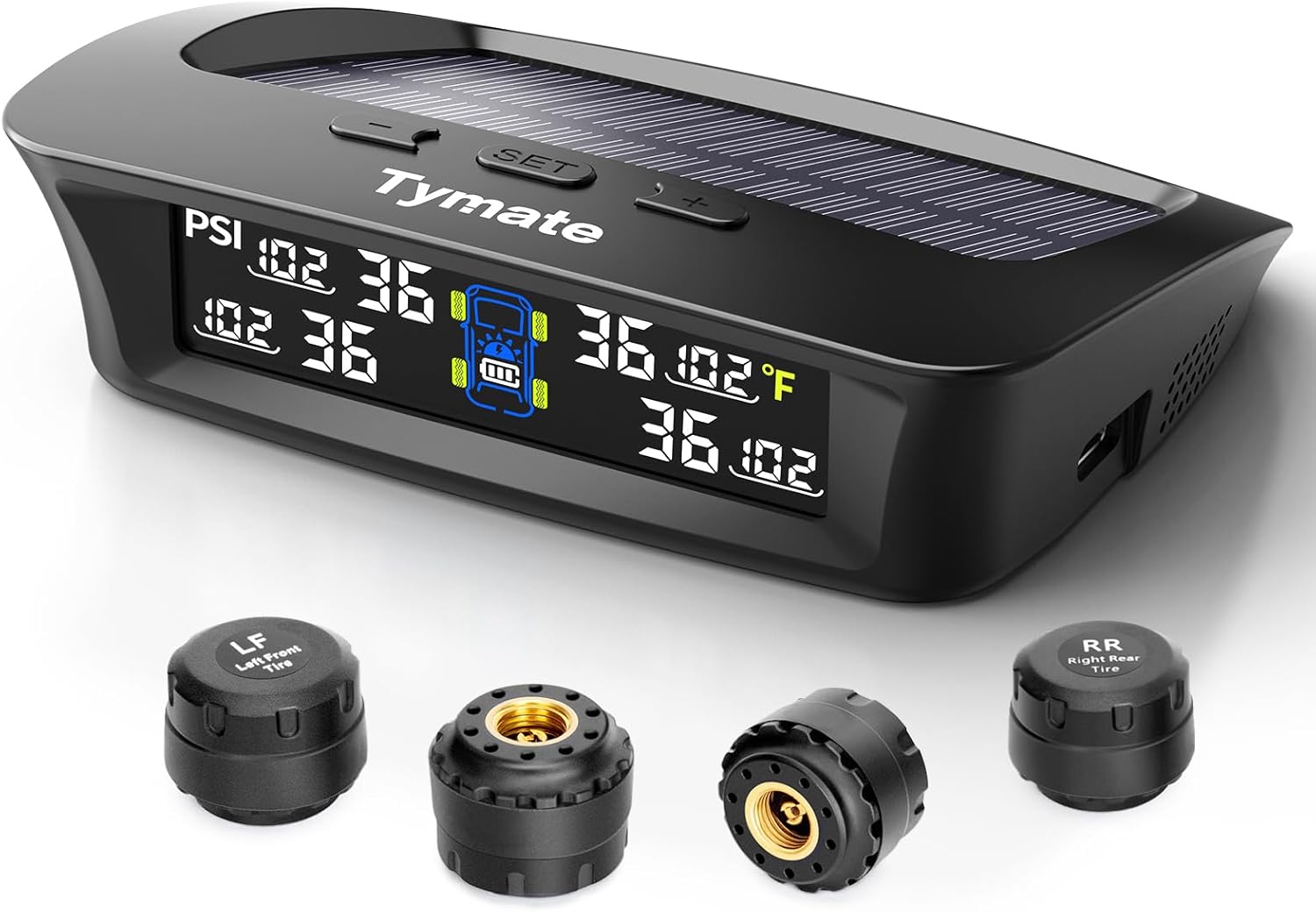
The Tymate TM3 RV TPMS delivers real-time tire pressure monitoring from 0 to 144 PSI with accurate readings and dependable wireless communication. It includes four external sensors with pre-pairing, six alarm modes for rapid leak, pressure extremes, temperature, and signal loss, plus an easy-reference setup for alert thresholds. Solar and USB-C charging help keep the display powered, while the color LCD and adaptive backlight improve visibility for safer driving and towing.
Use the Correct Cold Tire Pressure
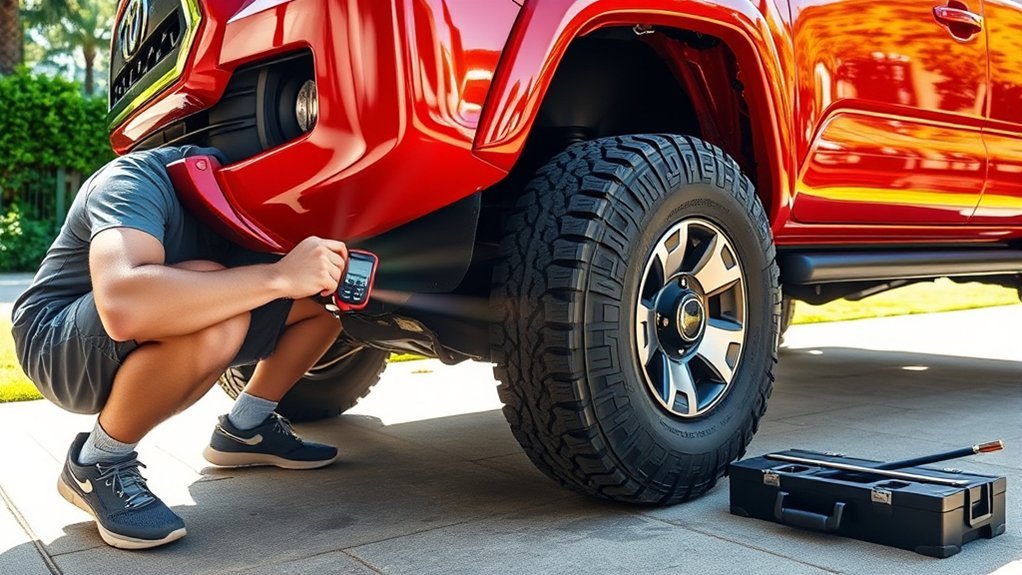
Do not assume that every Toyota Tacoma should be inflated to 30, 32, or 35 PSI. Tire pressure can differ by model year, trim, tire size, axle, and factory configuration. Find the correct cold pressure on the Tire and Loading Information label on the driver-side door opening. You can also confirm it in the model-specific owner’s manual.
Toyota’s tire-pressure guidance directs owners to the driver-side door-jamb sticker or owner’s manual. NHTSA TireWise also warns that the number on the tire sidewall is not the vehicle’s recommended inflation pressure.
For the most accurate reading, check pressure before the day’s first drive or after the truck has been parked for at least three hours. Remove the valve cap, press the gauge squarely onto the valve stem, record the reading, and add air in short bursts. Recheck after each adjustment and reinstall the cap.
Warning: Driving heats the tires and raises their measured pressure. Do not release air from a normally inflated hot tire merely to make it match the cold placard number. Check it again after the truck has cooled.
Underinflation can increase heat buildup, reduce load-carrying ability, and cause shoulder wear. Excessive pressure can affect ride quality and concentrate wear toward the center of the tread. A tire that repeatedly loses pressure needs leak diagnosis rather than repeated topping off.
Pro Tip: Write down all four readings. A tire that is consistently several PSI below the others may have a nail, bead leak, valve problem, or wheel damage even when it still looks normal.
Measure Tread Depth Correctly
Tread depth affects water evacuation, braking, and resistance to hydroplaning. Check every tire across its full width because a tire can have acceptable tread in the center but unsafe wear on an inner shoulder that is difficult to see.
Use a tread-depth gauge when possible: Place the gauge in a main groove without resting it on a raised treadwear bar. Measure the inner, center, and outer areas at several points around the tire. Record the lowest measurement, not the average.
Understand the penny test: Insert a penny into a main groove with Lincoln’s head pointing down. If the top of his head remains fully visible, the tread is around or below 2/32 inch and the tire has reached the common wear-bar replacement level described by NHTSA.
Use a quarter for a wet-weather screen: Insert a quarter with Washington’s head down. If the tread reaches part of his head, it is approximately 4/32 inch or deeper. The Bridgestone tread-depth guide recommends the quarter test as a quick way to identify tread approaching a wet-weather concern. A gauge remains more accurate than either coin.
A tire does not become equally capable in rain simply because it remains above 2/32 inch. Water evacuation generally declines as tread wears, so consider the expected weather, trip length, and tire condition rather than treating the minimum as an ideal road-trip target.
Note: Uneven readings can point to inflation, alignment, balance, suspension, or rotation problems. Replacing a tire without correcting the underlying cause may allow the same wear pattern to return.
Spot Visible Tire and Wheel Damage
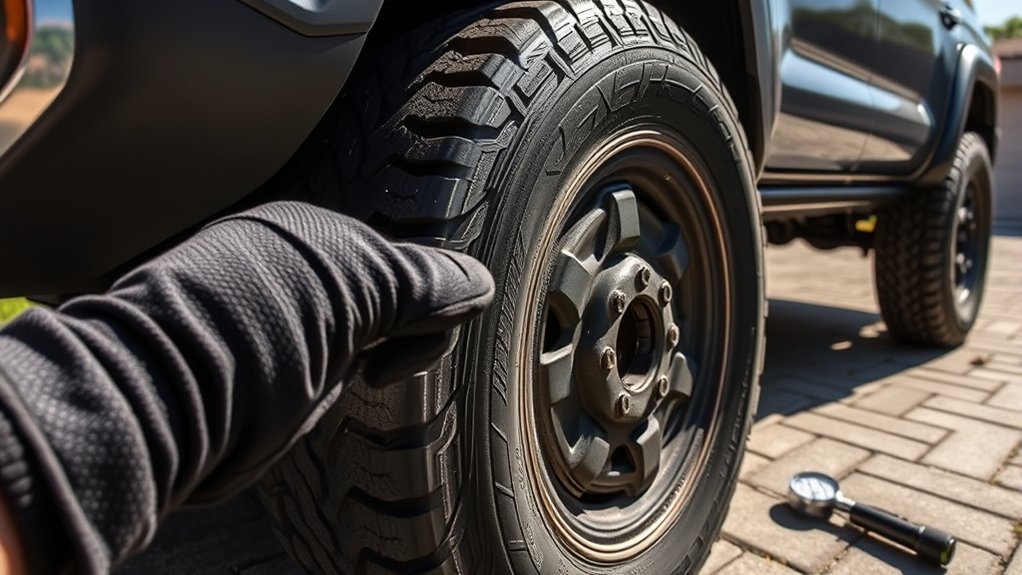
Use a flashlight to inspect the outer sidewall, tread surface, and visible inner sidewall of each tire. Move the Tacoma once if necessary so the section touching the ground can also be checked.
- Bulges or bubbles: These can indicate damaged internal cords and require prompt professional evaluation.
- Cuts or deep cracks: Damage that exposes cords or reinforcing material makes the tire unsafe.
- Nails, screws, or other objects: Do not pull them out before reaching a repair location, because the object may be slowing the leak.
- Uneven wear: Look for one-sided wear, center wear, shoulder wear, cupping, flat spots, and feathered tread edges.
- Wheel damage: Check for bent rim flanges, cracks, missing lug nuts, and heavy corrosion around the bead area.
- Valve damage: Confirm that stems are not cracked, bent, or leaking and that each valve has a cap.
Check the tire’s age when its history is unknown. The final four digits of the full DOT Tire Identification Number show the week and year of manufacture. For example, “2322” means the tire was made during the 23rd week of 2022. NHTSA notes that some vehicle and tire manufacturers recommend age-based replacement within six to ten years, regardless of remaining tread. Follow Toyota’s guidance and the tire manufacturer’s stated service-life policy.
Warning: Do not start or continue a highway trip with a sidewall bulge, exposed cords, tread separation, rapid pressure loss, severe new vibration, or a tire rubbing the body or suspension. Install a serviceable spare or arrange roadside assistance.
Check Alignment When the Truck Shows Symptoms
A Tacoma does not need wheel alignment simply because another 5,000 miles have passed. Have the alignment and suspension checked when the truck shows symptoms, after a hard pothole or curb impact, after suspension or steering work, or after installing a lift or changing wheel-and-tire dimensions.
The common signs of alignment trouble include:
- The truck pulls or drifts on a reasonably flat road.
- The steering wheel is off-center while traveling straight.
- One shoulder wears faster than the rest of the tread.
- The tread develops feathered edges.
- Handling changes after a pothole, curb strike, or suspension modification.
First verify that left and right tire pressures match the placard, because unequal pressure can also cause pulling. Vibration is not proof of misalignment; it may come from tire damage, imbalance, a bent wheel, loose components, or driveline problems.
Pro Tip: Ask the shop for the before-and-after alignment printout. It shows whether camber, caster, and toe were outside Toyota’s specifications and confirms what was adjusted.
Follow the Correct Tire-Rotation Schedule
Regular rotation helps distribute wear more evenly among the front and rear positions. It can support more consistent handling and allow the owner to use more of the tires’ available service life, but no fixed percentage improvement applies to every truck.
The 2025 Toyota Tacoma Warranty & Maintenance Guide lists tire rotation at 5,000-mile intervals. Use that as a current verified example, not as a substitute for checking the guide supplied for your own model year.
The correct rotation pattern depends on whether the tires are directional, whether front and rear sizes match, and whether a full-size spare is intended to enter the rotation. Do not cross directional tires to the other side unless they are remounted on their wheels. A temporary spare should not be added to a normal rotation.
Measure tread before rotating. If one tire is badly worn, damaged, or substantially different from the others, diagnose the cause first. Rotation cannot repair an alignment problem, internal tire damage, or a mismatched set.
Check the Spare Tire and Roadside Tools
A spare that is flat, rusted in place, inaccessible beneath cargo, or paired with missing tools will not solve a roadside problem. Before leaving:
- Locate the spare and determine whether it is full-size or temporary-use.
- Check its pressure against the spare specification in the owner’s manual or applicable label; it may differ from the road tires.
- Inspect its tread, sidewalls, wheel, valve stem, and DOT date code.
- Confirm that the lowering mechanism works if the spare is mounted beneath the truck.
- Locate the jack, handle extensions, lug wrench, wheel-lock key, and instructions.
- Carry an accurate gauge, portable inflator, flashlight, gloves, reflective triangles, and a charged phone.
- Make sure the lug wrench fits any aftermarket wheels and lug nuts.
Warning: Change a tire only on firm, level ground well away from traffic. Apply the parking brake, follow the manual’s jack-point instructions, and never place any part of your body beneath a truck supported only by its emergency jack.
[Products Worth Considering]

This spare tire tool kit is designed for the 2004 to 2018 Ford F-150 to help you loosen and tighten wheel lug nuts and manage the spare tire and provided jack functions from underneath the vehicle. It includes the lug nut wrench and extension pieces plus a convenient storage carrying case for organized transport. The jack itself is not included.
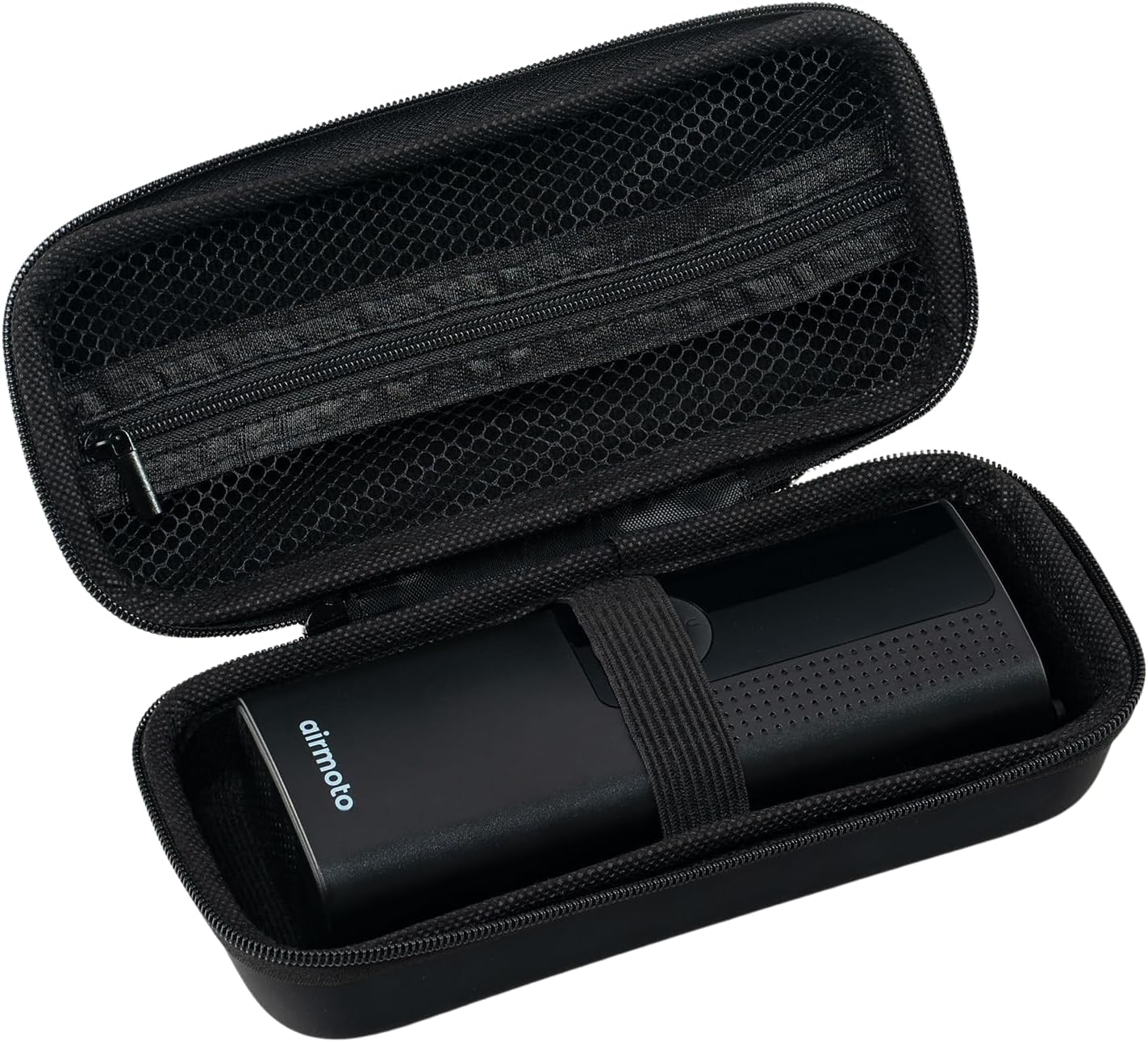
Protect and organize your Airmoto tire inflator with a purpose-designed carrying case made for a precise fit. The durable polyurethane shell and soft interior help guard against cuts, tears, and road wear, while a mesh pocket stores connectors and accessories. This travel box measures 7.5*3.5*2.8 inches and can work with most handheld portable air compressor models; this listing includes the case only.
Account for Cargo, Towing, and TPMS
Road-trip cargo adds weight to the tires. Check the driver-side Tire and Loading Information label for the maximum combined weight of occupants and cargo. Include passengers, luggage, coolers, bed accessories, recovery gear, and trailer tongue weight in that total.
Do not exceed the truck’s payload, axle, tire, or towing limits. The load index molded onto a replacement tire must meet the vehicle’s requirements, but the tire’s capacity does not increase the Tacoma’s rated payload or axle limits.
Use the cold pressure Toyota specifies unless the owner’s manual or another vehicle label provides a different instruction for a particular operating condition. Do not inflate above the wheel or tire limits in an attempt to compensate for overloading.
The tire-pressure monitoring system is a backup warning system, not a substitute for checking with a gauge. A tire can be below its ideal pressure before the warning appears. If the TPMS light stays on, check every monitored tire manually. If it flashes or remains illuminated after pressure has been corrected, consult the model-year manual because a sensor or system fault may be present.
Match the Tires to the Planned Terrain
The best Tacoma tire depends on where the truck will spend most of the trip. No single tread design is ideal for highway comfort, deep mud, snow, loose rock, and fuel economy at the same time.
- Highway or touring tires: Usually prioritize road noise, ride comfort, wet-road manners, and rolling efficiency. They suit trips spent mainly on pavement.
- All-terrain tires: Balance paved-road use with traction on gravel, dirt, and moderate trails. More aggressive versions may add noise, weight, and rolling resistance.
- Mud-terrain tires: Use large tread voids for loose mud and rough surfaces but commonly trade away some pavement comfort, noise control, and wet-road refinement.
- Winter or all-weather tires: Tires carrying the Three-Peak Mountain Snowflake symbol have met a standardized snow-traction performance test. The symbol does not eliminate the need to slow down or account for ice.
If you lower pressure for sand or trail use, treat the reduced setting as a low-speed, terrain-specific adjustment—not a highway pressure. Use a quality gauge, avoid tire-to-wheel or sidewall damage, and restore the placard pressure before returning to sustained road speed.
Note: There is no universal safe “aired-down” PSI for every Tacoma. Tire construction, wheel size, load, speed, terrain, and bead-retention capability all matter.
Choose Replacement Tires by Specification
Begin with the tire size and specifications on the placard and in the owner’s manual. Verify fitment for the exact model year, trim, drivetrain, wheel, and any suspension modification rather than buying by the Tacoma name alone.
- Size: Confirm section width, aspect ratio, construction, and wheel diameter.
- Load index or load range: Use a rating that meets the truck’s requirements and planned loading.
- Speed rating: Do not install a lower rating unless the vehicle and tire manufacturer permit it for a specific application.
- P-metric versus LT construction: LT tires may offer stronger construction for demanding loads or terrain, but they can be heavier and firmer and may require different inflation calculations.
- Weather rating: Select all-season, all-weather, or winter capability for the climates the truck will actually encounter.
- Tread type: Balance off-road traction against road noise, braking, comfort, and fuel use.
Keep the four road tires compatible in size, construction, and intended use unless Toyota specifies otherwise. Large differences in circumference or tread condition can affect handling and four-wheel-drive operation. Modified trucks may also need clearance checks at full steering lock and through suspension travel.
Maintain the Tires During the Road Trip
A pre-trip inspection does not end tire maintenance for a multi-day journey. Use this simple routine:
- Walk around the truck each morning: Look for a visibly low tire, fresh cuts, lodged objects, or sidewall damage.
- Check cold pressure periodically: Recheck after a major temperature change, after rough trail use, or when one tire appears different.
- Watch the TPMS: Treat a warning as a reason to find a safe stopping place and inspect the tires, not as permission to continue until the tire looks flat.
- Pay attention to new symptoms: Pulling, thumping, wobbling, vibration, or rhythmic noise can indicate a developing problem.
- Inspect after off-road driving: Look at the sidewalls, tread, wheels, and valve stems, then restore road pressure before highway driving.
- Recheck the load: Do not bury the spare or tools beneath cargo that cannot be unloaded safely at the roadside.
If a tire loses pressure repeatedly, have it inspected internally by a qualified tire professional. A plug, sealant, or inflator kit may have restrictions and should not automatically be treated as a permanent repair.
Frequently Asked Questions
Should I fill my Tacoma’s tires before a road trip?
Yes, if a cold reading is below the front or rear pressure printed on the driver-side placard. Check every tire with a gauge before departure. Do not use the tire sidewall maximum as the target and do not release air from a normally inflated hot tire just to reach the cold number.
Should every Toyota Tacoma use 30–35 PSI?
No. That range may overlap with some configurations, but it is not a universal specification. Use the cold front and rear pressures printed on your truck’s Tire and Loading Information label and verify them in the manual for the exact model year.
Do you have to be in Neutral to switch a Toyota Tacoma into 4WD?
It depends on the shift being made and the Tacoma’s model year and four-wheel-drive system. For example, Toyota’s 2024 part-time 4WD quick guide allows shifting between 2H and 4H below the listed speed limit. Shifting between 4H and 4L requires a complete stop and Neutral on an automatic model or the clutch held down on a manual model. Follow your exact owner’s manual rather than applying one procedure to every Tacoma.
What is the most common tire problem before a Tacoma road trip?
There is no single problem that affects every Tacoma. Common pre-trip findings include low pressure, slow punctures, uneven tread wear, impact damage, an old or underinflated spare, and overdue rotation. A systematic inspection is more useful than assuming alignment is always the cause.
Does the Tacoma TPMS monitor the spare tire?
That can vary by model year, equipment, and spare configuration. Do not assume the spare is monitored. Check it manually with a gauge and use the pressure specified for that spare in the owner’s manual or applicable label.
Conclusion
Your Tacoma’s tires are the truck’s only contact with the road, so small problems deserve attention before a long drive. Use the exact cold pressure on the door placard, measure tread across the full width, inspect for damage and age, confirm rotation and alignment needs, and make sure the spare and tools are usable. Complete these checks before loading the truck so repairs do not become roadside emergencies.
Sources
- Toyota: How to Check Tire Pressure — locating and using the vehicle’s recommended pressure.
- NHTSA TireWise — cold pressure, tread, damage, tire age, loading, and spare-tire guidance.
- 2025 Toyota Tacoma Warranty & Maintenance Guide — scheduled maintenance and tire-rotation intervals.
- 2024 Toyota Tacoma Quick Reference Guide — part-time four-wheel-drive shifting procedures.
- Bridgestone: How to Check Tire Tread Depth — penny, quarter, and tread-depth checks.
- Bridgestone: Tire Alignment Guide — symptoms that indicate an alignment inspection is needed.

Related Articles
How Tire Weight Affects Toyota Tacoma Performance
How does tire weight influence your Toyota Tacoma's performance and efficiency? Discover the surprising effects that could change your driving experience.
Read More
Tire Noise Levels by Tire Type on a Toyota Tacoma
A comprehensive look at how tire types affect noise levels in your Toyota Tacoma reveals surprising insights that could enhance your driving experience.
Read More
How To Choose Tires for a Dual Use Toyota Tacoma
Unlock the secrets to selecting the perfect tires for your dual-use Toyota Tacoma, ensuring optimal performance and comfort on every adventure. Discover more inside!
Read More