
How Many Miles Do Mud Terrain Tires Last on a Toyota Tacoma
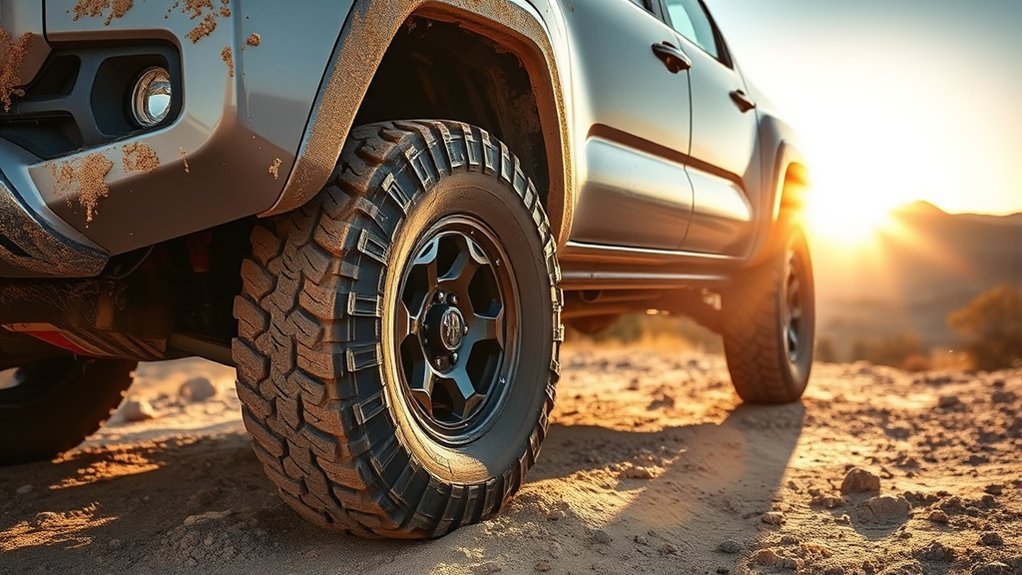
Mud-terrain tires on a Toyota Tacoma usually last about 20,000 to 40,000 miles, but that range is not a guarantee. A Tacoma that spends most of its time on pavement, carries extra armor, tows, or runs poor alignment may wear through them faster. A well-maintained truck with correct cold tire pressure, regular rotation, and mostly mixed trail use can often land near the higher end.
Quick Answer
Most Toyota Tacoma mud-terrain tires last around 20,000–40,000 miles. Heavy pavement driving, aggressive throttle and braking, poor alignment, low pressure, towing, and extra truck weight can shorten that range. Rotate them every 5,000–8,000 miles, check pressure monthly when cold, and replace them at 2/32 inch tread or sooner if damaged.
Key Takeaways
- A realistic Tacoma mud-terrain tire lifespan is usually 20,000–40,000 miles, depending on road use, load, driving style, and maintenance.
- Mud-terrain tires often wear faster on pavement because the tread blocks are large, open, and built for traction instead of quiet highway mileage.
- Check tire pressure at least once a month when the tires are cold, and use the Tacoma’s door placard or Toyota owner’s manual for the correct PSI.
- Replace tires when tread reaches 2/32 inch, or sooner if you see cracks, bulges, exposed cords, deep cuts, severe chunking, or loss of control.
- Do not assume a mud-terrain tire has a mileage warranty; many M/T tires only carry a limited workmanship-and-materials warranty.
At a Glance
| Time Required | 10–15 minutes for a basic tire check; longer if you measure all tread grooves and inspect the spare. |
| Difficulty | Easy for inspection; moderate if you rotate the tires yourself. |
| Tools Needed | Tire pressure gauge, tread-depth gauge, flashlight, gloves, and a torque wrench if rotating tires. |
| Cost | $0–$20 for DIY checks; more if you need rotation, balancing, alignment, repair, or replacement. |
Understanding the Lifespan of Mud-Terrain Tires on Your Tacoma
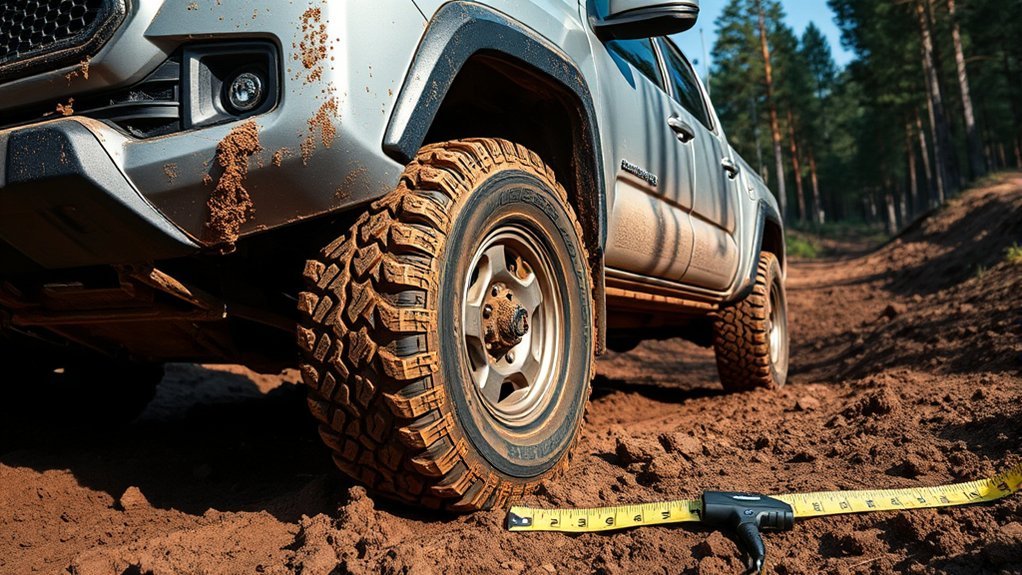
When you’re driving your Tacoma through rocky trails, wet dirt, ruts, and muddy job sites, mud-terrain tires earn their keep. Their deep voids, large tread blocks, and tough sidewalls are built for bite. The tradeoff is that they usually do not wear like highway tires or mild all-terrain tires.
For most Tacoma owners, a practical expectation is:
| Tacoma Use | Expected Mud-Terrain Tire Life | Why It Changes |
|---|---|---|
| Mostly pavement and commuting | 20,000–30,000 miles | Heat, braking, cornering, and highway miles wear aggressive tread blocks faster. |
| Mixed pavement, dirt roads, and weekend trails | 25,000–40,000 miles | This is the sweet spot when pressure, rotation, and alignment are maintained. |
| Frequent rocks, heavy mud, towing, overlanding weight, or job-site use | 15,000–30,000 miles | Chunking, sidewall scrapes, underinflation, payload, and sharp terrain can end tire life before the tread is evenly worn. |
The number on your odometer is only part of the story. Tire age, tread depth, tire pressure, alignment, load, and visible damage matter just as much as mileage.
NHTSA reports that 511 people died in tire-related crashes in 2024, which is why tread depth, inflation, age, and tire damage should be treated as safety checks—not just maintenance chores.
[Products Worth Considering]

EVOULTES heavy duty tire inflator with an integrated gauge delivers accurate pressure readings from 10–120 PSI, helping you inflate, deflate, and check tires in one tool. The 16.5-inch extended dual-head air chuck with swivel base reaches hard-to-access dual wheel valves on trucks and RVs. A brass trigger core and side-mounted air release valve make operation smooth, with standard 1/4" NPT threading and quick-connect compatibility for easy setup.

This portable cordless tire inflator delivers up to 160 PSI with fast 17 L/min airflow to help you quickly top up tires and get back on the road. It features dual power mode, running on a 21V rechargeable battery or a 12V DC adapter for convenient roadside use. An automatic shut-off with digital pressure gauge helps prevent overinflation, and a built-in LED light improves visibility in low-light conditions.

The JACO FlowPro Tire Inflator measures, inflates, and airs down tires up to 100 PSI with battery-free operation and ±2% accuracy after calibration. It features a glowing pressure dial for night visibility, a heavy-duty steel build with a hybrid hose, and a precision push-to-inflate thumb trigger. The patented Lightning Air Chuck locks on for a secure seal, and the kit includes quick-connect hardware for easy inline use with your air compressor.
Crucial Factors Impacting Your Tacoma’s Mud-Terrain Tire Lifespan
Maximizing the lifespan of your Tacoma’s mud-terrain tires hinges on several key factors. The aggressive tread design, while excellent for off-road traction, can lead to quicker wear on paved surfaces. If you frequently drive on highways or city streets, expect your tires to wear out faster than a Tacoma that sees more dirt, gravel, and low-speed trail use.
1. Pavement Miles
Mud-terrain tires are not built primarily for quiet, long highway life. Large tread blocks can squirm on pavement, and the softer compounds used for grip may wear faster than a highway-terrain tire. Long commutes, high-speed driving, and hot roads can shorten tread life.
2. Extra Tacoma Weight
Steel bumpers, winches, bed racks, rooftop tents, drawer systems, campers, recovery gear, and towing all add load. More weight means more heat and stress in the tire. If your Tacoma is built for overlanding, choose the correct tire size and load rating, and never exceed the tire or vehicle load limits.
3. Tire Pressure
Underinflation can wear the shoulders, build heat, and raise the risk of tire failure. Overinflation can wear the center tread and reduce the contact patch. For daily driving, use the cold tire pressure listed on your Tacoma’s Tire and Loading Information Label or in the Toyota owner’s manual, not the maximum PSI molded into the tire sidewall.
4. Alignment, Suspension, and Lift Changes
Uneven wear often comes from poor alignment, worn suspension parts, or a lift that was not aligned correctly after installation. If your Tacoma pulls, vibrates, cups the tread, or wears one tire edge faster than the other, schedule an alignment and suspension inspection before the tire damage becomes permanent.
5. Driving Style
Aggressive acceleration, hard braking, fast cornering, and spinning tires on rock or pavement can all shorten tread life. Smooth driving helps the tread blocks wear evenly and keeps the tire cooler.
Note: Airing down can improve traction and ride comfort off-road, but you should air back up before highway driving. Driving fast on underinflated tires can overheat the tire and damage the casing.
Essential Maintenance for Your Tacoma’s Mud-Terrain Tires
To help your Tacoma’s mud-terrain tires perform their best and last as long as possible, build tire checks into your normal maintenance routine. The most important habits are simple: check pressure, rotate on schedule, inspect tread and sidewalls, and correct alignment problems early.
Check Tire Pressure Monthly When Cold
The National Highway Traffic Safety Administration recommends checking tire pressure at least once a month when tires are cold, meaning the truck has not been driven for at least three hours. Check all four tires and the spare. A Tacoma’s correct PSI is listed on the driver-side door placard or in the owner’s manual.
Rotate Every 5,000 to 8,000 Miles
Rotating your tires helps reduce irregular wear and keeps traction more consistent. A good rule is to rotate mud-terrain tires every 5,000 to 8,000 miles, or sooner if uneven wear appears. Follow the tire maker’s pattern and Toyota’s guidance for your drivetrain and tire setup.
If your Tacoma has a matching full-size spare, ask your tire shop whether a five-tire rotation makes sense. It can spread wear across all five tires, but only if the spare is the same size, type, tread depth, and load rating.
Balance and Align When Needed
Balance the tires when new tires are installed, when you feel vibration, or after a hard off-road impact. Get an alignment after installing a lift, replacing suspension parts, hitting a curb, or noticing one-sided wear. Balancing and alignment help maximize tire life and improve safety.
Clean and Inspect After Trail Runs
After mud, rocks, or gravel, look for stones stuck between tread blocks, cuts near the shoulder, missing chunks, bead damage, sidewall scrapes, and punctures. Mud packed inside wheels can also create vibration on the drive home.
Pro Tip: Measure tread depth in three places across each tire: inner edge, center, and outer edge. If one area is wearing faster, the problem is usually pressure, alignment, suspension, or rotation—not the tire brand alone.
How to Recognize When to Replace Your Mud-Terrain Tires
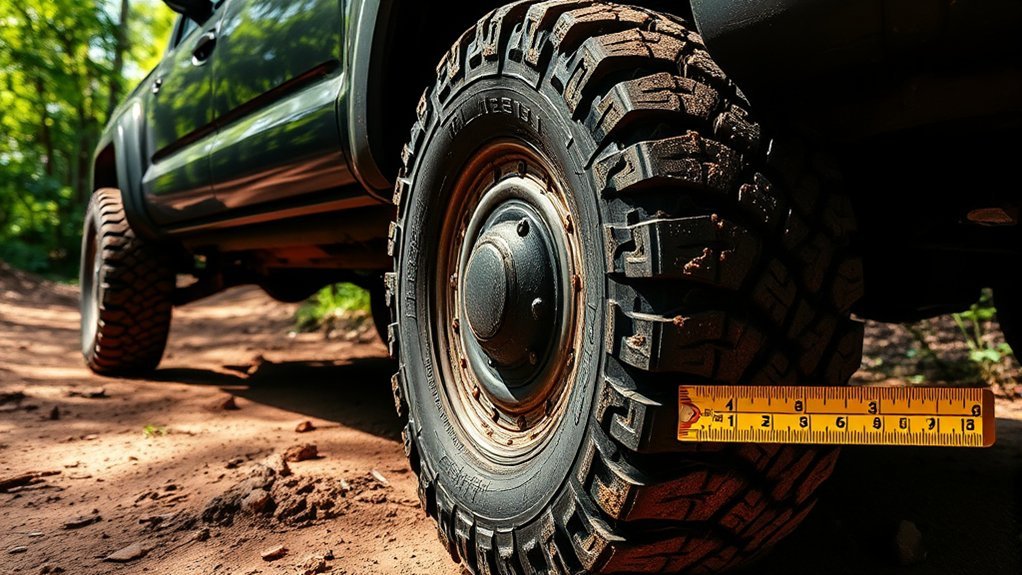
How can you tell if it’s time to replace your mud-terrain tires? Start with a full tire inspection. The safest approach is to check tread depth, tread condition, sidewall condition, tire age, and how the truck feels on the road.
Replace at 2/32 Inch Tread Depth
Tires are considered unsafe and should be replaced when tread reaches 2/32 inch. You can check this with a tread-depth gauge, the built-in treadwear bars, or the penny test. If the tread is level with the wear bars, the tire is done.
Replace Earlier for Off-Road Performance
A mud-terrain tire can become poor in mud, wet dirt, and rocks before it reaches the legal minimum. If the lugs are rounded, the voids are shallow, or traction has dropped sharply, replacement may be smart even if the tire still has more than 2/32 inch remaining.
Watch for Uneven Wear
Uneven wear, bald patches, feathering, cupping, or one-edge wear can signal alignment, suspension, pressure, or rotation problems. If the wear is severe, replacing the tires without fixing the cause can ruin the new set quickly.
Check for Physical Damage
Replace or professionally inspect tires with cracks, bulges, deep cuts, exposed cords, punctures near the sidewall, separated tread, or repeated air loss. Mud-terrain tires are tough, but sharp rocks and trail impacts can still damage the casing.
Check Tire Age
Even if tread remains, tires age as rubber and internal components change over time. NHTSA says some vehicle and tire manufacturers recommend replacing tires that are six to 10 years old, regardless of treadwear. Find the tire’s DOT Tire Identification Number on the sidewall; the last four digits show the week and year it was made.
Warning: Do not keep driving on a tire with a bulge, exposed cords, a sidewall cut, severe vibration, or tread separation. Install the spare if safe to do so and have the tire inspected by a professional.
Comparing Brands: Which Mud-Terrain Tires Last Longer?
Brand reputation matters, but it is not the only predictor of mud-terrain tire life. Tread compound, tire weight, tread depth, sidewall construction, rotation schedule, pressure, alignment, terrain, and driving style all affect how long the tire lasts.
The biggest mistake is treating a brand’s limited warranty as a mileage promise. Many mud-terrain tires have a workmanship-and-materials warranty or trial offer, not a treadwear mileage warranty. Here is a safer way to compare popular M/T options for a Tacoma:
| Mud-Terrain Tire | Published Warranty / Brand Note | What It Means for Tacoma Owners |
|---|---|---|
| BFGoodrich Mud-Terrain T/A KM3 | Standard Manufacturer’s Limited Warranty for workmanship and materials for usable tread life or six years from purchase, whichever comes first. | Strong off-road reputation, but do not read the warranty as a mileage guarantee. |
| Falken Wildpeak M/T | Falken states it does not offer a mileage warranty on the Wildpeak M/T because mud-terrain use varies widely. | A good example of why real-world M/T tire life depends more on use and maintenance than a published mileage promise. |
| Toyo Open Country M/T | Toyo lists a limited warranty and describes the tire as built for durability, off-road performance, and long tread life. | Worth considering for mixed pavement and trail use, but check the current warranty booklet for exact coverage. |
| General Grabber X3 | General lists a 45-day trial and 12-month road hazard coverage for the Grabber X3. | Compare protection plans, road noise, and tread-life ratings, not just brand name. |
Nitto, BFGoodrich, Toyo, Falken, General, Goodyear, and other brands all make popular mud-terrain tires that Tacoma owners run successfully. The best choice depends on whether you care most about rock traction, mud clearing, road noise, wet braking, winter use, price, weight, or tread life.
[Products Worth Considering]
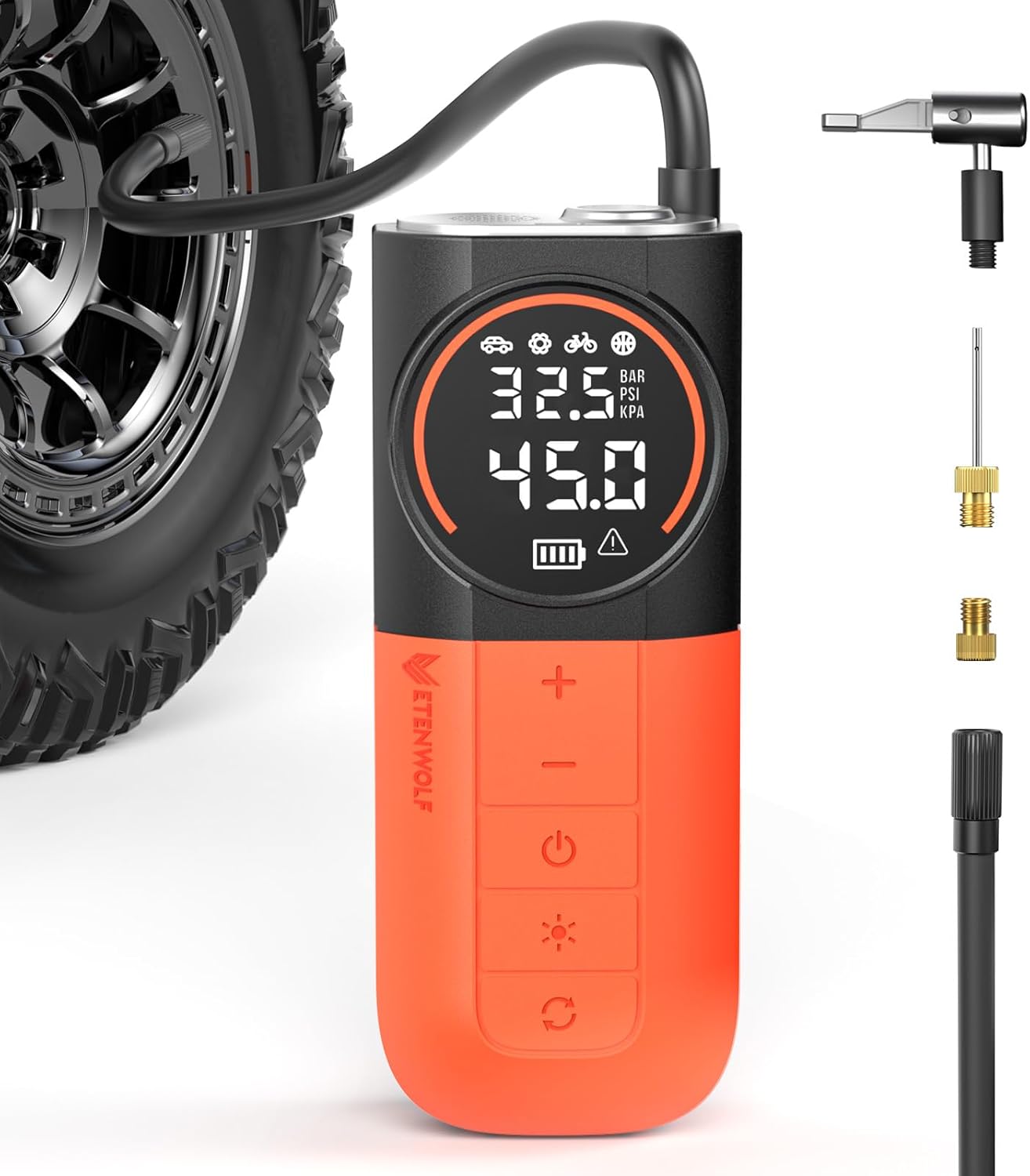
The ETENWOLF S1 cordless tire inflator delivers ultra-fast inflation with up to 160 PSI and a 20 L/min airflow for quicker tire top-offs. Its 5200mAh battery and cooling...
How to Make Mud-Terrain Tires Last Longer on a Tacoma
- Use the correct cold PSI: Check the door placard and adjust when the tires are cold.
- Rotate consistently: Use a 5,000–8,000 mile interval, or sooner if the tires begin to feather or cup.
- Align after changes: Get an alignment after a lift, new control arms, new suspension parts, or hard trail impacts.
- Avoid unnecessary wheelspin: Spinning lugs on rock, asphalt, or hardpack can tear and round the tread blocks.
- Air down wisely: Air down for off-road traction when appropriate, but air back up before highway speeds.
- Watch payload: Extra weight from armor, camping gear, towing, and tools increases heat and wear.
- Inspect after every trail day: Remove rocks, look for cuts, and check for slow leaks.
- Fix problems early: A vibration, pull, or uneven wear pattern will not improve on its own.
Frequently Asked Questions
How often should I replace the tires on my Toyota Tacoma?
Replace your Tacoma’s mud-terrain tires when tread reaches 2/32 inch, when damage appears, when traction becomes unsafe, or when the tire reaches the age limit recommended by the tire or vehicle manufacturer. Many manufacturers advise close inspection around six years and replacement somewhere between six and 10 years, even if tread remains.
Do mud-terrain tires wear faster on pavement?
Yes, they often do. Mud-terrain tires use aggressive tread blocks and open voids for off-road grip. Those same features can create more heat, tread squirm, noise, and uneven wear during daily pavement driving.
Can Tacoma mud-terrain tires last 50,000 miles?
Some drivers may reach 50,000 miles, but it is not a safe expectation for every Tacoma. Mostly highway use, careful driving, correct pressure, frequent rotation, and good alignment help. Heavy off-road use, towing, poor alignment, and extra vehicle weight can keep the tire closer to 20,000–40,000 miles.
What tread depth is too low for mud-terrain tires?
The minimum replacement point is 2/32 inch. For off-road use, mud, wet trails, and loose terrain, performance can drop before that. If the lugs are rounded, the voids are shallow, or the tire no longer clears mud well, replacement may be smart earlier.
Should I rotate Tacoma mud-terrain tires more often than all-terrain tires?
Often, yes. Mud-terrain tires can develop cupping, feathering, and uneven block wear if they are neglected. A 5,000-mile rotation interval is a smart target for many Tacoma owners, especially with heavy tires, lifted suspension, or frequent trail use.
Do mud-terrain tires have mileage warranties?
Some do, but many dedicated mud-terrain tires do not. Several popular M/T tires carry limited warranties for defects, road hazard coverage, or trial periods instead of treadwear mileage guarantees. Always check the current warranty booklet for the exact tire model and size you plan to buy.
Conclusion
To sum up, the lifespan of mud-terrain tires on your Tacoma usually falls around 20,000 to 40,000 miles, but your actual result depends on how the truck is driven, loaded, aligned, inflated, and maintained. Keep an eye on tread wear, maintain proper cold tire pressure, rotate regularly, inspect after trail runs, and replace tires when they reach 2/32 inch tread or show damage. With steady care, your Tacoma will stay safer on pavement and more capable when the trail turns rough.
Sources
- NHTSA TireWise — tire pressure, tread-depth replacement point, tire aging, rotation, alignment, and tire-related crash safety context.
- Toyota Manuals and Warranties — official Toyota source for owner’s manuals, warranty information, and vehicle-specific tire guidance.
- BFGoodrich Mud-Terrain T/A KM3 — product details and Standard Manufacturer’s Limited Warranty language.
- Falken Wildpeak M/T — mud-terrain usage notes, no-mileage-warranty statement, and performance ratings.
- Toyo Open Country M/T — product description, limited warranty, trial offer, and tread-life rating context.
- General Grabber X3 — mud-terrain product details, trial offer, and road hazard coverage information.

Related Articles
How Tire Weight Affects Toyota Tacoma Performance
How does tire weight influence your Toyota Tacoma's performance and efficiency? Discover the surprising effects that could change your driving experience.
Read More
Tire Noise Levels by Tire Type on a Toyota Tacoma
A comprehensive look at how tire types affect noise levels in your Toyota Tacoma reveals surprising insights that could enhance your driving experience.
Read More
How To Choose Tires for a Dual Use Toyota Tacoma
Unlock the secrets to selecting the perfect tires for your dual-use Toyota Tacoma, ensuring optimal performance and comfort on every adventure. Discover more inside!
Read More