
Why Tires Overheat: 7 Causes, Signs and Safety Fixes
A hot tire can fail fast, and the warning signs are easy to miss until the vehicle feels unstable. Underinflation, overload, high speed, rough roads, or hard braking can force the tire to flex too much and build dangerous heat. This guide explains why tires overheat, how to spot heat damage, and what you should check before every long trip.
Quick Answer
Tires overheat when pressure, load, speed, road damage, or driving style make the tire flex and rub more than it can safely handle. Heat weakens rubber, belts, and adhesives, which raises the risk of tread separation, blowouts, and loss of control. You can reduce the risk by checking cold tire pressure, staying within load and speed ratings, using your tire pressure monitoring system (TPMS), and inspecting tires often.
Key Takeaways
- Check cold tire pressure before long trips and set it to the vehicle placard.
- Keep cargo within the tire and vehicle load limits to reduce heat buildup.
- Avoid sustained high speeds, hard braking, and rough routes when tires already run hot.
- Replace tires with bulges, cracks, tread tearing, or signs of separation.
- Use TPMS alerts as early warnings, not as a replacement for manual checks.
Why Tires Overheat: Main Causes and What Happens Inside
Tire overheating happens when internal and external heat sources exceed the tire’s ability to shed heat. Rubber, belts, sidewalls, and adhesives all have heat limits. Once a tire passes those limits, the structure can weaken.
Internal heat comes from repeated flexing in the tread, sidewall, and carcass. Underinflation makes the sidewall flex more, which raises friction and heat inside the tire. Overloading adds more force to the contact patch and can speed up heat buildup.
External heat also matters. Hot pavement, high air temperature, nearby brake heat, and poor airflow can reduce cooling around the tire. If heat keeps building, the tire can suffer tread separation, casing damage, or a blowout.
[Products Worth Considering]
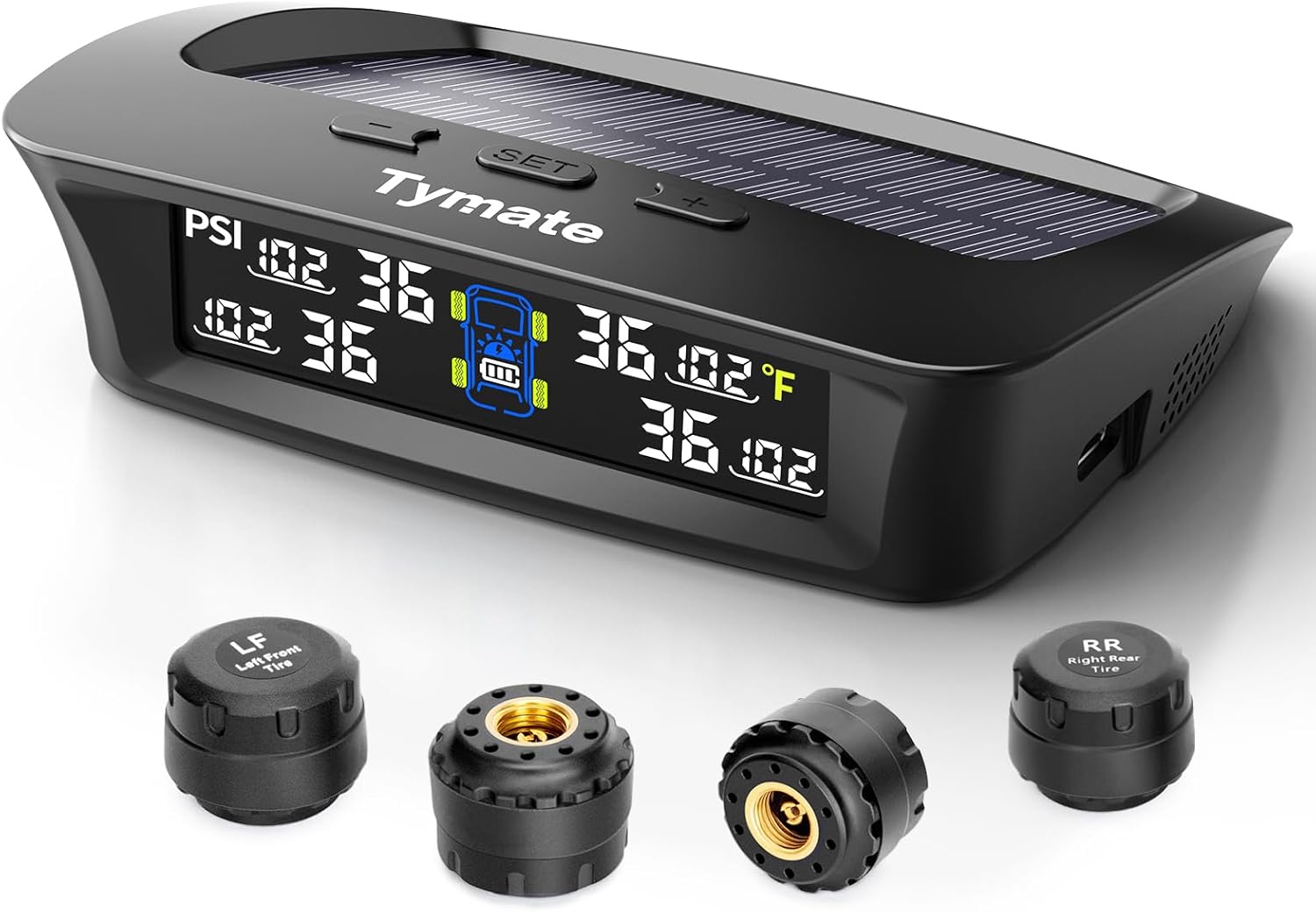
The Tymate TM3 RV TPMS delivers real-time tire pressure monitoring from 0 to 144 PSI with accurate readings and dependable wireless communication. It includes four external sensors with pre-pairing, six alarm modes for rapid leak, pressure extremes, temperature, and signal loss, plus an easy-reference setup for alert thresholds. Solar and USB-C charging help keep the display powered, while the color LCD and adaptive backlight improve visibility for safer driving and towing.

EVOULTES heavy duty tire inflator with an integrated gauge delivers accurate pressure readings from 10–120 PSI, helping you inflate, deflate, and check tires in one tool. The 16.5-inch extended dual-head air chuck with swivel base reaches hard-to-access dual wheel valves on trucks and RVs. A brass trigger core and side-mounted air release valve make operation smooth, with standard 1/4" NPT threading and quick-connect compatibility for easy setup.

This portable cordless tire inflator delivers fast, efficient inflation for cars, motorcycles, bikes, and sports balls with a digital pressure gauge. Use the one-click PSI preset with auto shut-off for accurate, hands-free topping to your target pressure up to 150 PSI. It’s compact and rechargeable with a built-in emergency LED light plus valve adapters and accessories for quick, ready-to-go use.
How Driving, Load and Road Conditions Raise Tire Heat
High speeds, heavy loads, rough roads, and sharp driving inputs all raise tire temperature. Each factor makes the tire flex, scrub, or absorb impact more often. Heat rises faster when more than one factor happens at the same time.
How Speed Raises Tire Heat
Speed increases the number of times a tire flexes each minute. That constant flexing creates heat inside the rubber and casing. If you drive above the tire’s speed rating, you raise the risk of structural failure.
Underinflation makes high-speed driving more dangerous because the sidewall bends more with every rotation. Hard acceleration, sharp cornering, and sudden braking add more stress. You can reduce heat by slowing down and keeping inputs smooth.
- Maintain correct inflation and follow tire ratings.
- Avoid long high-speed drives near the tire’s limit.
- Limit hard acceleration, sharp turns, and rapid stops.
How Load and Road Damage Add Heat
Extra weight increases the tire’s contact force with the road. Uneven cargo can overload one tire or axle, which creates local heat and wear. A tire that carries too much weight can fail even if it looks normal from the outside.
Potholes, gravel, corrugation, and road debris add impact and abrasion. Those impacts can damage cords, belts, and sidewalls while also adding heat. Choose smoother routes when possible, and slow down on damaged roads.
- Balance cargo across the vehicle before long trips.
- Stay within the tire and vehicle load ratings.
- Reduce speed on rough, hot, or damaged roads.
Warning: Never keep driving on a tire that smells hot, shows a bulge, or triggers repeated pressure warnings.
How to Spot Heat Damage: Visual and Performance Signs
Start with a slow visual check of each tire. Look for centered wear, uneven shoulder wear, a blue tint, tread tearing, chunking, cuts, cracks, or bulges. These signs can point to heat stress, pressure problems, or structural damage.
Feel for changes during a short, safe test drive. A tire with heat damage may create vibration, pulling, noise, or a rough ride. Stop and inspect the tire again if the vehicle feels unstable.
- Check for higher rolling resistance, vibration, or pulling during a test drive.
- Measure tread depth and compare wear across the tire width.
- Photograph cuts, cracks, bulges, or tread separation before seeking service.
Do not rely on looks alone. Some internal damage stays hidden until the tire fails. Replace any tire with a bulge, visible separation, or severe cracking.
Safety Risks and Cost Impacts of Overheated Tires
Hot tires can fail without much warning. A blowout or tread separation at highway speed can cause sudden loss of control. The danger rises when the vehicle carries a heavy load or travels in traffic.
Heat damage also raises costs. It can ruin casings, shorten tire life, reduce fuel efficiency, and cause roadside downtime. For fleets, one preventable tire failure can lead to repair costs, delays, and liability risk.
| Consequence | Safety Impact | Financial Impact |
|---|---|---|
| Blowout | Immediate collision risk | Repair and liability costs |
| Casing damage | Reduced tire integrity | Higher replacement rates |
| Downtime | Loss of safe operation | Revenue and labor loss |
Treat tire safety as part of your maintenance plan, not a last-minute check. Regular pressure checks, load control, and inspections help prevent heat-related failures.
Prevent Tire Overheating Before a Trip: Speed, Load, and Pressure
Check tire pressure, load, and speed ratings before every long drive. Use the cold tire pressure listed on the vehicle placard, not the number on the tire sidewall. Correct pressure reduces sidewall flex and helps control heat.
Confirm your total payload and cargo layout before you leave. Keep the load within the tire carrying capacity and the vehicle’s rated limits. Heavy or uneven cargo can make one tire run much hotter than the others.
- Check cold tire pressure with a calibrated gauge and set it to spec.
- Compare total payload and axle load against the vehicle placard.
- Review your tire speed rating before long highway drives.
- Inspect for cuts, bulges, cracks, embedded objects, or tread damage.
Your tire pressure monitoring system can help you catch pressure loss while you drive. Use it as an active warning tool, but still check tires by hand. Damaged tires can overheat even when pressure looks normal.
Pro tip: Check pressure before sunrise or after the vehicle sits for several hours for the most useful cold reading.
[Products Worth Considering]
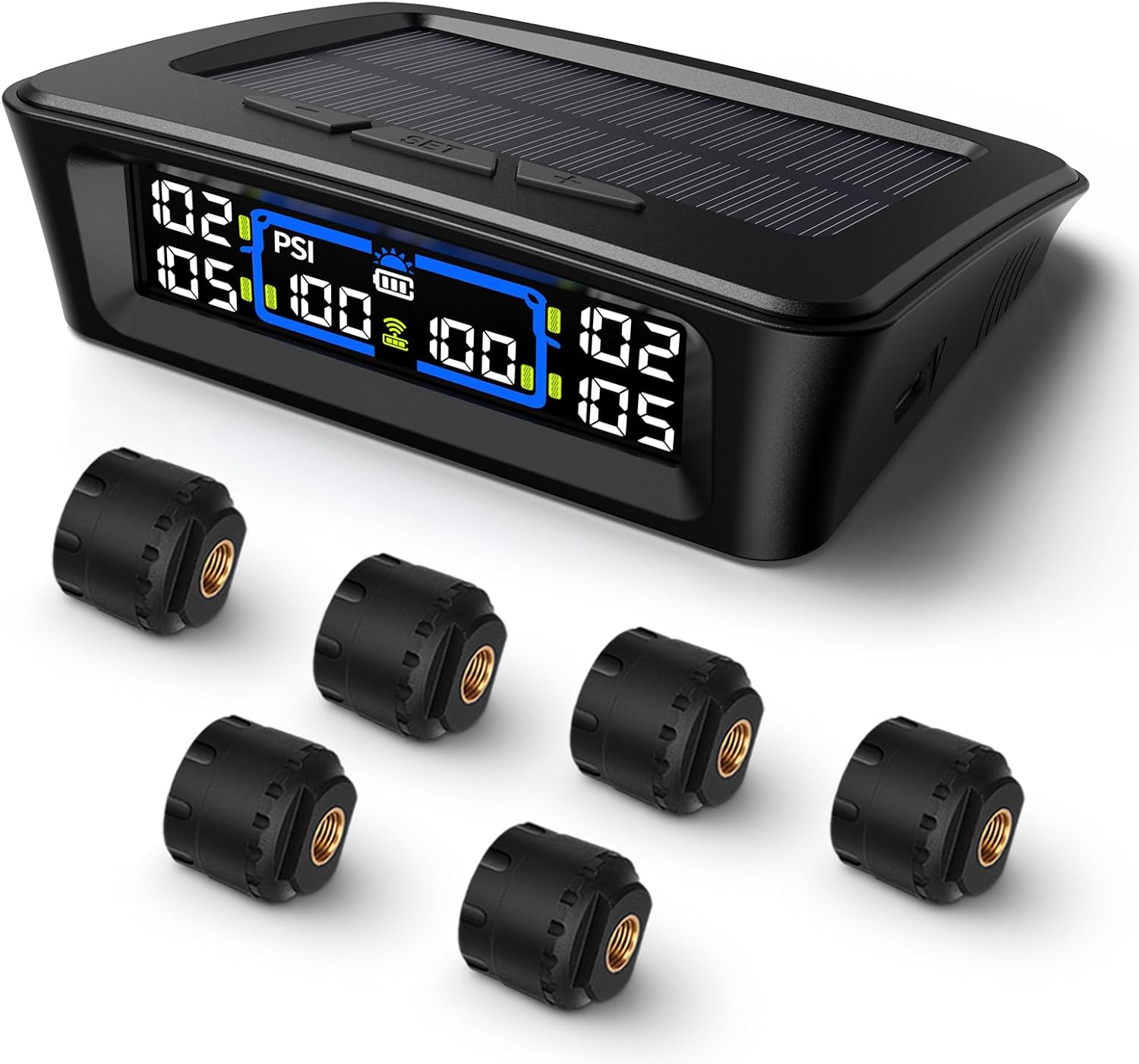
The Tymate TM12 RV TPMS delivers real-time tire pressure and temperature monitoring with a stable 433Hz display for safer long-distance driving. It supports simultaneous monitoring across vehicle and trailer zones, includes six alarm modes for pressure, temperature, leakage, battery, and signal loss, and features easy DIY installation with auto calibration. Power is supplied via USB-C charging or solar recharging, with a wide 0–144 PSI range and up to 50 ft signal coverage for RVs and towable trailers.
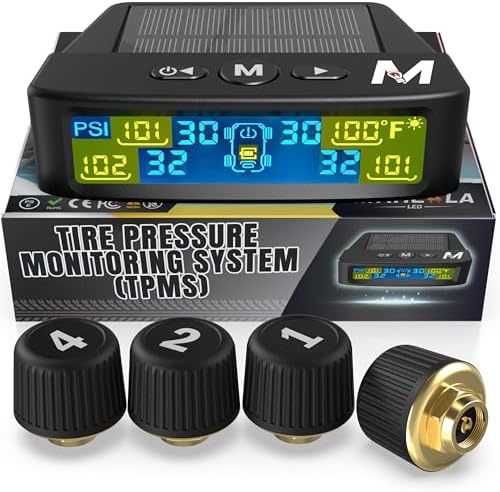
Marcala’s TPMS set of four sensors helps you monitor tire pressure and temperature in real time while driving, with updates every second. The bright color LCD uses auto-dimming for easy viewing, powered by dual solar and USB charging, and offers six alarm modes. Built for trailers, RVs, campers, trucks, and towing setups, the sensors support monitoring 1-4 wheels up to 98 PSI with IP67 waterproof protection.
Tire Maintenance and Monitoring to Prevent Overheating
Routine checks help you catch small tire problems before they become heat failures. Check cold inflation pressure at least monthly and before long trips. Use the vehicle placard as your pressure target.
Temperature changes can affect pressure, so recheck it when weather shifts. As a general rule, tire pressure changes about 1 PSI for every 10°F change in air temperature. Do not bleed air from a hot tire just because pressure rises during normal driving.
Inspect every tire for cuts, cracks, bulges, uneven wear, and signs of tread separation. Increase inspection frequency during hot weather or heavy towing. Keep loads within the manufacturer’s limits to reduce heat and stress.
- Use TPMS alerts to catch pressure loss early.
- Rotate tires on the schedule in your owner’s manual.
- Check tread depth and replace worn tires before long trips.
- Have a tire professional inspect damage you cannot judge safely.
What to Do Immediately if a Tire Overheats or Fails
If a tire overheats, slow down gradually and pull over to a safe place. Choose a shaded area away from traffic if you can. Do not keep driving on a hot or damaged tire.
Let the tire cool before you touch it or check pressure. A hot tire can give a misleading pressure reading, and damaged rubber can fail without warning. Once it cools, inspect for cracks, bulges, discoloration, tearing, or separation.
- Check pressure and visible damage only after the tire cools.
- Install the spare only if you can do it safely and correctly.
- Call roadside assistance if traffic, heat, or damage makes the situation unsafe.
- Replace a tire that shows bulging, separation, or severe heat damage.
After you replace or repair the tire, monitor pressure and handling closely. Heat damage can point to a larger issue, such as overload, poor alignment, dragging brakes, or underinflation.
Frequently Asked Questions
What Are the Best Safeguards Against Heat Buildup in Aircraft Tires?
Aircraft tires need strict inspection, correct inflation, proper loading, and careful preflight checks. Qualified aviation maintenance teams should follow the aircraft and tire manufacturer’s procedures. Real-time monitoring can also help crews catch heat or pressure issues before they become unsafe.
Can Underinflated Tires Overheat Even on a Short Trip?
Yes. Underinflation makes the sidewall flex more, so heat can build quickly even on a short drive. The risk rises when you add high speed, heavy cargo, hot pavement, or rough roads.
Should You Lower Tire Pressure When Tires Get Hot?
No. Do not bleed air from a hot tire during normal driving. Check and set pressure when the tire is cold, then compare it with the vehicle placard.
What Tire Temperature Is Too Hot?
Safe temperature limits vary by tire type, load, speed, and use. If a tire smells hot, shows visible damage, or causes a pressure warning, treat it as unsafe. Pull over, let it cool, and inspect it before driving again.
When Should You Replace a Heat-Damaged Tire?
Replace the tire if you see bulges, tread separation, deep cracks, exposed cords, or severe tread chunking. Have a tire professional inspect uncertain damage. Do not risk highway driving on a tire that may have internal heat damage.
Safety Disclaimer: This article provides general safety information and does not replace your owner’s manual, tire manufacturer guidance, or professional inspection. Ask a qualified tire technician or vehicle service professional before driving on a tire that may be damaged.
Conclusion
Tire heat becomes dangerous when pressure, load, speed, or road stress pushes the tire beyond its safe limits. Your best next step is simple: check cold pressure, inspect the tread and sidewalls, and confirm the load before every long trip. If a tire overheats or shows damage, stop driving and get it inspected. A few minutes of prevention can protect your vehicle, your budget, and everyone on the road.
References
- Tires — National Highway Traffic Safety Administration
- Tire Safety: Everything Rides On It — National Highway Traffic Safety Administration
- Aircraft Tire Maintenance and Operational Practices — Federal Aviation Administration

Related Articles
Why Put a Plastic Bottle on Your Tire? The Viral Trick Explained
Mysterious plastic bottle on your tire? Discover the viral trick’s surprising truth and what it really means before you assume it’s protecting your car.
Read More
What Happens When a Tire Blows Out at Highway Speed? Full Guide
Buckle up to discover what really happens when a tire blows out at highway speed, and why your next move could change everything.
Read More
What Does V Mean on a Tire? Load, Speed & Rating Guide
Need to know what “V” means on a tire and how load and speed ratings affect safety?
Read More