
Staggered Tire Setup: What It Is and How It Affects Your Car

A staggered tire setup means your rear tires (or wheels) are wider, or sometimes larger, than the fronts. The goal is to boost rear traction, reduce wheelspin, and improve straight-line acceleration and stability. That tradeoff limits full front-to-rear rotation, can shift handling toward understeer, and requires careful attention to offset, diameter matching, and brake bias to protect the drivetrain. Staggered setups are common on RWD performance cars and are also popular for styling. Keep sizing within recommended diameter limits, check clearance, and read on for everything you need to know about fitment and care.
Quick Guide: Staggered or Square — Which Should You Pick?
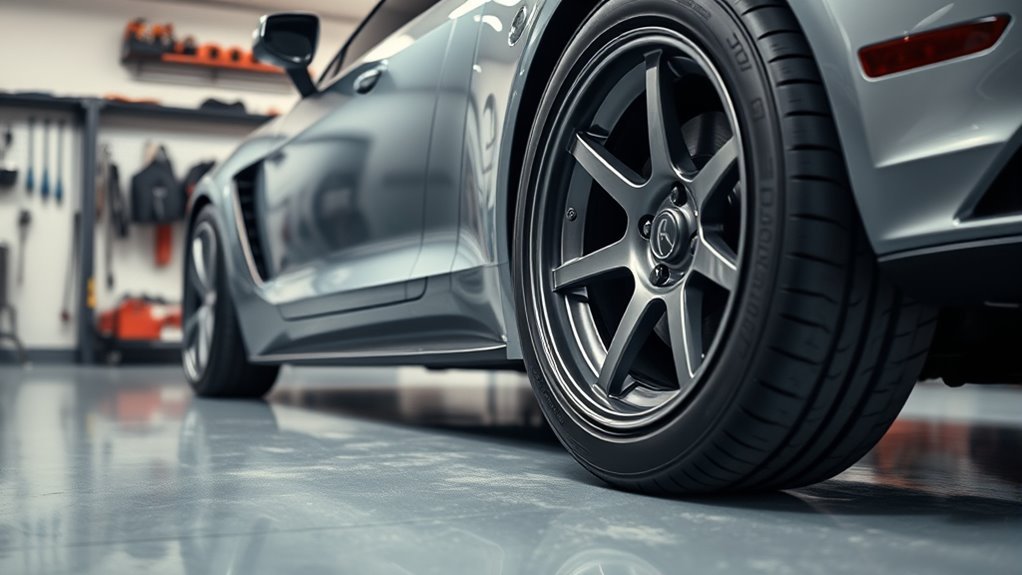
Staggered setups put wider rubber at the rear to boost acceleration and rear-wheel traction. That usually increases understeer, so you give up a neutral turn-in and full tire rotation — rear tires tend to wear out faster.
Square setups use identical sizes all around. You get balanced handling, more predictable behavior in varied conditions, and full front-to-rear rotation to extend tread life.
Pick staggered if you prioritize rear grip, aggressive aesthetics, or track-style launches. Choose square if you want easier maintenance, flexible daily driving, and a neutral chassis feel. Match the setup to how you actually use the car — daily driver, weekend track, or performance statement.
What “Staggered” Means: Wheel Stagger vs. Tire Stagger
When you hear “staggered,” it can mean either wheel stagger — different wheel widths or diameters front to rear — or tire stagger — different tire sizes on identical wheels. Wheel stagger changes the contact patch and track width. Tire stagger tunes grip and sidewall profile without swapping rims. Understanding the difference helps you balance handling gains against potential issues like uneven wear and drivetrain mismatch.
Wheel Stagger Definition
Wheel stagger means using different wheel widths or diameters between the front and rear axles. You fit wider, often larger-diameter wheels at the rear to enlarge the contact patch and improve acceleration and braking on rear-drive cars. The goal is to keep overall tire diameter nearly equal between axles to protect the drivetrain, especially on AWD systems. Wheel stagger produces more pronounced handling shifts than changing tires alone.
Tire Stagger Definition
Tire stagger means mounting different-width (or occasionally different-diameter) tires on identical wheels so the rear tires are wider or larger than the fronts. This increases the rear contact patch and traction without changing the wheels themselves. It’s a targeted change to footprint and slip characteristics that works well on rear-wheel-drive cars that need better traction off the line. Keep overall diameters within about 1–2% to protect the drivetrain, especially on AWD. Tire stagger offers simpler fitment and fewer cosmetic trade-offs than full wheel stagger.
Key Differences Explained
Both setups aim to boost rear traction, but they get there differently. Wheel stagger changes the rim itself — different widths or diameters front to rear. Tire stagger keeps identical wheels and alters tire width or profile to adjust the contact patch.
Choose wheel stagger when you want structural changes: wider 10-inch rears versus 8-inch fronts shift load distribution and allow broader tires, improving traction and stability under high torque. Choose tire stagger to tune performance without swapping rims — for example, 225/40R18 fronts with 255/35R18 rears. Either way, keep overall diameters within 1–2% to protect the drivetrain, and expect faster rear wear due to higher load and grip demands.
Why People Choose Staggered Setups (Traction, Packaging, Styling)
Wider rear tires boost traction and acceleration on high-torque, rear-wheel-drive cars by reducing wheelspin off the line. The rear-biased grip also stabilizes handling in corners and at speed, giving engineers a way to tune oversteer/understeer balance without major chassis changes. On the styling side, larger rear rubber creates the aggressive stance many enthusiasts are after, while still fitting within the car’s intended wheel-well and suspension geometry.
Traction and Acceleration
Wider rear tires increase the contact patch, letting a rear-wheel-drive car transfer more torque without overwhelming grip. Acceleration feels stronger and more controlled. The wider footprint spreads load across a larger rubber area, which reduces slip onset and improves launch consistency under hard throttle.
On twisty roads, the staggered layout stabilizes rear-end bite, so you can get back on the throttle earlier out of corners. Braking also benefits from the added contact area, tightening deceleration. The trade-off is less front-end bite, which is worth keeping in mind if your driving involves a lot of tight, technical corners.
Visual and Fitment Appeal
The performance case for staggered setups is real, but so is the visual appeal. Wider rear tires improve traction under acceleration on rear-wheel-drive cars, which is why models like the Nissan 350Z and BMW M cars use staggered fitments to balance power delivery and cornering stability.
Designers also use the size difference to package brakes and suspension components more efficiently, improving handling dynamics without compromising steering feel up front. The aggressive rear stance isn’t just for looks — it reflects optimized geometry and contact patches tailored to each axle’s role.
How Staggered Tire Sizes Affect Handling, Braking, and Drivetrain
Different tire widths change the way a car behaves in three key areas:
- Handling: Staggered rears shift lateral grip rearward, so you’ll usually experience a neutral-to-understeer balance. Suspension tuning can recover some front bite, but the basic geometry favors rear traction.
- Braking: Wider rear tires help stabilize the car under heavy stops. However, they can upset front-to-rear braking balance if not matched by proper brake bias and maintenance, which can lead to longer stopping distances or uneven deceleration.
- Drivetrain: If diameters differ significantly, especially on AWD, you risk torque steer, differential strain, and premature wear. Monitor tread depth and stick to recommended sizes to avoid drivetrain damage.
Choosing Compatible Staggered Sizes: Width, Offset, and Diameter Limits
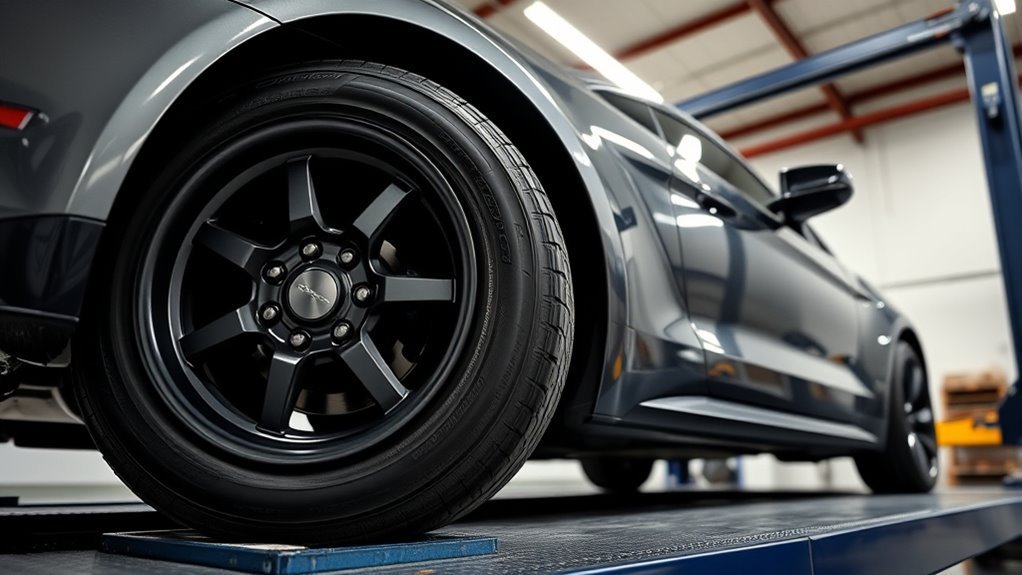
Mismatched widths, offsets, or diameters can quickly cancel out the benefits of a staggered setup. As a general rule, select rear tires about 1–1.4 inches wider than the fronts, keep overall diameters within 1–2% (critical for AWD), and confirm wheel offsets don’t push rims into the suspension or fenders. For help matching specific tire sizes to your vehicle, Tire Rack’s tire size guide is a reliable starting point.
Wider rears improve traction and acceleration; narrower fronts preserve turn-in response. Offset affects clearance: positive offsets move the hub face inward, while negative offsets push wheels outward. Always cross-check your vehicle’s specs and tire load ratings before committing to a size.
| Parameter | Typical Range | Impact |
|---|---|---|
| Front Width | narrower by ~1–1.4″ | Steering feel |
| Rear Width | wider by ~1–1.4″ | Traction |
| Diameter Tolerance | within 1–2% | Drivetrain stress |
| Offset | vehicle-specific | Fender/suspension clearance |
| Fitment Check | mandatory | Performance & safety |
Maintenance and Tire Rotation Limits for Staggered Fitments
With a staggered fitment, rotation options shrink to side-to-side on each axle only — you can’t move tires from front to rear. That means a stricter maintenance routine to avoid premature wear and safety issues. Monitor tire pressure independently front and rear, track wear patterns closely, and expect rear tires to need replacement sooner than fronts.
Running a staggered fitment narrows rotations to side-to-side; monitor front/rear pressures, wear, and alignments closely.
- Check weekly: monitor tire pressure, tread depth, and sidewall condition; log your checks to spot trends early.
- Rotate side-to-side every 5–8k miles on each axle only; document wear patterns to time replacements and keep handling balanced.
- Schedule alignment checks whenever lateral wear or handling drift appears, and after any suspension changes.
Staggered setups demand discipline. Separate front/rear monitoring, consistent maintenance intervals, and timely alignment adjustments are what keep performance and safety intact over the long run.
Is Staggered Right for Your Car? A Quick Compatibility Checklist
Use the checklist below to decide whether the benefits of a staggered setup outweigh the trade-offs for your specific car.
| Checkpoint | Why it matters | Action |
|---|---|---|
| Drivetrain | RWD tolerates wider rears; AWD/4WD risks damage | Prefer RWD; avoid AWD |
| Manufacturer spec | Some cars ship staggered (e.g., Infiniti Q60) | Confirm factory recommendation |
| Diameter variance | >2% causes ABS/traction issues | Keep within 1–2% |
| Fender/suspension | Wider tires can rub or alter geometry | Verify clearance, adjust if needed |
| Intended use | Track/accel benefit; daily comfort may suffer | Match use case to goals |
If you drive RWD and want traction and style, a staggered setup can deliver real performance gains. If you’re on AWD or concerned about drivetrain electronics, the drawbacks outweigh the benefits. Inspect your specs, measure diameters, and do a mock fitment before committing.
Frequently Asked Questions
Why Are My Front and Rear Tires Different Sizes?
Your fronts and rears differ because a staggered setup improves traction and handling: wider rear tires boost grip for acceleration and stability, while narrower fronts maintain steering responsiveness.
What Does 19 Inch Staggered Mean?
“19-inch staggered” means the car uses 19-inch wheels with wider rear tires than fronts. You get better traction and a bolder stance, while keeping the overall diameter close enough on both ends to protect the drivetrain.
Do Staggered Tires Wear Faster?
Yes — rear tires in a staggered setup tend to wear faster. They carry more traction load and have a larger contact patch, both of which reduce tread life. Monitor rear wear closely and plan replacements accordingly.
Conclusion
Staggered setups boost rear traction and look great, but they trade away rotation flexibility and can complicate brake balance. They’re a popular choice on performance coupes for exactly those reasons. Before committing, confirm that rear width, offset, and diameter limits match your chassis and drivetrain. If you want predictable braking, easy tire maintenance, and full rotation life, a square setup is the safer pick. Go staggered only when the benefits clearly match how you drive.

Related Articles

What Is a Fat Tire? Complete Guide & Best Options
I’ll show you what makes fat tires different, which setups work best, and why the right choice could change your ride.
Read More
What Does W Mean on a Tire? Load, Speed & Rating Guide
Huh, what does W on a tire really mean, and why could choosing the wrong rating affect your safety and performance?
Read More
What Does Tire Flipping Work? Muscles, Benefits & Workout Guide
Strong tire flips hammer your entire body, but which muscles and benefits matter most?
Read More